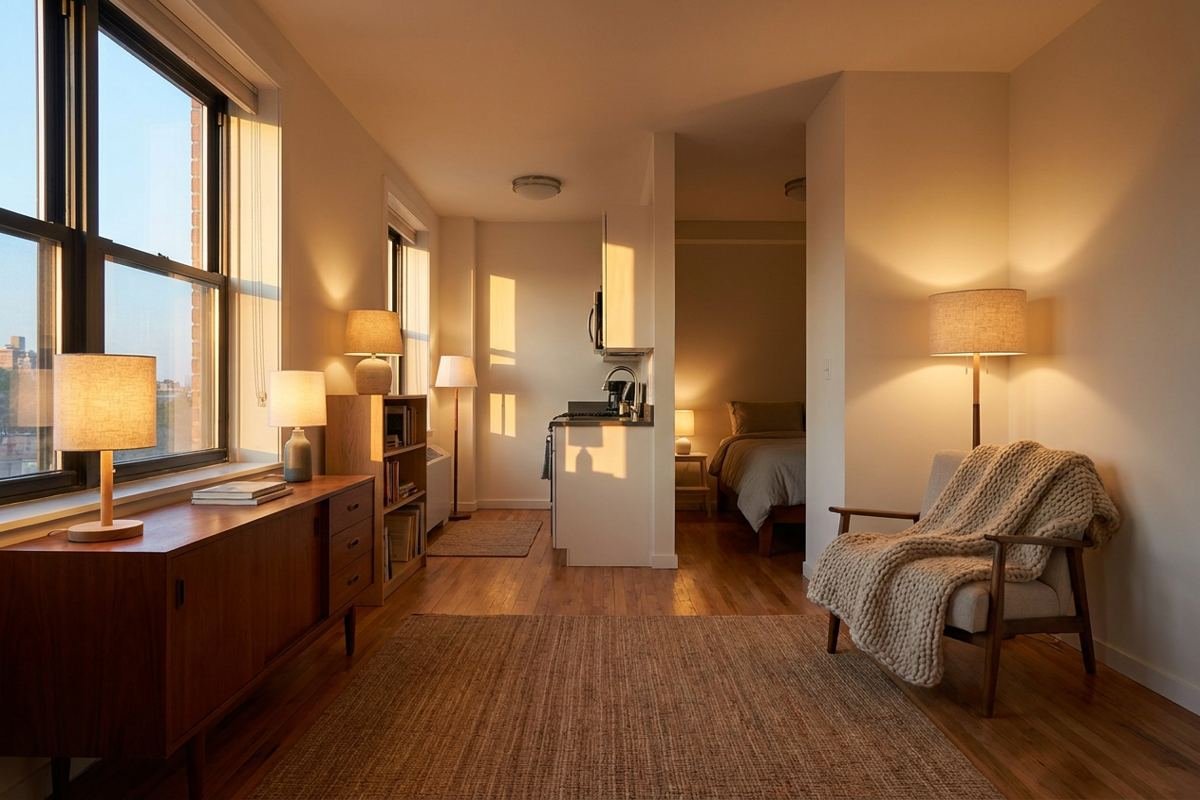
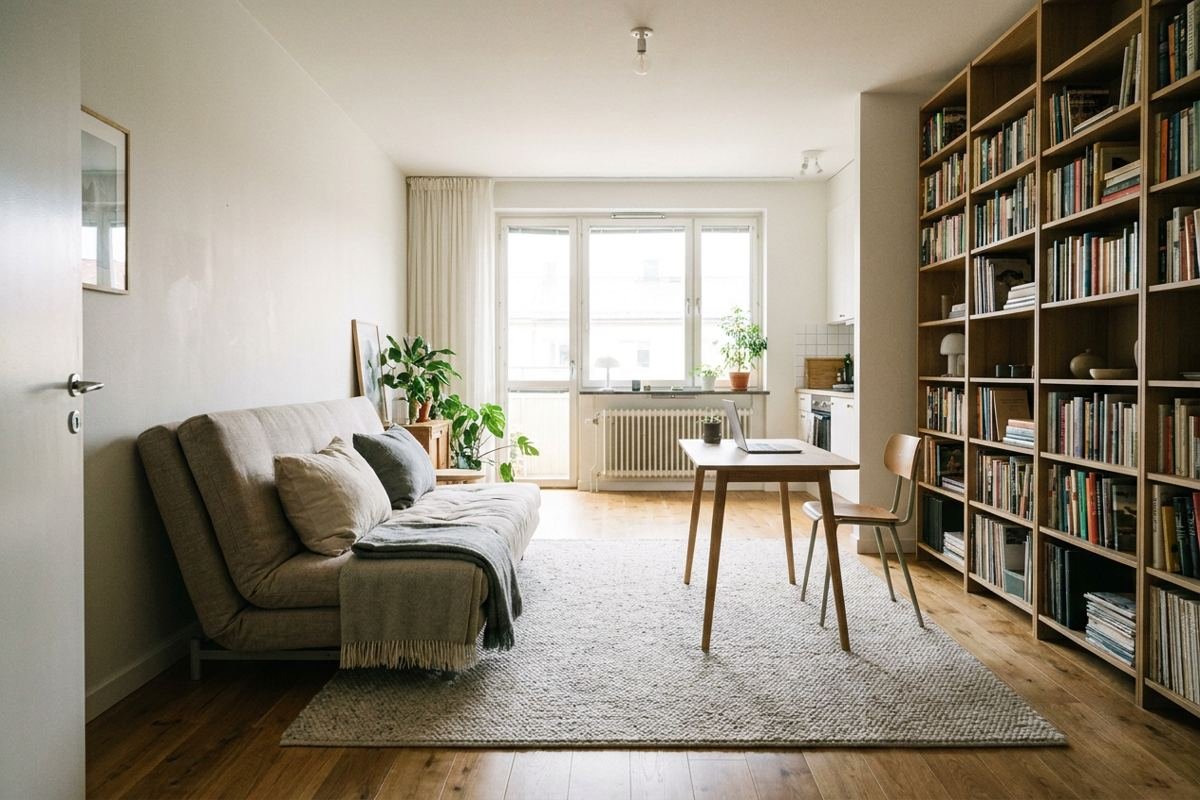
Small space and studio apartment decor works best when every piece earns its footprint. Choose furniture that does two jobs, define zones with rugs and lighting instead of walls, draw the eye upward, and keep floors visible. Edit before you buy, and the room will feel larger than its square footage.
A small home asks for better decisions, not fewer comforts. When each object has a purpose and a place, a studio can feel generous, calm, and personal rather than cramped, even when one room holds the bed, sofa, desk, and dinner table.
This guide covers ten practical ideas, from zoning and vertical storage to mirrors and layered lighting, along with what is going out, budgets, a step-by-step plan, and styling advice for different layouts and rentals.
The Big Picture: Why Small Space and Studio Apartment Decor Is Changing in 2026
Three forces explain almost every idea below.
- Rooms that do more. Remote work and smaller homes mean one room often serves as office, bedroom, and living area. Furniture and layouts have to shift easily between those roles without a lot of effort.
- Rental-friendly design. More people rent for longer, so they want upgrades that come with them: plug-in lights, freestanding storage, and removable hardware instead of permanent changes.
- Calm over clutter. After years of overstuffed shelves, people want visible floors, clear surfaces, and a few meaningful objects. In a small space, restraint is the biggest luxury you can create.
Together, these shifts favor flexible furniture, clever vertical storage, and a disciplined approach to what stays and what goes.
Zone with Rugs and Lighting
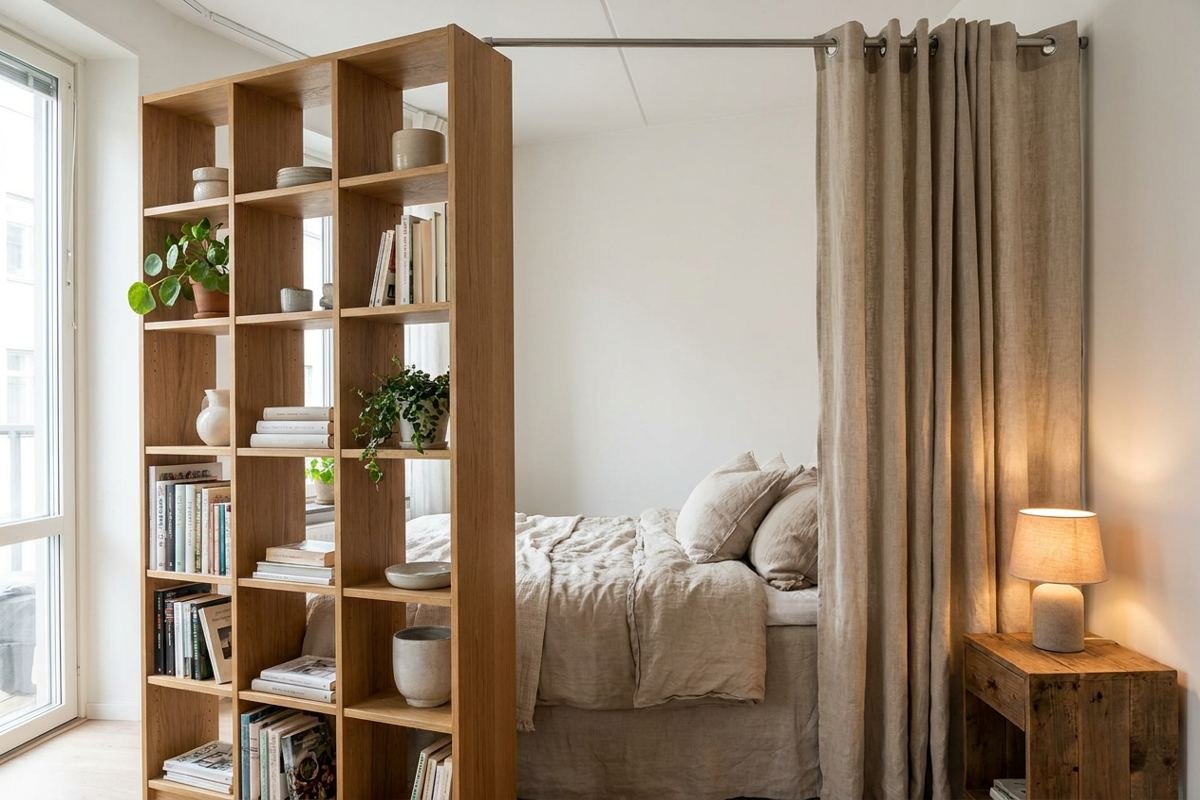
Without walls, a studio needs visual boundaries. A rug under the sofa and a lamp beside the bed tell the eye where each activity happens, so one room feels like several.
Why it works: the brain reads separate zones as separate rooms, which makes the space feel bigger.
- Anchor with a rug. Choose a rug large enough that at least the front legs of the sofa rest on it.
- Light each zone. Give the sleeping, sitting, and eating areas their own lamp rather than relying on one ceiling fixture.
- Repeat colors. Use a shared palette across zones so the room reads as one calm space.
- Leave pathways clear. Keep a walking path of about 30 inches between zones so movement feels easy.
- Live with it a week. Mark the plan with tape or a temporary setup first, then adjust before spending money on anything permanent.
Budget options: Flat-weave rugs and plug-in floor lamps are affordable and easy to move.
Mistakes to avoid: Using a tiny rug that floats in the middle and does not define anything.
The Bookshelf Divider
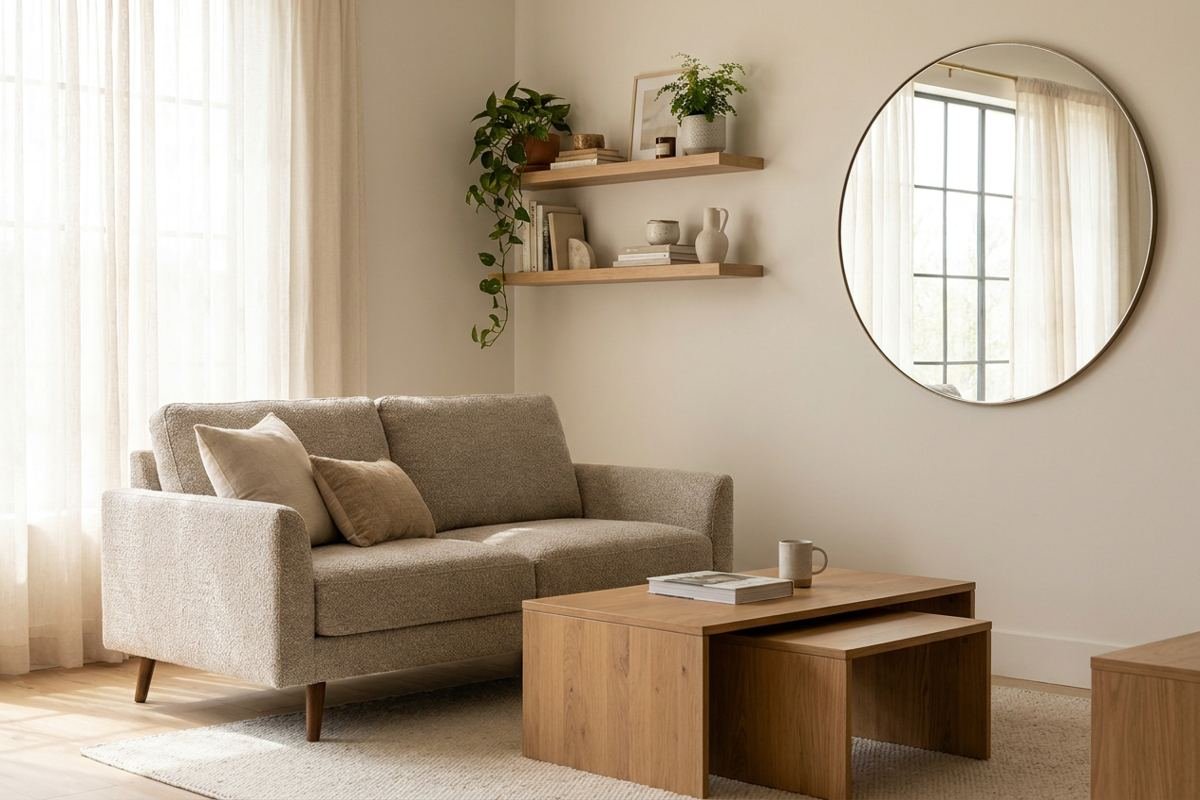
An open bookcase placed perpendicular to a wall separates the bed from the living area while letting light through. It also gives you storage without taking up a second wall.
Why it works: open backs keep sightlines and daylight moving.
- Choose open backs. A shelf you can see through feels lighter than a solid piece.
- Anchor it. Secure tall shelves to the wall or floor to prevent tipping.
- Style both sides. Keep the bed side tidy with baskets and the living side with books and plants.
- Mind the height. A shelf about 60 inches tall divides without blocking windows.
- Check the sightline. Stand at the door and at the sofa; the first view into the room should feel open and uncluttered.
Budget options: Cube shelves from a big-box retailer work well and can be stacked or rearranged later.
Mistakes to avoid: Overloading the divider with objects so it looks like a wall of clutter.
Furniture That Does Double Duty
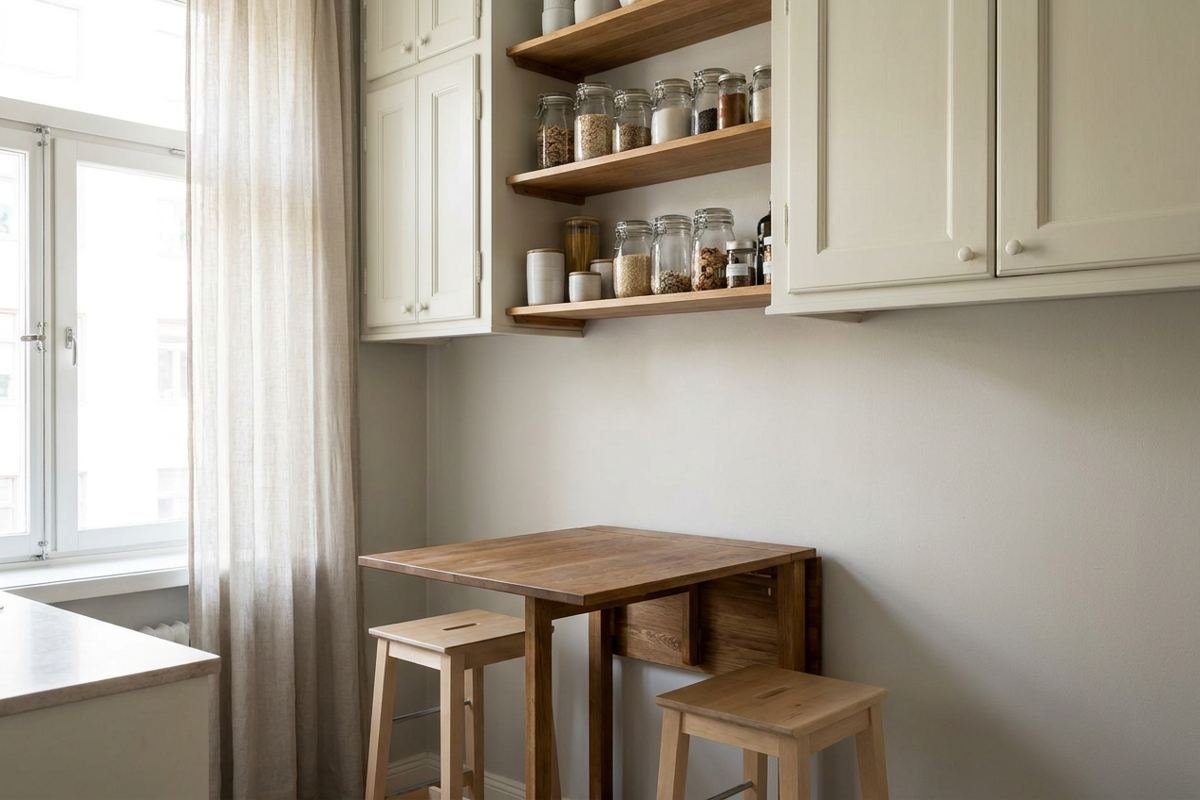
In a small home, every large piece should work twice. Think of a sofa bed, a storage ottoman, a lift-top coffee table, or a bench with a hidden compartment.
- Pick a quality sofa bed. Test the mechanism and mattress comfort in person if you can.
- Use nesting tables. They tuck away when not needed and expand for guests.
- Choose storage ottomans. They hold blankets while serving as extra seating and footrests.
- Try drop-leaf tables. A table that folds down to a slim console saves floor space daily.
- Keep one clear surface. Leave a single table or counter empty each day so the room always has a place that feels calm.
Budget options: Look for secondhand storage ottomans and nesting tables, which are easy to find.
Mistakes to avoid: Buying a bulky piece with a gimmick that you will not use.
Go Vertical with Storage
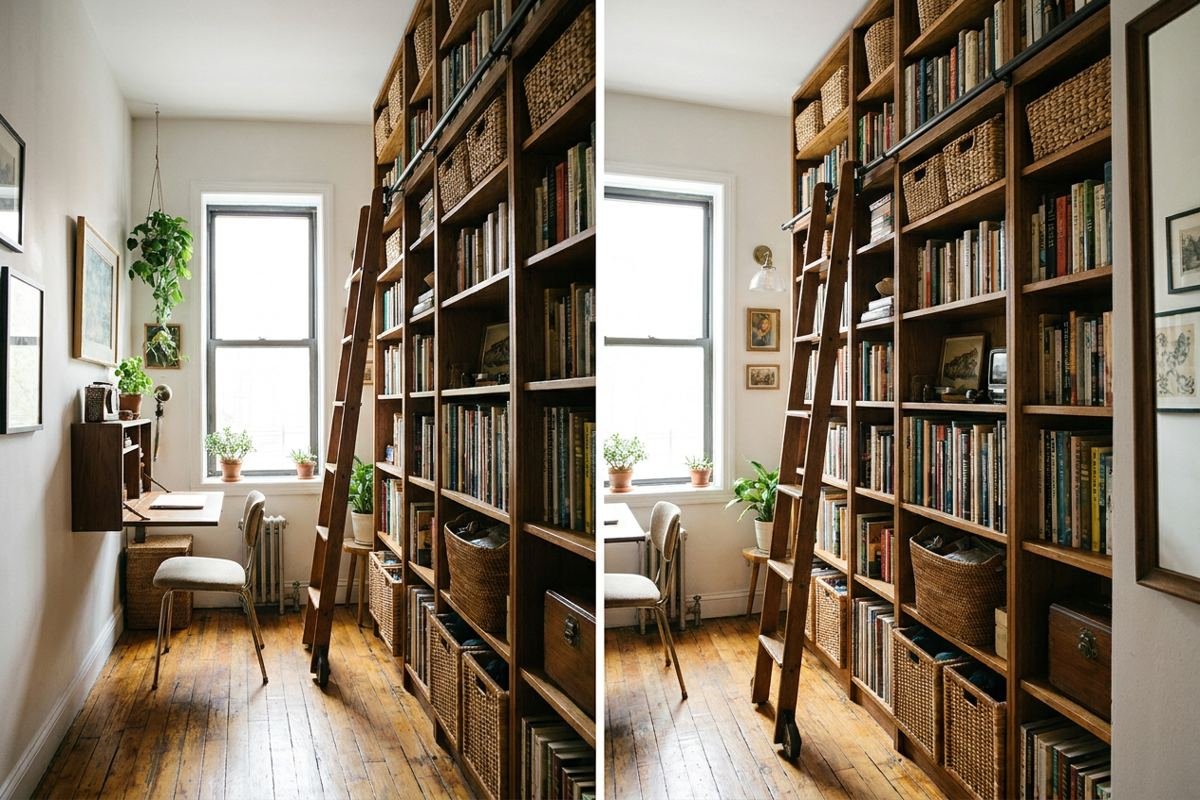
When floor space is limited, use the walls. Tall shelves, wall-mounted desks, and hooks pull the eye up and free the floor for living.
Why it works: raising storage keeps clutter off surfaces and makes ceilings feel taller.
- Choose tall, not wide. Narrow bookcases that reach near the ceiling add storage with a small footprint.
- Mount a desk. A fold-down or floating desk disappears when not in use.
- Use wall hooks. Hang bags, coats, and hats to clear the floor and add personality.
- Add baskets. Closed baskets on shelves hide small items and keep lines calm.
- Choose legs over skirts. Furniture raised on visible legs shows more floor, which makes a compact room read as larger.
Budget options: Simple floating shelves and hook rails cost little and can be installed in an afternoon.
Mistakes to avoid: Filling every shelf to the edge, which makes the wall feel heavy.
Mirrors and Reflective Surfaces
A large mirror across from a window doubles daylight and gives the room a sense of depth. Glass, polished metal, and light finishes help in the same way.
- Hang opposite light. A mirror facing the window brightens the darkest corner.
- Go large. One oversized mirror does more than several small ones.
- Lean it. A floor mirror adds depth without drilling in a rental.
- Choose glass accents. Glass tables and acrylic chairs keep sightlines open.
- Mind scale. Pick pieces proportioned to the room, since a deep sofa can swallow a studio while a slim one leaves space to breathe.
Budget options: A large inexpensive mirror leaned against a wall works beautifully.
Mistakes to avoid: Reflecting clutter, which only doubles the mess.
A Calm, Limited Palette
Keeping to two or three colors helps a small space feel unified. A pale background with a few deeper accents gives variety without visual noise.
Why it works: fewer color breaks mean fewer visual edges, and the eye reads the room as larger.
- Choose a light base. Soft whites and warm neutrals reflect light and widen walls.
- Add one accent. A deep green or navy in pillows and art gives depth.
- Match trim and walls. Painting both the same color blurs edges and expands the room.
- Vary texture. Linen, wool, and wood add richness without extra color.
- Use matching containers. Identical baskets or boxes make stored items look intentional and quiet the visual noise on open shelves.
Budget options: A gallon of paint is the most affordable transformation you can make, if your lease allows.
Mistakes to avoid: Using many small patterns that fight each other.
Layered Lighting
One overhead fixture flattens a studio. Layer floor lamps, table lamps, and small accent lights at different heights to make the room warm and flexible.
- Use three levels. Combine overhead, task, and low ambient lighting for different moods.
- Pick warm bulbs. Choose 2700K bulbs for a cozy evening glow.
- Add dimmers. Plug-in dimmers give control in rentals.
- Light dark corners. A small lamp in a corner makes the room feel larger.
- Plan for guests. Keep two stools, floor cushions, or a folding chair tucked away so hosting never demands permanent seating.
Budget options: Plug-in sconces and clip lamps offer lighting without electrical work.
Mistakes to avoid: Relying only on the ceiling light, which makes a small room feel harsh.
Curtains Hung High
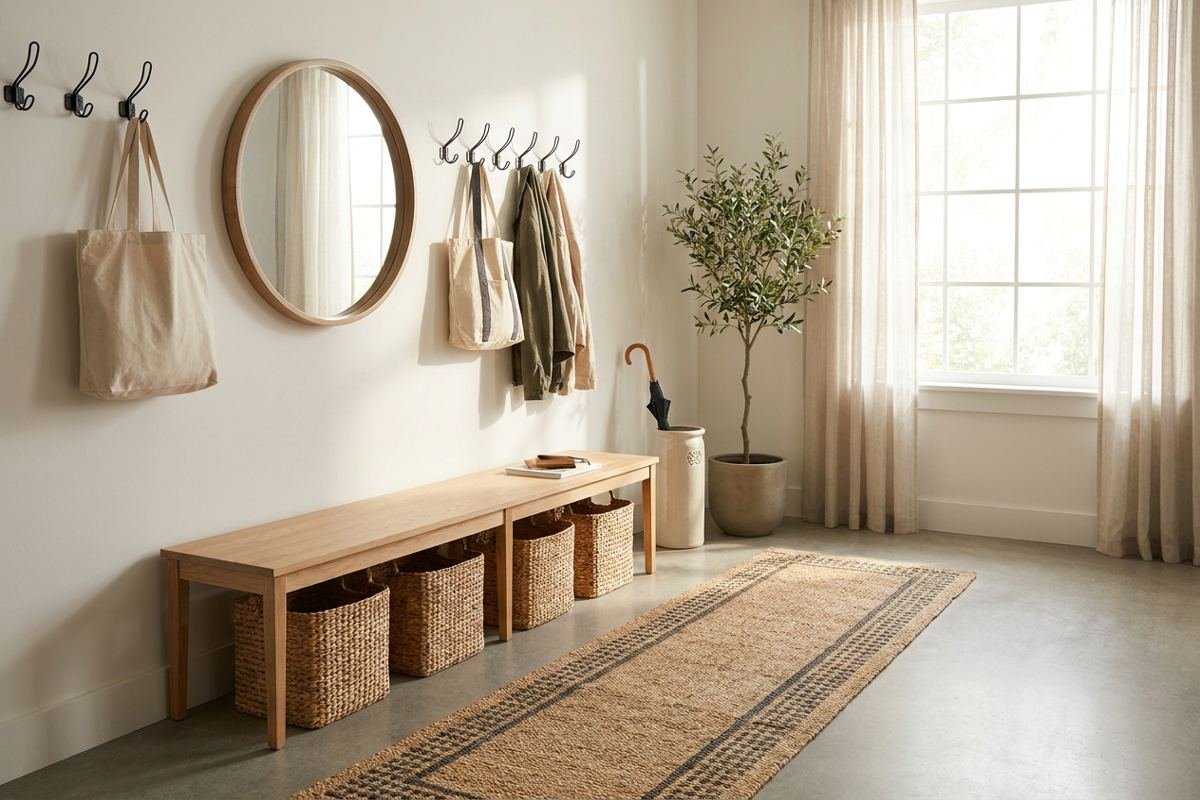
Hanging curtains close to the ceiling and letting them reach the floor adds height and softens a small window. Sheer fabrics let in light while still giving privacy.
- Hang near the ceiling. Mount the rod a few inches below the ceiling line to lift the eye.
- Extend past the frame. Let the rod stretch 8 to 12 inches beyond each side so windows look larger.
- Choose light fabric. Linen or cotton sheers in white or cream keep light flowing.
- Skim the floor. Let panels just touch or hover above the floor for a clean line.
- Look at the ceiling. Light paint overhead, or a plain fixture, keeps the upper edge of the room from pressing down.
Budget options: Simple curtain rods and ready-made panels can be hemmed with iron-on tape.
Mistakes to avoid: Hanging curtains right at the window frame, which shrinks the view.
A Smart Entry Drop Zone
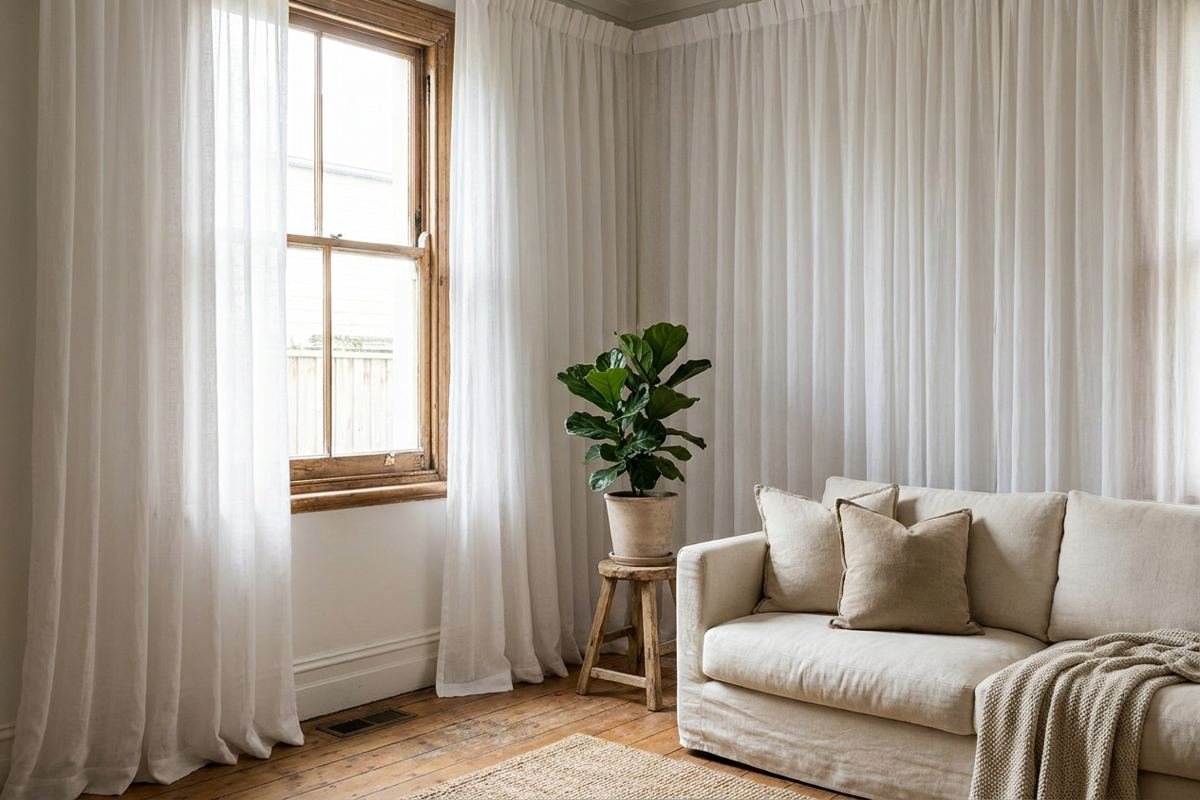
A tiny entry can still handle coats, keys, and shoes. A good drop zone keeps clutter off the sofa and counters and sets a calm tone from the moment you arrive.
- Add hooks. Wall hooks hold coats and bags without taking floor space.
- Use a slim bench. A narrow bench holds shoes underneath and gives you a seat.
- Hang a mirror. It brightens the entry and offers a last-minute check.
- Add a tray. A small tray collects keys and mail in one place.
- Hide the cords. Bundle cables with clips and run them along baseboards so lamps and electronics stay tidy.
Budget options: Adhesive hooks and a plain shoe rack create a drop zone for very little.
Mistakes to avoid: Leaving shoes and bags on the floor, which makes the whole room feel messy.
The Hidden Storage Habit
Closed storage keeps small spaces calm. Under-bed bins, ottomans, and lidded baskets hide daily items while keeping surfaces clear.
- Use under-bed space. Flat bins hold off-season clothing and linens neatly.
- Pick lidded baskets. They hide clutter while looking good on open shelves.
- Raise the bed. Bed risers add several inches of storage height below.
- Edit twice a year. Remove anything you do not use to keep storage from filling.
- Reset nightly. A five-minute evening tidy keeps a one-room home feeling like a home instead of a crowded storage space.
Budget options: Simple fabric bins and bed risers are inexpensive and quickly improve storage.
Mistakes to avoid: Buying more storage instead of owning less.
What Is Going Out in 2026
Fading -> Replacing it:
- Oversized sectional sofas -> Compact loveseats and sofa beds
- Bulky TV stands -> Wall-mounted screens or slim consoles
- Single overhead light -> Layered lamps at different heights
- Dark heavy curtains -> Light sheers hung high
- Tiny rugs under furniture -> Rugs sized to anchor a zone
- Cluttered open shelves -> Edited shelves with closed baskets
- Matching furniture sets -> Flexible, mixed pieces with a shared palette
- Gallery walls that fill every wall -> One or two statement pieces
How to Combine These Ideas Without Making a Mess
Small rooms have no room for mistakes, so these rules keep your decisions in balance.
Rule 1: Choose one piece to be the star in each zone, and let the others stay quiet.
Rule 2: Keep large furniture low and light on legs, so you can see the floor beneath.
Rule 3: Repeat two colors across all zones so the studio reads as one space.
Rule 4: Match every purchase to a purpose. If you cannot say what it does, leave it behind.
Rule 5: Leave at least one wall mostly bare to give the eye a place to rest.
Rule 6: Measure everything, including doorways, walkways, and elevators, before buying anything large.
Three Sample Combinations
The Work-and-Rest Studio. A wall-mounted desk, a sofa bed in soft gray, a flat-weave rug, and one floor lamp that serves both zones.
The Light-Filled One-Room. Sheer curtains hung high, a large leaning mirror, pale walls, and a slim storage bench near the entry.
The Divided Loft. An open bookshelf between the bed and sofa, two rugs marking each zone, and layered lamps for evenings.
Budget Guide
Smart buying tips:
- Measure first. Tape furniture outlines on the floor and walk around them before ordering.
- Buy fewer, better. One solid sofa bed beats three cheaper pieces that do less.
- Check return policies. Large items are hard to ship back, so confirm terms in advance.
Budget tiers:
- Under $300: Hooks, baskets, a large mirror, plug-in lamps, and sheer curtains
- $300 to $1,500: A compact sofa or sofa bed, a flat-weave rug, and an open bookcase
- $1,500 to $5,000: A quality sofa bed, a custom wall desk, and built-in style shelving
- $5,000+: Custom storage, a Murphy bed, or built-in furniture designed for the layout
Step-by-Step 2026 Small Space and Studio Apartment Refresh
- Declutter first. Remove everything you do not use before buying a single new item.
- Measure the room. Record wall lengths, window heights, and doorway widths.
- Map your zones. Decide where you will sleep, sit, eat, and work.
- Tape the floor. Outline furniture with painter’s tape to test layout and pathways.
- Choose multi-use furniture. Replace single-purpose pieces with ones that store or fold.
- Anchor zones with rugs. Place rugs so furniture sits partly on them.
- Add vertical storage. Install shelves, hooks, and tall bookcases.
- Layer your lighting. Add floor and table lamps with warm bulbs.
- Hang curtains high. Mount rods near the ceiling and use light fabric.
- Place a large mirror. Position it across from a window.
- Edit and style. Remove anything extra and leave breathing room.
Styling It by Room Size and Layout
Studios differ in shape, so adjust the plan to your floor plan.
Narrow Studios
- Run furniture along walls. Keep the center open to create a clear path.
- Use a long rug. A runner-style rug emphasizes the length elegantly.
- Place beds at the far end. The back of the room becomes a quiet retreat.
- Hang tall mirrors. They widen the feeling of the room.
Square Studios
- Divide into quadrants. Give each corner a purpose such as sleep, work, and lounge.
- Float one piece. A sofa with its back to the bed creates a gentle divider.
- Balance the corners. Place a plant or lamp in each to keep things even.
- Use round tables. Curves soften corners and make walking easier.
Open Lofts with High Ceilings
- Use tall pieces. Bookcases and art can fill the extra height.
- Hang statement lighting. A pendant fixture fills vertical space nicely.
- Add a mezzanine nook. A reading chair on a raised platform makes extra space.
- Layer large rugs. They help ground the room.
Rentals
- Choose plug-in lighting. Lamps and sconces need no wiring.
- Use removable adhesive. Hooks and shelves rated for the weight protect walls.
- Add peel-and-stick wallpaper. Test it in an inconspicuous spot first.
- Pick portable furniture. Choose items that break down easily for moving.
FAQ
How do I make a studio feel bigger? Keep floors visible, use light colors, hang a large mirror opposite a window, and choose furniture on legs so you can see underneath.
How do I separate sleeping from living space? Use an open bookcase, a curtain on a ceiling track, or a rug and lamp arrangement to define each zone without blocking light.
What size rug works in a small living area? A 5 by 8 or 6 by 9 foot rug usually works, with at least the front legs of the sofa resting on it.
Should I paint a small room dark? You can. Dark colors can feel cozy if lighting is good, but light tones are safer if natural light is limited.
How much furniture is too much? If you cannot walk comfortably with about 30 inches of clearance between pieces, remove something until movement feels easy.
What are good storage ideas for tiny apartments? Use under-bed bins, tall bookcases, wall hooks, and storage ottomans, and keep surfaces mostly clear.
How can renters decorate without damaging walls? Use leaning mirrors, plug-in lighting, freestanding shelves, adhesive hooks, and removable wallpaper, and follow your lease terms.
How many colors should I use? Two or three. A calm base color and one or two accents keep a small space from feeling busy.
Final Thoughts
A small home rewards clarity. Decide what each zone is for, choose pieces that earn their place, and let light and open floor do the rest. The result is a studio that feels calm, flexible, and truly yours, whatever its size. Start with one zone this weekend, notice how the change feels, and let each small improvement guide the next purchase or the next piece you decide to let go of.