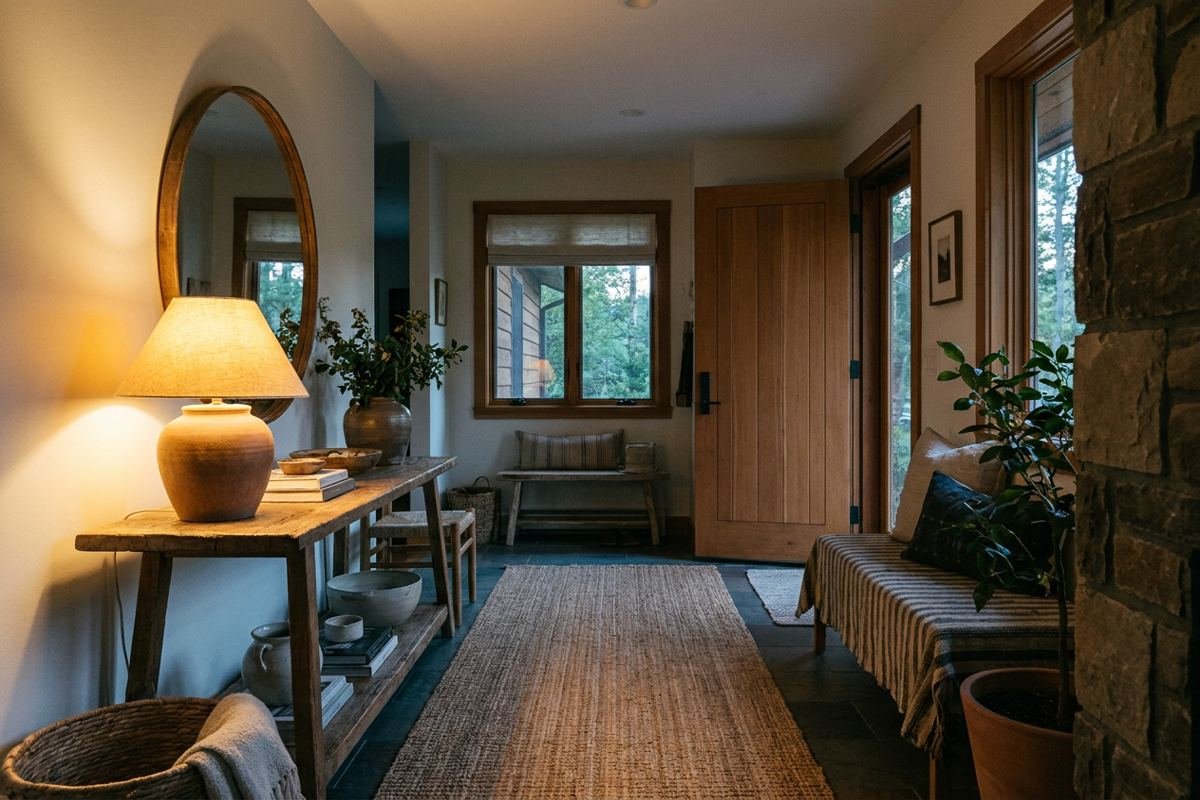
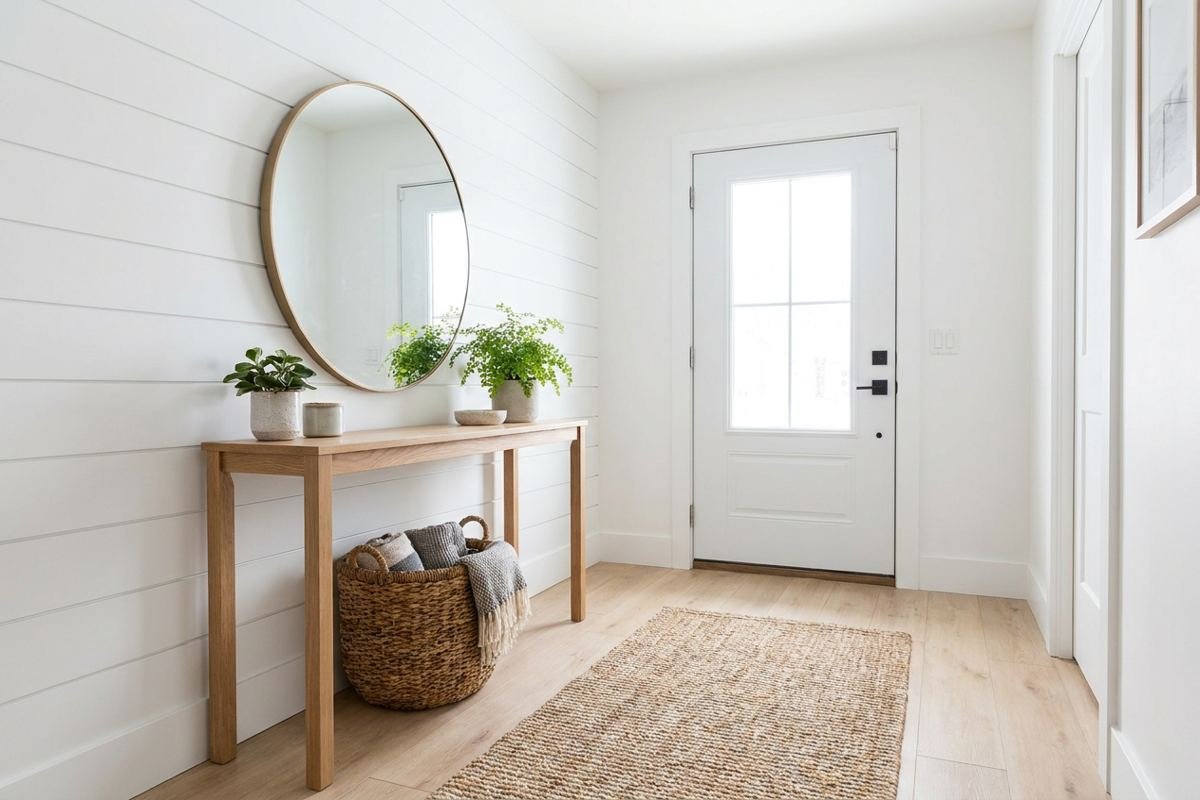
The best entryway decor in 2026 does three jobs at once: it welcomes you, hides the clutter of daily life, and sets the tone for the rest of the house. Think a good mirror, soft layered light, a durable rug, and smart closed storage, all in a small footprint.
Most entryways are the smallest and hardest-working spaces in a home. Shoes, bags, mail, keys, umbrellas and dog leashes all land there within seconds of walking in. Yet it is also the first thing every guest sees, so it deserves more thought than a lone hook and a doormat.
This guide walks through nine entryway looks, from slim consoles to full mudroom setups, with budget options and common mistakes for each. You will also find a fading-versus-rising table, combination rules, a budget guide, a ten-step refresh plan, layouts by space size, and answers to common questions.
The Big Picture: Why Entryway Decor Is Changing in 2026
Three forces explain almost every idea below.
- Hidden storage over open clutter. People want the entry to look calm even when five pairs of shoes live there, so closed cabinets, lidded baskets and benches with drawers are replacing open racks and overloaded hook rows.
- Warmth instead of showroom polish. Soft lamps, natural wood, wool runners and plaster-look walls make a doorway feel like a pause rather than a corridor. Cold, glossy, all-white entries feel less appealing than they used to.
- Small spaces getting real design attention. More people live in apartments and narrow townhouses, so wall-mounted pieces, slim consoles and multi-purpose furniture now drive the look, not oversized foyer tables.
The result is an entry that is practical first and pretty second, but never one at the expense of the other. Each idea below can be done in a corner, a hallway or a full foyer.
The Slim Console and Mirror
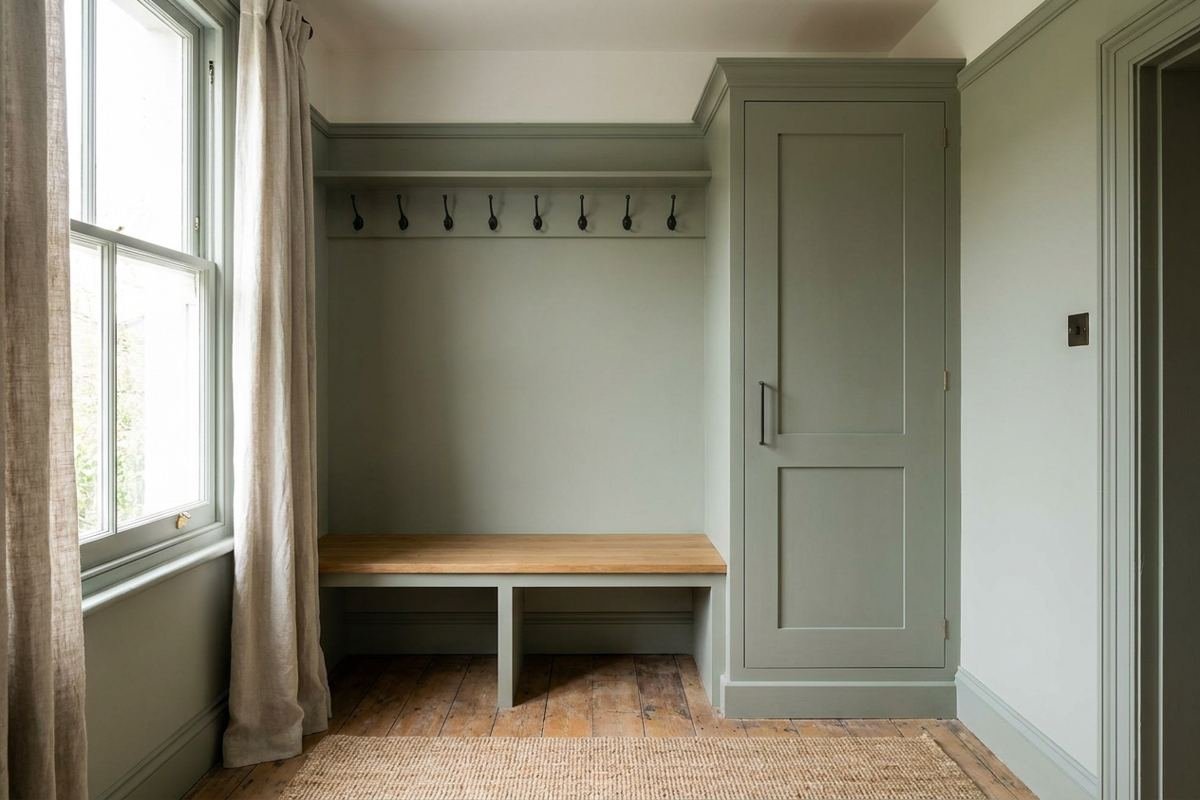
A narrow console under a large mirror remains the most reliable entry formula. A console only 10 to 14 inches deep leaves walking room, while the mirror bounces light and gives everyone a last check before leaving.
Why it works: the mirror doubles the sense of depth and the console gives a landing spot for keys, mail and a lamp.
- Console depth. Choose 10 to 14 inches deep in tight halls, and up to 18 inches only where there is clear space.
- Mirror size. Make it roughly two-thirds the width of the console, hung with its center near 57 to 60 inches.
- Shape choice. Arched and round mirrors soften hard door and wall angles and feel more current than plain rectangles.
- Lower shelf. Slide two baskets or a pair of stools underneath for hidden storage and a finished look.
Budget options: Look for secondhand narrow consoles, sand them, and refinish. A frameless round mirror from a home store is inexpensive and looks clean.
Mistakes to avoid: Buying a console too deep for the hall, or hanging the mirror so high only tall people can use it.
Built-In Bench and Hooks
A bench with hooks above it is the classic family solution, and in 2026 the look is cleaner: simple painted wood, concealed drawers and a few well-spaced hooks rather than a crowded rack.
Why it works: sitting to put on shoes is easier, and every item gets a defined spot.
- Bench height. Aim for about 17 to 18 inches high, comfortable for sitting and pulling on boots.
- Hook spacing. Leave 8 to 10 inches between hooks so coats do not pile onto each other.
- Paint the whole unit. A single muted color such as sage, clay or warm gray on bench and backboard looks custom.
- Cushion fabric. Pick performance fabric or a removable cover that survives wet weather and muddy paws.
Budget options: Assemble a storage bench from stock cabinets or a ready-made shoe bench, then add a painted backboard and hardware.
Mistakes to avoid: Mounting hooks too high for kids, or too few hooks for the number of people in the home.
Closed Shoe and Cubby Storage
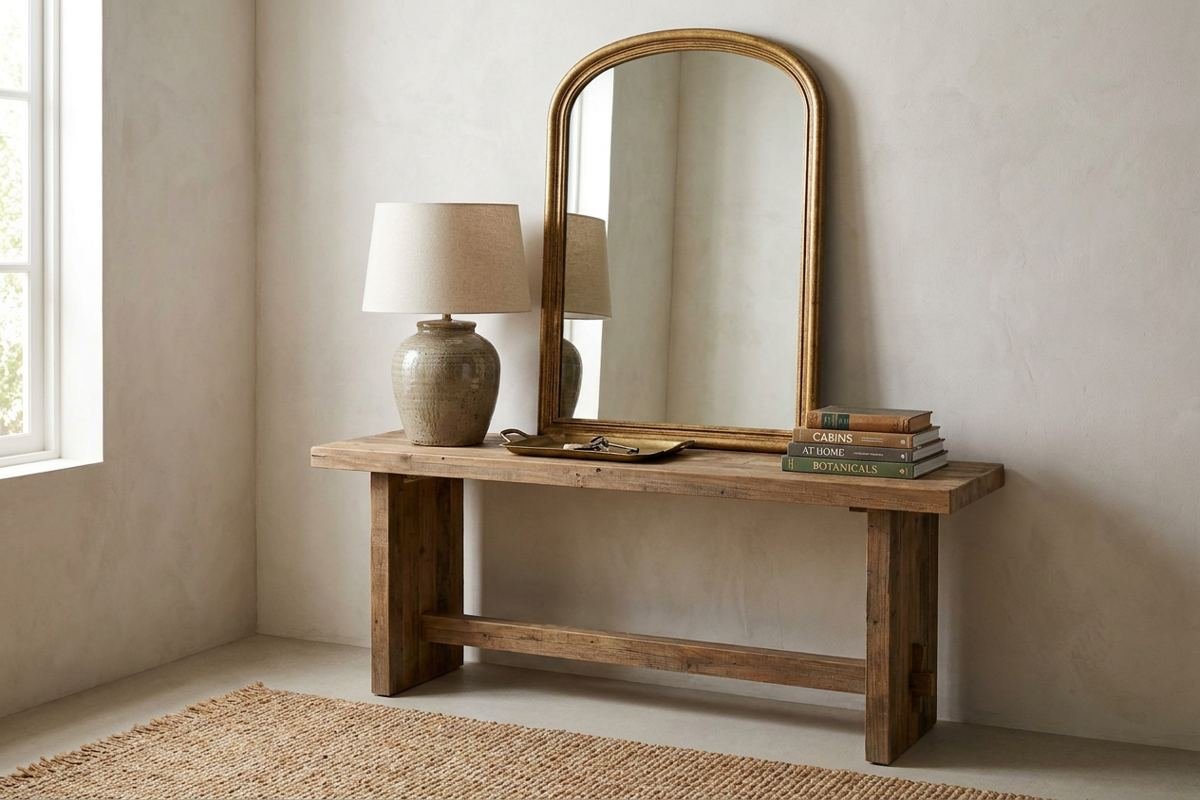
Shoes are the biggest visual problem in most entryways. Closed cabinets with tilt-out fronts, slatted doors or cubbies with baskets keep the pile out of sight while still letting boots dry and breathe.
- Tilt-out cabinets. These hold several pairs in a depth of only 8 to 12 inches, ideal for narrow halls.
- Slatted or caned doors. Airflow reduces smell while hiding the mess, and the texture looks warm and deliberate.
- Labeled baskets. One basket per person for gloves, hats and leashes stops items drifting through the house.
- Top surface. Use the cabinet top as a landing zone with a tray and a small lamp.
Budget options: Stock cabinets with swapped hardware, or a cube shelf with fabric bins, work well for a fraction of custom cost.
Mistakes to avoid: Choosing deep cabinets that block a door swing, or open shelving that displays every pair of shoes.
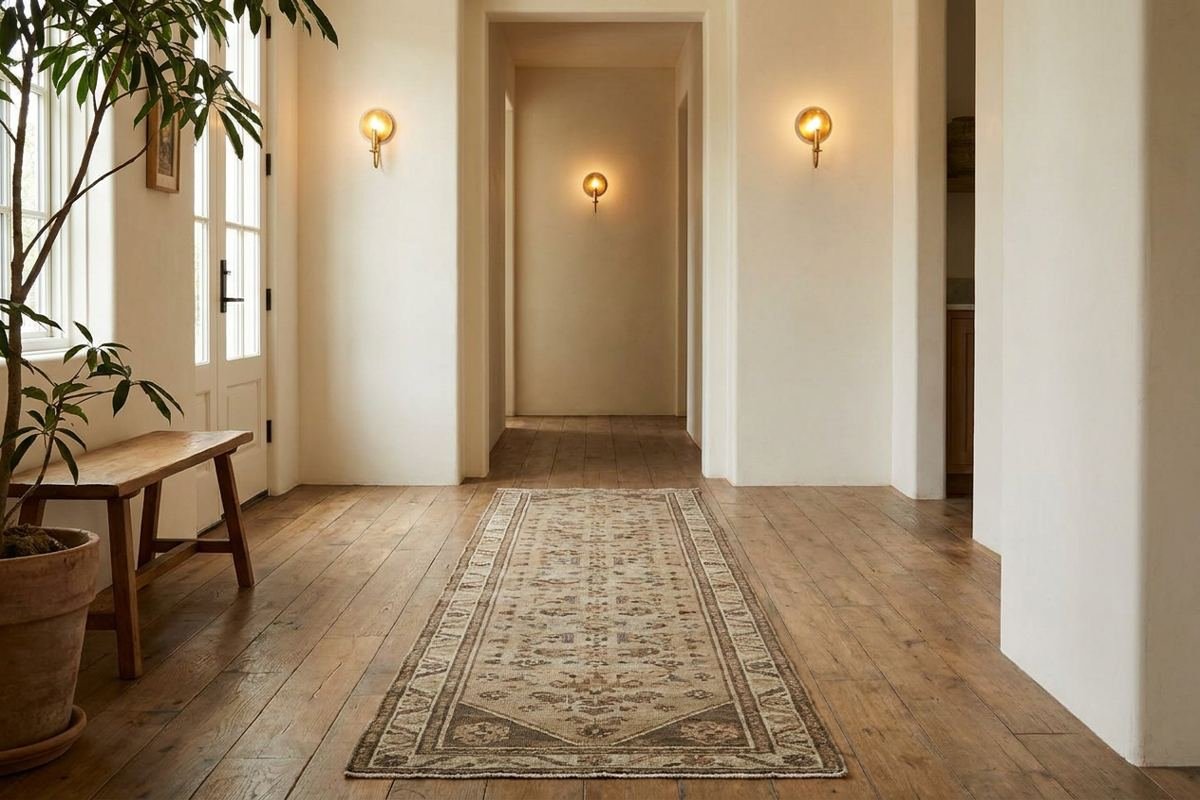
The Runner Rug Welcome
A rug is the quickest way to give an entry a sense of arrival. In 2026, flat-weave wool, washable polyester blends and low-pile natural fibers lead because they survive grit and are easy to clean.
Why it works: a rug marks the zone, protects floors and adds pattern and warmth underfoot.
- Size it right. Leave 4 to 6 inches of floor visible on each side of a runner in a hall.
- Go low pile. Doors need to swing freely, so choose a rug under half an inch thick.
- Add a pad. A thin non-slip pad prevents slipping on hard floors and extends rug life.
- Washable choices. Machine-washable rugs suit homes with pets, kids and wet weather.
Budget options: Outdoor-rated polypropylene rugs handle mud and cost less than wool, and many look surprisingly refined.
Mistakes to avoid: Choosing a rug too small, or a thick shag that catches the door and traps dirt.
Small Apartment Entry Tricks
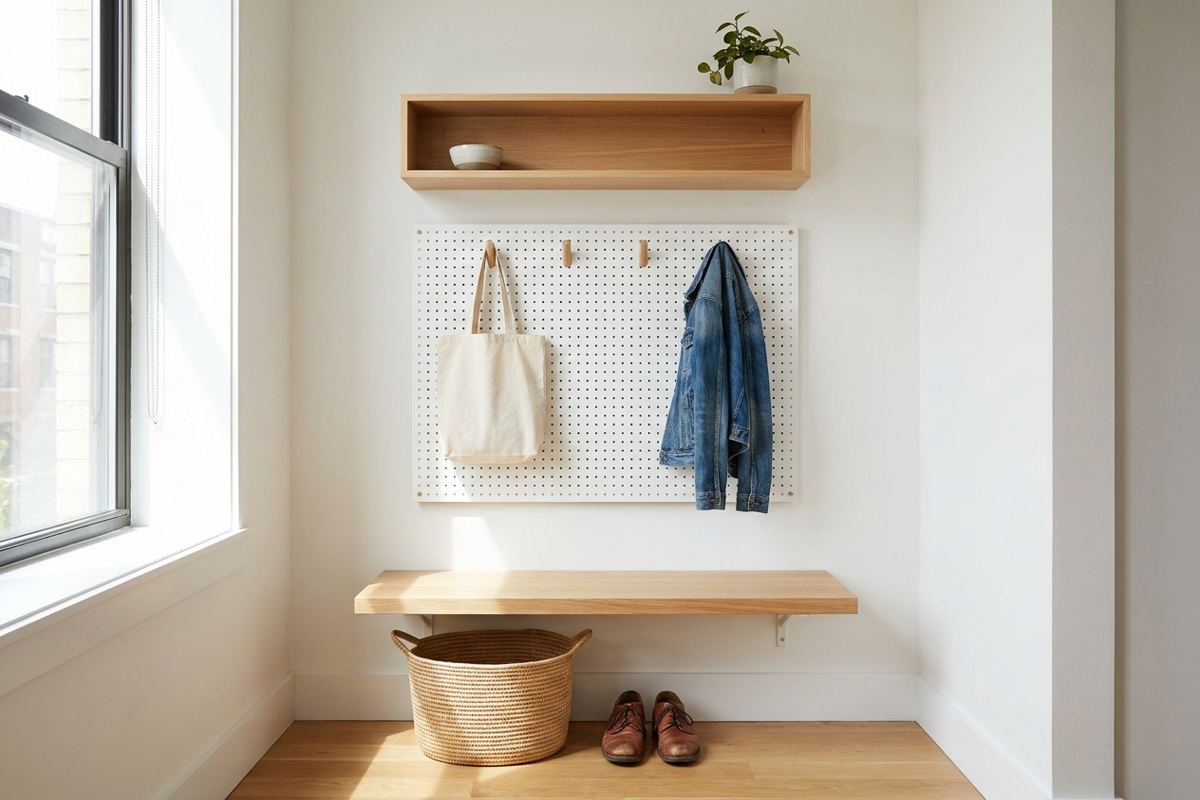
When there is no foyer at all, wall space does the work. A floating shelf, a narrow bench and a row of hooks can turn a few feet of wall beside the door into a complete entry.
- Floating shelf. Mount one at about 48 inches with hooks beneath for bags and keys.
- Slim bench. A seat only 10 to 12 inches deep still gives a place for shoes.
- Over-door hooks. Renters can add storage without drilling into trim or walls.
- Rug as boundary. A small mat or rug visually separates the entry from the living area.
Budget options: Adhesive hooks, a tension shelf and a thrifted stool create a complete entry for very little.
Mistakes to avoid: Filling every inch of the wall, which makes the entry feel cramped and busy.
Warm Layered Lighting
Harsh ceiling lights make a doorway feel cold. Layering a soft pendant or flush mount with a table lamp or wall sconce creates a gentler, more flattering arrival, especially in evenings.
Why it works: soft light at multiple heights hides imperfections and makes a small entry feel intentional.
- Bulb color. Pick 2700K warm white bulbs for a cozy, welcoming glow.
- Plug-in sconces. Renters can add wall light without hardwiring, with cords hidden in a cord cover.
- Table lamp. A small lamp on a console works well when ceiling fixtures are limited.
- Dimmers or smart bulbs. Lower the light at night for a calmer feel.
Budget options: A rattan or paper pendant shade over an existing fixture and a simple lamp change the mood immediately.
Mistakes to avoid: Relying on a single bright overhead bulb with nothing at eye level.
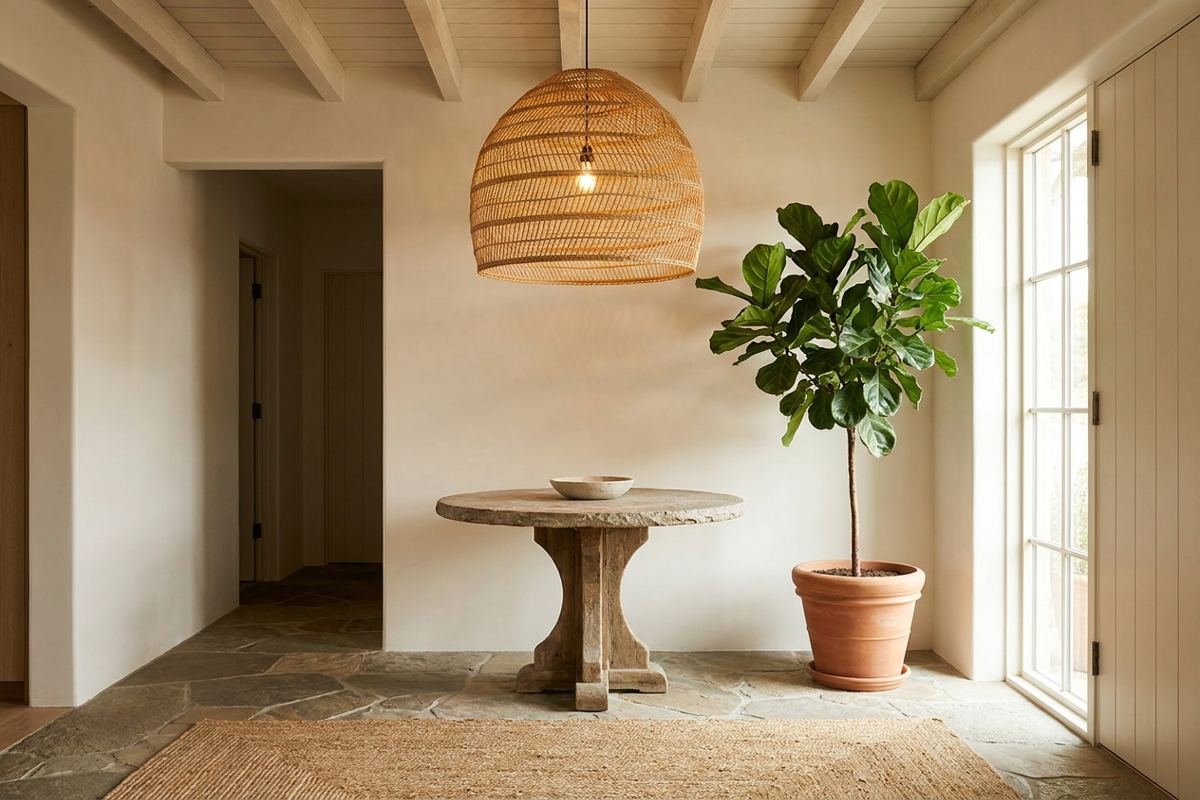
Natural Texture and Greenery
Woven baskets, stone trays, wooden stools and a leafy plant add the human touch that keeps an entry from feeling like a utility corridor. Keep the palette quiet and let materials do the talking.
- Woven baskets. Use lidded ones for scarves, gloves and pet gear so the look stays neat.
- Stone or ceramic tray. Corral keys and sunglasses in a single heavy dish.
- Low-light plants. Pothos, snake plants and ZZ plants cope with limited light near doors.
- Wood tones. Repeat one wood tone across stool, frame and shelf for cohesion.
Budget options: Thrift baskets and ceramics, and propagate a pothos cutting in a glass jar for a green touch.
Mistakes to avoid: Choosing delicate plants that cannot cope with cold drafts when the door opens.
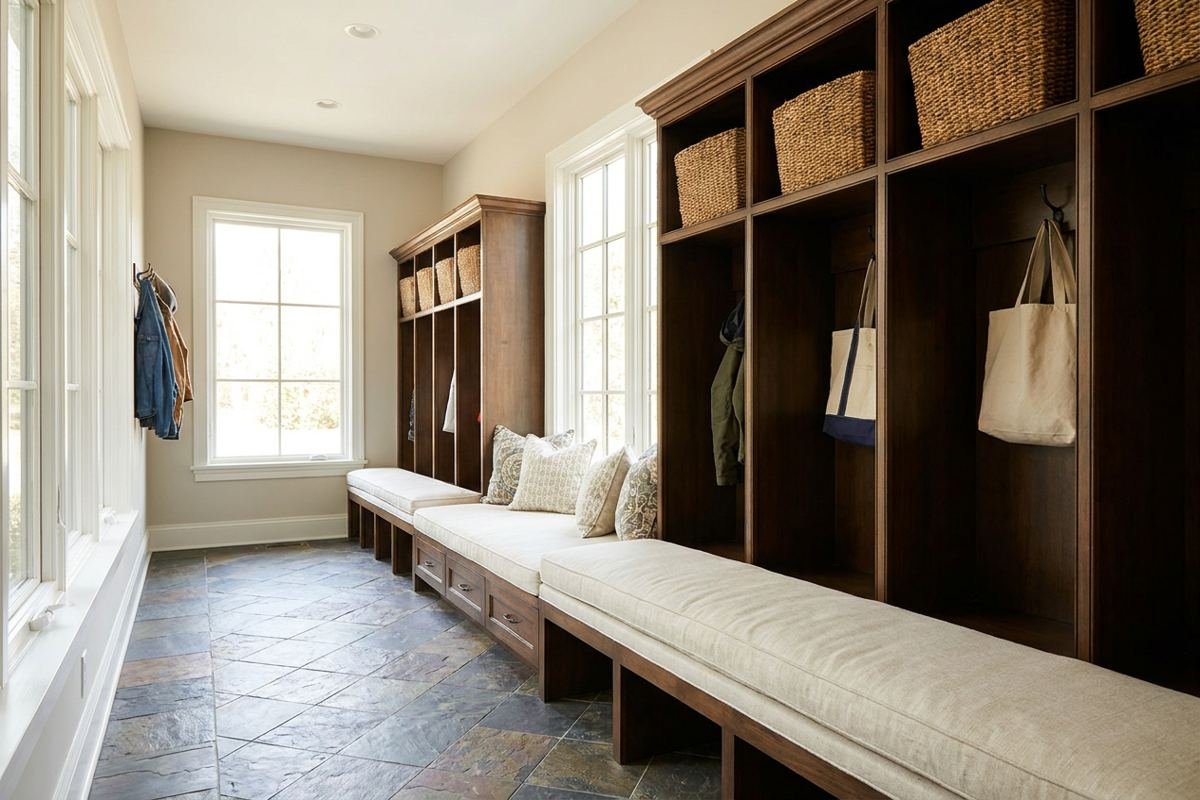
The Mudroom-Style Drop Zone
Where space allows, a full drop zone with tall lockers, a bench and tile or stone flooring handles wet coats, sports gear and bags. It protects the rest of the house from the daily mess.
Why it works: every item has a home within arm’s reach of the door.
- Individual cubbies. Give each family member a labeled space for bags and outerwear.
- Durable flooring. Choose porcelain tile or sealed stone that wipes clean after rain.
- Charging shelf. Add a power strip in a drawer to charge devices out of sight.
- Boot tray. Place a tray with a pebble layer for wet boots.
Budget options: Modular storage systems can be installed in a weekend and painted to match the walls.
Mistakes to avoid: Skipping a wet-boot tray, which damages floors, or forgetting to size cubbies for bulky winter coats.
Statement Door and Wall Color
A bold front door color or a deep wall paint makes a small entry memorable. Because you spend so little time there, entryways are a perfect place to try a richer shade than you would use in a bedroom.
- Deep wall color. Forest green, ink blue or terracotta make a compact entry feel cozy rather than small.
- Painted ceiling. Matching the ceiling to the walls creates a wrapped, intentional effect.
- Door interior. Paint the inside of the front door a contrasting color for a surprise.
- Semi-gloss trim. Wipeable finishes resist scuffs from shoes and bags.
Budget options: A single can of paint and a weekend refreshes the whole space.
Mistakes to avoid: Choosing a flat finish on lower walls, which scuffs quickly in a high-traffic spot.
Art and Personal Touches
A small gallery of framed pieces, a favorite print or a set of family photos tells visitors who lives here. Keep it modest so it does not compete with practical storage.
- Single large piece. One oversized frame reads cleaner than many small ones in a narrow hall.
- Consistent frames. Matching frames in one finish unify mixed art.
- Eye-level hang. Center artwork around 57 inches from the floor.
- Scent touch. A diffuser or candle on the console adds a welcoming smell.
Budget options: Print your own photographs in black and white and use affordable frames with wide mats.
Mistakes to avoid: Hanging art too high or leaving it too small for the wall.
What Is Going Out in 2026
Fading -> Replacing it:
- Open shoe racks -> Closed cabinets and benches
- Crowded hook rows -> Few well-spaced hooks
- Cold overhead glare -> Layered warm light
- Tiny doormats -> Properly sized runners
- Glossy all-white foyers -> Warm earthy colors
- Oversized foyer tables -> Slim consoles
- Plastic bins -> Woven and fabric baskets
- Fake plants in corners -> Real low-light greenery
How to Combine These Ideas Without Making a Mess
An entry is small, so every added item competes for attention. These rules keep the look edited.
Rule 1: Start with storage. Decide where shoes, bags and coats go before choosing anything decorative.
Rule 2: Pick one hero. Let either the mirror, the lamp or the wall color lead, and keep the rest quiet.
Rule 3: Limit the palette. Use three colors at most, including wood tones and metals.
Rule 4: Layer light at three heights. Combine ceiling, table and wall light for balance.
Rule 5: Keep the floor clear. Leave at least 36 inches of walking space where you can.
Rule 6: Edit weekly. Clear the console surface and empty bags so it stays as styled.
Three Sample Combinations
The Calm Apartment Entry. A floating shelf, three hooks, a slim bench, a round mirror and a small flat-weave rug in warm neutrals.
The Family Landing Zone. A painted bench with cubbies, closed shoe cabinet, durable runner, wipeable semi-gloss walls and a table lamp on top.
The Elegant Foyer. A stone-topped console, arched mirror, woven pendant, deep green walls, a framed print and a large plant.
Budget Guide
Smart buying tips:
- Spend on storage and flooring. These take the most wear and deliver the biggest daily benefit.
- Save on accessories. Trays, baskets and frames are easy to find secondhand.
- Measure twice. Check door swing and hallway width before buying any furniture.
Budget tiers:
- Under $300: Hooks, a mirror, a rug, a plug-in lamp, baskets and a can of paint
- $300 to $1,500: Slim console or bench, runner rug, sconces, closed shoe cabinet and framed art
- $1,500 to $5,000: Custom or semi-custom bench and cubbies, statement pendant, tile or stone flooring, designer mirror
- $5,000+: Full built-in mudroom, custom millwork, new front door, hardwired lighting and premium flooring
Step-by-Step 2026 Entryway Decor Refresh
- Empty the space. Remove everything and clean the walls, floor and baseboards.
- List what lives here. Count shoes, coats and bags so storage matches real use.
- Measure the footprint. Note width, depth and door swing for furniture choices.
- Choose your storage. Pick a bench, cabinet or cubbies that fit the measurements.
- Pick a color plan. Select a wall color and two supporting tones.
- Paint the walls. Use a scrubbable finish on lower walls and trim.
- Lay the rug. Place it with a non-slip pad, checking the door clears.
- Hang the mirror. Center it near 57 to 60 inches from the floor.
- Add light. Install a lamp or sconce with warm 2700K bulbs.
- Style the surface. Add a tray, one plant and one object you love.
- Set a weekly reset. Spend five minutes each week clearing the entry.
Styling It by Room Size and Layout
The right entry depends on how much space you have. Here is how to adapt the ideas.
Small Apartment Entries
- Go vertical. Use hooks and a floating shelf to keep the floor clear.
- Choose one mirror. It makes the space feel larger.
- Use a slim bench. Under 12 inches deep keeps the path open.
- Keep color light. Pale walls help the area feel open.
Open-Plan Entries
- Define the zone. A rug and console mark the entry without walls.
- Use a screen. A slatted divider hides shoes from the living area.
- Match finishes. Repeat wood tones from the living space.
- Add a pendant. Light hung above the entry marks the arrival.
Large Foyers
- Add a round table. A center table with flowers makes a strong focal point.
- Use big art. Scale up mirrors and frames to suit tall walls.
- Add a bench seat. A second seat gives guests a place to pause.
- Layer rugs. A large rug anchors the whole space.
Rentals
- Choose adhesive hooks. They hold coats without damaging paint.
- Use plug-in lights. Skip hardwiring and take lamps with you.
- Add removable wallpaper. A peel-and-stick panel adds color safely.
- Pick freestanding storage. Furniture moves with you.
FAQ
How do I decorate a very small entryway? Use wall-mounted hooks, a floating shelf, one mirror and a small rug. Keep surfaces clear so the space feels open.
What size mirror should I hang in an entry? Choose a mirror about two-thirds the width of the console below it, hung with its center near 57 to 60 inches.
How can I hide shoes in an entryway? Use closed cabinets, tilt-out shoe storage or benches with lids. Baskets in cubbies also work and look neat.
What rug is best for an entryway? A low-pile, flat-weave or washable rug handles dirt and door swings best. Add a non-slip pad underneath for safety.
What lighting suits an entry? Combine a soft ceiling fixture with a lamp or sconce, using warm 2700K bulbs to create a gentle, welcoming glow.
What color should I paint an entryway? Warm neutrals suit small spaces, while deep greens and blues add drama. Use a washable finish because scuffs are common.
How do I decorate an entry without a console? Use a wall shelf with hooks below, a slim bench or a tall plant stand to hold essentials and decor.
Can renters improve an entry? Yes. Adhesive hooks, plug-in sconces, freestanding furniture, removable wallpaper and a good rug transform the space without permanent changes.
Final Thoughts
A great entry is built on habits as much as furniture. Give every item a place, add warm light, and finish with one or two things you truly love. Start with storage, add a mirror and rug, and the rest follows naturally. Small effort here improves every single day you come home.