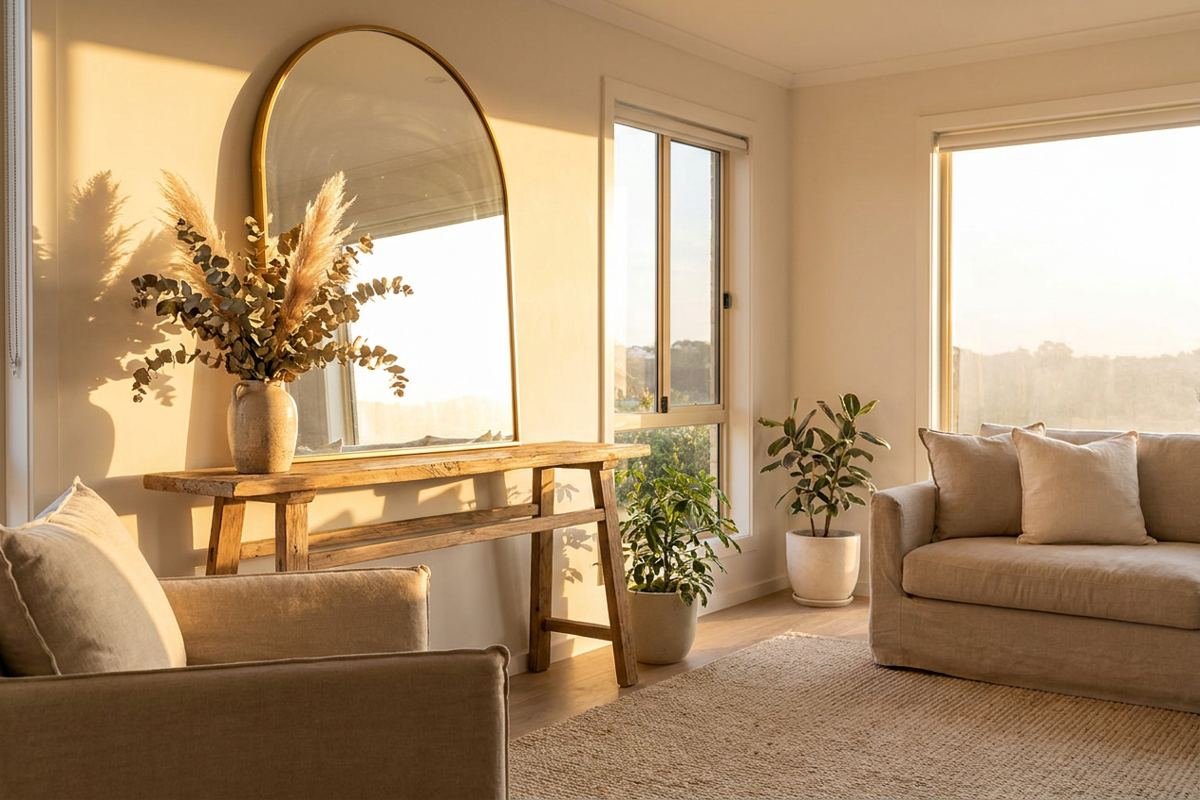
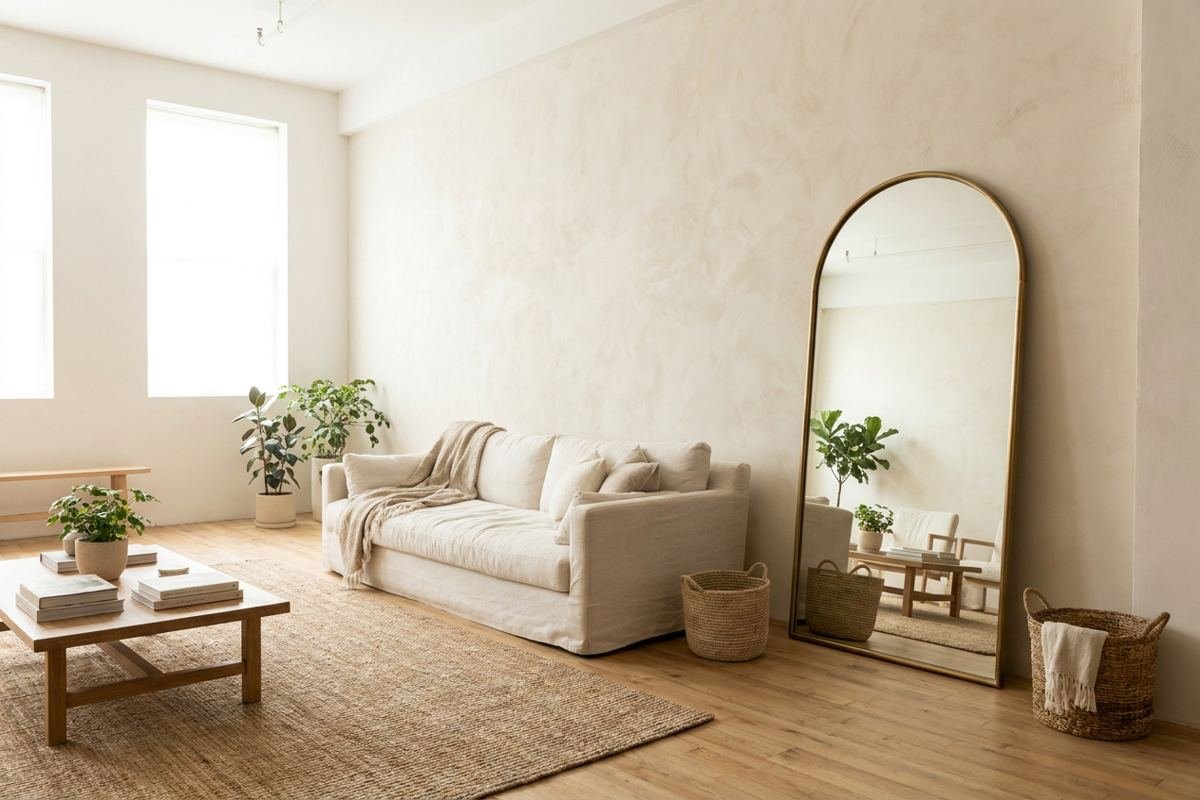
Arched and statement mirrors work in 2026 because they act as both light source and sculpture. Choose a shape with a soft curve, a frame with real material presence, and a size that covers roughly two-thirds of the furniture below it. Hang it where it reflects a window or a handsome view.
A mirror is the only decor item that changes what the rest of the room looks like. It doubles daylight, stretches a narrow wall, and frames whatever sits across from it. That is why one good piece often does more than a dozen small accessories.
This guide covers ten mirror ideas, from tall arches to cluster walls, plus what is going out, how to combine shapes, budgets, a ten-step refresh, and styling advice for different room sizes.
The Big Picture: Why Arched and Statement Mirrors Are Changing in 2026
Three forces explain almost every idea below.
- Softer geometry. After years of sharp rectangles and hard grids, people want curves that relax a room. Arches, ovals, and rounded corners echo the shapes of doorways, vases, and sofas without feeling fussy or themed.
- Light as a design material. Homeowners now think about where daylight lands before picking furniture. A mirror placed opposite a window is the cheapest way to move that light deeper into a dim room.
- Fewer, better objects. Instead of crowded gallery walls, people prefer one large piece with weight and character. A statement mirror fills that role and still serves a practical purpose every morning.
Put together, these shifts reward mirrors with generous scale, honest frame materials, and thoughtful placement rather than decorative flourish or novelty shapes.
The Tall Arched Floor Mirror
The leaning arched floor mirror is the signature piece of the moment. Typically 60 to 72 inches tall, it reads as an opening in the wall and gives a room instant height.
Why it works: the arch echoes doorways and windows, so it feels architectural rather than added on.
- Lean it safely. Set the base on a rug edge or felt pad and add a discreet wall anchor if children or pets are around.
- Pick a slim frame. Thin metal or narrow wood keeps the focus on reflection and suits small rooms best.
- Angle toward light. Place it so it catches a window at an angle, not head-on, to avoid glare.
- Anchor with a plant. A tall plant or basket beside the base makes the mirror feel intentional.
Budget options: Hardware-store arched panels with a simple wood or metal frame cost far less than boutique versions and look good when leaned.
Mistakes to avoid: Hanging it too high, or leaving it where it reflects a cluttered corner or the back of a door.
The Entryway Arch
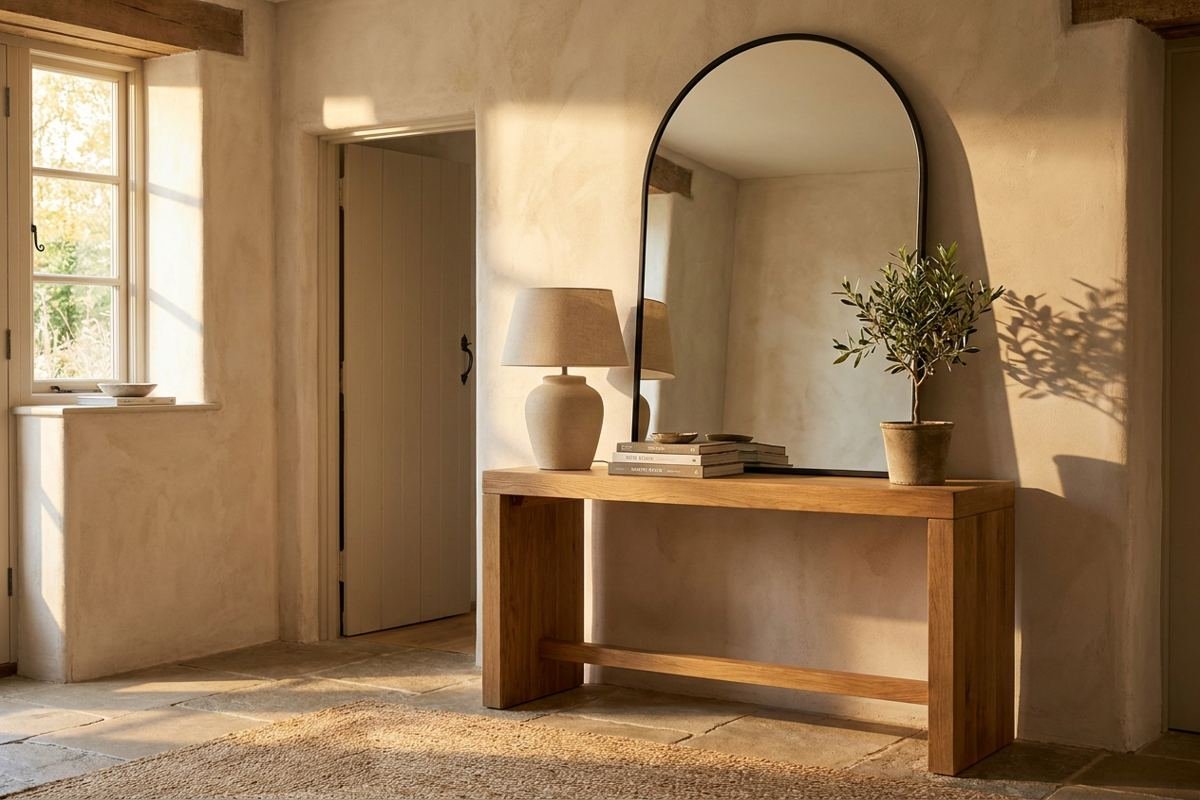
Entry mirrors earn their keep. They let you check your look before leaving and make a narrow hall feel wider. An arch over a console adds a welcoming curve at the first spot guests see.
Why it works: the mirror bounces light from the door back into the space.
- Size to the console. Aim for a mirror about two-thirds the width of the table beneath it.
- Hang at eye level. The center of the mirror should sit roughly 57 to 60 inches from the floor.
- Layer a tray. A small tray for keys and a lamp give the vignette a practical, finished feel.
- Mind the reflection. Check what the mirror shows from the doorway and adjust to catch a window or artwork.
Budget options: Use a vintage frame with a fresh mirror cut, or paint a thrifted frame in matte black.
Mistakes to avoid: Choosing a mirror narrower than the console, which looks like an afterthought.
The Bathroom Pair
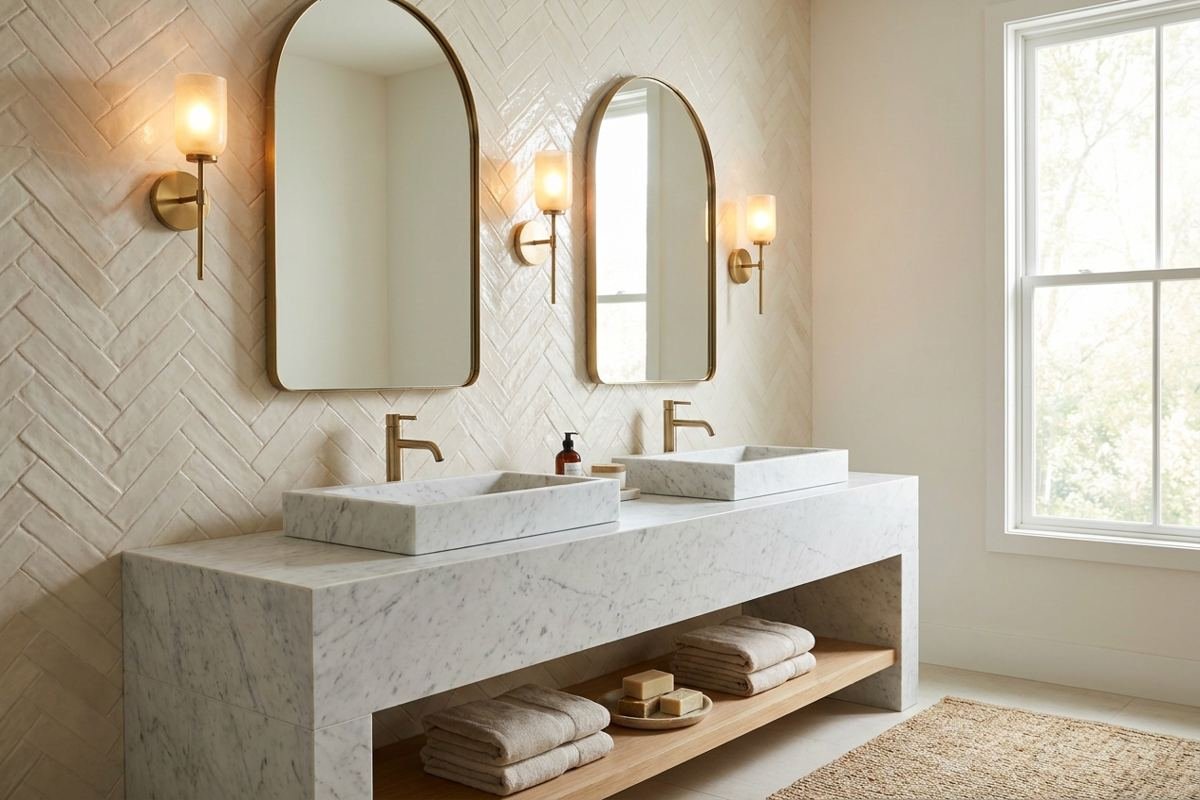
Two arched mirrors over a double vanity feel more custom than one wide rectangle. Each person gets a defined space, and the curves soften the hard surfaces of tile and stone.
Why it works: matching arches create rhythm and a symmetry that suits both modern and traditional baths.
- Center on each sink. Align every mirror with its faucet, leaving a few inches of wall between them.
- Choose moisture-rated frames. Metal, sealed wood, or painted finishes hold up better to steam.
- Pair with sconces. Mount sconces on the sides at face height to avoid shadows under the eyes.
- Keep tops level. Hang both at the same height even if your sinks differ slightly.
Budget options: Frameless arched mirrors with a polished edge are inexpensive and clean looking.
Mistakes to avoid: Raw wood frames in a bath with poor ventilation, which swell and stain.
The Oversized Round Mirror
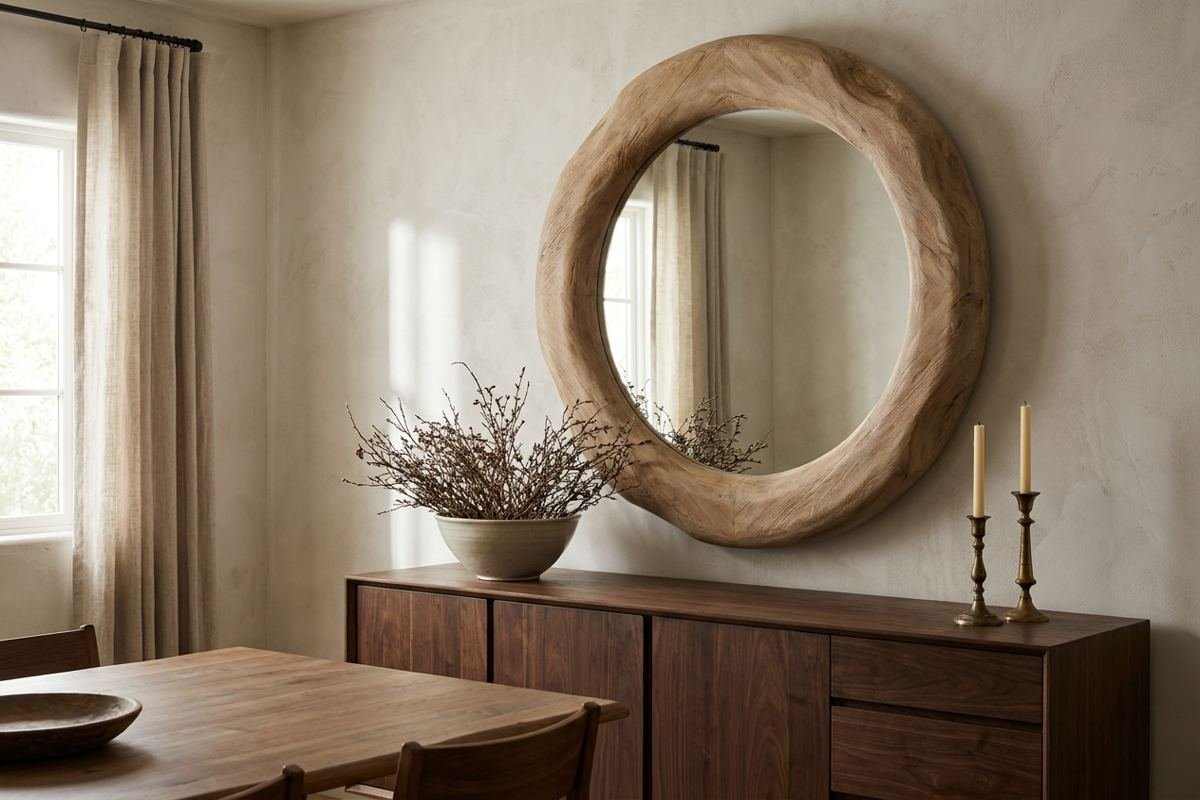
A large round mirror, 30 to 40 inches across, works as wall art above a sideboard, bed, or sofa. Its circle breaks up the square lines of furniture and windows.
Why it works: one big shape needs little else around it.
- Scale up. Go bigger than you think, ideally covering half to two-thirds of the furniture width below.
- Choose a bold frame. A thick carved wood or plaster frame gives the piece sculptural weight.
- Leave breathing room. Keep about 6 to 10 inches between the furniture top and the bottom of the mirror.
- Keep the styling light. A bowl and one candlestick below are plenty.
Budget options: Wrap a plain round mirror with rope or paint a thick frame yourself.
Mistakes to avoid: Hanging a small circle high on a large wall where it floats unconnected.
The Full-Length Bedroom Mirror
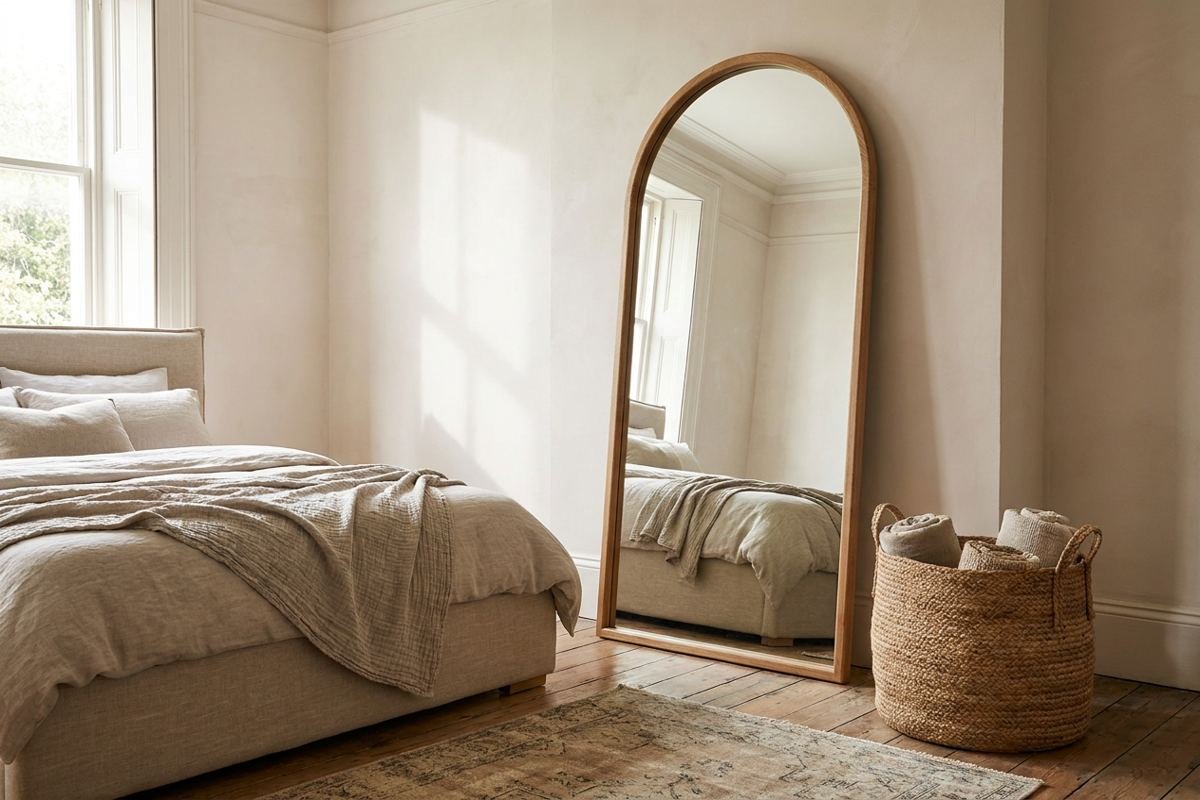
A full-length arched mirror in a corner of the bedroom is practical and calming. It adds depth and doubles bedside lamp glow in the evening.
- Pick a corner. Position it near the closet or beside a window, not directly facing the bed.
- Add a soft base. A rug, basket, or folded throw at the foot warms the reflection.
- Check proportions. Choose a mirror at least 20 inches wide so it shows a full outfit.
- Frame choice. Wood tones suit warm schemes, thin black metal suits crisp ones.
Budget options: Door-mounted full-length mirrors can be freestanding by building a simple wooden support.
Mistakes to avoid: Placing it opposite the bed, which many people find unsettling at night.
The Mixed Mirror Cluster
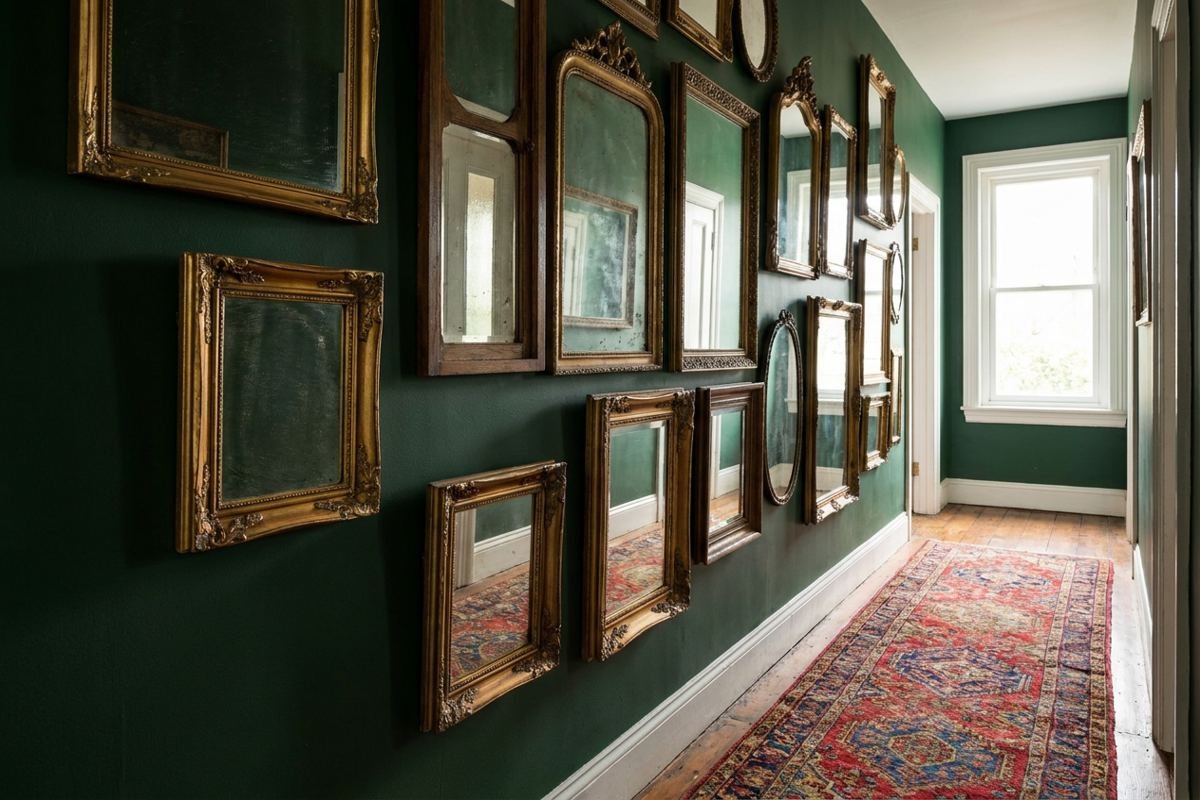
A cluster of mirrors in different shapes and vintage frames feels collected and personal. It works well in hallways, stair walls, and above a console where one large piece would feel too heavy.
Why it works: variety in shape and finish reads as curated, not matched.
- Lay it out first. Arrange the pieces on the floor and photograph the layout before nailing anything.
- Limit the palette. Choose frames in two or three finishes, such as aged brass, black, and wood.
- Keep gaps even. Two to three inches between frames keeps a cluster cohesive.
- Mix sizes. Include one large anchor with three or four smaller pieces.
Budget options: Thrift stores and flea markets are the best source of small framed mirrors.
Mistakes to avoid: Using too many shapes, which looks chaotic rather than collected.
The Window-Opposite Mirror
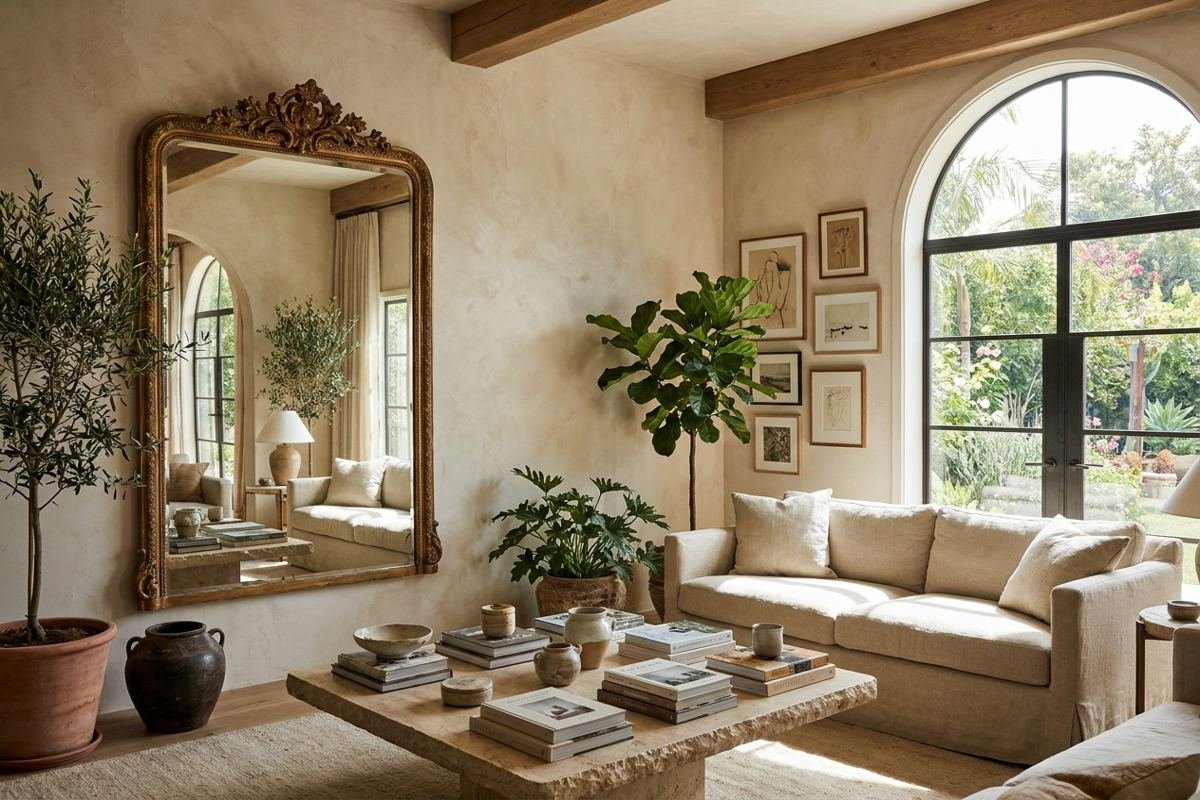
Where you hang a mirror matters more than the mirror itself. Place one across from a window and it brings the garden or sky into the room.
Why it works: it bounces daylight onto the dark side of the room, making it feel brighter.
- Find the dim wall. Stand in the room at noon and notice which wall gets the least light.
- Reflect something lovely. Make sure the view includes greenery, sky, or art rather than a neighbor’s roof.
- Offset slightly. Hanging at a slight angle to the window avoids a harsh, blinding reflection.
- Add a lamp. At night, a lamp near the mirror doubles its glow.
Budget options: Any large mirror works here; location does the heavy lifting.
Mistakes to avoid: Reflecting a messy desk or a television screen.
The Sculptural Frame
Frames with real material presence, such as carved wood, plaster, travertine, or hammered metal, turn a mirror into art. These suit living rooms and dining rooms where the mirror is a focal point.
- Choose texture. Rough plaster or grained oak adds depth next to smooth walls.
- Match one material. Echo the frame in a lamp base, vase, or side table nearby.
- Mind the weight. Heavy frames need proper wall anchors and studs, not just picture hooks.
- Keep walls calm. A plain painted wall lets the frame stand out.
Budget options: Plaster-effect frames in lightweight resin deliver the look at a lower cost and weight.
Mistakes to avoid: Underestimating weight and skipping heavy-duty anchors.
The Leaning Console Mirror
Instead of hanging, lean a mirror on a mantel, a sideboard, or a console. It feels relaxed, lets you move things around, and works in rentals where drilling is limited.
- Choose a stable ledge. A deep mantel or wide console holds the weight securely.
- Add a layer. Place small art or a candle in front to soften the edge.
- Secure it. Use museum putty or a small bracket behind to prevent slipping.
- Mix heights. Let the mirror rise above lower objects for a layered effect.
Budget options: Use a large mirror from a discount store and lean it on a mantel for a designer look.
Mistakes to avoid: Leaning heavy glass on a narrow shelf where it can slide.
The Arched Mirror in a Dining Room
A mirror on the wall behind a dining table reflects candlelight and multiplies the glow of a chandelier. An arch above a sideboard adds elegance without extra clutter.
- Hang above the sideboard. Keep the bottom 6 to 8 inches above the surface.
- Reflect the chandelier. Position to catch light fixtures for evening sparkle.
- Choose antiqued glass. Foxed or slightly aged glass adds warmth in candlelit spaces.
- Keep it simple. A pair of candlesticks and a bowl suit the setting.
Budget options: Antiqued glass finishes are available on affordable mirrors, or use a vintage find.
Mistakes to avoid: Picking a mirror so large it overwhelms a modest dining room.
What Is Going Out in 2026
Fading -> Replacing it:
- Thin rectangular builder mirrors -> Arched or oval mirrors with a real frame
- Tiny decorative mirrors scattered about -> One oversized statement piece
- Matching sets of identical mirrors -> Mixed clusters in related finishes
- Shiny gold plastic frames -> Aged brass, wood, or plaster frames
- Mirrors hung too high -> Eye-level placement
- Mirror walls covering entire rooms -> One large mirror with calm walls around it
- Starburst sunburst mirrors everywhere -> Quiet round or arched shapes
- Mirrors that reflect clutter -> Mirrors that reflect windows and views
How to Combine These Ideas Without Making a Mess
Mirrors are powerful, so a few rules keep a room feeling calm rather than crowded with reflections.
Rule 1: Use one hero mirror per room, and let the others be supporting players that stay smaller in scale.
Rule 2: Repeat a shape only twice. Two arches in a room feel intentional, while five start to look like a theme.
Rule 3: Match one frame finish to something nearby, such as a lamp, hardware, or picture frame.
Rule 4: Avoid mirrors facing each other directly, which creates tunnel reflections that feel dizzying.
Rule 5: Always check the reflection from where you actually sit, not only from the doorway.
Rule 6: Leave blank wall around a statement piece. Space is part of its impact.
Three Sample Combinations
The Light Catcher. A tall arched floor mirror opposite the window in the living room, a plain linen sofa, and a single tall plant beside the base.
The Gracious Entry. An arched mirror over an oak console, a small lamp, a tray, and a bowl, with a vintage cluster in the hallway beyond.
The Spa Bath. Two arched mirrors above a double vanity, soft sconces on each side, and warm white towels folded below.
Budget Guide
Smart buying tips:
- Check glass quality. Look at the reflection for waves or distortion in person or through returns policies.
- Measure the wall. Cut paper to the mirror’s size and tape it up before buying.
- Ask about hanging. Confirm weight and included hardware, then plan for studs or heavy-duty anchors.
Budget tiers: Under $300: One large frameless or simple-framed arch, plus thrifted frames for a small cluster. $300 to $1,500: A quality arched floor mirror or an oversized round with a solid wood or metal frame. $1,500 to $5,000: A sculptural plaster or carved frame, or a matched pair for a vanity. $5,000+: Custom-cut antiqued glass, bespoke arched frames, or a statement piece in rare stone or metal.
Step-by-Step 2026 Arched and Statement Mirror Refresh
- Study the light. Note where daylight enters and which walls stay dim at midday.
- Pick a hero wall. Choose the wall that faces a window or the main seating area.
- Tape out sizes. Mark mirror dimensions on the wall with painter’s tape and live with it for a day.
- Choose the shape. Arches for tall rooms, rounds for horizontal furniture, clusters for hallways.
- Select the frame. Match the material to a lamp, rug, or wood tone in the room.
- Order or find it. Compare a few options and check return policies on large glass.
- Locate the studs. Use a stud finder and mark anchors for heavy frames.
- Hang at the right height. Center near eye level or keep the bottom a few inches above furniture.
- Style the base. Add a console, plant, or tray beneath to ground the mirror.
- Check the reflection. Sit in each seat and adjust until the view is pleasing.
- Clean the glass. Use a lint-free cloth and a streak-free cleaner to finish.
Styling It by Room Size and Layout
The right mirror depends on the space, so here is how to adjust the ideas above.
Small Rooms
- Go tall. A narrow arched floor mirror adds height without taking floor space.
- Reflect the window. Place it across from the light source for maximum brightening.
- Use thin frames. Slim metal keeps the piece from feeling heavy.
- Skip clusters. One clean shape reads calmer in tight quarters.
Open Plan Spaces
- Define zones. Use a mirror to mark an entry or dining area without a wall.
- Watch sightlines. Check what the mirror shows from the sofa and the kitchen.
- Pick one hero. Avoid competing mirrors across a large shared room.
- Anchor with furniture. Place a console or sideboard beneath to ground it.
Large Rooms
- Scale up. Go oversized, such as 40 inches or more, so the piece does not get lost.
- Try pairs. Two large arches side by side balance a long wall.
- Choose heavy frames. Substantial frames hold their own in big spaces.
- Mix finishes. Wood, plaster, and metal add depth in a roomy setting.
Rentals
- Lean, do not hang. A floor mirror needs no holes and moves with you.
- Use removable strips. Light mirrors can hang with strong adhesive hooks rated for the weight.
- Anchor safely. Ask your landlord about a single anti-tip bracket.
- Choose lightweight frames. Resin or thin metal is easier to hang and transport.
FAQ
What size mirror should I hang above a console? Choose one about two-thirds the width of the console, with the bottom 6 to 8 inches above the surface.
How high should a statement mirror hang? Center it around 57 to 60 inches from the floor, or lower if you are placing it above furniture.
Are arched mirrors still in style? Yes. Arches are now a classic shape, and they stay fresh when paired with solid frames and simple styling.
Where should a mirror not go? Avoid hanging one opposite the bed, facing another mirror, or across from clutter, since reflections multiply whatever they show.
Can I lean a heavy mirror safely? Yes, if you use an anti-tip strap or wall anchor, and place it on a stable surface away from foot traffic.
Do mirrors really make rooms look bigger? They add depth and bounce light, which makes a space feel larger, especially when facing a window.
How do I clean a large mirror without streaks? Use a microfiber cloth with a little glass cleaner, work from top to bottom, and buff dry with a second cloth.
Can I mix mirror frame finishes? Yes. Keep them to two or three related finishes, and repeat at least one in nearby decor.
Final Thoughts
The best mirror choices feel like part of the architecture, not an add-on. Choose a curve you love, a frame with real material, and a spot where the reflection is worth seeing. Do that, and one mirror can lift an entire room.