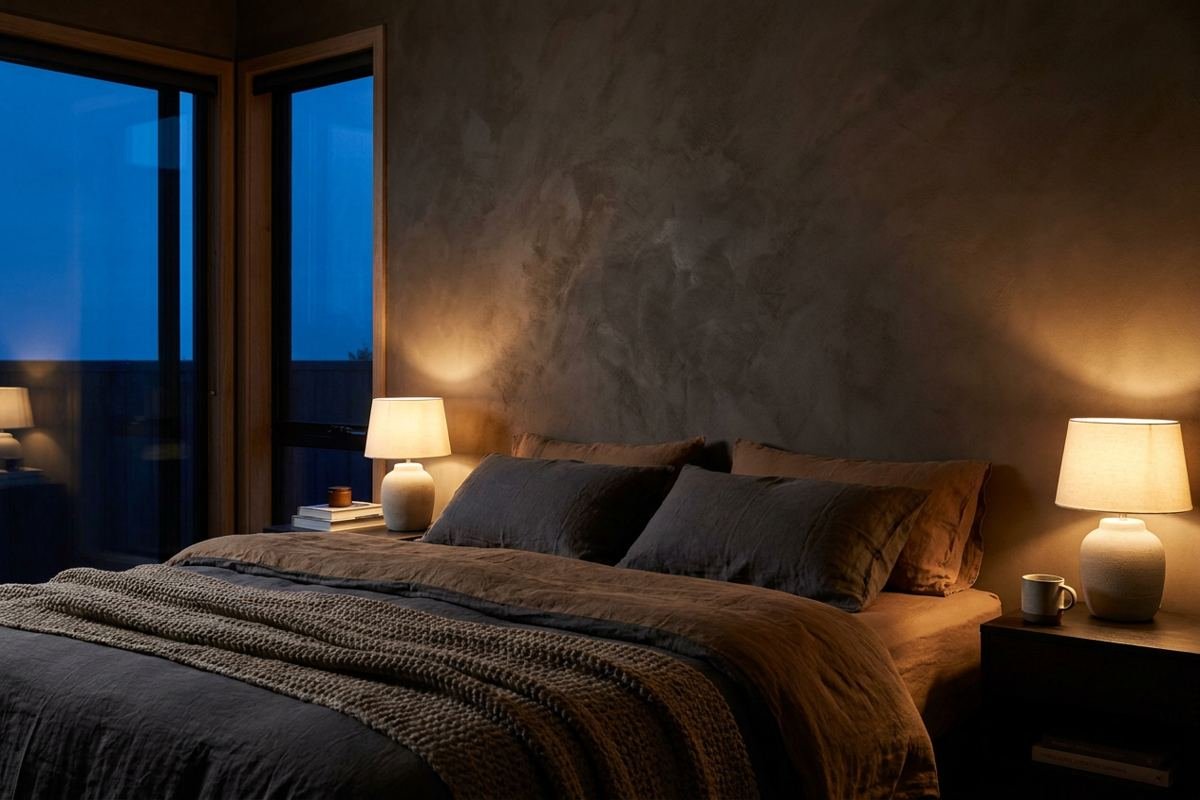
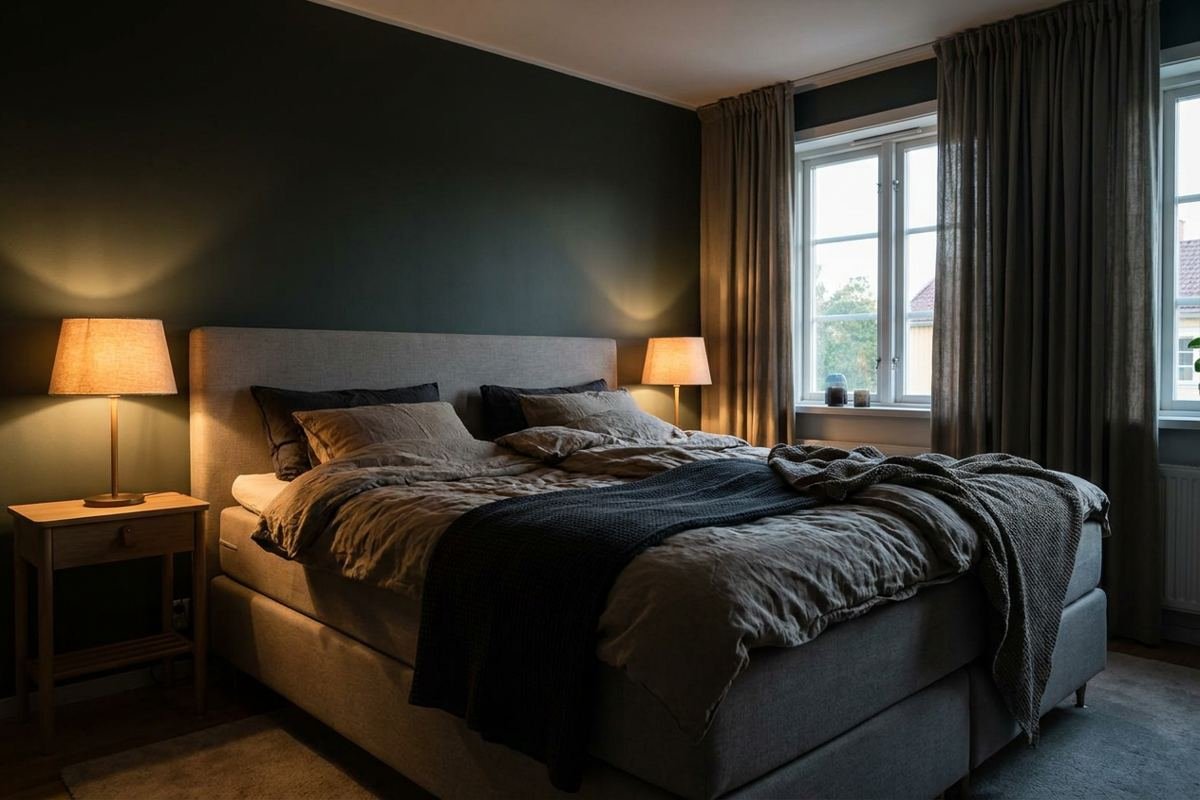
Moody dark bedroom ideas work in 2026 when deep color is balanced by warm light and rich texture. Choose a saturated shade such as charcoal green, navy, or aubergine, paint the walls and often the ceiling, then layer linen, wool, wood, and low lamps. Dark walls cocoon a bedroom instead of shrinking it.
A bedroom is the one room where you are not trying to feel energized. Deep color softens edges, hides clutter in shadow, and signals rest. Done carefully, a dark room feels like a hotel suite rather than a cave.
This guide shares ten moody bedroom ideas, from wall color and bedding to lighting and curtains, along with what is going out, budgets, a step-by-step paint and styling plan, and advice for small rooms, rentals, and rooms with little daylight.
The Big Picture: Why Moody Dark Bedroom Ideas Are Changing in 2026
Three forces explain almost every idea below.
- Bedrooms as retreats. People want one room that feels removed from screens and noise. Dark, enveloping color lowers visual stimulation and pairs naturally with quiet evening routines and low lamplight.
- Color confidence. After a decade of gray and white, homeowners are bolder. Inky greens, blue-blacks, and earthy browns feel sophisticated, and paint is the cheapest way to experiment with them.
- Texture as decoration. Dark rooms depend on touch and surface instead of pattern. Linen, boucle, wool, plaster, and wood give depth that bright rooms can get from sunlight alone.
Taken together, these shifts reward saturated color, soft low lighting, and natural materials over loud pattern or shiny finishes.
Deep Charcoal Green Walls
A dark green with gray or black undertones reads calm and natural. It flatters wood, brass, and cream linen and works in almost every bedroom, including north-facing ones.
Why it works: green is restful, and its depth makes a room feel enclosed in a comforting way.
- Test large swatches. Paint two-foot squares and watch them at morning, noon, and night before committing to a color.
- Pick a matte finish. Flat or matte paint hides wall flaws and gives color a velvety depth.
- Pair with warm whites. Cream or ivory bedding stands out sharply against dark walls without feeling stark.
- Add natural wood. Oak or walnut furniture warms the green and keeps the room grounded.
- Paint a test board. Move a painted board around the room so you see the color against bedding, wood, and lamplight rather than a bare wall.
Budget options: A gallon of quality matte paint is often all a bedroom needs, making this the cheapest big change.
Mistakes to avoid: Choosing a color from a tiny chip, and skipping primer when covering lighter walls.
Navy and Ink Blue Envelopment
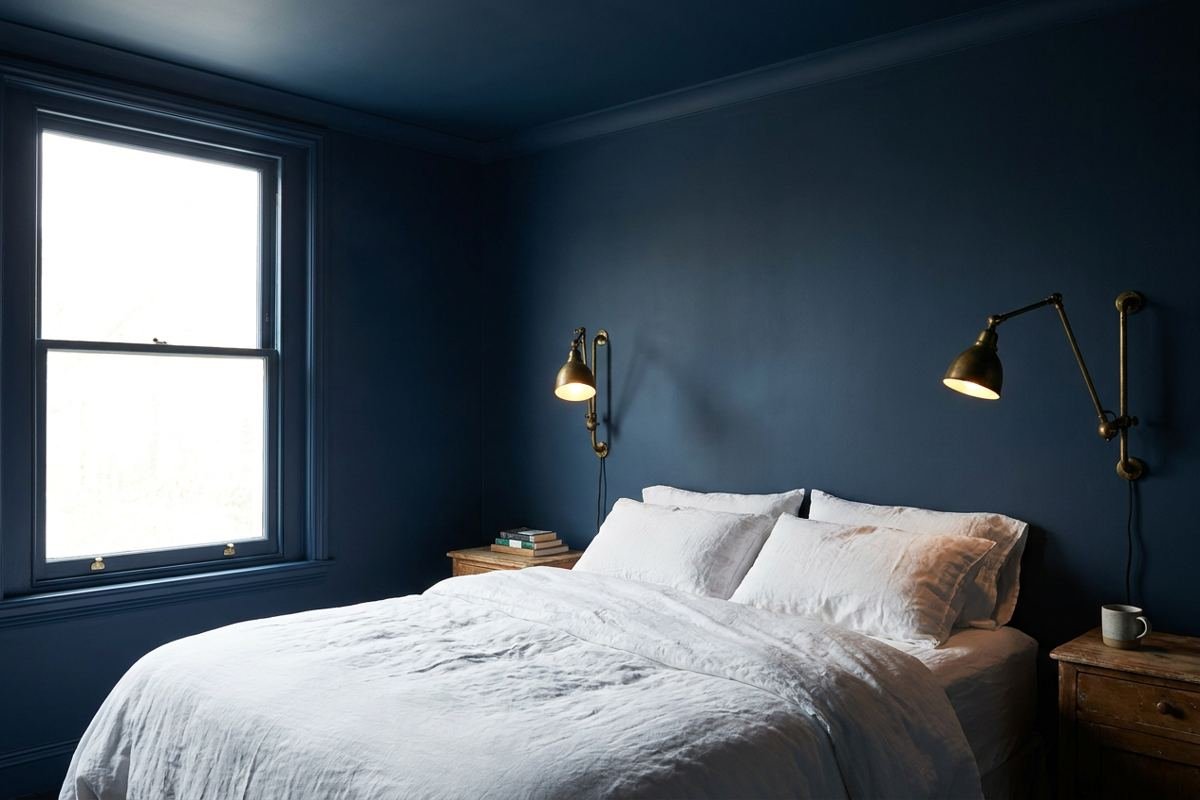
Painting walls, trim, and ceiling the same deep blue creates a seamless, enveloping box. Edges disappear, and the room feels tailored and quiet.
Why it works: one color across every surface removes visual breaks, which calms the eye.
- Match trim and walls. Use the same color in a slightly higher sheen on trim for subtle definition.
- Paint the ceiling too. A dark ceiling lowers the room’s sense of height in a cozy way.
- Choose warm metals. Brass and bronze glow against deep blue and prevent a cold feel.
- Use white bedding. Crisp white linen gives the strongest contrast and looks fresh.
- Edge carefully. Tape crisp lines where dark paint meets a white ceiling or trim so the contrast looks sharp rather than messy.
Budget options: Skip the ceiling at first and paint just the walls and trim, or one accent wall behind the bed.
Mistakes to avoid: Using cool, gray-blue tones that feel chilly instead of rich and warm.
Velvet and Plush Headboards
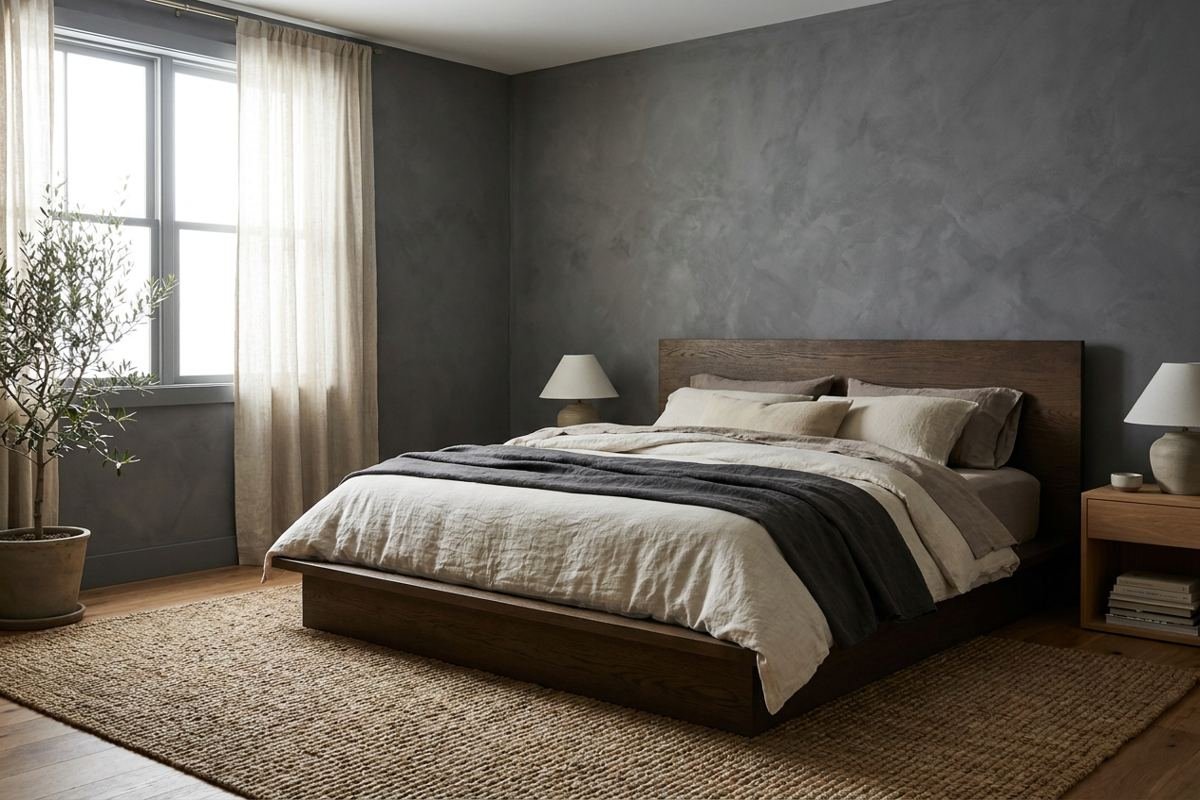
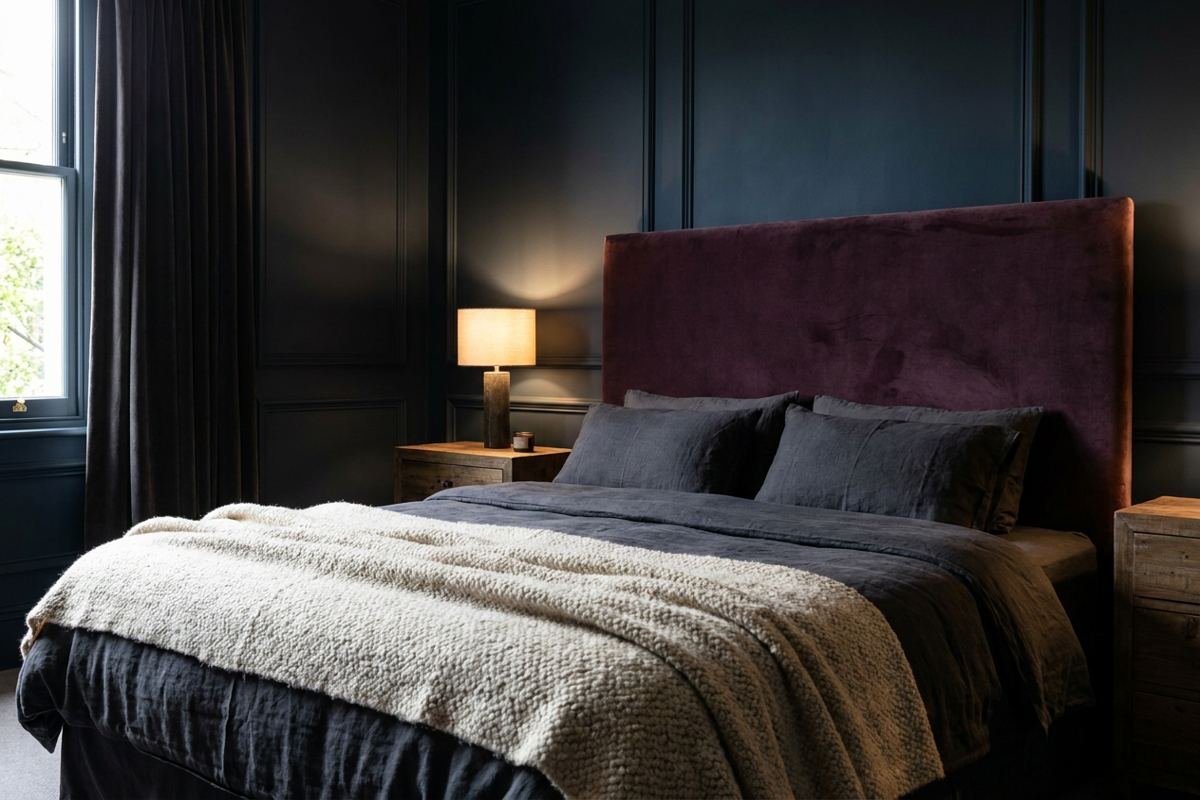
A deep velvet headboard in plum, forest, or mushroom brown brings softness to a dark room. It gives the bed visual weight and a place to rest your head comfortably.
- Go oversized. A headboard wider than the bed by several inches looks luxurious.
- Match to the wall. Choose a tone slightly lighter or darker than the walls for subtle contrast.
- Check fabric durability. Look for performance velvet that resists crushing and stains.
- Add piping or tufting. Simple details give a custom, tailored look.
- Mind the undertone. Compare the paint to your floors; a green with brown undertones suits warm wood, while blue-green suits cooler boards.
Budget options: Make a headboard by wrapping plywood in batting and fabric, or add a fabric cover to an existing frame.
Mistakes to avoid: Choosing a headboard that matches the wall exactly, which can disappear in dim light.
Limewash and Plaster Texture
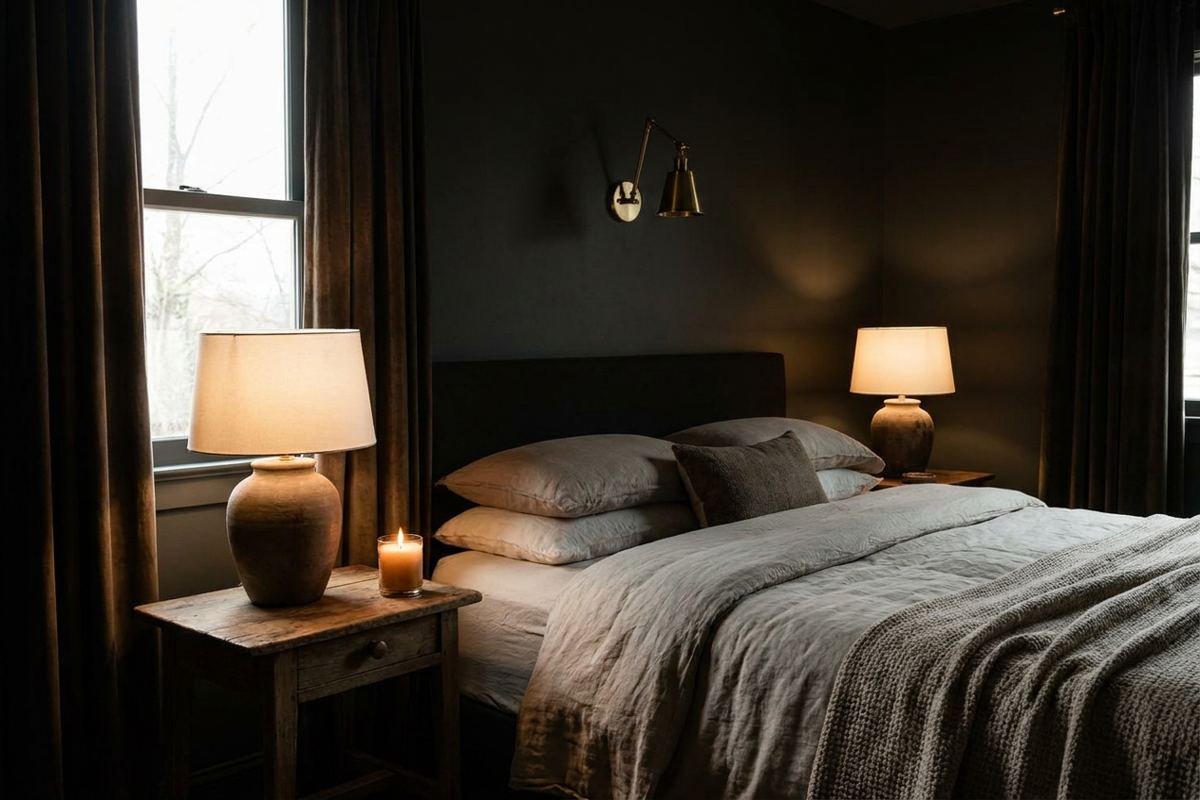
Limewash and textured plaster finishes give dark walls movement. Light shifts across the surface through the day and gives a depth no flat paint can match.
- Hire it out if unsure. Limewash is simple but technique matters for a soft, cloudy finish.
- Pick a muted tone. Charcoal, olive, and deep brown look natural in plaster.
- Keep furniture simple. Textured walls already add visual interest, so let furniture be plain.
- Add a matte rug. Natural fibers like jute or wool echo the earthy feel.
- Keep the bed lighter. Let the bedding be the lightest thing in the room so the eye lands there first at night.
Budget options: Use a limewash-style paint with a wide brush for a cloudy finish at lower cost.
Mistakes to avoid: Applying it on glossy walls without proper prep.
Layered Low Lighting
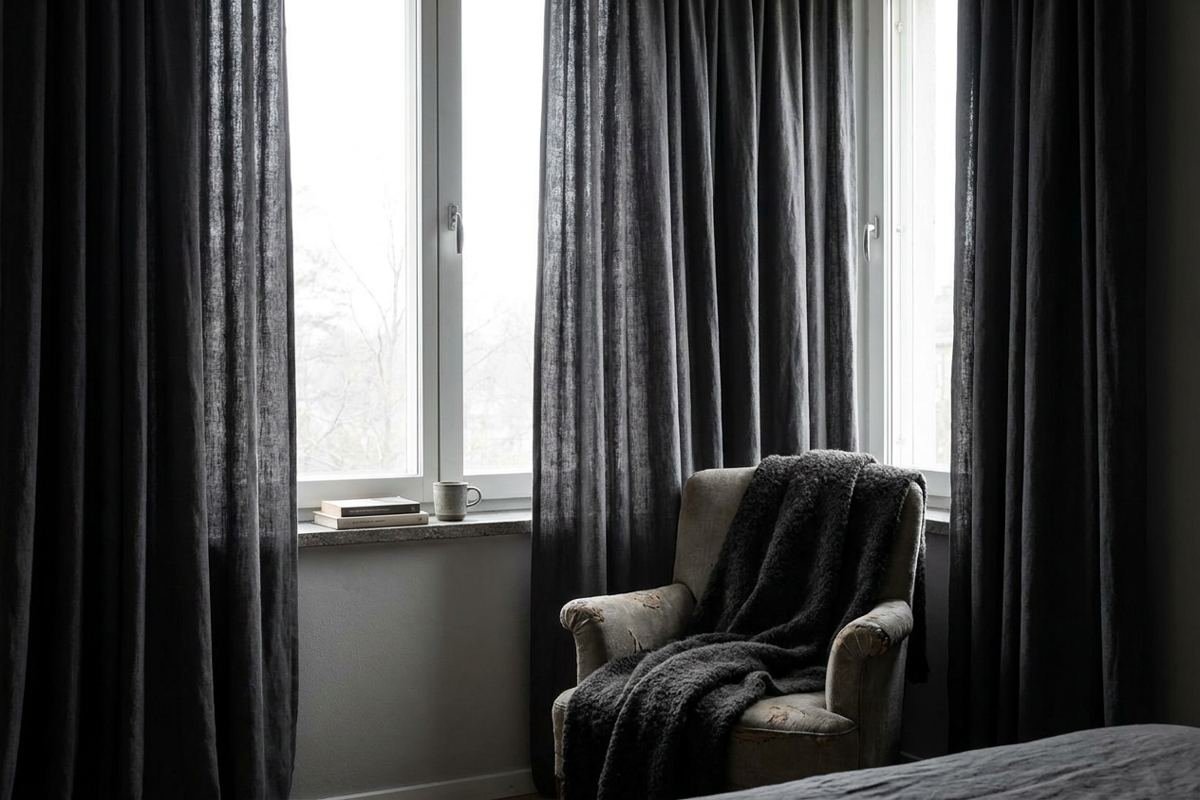
Dark rooms need good lighting. Instead of one overhead light, use several lamps at low heights to create warm pools of glow that flatter the walls.
Why it works: low light at varied heights is soft and flattering, and it makes dark colors glow.
- Use 2700K bulbs. Warm white bulbs keep dark walls rich rather than gray.
- Add dimmers. Adjust the mood easily from bright to bedtime.
- Place lamps low. Bedside lamps should sit near shoulder height when you are seated in bed.
- Wall sconces save space. Mount them on either side of the bed to free up nightstands.
- Soften corners. A plant or floor lamp in a dim corner stops the shadows from reading as empty, heavy space.
Budget options: Plug-in sconces and plain ceramic lamps from discount stores work well with warm bulbs.
Mistakes to avoid: Using a single bright ceiling light that flattens dark walls and ruins the mood.
Heavy Curtains and Blackout Layers
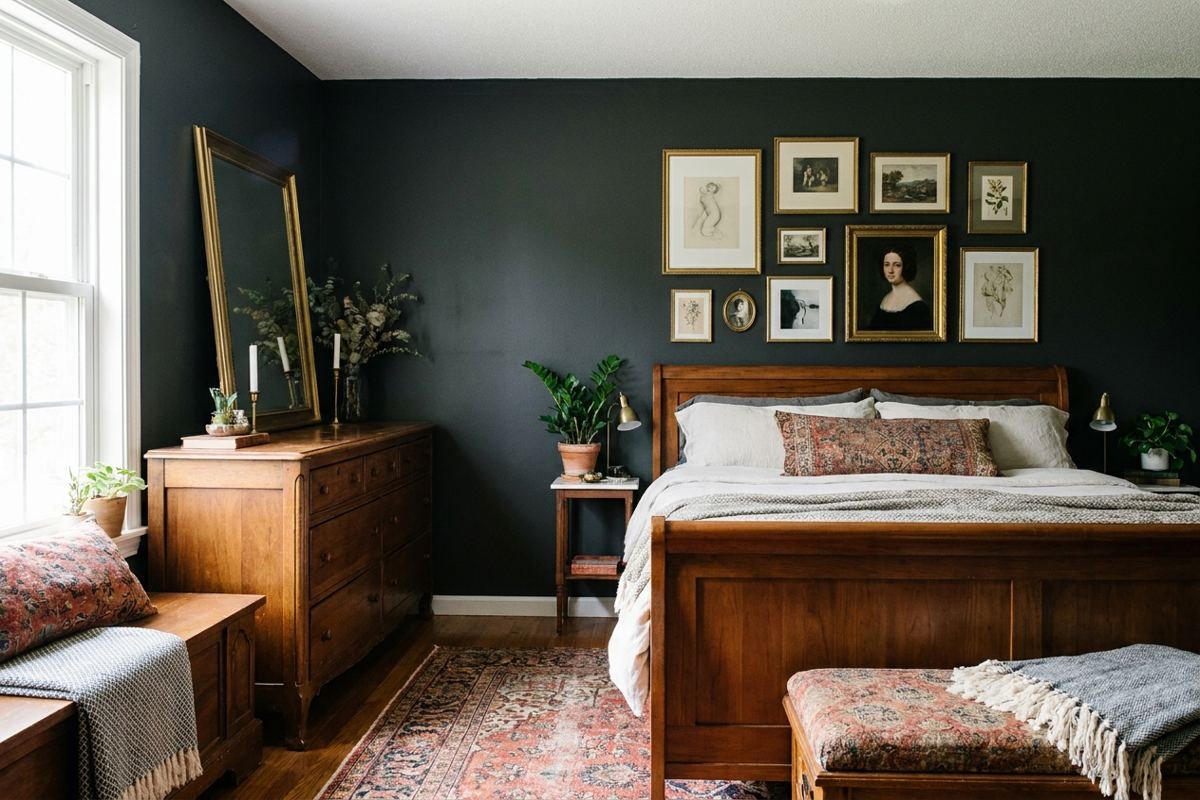
Heavy curtains soften a dark room and block morning light. Floor-length drapes in linen, velvet, or wool in a tone close to the walls look seamless.
- Hang high and wide. Mount rods near the ceiling and wide of the frame for fullness.
- Add blackout lining. It blocks light for better sleep without changing the look.
- Choose natural fabrics. Linen and wool drape beautifully and age well.
- Match the walls. A curtain close to the wall color makes the window blend in.
- Use shades with warm interiors. Lampshades lined in gold or cream cast a flattering glow that deepens the walls beautifully.
Budget options: Buy ready-made panels and add a separate blackout liner, then hem to length with iron-on tape.
Mistakes to avoid: Curtains too short, which look unfinished and let light leak.
Rich Layered Bedding
Dark walls ask for bedding with real texture. Layer a linen duvet, a wool or boucle throw, and a mix of pillows in cream, rust, and olive.
- Choose washed linen. Its soft wrinkles look relaxed against dark walls.
- Layer a throw. Fold a wool blanket across the foot of the bed.
- Mix pillow sizes. Use two sleeping pillows, two Euro pillows, and one lumbar.
- Stay with a palette. Use three or four colors so the bed does not look busy.
- Add a bedside candle. A candle in a glass holder adds flicker and warmth, though always extinguish it before sleeping.
Budget options: Mix affordable cotton basics with one splurge piece such as a good throw.
Mistakes to avoid: Choosing shiny synthetic fabrics that look cheap in low light.
Warm Wood and Vintage Furniture
Wood is the best partner for dark walls. Oak, walnut, and aged pine bring warmth, and vintage dressers carry history that makes a bedroom feel collected.
- Mix wood tones. Pair a dark nightstand with a lighter dresser for depth.
- Choose simple shapes. Clean lines stay quiet against dark color.
- Add a vintage find. A worn dresser or bench gives character.
- Polish the surfaces. A little wax or oil keeps wood glowing in low light.
- Layer window treatments. Pair sheers with heavy drapes so you can choose between soft daylight and total darkness.
Budget options: Secondhand furniture is often solid wood at a lower cost than new.
Mistakes to avoid: Painting dark furniture on dark walls, which loses all definition.
Art, Mirrors, and Brass Accents
Dark walls make art and metal glow. Choose a few pieces with warm light-reflecting frames, and add a mirror to bounce lamplight across the room.
- Pick light mats. White or cream mats make art pop against dark walls.
- Use brass frames. Warm metal frames reflect lamplight beautifully.
- Hang a mirror. Place one opposite a lamp or window to spread light.
- Keep it edited. Choose a few large pieces rather than many small ones.
- Keep a pale pillow. One cream or oatmeal accent near the headboard gives the dark scheme a small, clean highlight.
Budget options: Print your own art and frame it with plain brass-toned frames.
Mistakes to avoid: Crowding the wall with small pieces that look scattered.
A Soft, Natural Rug and Floor
A large rug in wool or jute grounds the bed and softens a dark palette. It brings warmth underfoot and balances the weight of dark walls.
- Choose a large size. A 8 by 10 foot rug suits a queen bed, extending 18 to 24 inches beyond each side.
- Keep it light. A cream or oatmeal rug lifts the room and reflects lamplight.
- Pick natural fibers. Wool and jute feel good and add texture.
- Add a pad. A thick pad adds comfort and keeps the rug in place.
- Ventilate well. Dark rooms hold stale air, so open the window each morning and wash bedding regularly to keep everything fresh.
Budget options: Flatweave wool-blend rugs offer good looks at moderate prices.
Mistakes to avoid: A rug that is too small, which makes the bed look like it is floating.
What Is Going Out in 2026
Fading -> Replacing it:
- All-gray bedrooms -> Deep green, navy, and brown tones
- One bright overhead light -> Layered low lamps with warm bulbs
- Shiny satin bedding -> Washed linen and wool textures
- Stark white ceilings in dark rooms -> Ceilings painted to match the walls
- Black accent walls in an otherwise white room -> Fully enveloping color on all walls
- Cold blue-black tones -> Warm, earthy dark shades
- Matching bedroom furniture sets -> Mixed wood pieces and vintage finds
- Gloss-finish wall paint -> Matte, limewash, and plaster finishes
How to Combine These Ideas Without Making a Mess
Dark rooms can be moody or oppressive depending on how you balance them. These rules keep the mood on the cozy side.
Rule 1: Choose one main color and commit to it across walls, trim, and often the ceiling.
Rule 2: Make sure light sources cover three levels: overhead dimmer, lamps, and low accent lights.
Rule 3: Include at least one light, reflective element, such as cream bedding or a pale rug.
Rule 4: Pick two natural textures, such as linen and wool, and repeat them throughout the room.
Rule 5: Limit metal finishes to one, usually aged brass, so the room stays calm.
Rule 6: Keep patterns small and rare. Dark rooms already have plenty of visual depth.
Three Sample Combinations
The Forest Retreat. Charcoal green walls, cream linen bedding, walnut nightstands, brass sconces, and a jute rug.
The Midnight Suite. Navy walls and ceiling, a plum velvet headboard, white bedding, and warm bronze lamps.
The Plaster Cave. Limewashed brown walls, an oak bed, a wool throw, and a vintage dresser with a ceramic lamp.
Budget Guide
Smart buying tips:
- Spend on paint prep. Good primer and two coats give a richer, more even finish.
- Buy bulbs first. Warm bulbs transform a room for almost nothing.
- Test fabrics at night. Look at swatches under lamplight, which is how you will use them.
Budget tiers:
- Under $300: Paint, primer, warm bulbs, plug-in sconces, and a linen throw
- $300 to $1,500: Quality bedding, blackout curtains, a large rug, and bedside lamps
- $1,500 to $5,000: A velvet or upholstered bed, vintage furniture, and professional painting or limewash
- $5,000+: Custom plaster walls, built-in headboards, hardwired sconces, and bespoke curtains
Step-by-Step 2026 Moody Dark Bedroom Refresh
- Choose your color. Select three samples and paint large swatches on different walls.
- Watch the light. View swatches at morning, afternoon, and evening before deciding.
- Prep the walls. Fill holes, sand, and wipe dust before painting.
- Prime. Use a tinted primer to help dark color cover evenly.
- Paint the walls. Apply two coats of matte paint with a roller and brush.
- Paint trim and ceiling. Match them if you want a seamless look.
- Swap the bulbs. Install 2700K bulbs and add a dimmer.
- Layer the bedding. Add linen, a throw, and varied pillows.
- Hang the curtains. Use blackout lining and mount high and wide.
- Add art and a mirror. Hang a few pieces with light mats and warm frames.
- Finish with a rug. Place a large natural-fiber rug under the bed.
Styling It by Room Size and Layout
Dark color behaves differently depending on the room, so adapt the approach.
Small Bedrooms
- Go all in. Paint walls, trim, and ceiling the same shade so the edges disappear.
- Keep furniture slim. Choose low profile pieces to avoid crowding.
- Use mirrors. One large mirror bounces lamplight and adds depth.
- Choose light bedding. Cream or white keeps the bed as the focal point.
Rooms with Little Daylight
- Choose warm dark tones. Brown and olive feel cozy rather than cave-like.
- Use bright lamps. Add more lights at multiple heights.
- Add light textiles. Pale rugs and bedding reflect available light.
- Accept the mood. A dark room feels intentional when you lean in fully.
Large Bedrooms
- Try two tones. Paint walls dark and leave built-ins a lighter shade.
- Add a sitting area. A chair and lamp make the space feel layered.
- Use big art. Large pieces hold their own on big walls.
- Layer rugs. Combine two rugs to add warmth across a large floor.
Rentals
- Check your lease. Many landlords allow paint if you agree to repaint later.
- Use peel-and-stick wallpaper. Choose a dark solid or subtle texture for a removable option.
- Focus on textiles. Dark curtains and bedding create mood without paint.
- Add plug-in lighting. Lamps and sconces help set a moody tone.
FAQ
Do dark walls make a bedroom feel smaller? They can blur edges, which often feels cozy rather than cramped, especially with warm lighting and light bedding for contrast.
What is the best dark paint for a bedroom? Choose a deep green, navy, or brown with warm undertones, and test it at several times of day first.
Should I paint the ceiling dark too? Yes if you want an enveloping effect. A light ceiling can also work, but color on all surfaces feels more seamless.
What finish works best on dark walls? Matte or flat finishes hide flaws and feel velvety, while glossy paint highlights every imperfection.
How do I stop a dark room from feeling gloomy? Layer warm lamps, add pale textiles, include natural wood, and avoid cool bulbs that make the color look flat.
What color bedding looks best with dark walls? Cream, ivory, and white give crisp contrast, while rust, olive, and mustard add warmth without clashing.
Can I do dark walls in a rental? Often yes with permission. Otherwise, use dark textiles, plug-in lamps, and removable wallpaper to create a similar mood.
How do I choose between navy and green? Navy feels formal and crisp, while green feels organic and relaxed. Consider your furniture and the light before choosing.
Final Thoughts
A moody bedroom is not about darkness for its own sake. It is about comfort, warmth, and the feeling of being held by the room. Pick one deep color, light it softly, and layer natural textures, and the space will feel like a place to truly rest. If you are unsure, start with the lamps, bedding, and curtains, then add paint once you know how the room feels after dark.