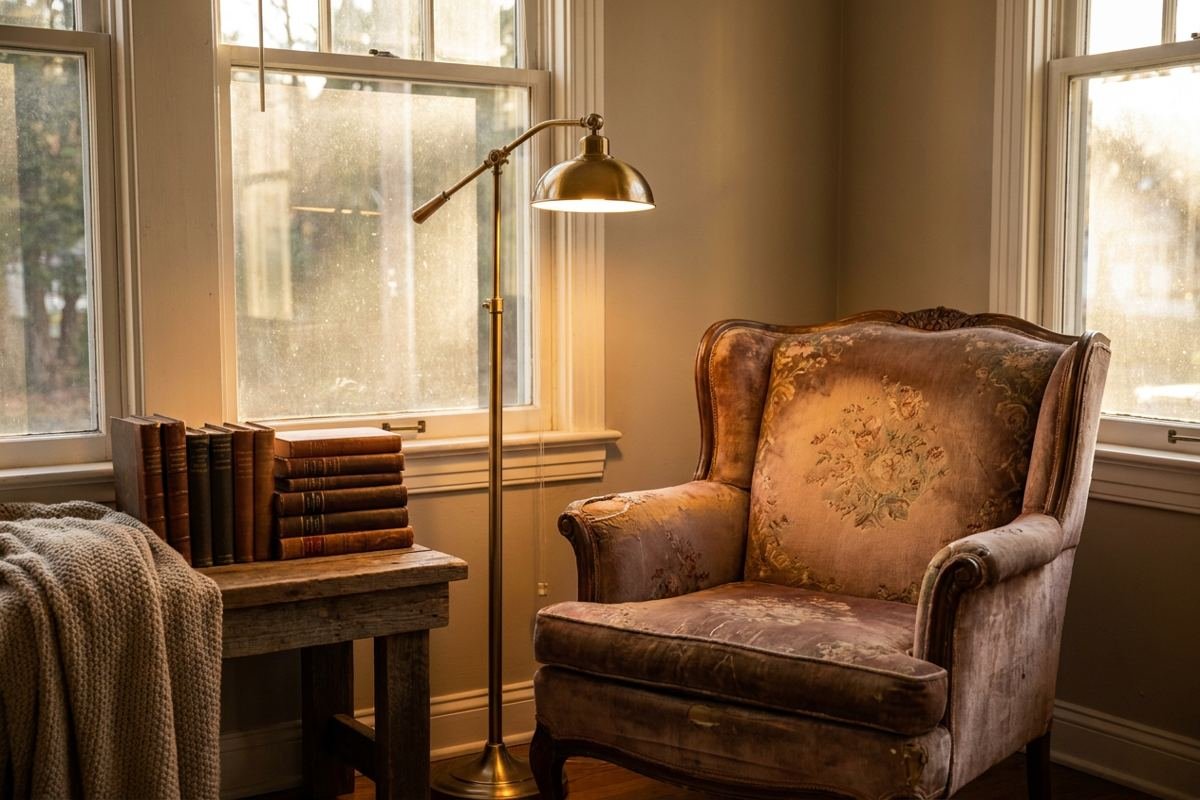
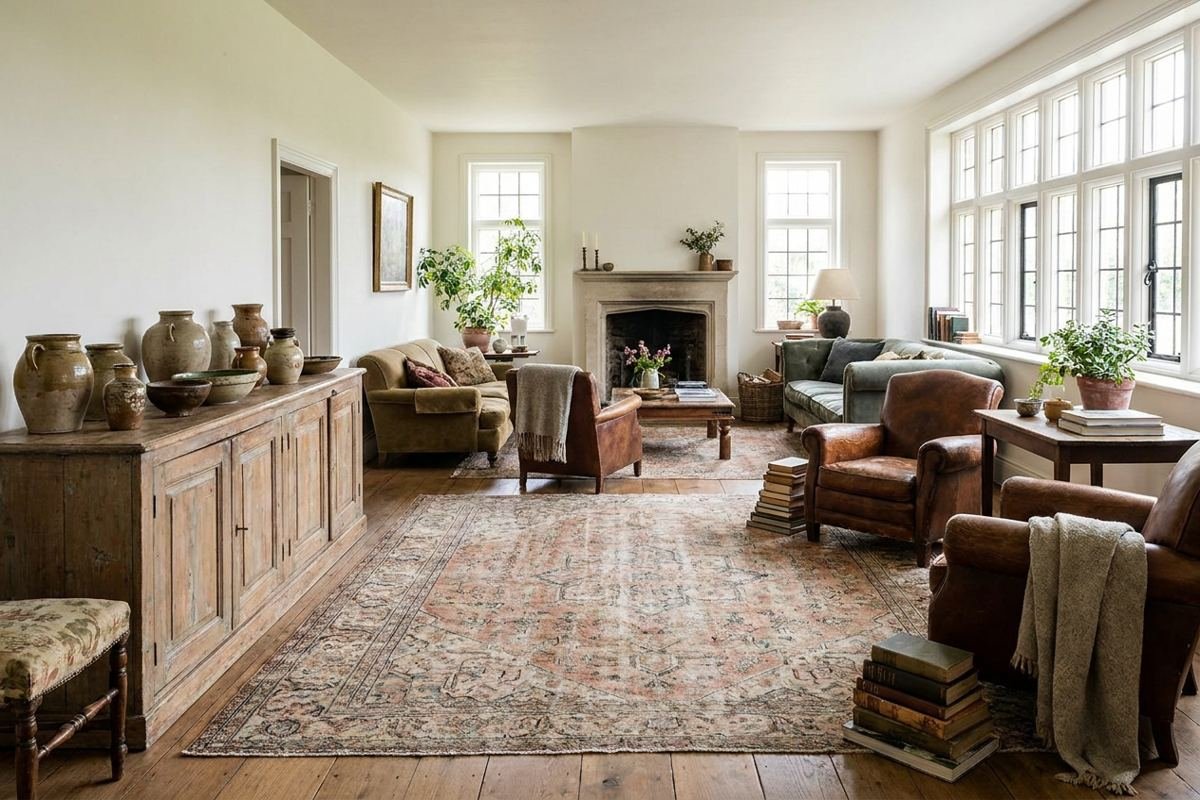
Vintage and thrifted decor in 2026 means choosing a few well-made old pieces and letting them sit among simple new ones. Look for solid wood, real ceramic, brass, and worn textiles; check condition carefully; and edit hard. A room with six great finds looks collected, while sixty looks like a storage unit.
Secondhand shopping has moved from hobby to design strategy. Old furniture is often better built than new, old objects carry history that new ones cannot fake, and every piece you rescue is one fewer purchase from a catalog.
This guide walks through ten ways to use thrifted and vintage finds, from furniture and art to lighting and textiles, with budgets, sourcing tips, what to skip, and a step-by-step plan for building a room slowly and well.
The Big Picture: Why Vintage and Thrifted Decor Is Changing in 2026
Three forces explain almost every idea below.
1. Quality over speed. People are tired of furniture that wobbles after two years. Old solid wood, dovetail joints, and heavy ceramics have already proven they last, and they usually cost less than comparable new pieces.
2. Personality over sets. Matching bedroom suites and catalog rooms feel anonymous. A room with different eras and finishes feels lived in, and thrifting is the easiest way to get that variety without a designer.
3. A calmer relationship with buying. Waiting for the right piece, repairing it, and giving it a second life feels better than ordering a dozen trendy accessories that end up in a donation bin.
Put together, these shifts reward patience, restraint, and a willingness to clean, repair, and restyle what you find.
The Solid Wood Furniture Anchor
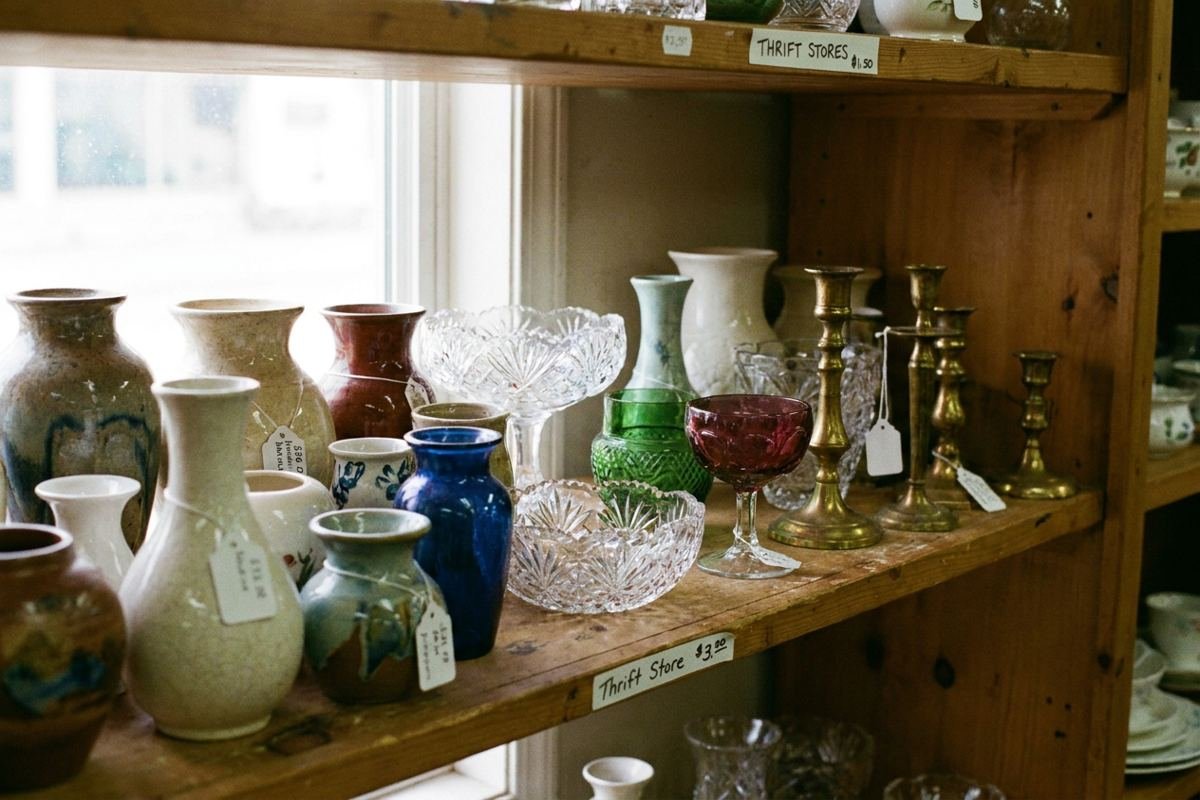
Start with one substantial wood piece, such as a dresser, sideboard, or table. Heavy old furniture gives a room visual weight that lightweight new furniture rarely matches.
Why it works: real wood ages gracefully, and scratches only add character.
- Check the joints. Pull out drawers and look for dovetails rather than staples, which signal sturdier construction.
- Test for wobble. Push on the piece firmly; loose legs can be glued, but twisted frames are harder to fix.
- Smell the drawers. Strong musty or smoke odors are hard to remove, so walk away from those.
- Measure twice. Confirm it fits through your doorways and stairs before buying.
- Wait for the right one. If a piece is almost right but not quite, leave it; the better version usually turns up within a month or two.
Budget options: Estate sales and online marketplaces often sell solid pieces for a fraction of retail, especially if you collect them yourself.
Mistakes to avoid: Painting over wood that is in good condition, or buying a piece too large for the room.
The Mismatched Dining Chairs
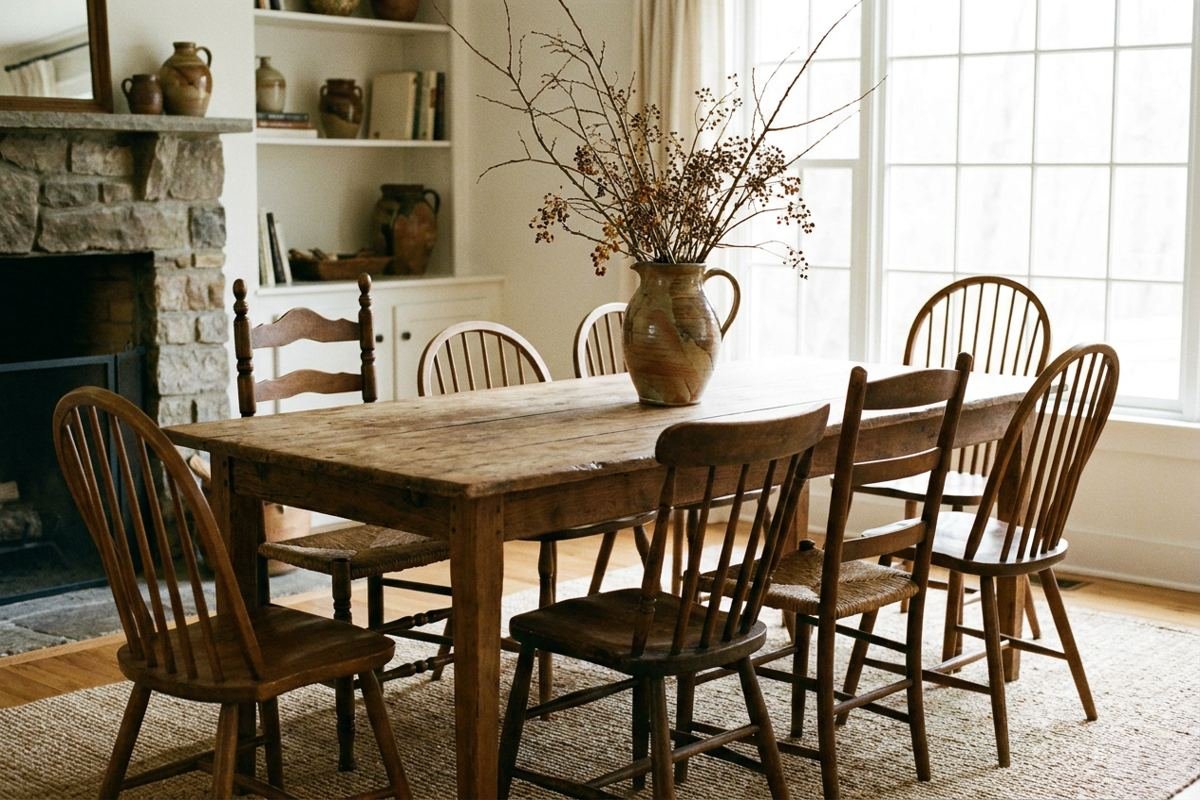
Eight identical chairs can feel stiff. Mixing different wood chairs around one table feels warm and relaxed, and each seat tells a bit of its own story.
Why it works: a shared tone or shape ties the group together, even when each design differs.
- Pick a common thread. Keep the same wood tone, seat height, or color so the set feels deliberate.
- Match the seat height. Aim for 17 to 19 inches so everyone sits comfortably at the table.
- Pair them. Use two matching armchairs at the ends and mixed side chairs along the sides.
- Add cushions. Seat pads in one fabric can unify chairs from different eras.
- Take photos. Snap pictures of finds in the shop and compare them against your room palette before you commit to carrying them home.
Budget options: Buy chairs individually from thrift shops, and paint all in one color if tones clash.
Mistakes to avoid: Mixing too many wildly different styles with no common color or height.
Thrifted Ceramics and Glass
Vases, bowls, pitchers, and pottery are the easiest and cheapest vintage finds. They bring texture to shelves, tables, and counters at almost no cost.
Why it works: handmade or older ceramics have glazes and shapes that modern mass-produced ones lack.
- Look for weight. Heavy pieces with a real glaze usually last and feel substantial in the hand.
- Check for cracks. Hold each piece to the light and run a finger around the rim.
- Group in threes. Cluster objects of different heights and keep to a limited color range.
- Use them daily. Put flowers in a pitcher or fruit in a bowl so they feel lived with.
- Ask about history. Sellers often know where a piece came from, and that story is part of what makes it worth owning.
Budget options: Thrift shops and church sales often price pottery at a few dollars each.
Mistakes to avoid: Filling every surface; leave empty space so each object can be seen.
The Gallery Wall of Found Art
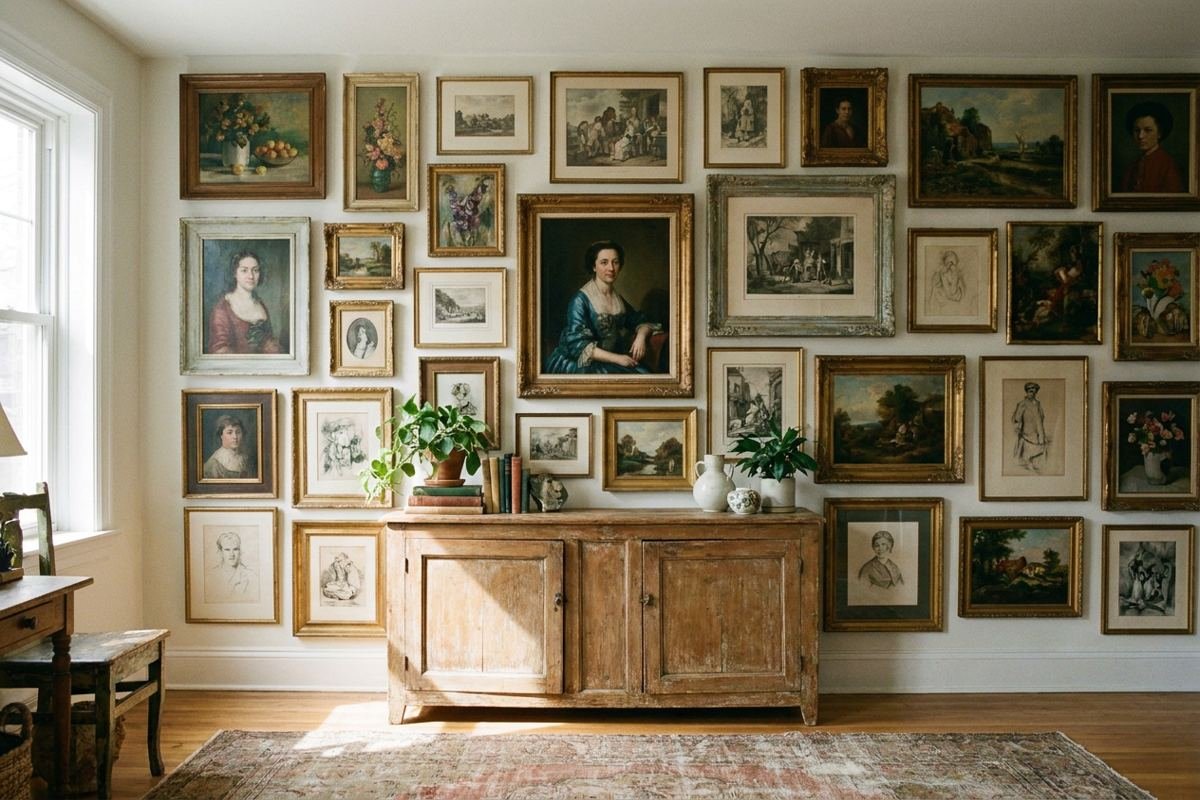
Thrifted frames and artwork make some of the most interesting walls. Mix landscapes, portraits, botanicals, and abstract pieces for a gallery that feels layered over time.
Why it works: different frames create depth, while a limited palette keeps it cohesive.
- Buy for the art. Choose images you actually like; frames can always be swapped or painted.
- Unify with color. Repaint mismatched frames in one or two finishes for a polished look.
- Plan on the floor. Lay the arrangement out first and photograph it before hanging.
- Keep gaps tight. Two to three inches between frames keeps the wall from scattering.
- Test in daylight. Carry smaller finds to a window to check color, glaze, and hidden damage that dim shop lighting can hide.
Budget options: Buy framed pieces for the frames alone and replace the art with your own prints.
Mistakes to avoid: Hanging art too high, or choosing frames so mismatched that the wall looks chaotic.
Vintage Lighting
Old lamps have beautiful bases in brass, ceramic, and wood. Rewired and fitted with a new shade, they look current and cost far less than designer lamps.
- Inspect the cord. Frayed or brittle wiring should be replaced by a qualified person before use.
- Rewire for safety. A basic rewire kit and a local lamp shop can modernize an old base.
- Pick fresh shades. A new linen or paper shade instantly updates an old base.
- Use warm bulbs. Choose 2700K bulbs for cozy light that suits aged materials.
- Clean before judging. A good wash and polish often transforms a dull find, so look past grime to the shape underneath.
Budget options: Buy bases only, and match them with plain drum shades from a big-box store.
Mistakes to avoid: Plugging in an old lamp without checking the wiring.
Layered Vintage Textiles
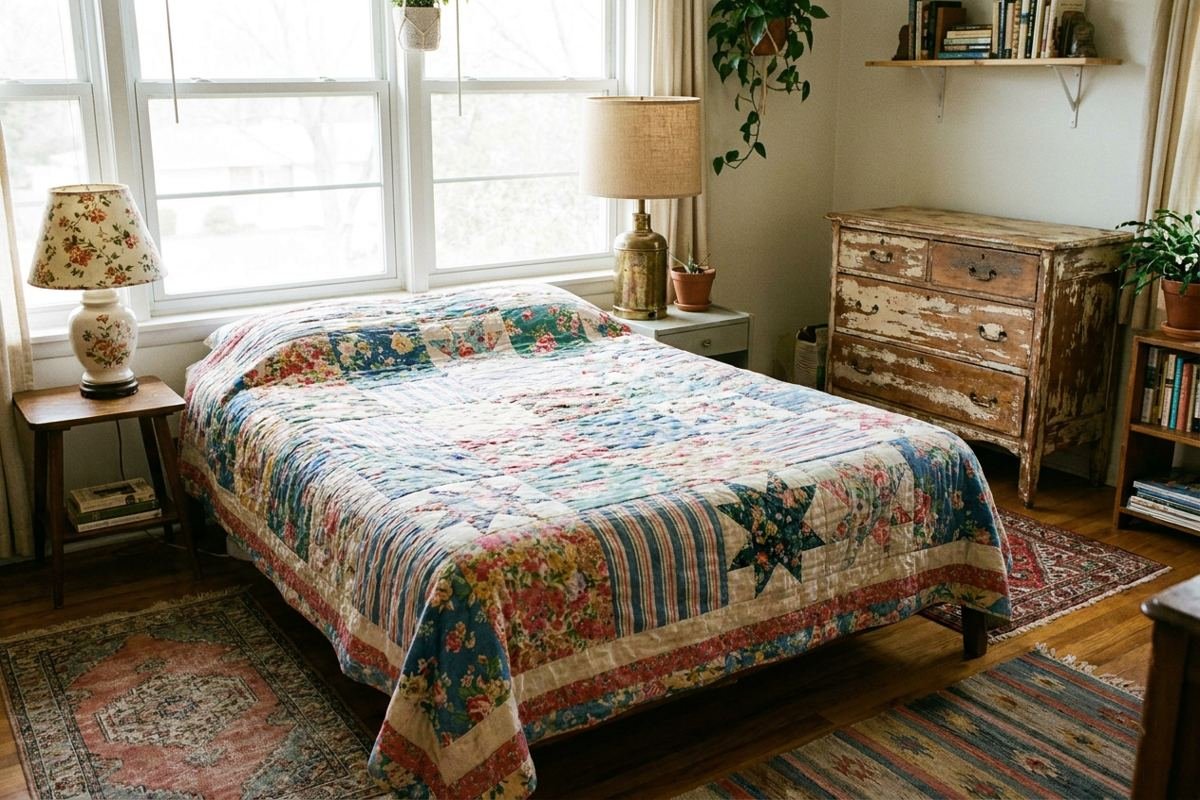
Old quilts, kilims, and embroidered linens add warmth and pattern. They soften a room and bring hand-made character that new textiles often lack.
Why it works: faded colors blend easily, so mixing patterns feels natural.
- Check the fabric. Hold it to the light to spot thin patches or moth holes.
- Wash gently. Hand wash or have it professionally cleaned; avoid harsh machines.
- Layer thoughtfully. Place a quilt across the foot of the bed or over a sofa arm.
- Use as art. Hang a beautiful piece on a quilt rod rather than folding it away.
- Mix with new. Place the old piece beside something plain and modern so the age reads as a choice, not a theme.
Budget options: Flea markets and estate sales are filled with affordable quilts and linens.
Mistakes to avoid: Skipping a smell check, since odors can be hard to remove.
The Vintage Kitchen Collection
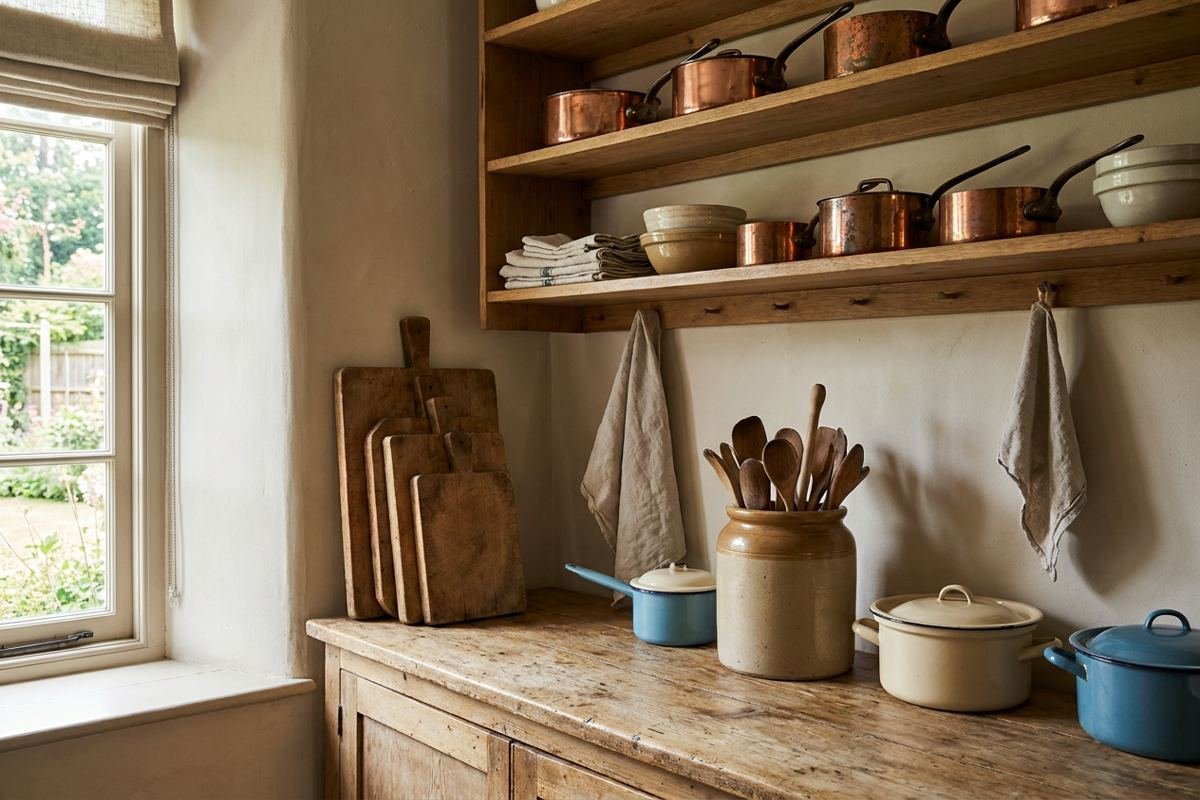
Cutting boards, crocks, enamelware, and copper pots add personality to a modern kitchen. They are practical, sturdy, and look better with age.
- Choose useful pieces. Pick items you will actually cook with, not only display.
- Test the finish. Avoid chipped enamel on surfaces that touch food.
- Group by material. Keep wood together, then metal, then ceramics, for a calmer counter.
- Clean carefully. Season wooden boards with food-safe oil and wash by hand.
- Keep receipts for repairs. Track what you spend fixing each piece so the real cost stays honest against comparable new items.
Budget options: Garage sales often sell cast iron and enamelware for little, and these can be restored.
Mistakes to avoid: Using old pots with flaking coatings or unknown glazes for cooking.
The Antique Entry Runner and Bench
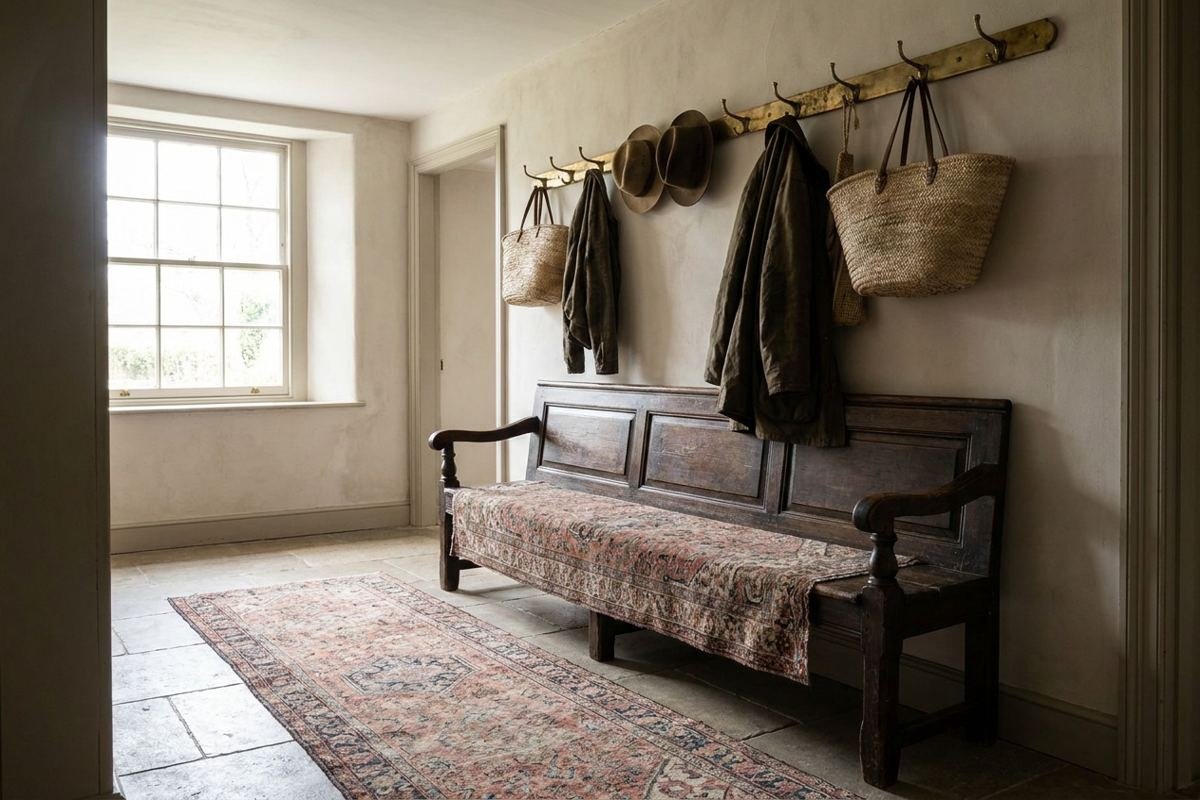
An old rug and a sturdy bench make a welcoming entry. They hold up to daily traffic and add instant history to a space that is often overlooked.
- Size the rug. A runner should leave a few inches of floor visible on each side.
- Add a non-slip pad. Prevent sliding on hard floors and extend the rug’s life.
- Choose a sturdy bench. Old benches handle daily use, from shoe changes to bag drops.
- Hang hooks. A vintage rail or row of hooks completes the setup.
- Rotate placement. Move finds between rooms every season; a piece that disappeared on one wall can shine on another.
Budget options: Look for worn rugs at estate sales, where wear adds to the charm.
Mistakes to avoid: Skipping a rug pad, which is a slipping hazard.
The Reupholstered Armchair
A vintage armchair with good bones is worth reupholstering. A new fabric turns a dated piece into the standout seat in the room.
- Check the frame. Press on the arms and legs to confirm they are sturdy.
- Choose durable fabric. Tightly woven wool or performance fabric lasts for years.
- Get quotes. Ask for pricing before buying, since labor can exceed the cost of the chair.
- Keep the lines. Maintain the original shape for a classic silhouette.
- Protect from sun. Keep old textiles and wood out of direct afternoon light, which fades dyes and dries finishes over time.
Budget options: Slipcovers or a simple fabric swap are lower cost than full reupholstery.
Mistakes to avoid: Buying a chair with a cracked frame, which costs more to repair than to replace.
The Edited Curio Shelf
A single shelf of carefully chosen small finds, such as brass, books, and small boxes, tells a story. It gives the collector in you a home without cluttering the whole room.
- Set a theme. Choose a color or material such as brass, blue glass, or stone.
- Vary height. Stack books and place small objects on top for rhythm.
- Leave gaps. Empty space lets each piece be appreciated.
- Rotate seasonally. Swap a few items every few months for a fresh look.
- Learn simple repairs. Wood glue, felt pads, and replacement knobs solve most common problems for just a few dollars.
Budget options: Start with five items and add one at a time as you find them.
Mistakes to avoid: Displaying everything you own, which reads as clutter.
What Is Going Out in 2026
Fading -> Replacing it:
- Matching furniture sets from one showroom -> Mixed pieces from different eras
- Heavily distressed fake antiques -> Real aged wood and honest wear
- Mass-produced farmhouse signs -> Found art and old frames
- Identical white ceramic accessories -> Thrifted pottery with real glaze
- Fast-furniture dressers -> Solid wood vintage dressers
- Overpainted, glossy flipped furniture -> Repaired pieces with original finishes
- Theme-park vintage rooms -> A few old pieces among simple new ones
- Impulse buying every find -> Waiting for the right piece
How to Combine These Ideas Without Making a Mess
Vintage shopping goes wrong when every piece shouts at once. These rules keep a collected room looking calm.
Rule 1: Keep about 60 percent of a room simple and modern, and let vintage pieces be the accents.
Rule 2: Choose one color family for ceramics and glass so mismatched objects look related.
Rule 3: Limit yourself to two or three wood tones in a single room.
Rule 4: Mix eras but not all of them. Two or three periods read as curated, while seven look random.
Rule 5: Repair before you display. A cleaned, tightened, polished piece looks cared for instead of neglected.
Rule 6: Leave blank space. Empty surfaces let the best pieces stand out.
Three Sample Combinations
The Collected Living Room. A solid wood sideboard, a vintage rug, a thrifted lamp base with a new shade, and a cluster of pottery.
The Relaxed Dining Room. A farmhouse table, mismatched wood chairs with matching cushions, and a thrifted pitcher full of branches.
The Quiet Bedroom. A vintage quilt, mismatched thrifted lamps, a worn dresser, and plain white walls.
Budget Guide
Smart buying tips:
- Go early. Estate sales and flea markets have the best items in the first hours.
- Carry a tape measure. Check dimensions before you fall for something that will not fit.
- Negotiate politely. Bundling several items often earns a better price.
Budget tiers:
- Under $300: Pottery, frames, linens, a few lamp bases, and one small wood piece
- $300 to $1,500: A solid wood dresser or sideboard, a vintage rug, and reupholstery fabric
- $1,500 to $5,000: A quality antique table, a set of restored chairs, and professional rewiring or refinishing
- $5,000+: A statement antique, a large handmade rug, and professional restoration of key pieces
Step-by-Step 2026 Vintage and Thrifted Decor Refresh
- Define your palette. Pick three to four colors that suit your room, and shop with them in mind.
- List what you need. Write down real gaps such as a dresser or lamp so you shop with purpose.
- Measure your spaces. Record wall widths and furniture limits before leaving home.
- Pack a kit. Bring a tape measure, a flashlight, and a cloth.
- Inspect carefully. Check joints, wiring, cracks, and odors before paying.
- Buy one anchor first. Start with a sturdy wood piece and build around it.
- Clean thoroughly. Wipe with a mild soap solution, and treat wood with a suitable oil or wax.
- Repair small flaws. Tighten screws, glue loose joints, and replace worn hardware.
- Place and edit. Put items in the room, live with them, and remove anything that feels extra.
- Add new basics. Balance old pieces with simple new linens, shades, or storage.
- Keep hunting slowly. Add one piece at a time over several months.
Styling It by Room Size and Layout
Vintage works in any home, but the approach shifts with the space.
Small Rooms
- Choose petite pieces. A slim dresser or small bench fits better than a bulky cabinet.
- Edit heavily. Fewer, better objects keep a tiny room calm.
- Go vertical. Hang art and shelves higher to keep floors clear.
- Use multipurpose pieces. A trunk can be a table and storage.
Open Plan Spaces
- Define zones. Use a vintage rug to mark the sitting area.
- Repeat wood tones. Echo one wood across the kitchen and living areas.
- Use furniture as dividers. A sideboard behind a sofa creates a soft boundary.
- Keep a consistent palette. One color family ties the whole space together.
Large Rooms
- Go big. Large cabinets and long tables fill space with confidence.
- Layer rugs. Place a smaller vintage rug over a larger neutral one.
- Cluster furniture. Group seating to keep it cozy rather than scattered.
- Mix scales. Combine a statement antique with several smaller objects.
Rentals
- Choose freestanding pieces. Furniture and lamps need no installation.
- Hang lightly. Use removable hooks for lightweight art.
- Protect floors. Add felt pads under heavy furniture.
- Pick portable finds. Choose items that move easily to the next place.
FAQ
Where is the best place to find vintage decor? Estate sales, flea markets, thrift shops, and local online listings are the strongest sources, and each tends to reward early and frequent visits.
How do I know if furniture is solid wood? Look at the edges and underside for continuous grain and heavy weight; particleboard looks uniform and feels light.
How do I remove musty smells? Air the piece outdoors, wipe with a mild vinegar solution, and place baking soda inside drawers for several days.
Is it safe to use old lamps? Only after checking the cord and wiring. Have frayed or brittle wiring replaced by a qualified person before plugging in.
Should I paint vintage furniture? Paint pieces that are damaged or poorly finished, but keep good original wood finishes, which tend to look better and hold value.
How do I mix vintage with modern? Keep the basics simple and modern, then use two or three old pieces as accents in a shared color or material.
How much should I pay for thrifted items? Pay what the piece is worth to you after repairs, and compare prices for similar items before buying.
How do I avoid clutter? Buy only what fits a plan, edit regularly, and let empty surfaces remain empty.
Final Thoughts
The best vintage rooms grow slowly. Buy what you love, repair what needs care, and keep only what earns its place. Over time the home gathers a quiet character that new furniture alone cannot create, and every piece has a story.