
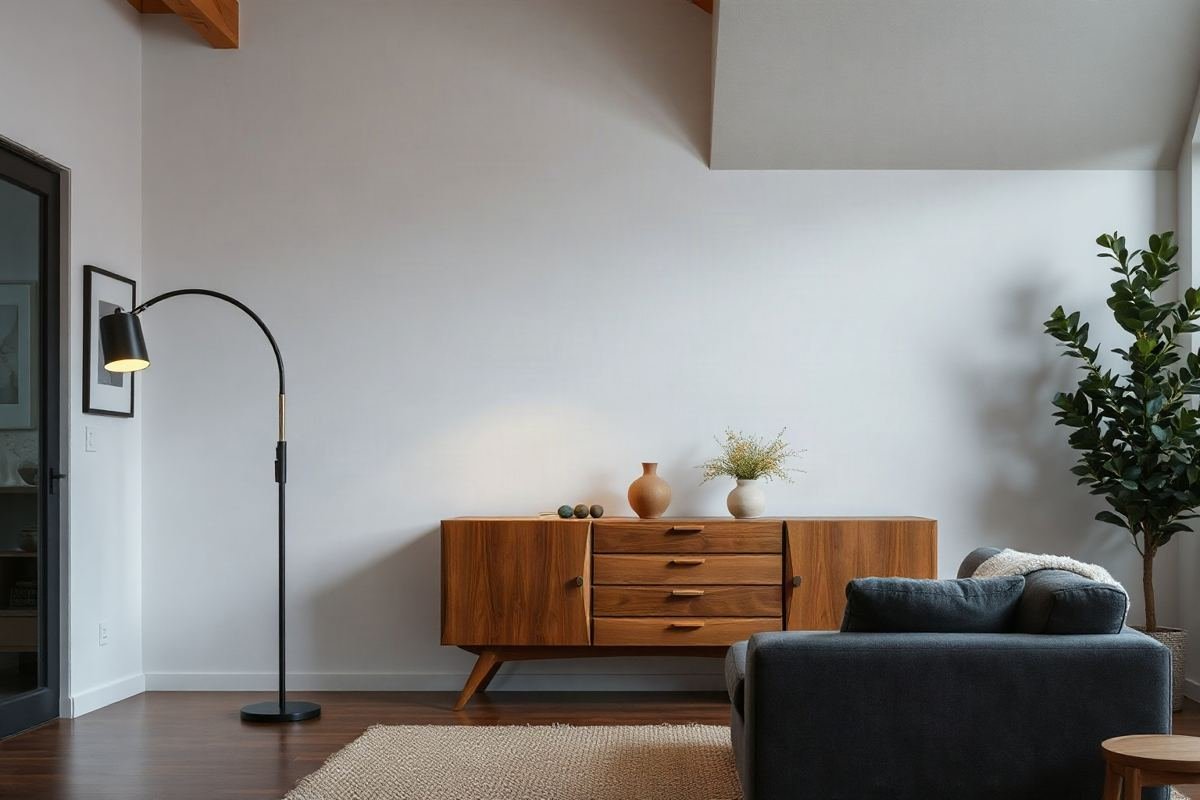
The defining 2026 mid-century modern decor trends are warm, graphic and built to last. Expect walnut and teak furniture on tapered legs, low sculptural sofas, earthy mustard, olive and rust palettes, statement lounge chairs, credenzas, starburst and Sputnik accents, abstract art, arc lamps, studio pottery, plants, slatted walls, terrazzo, cane and bold wool rugs in open, window-filled rooms.
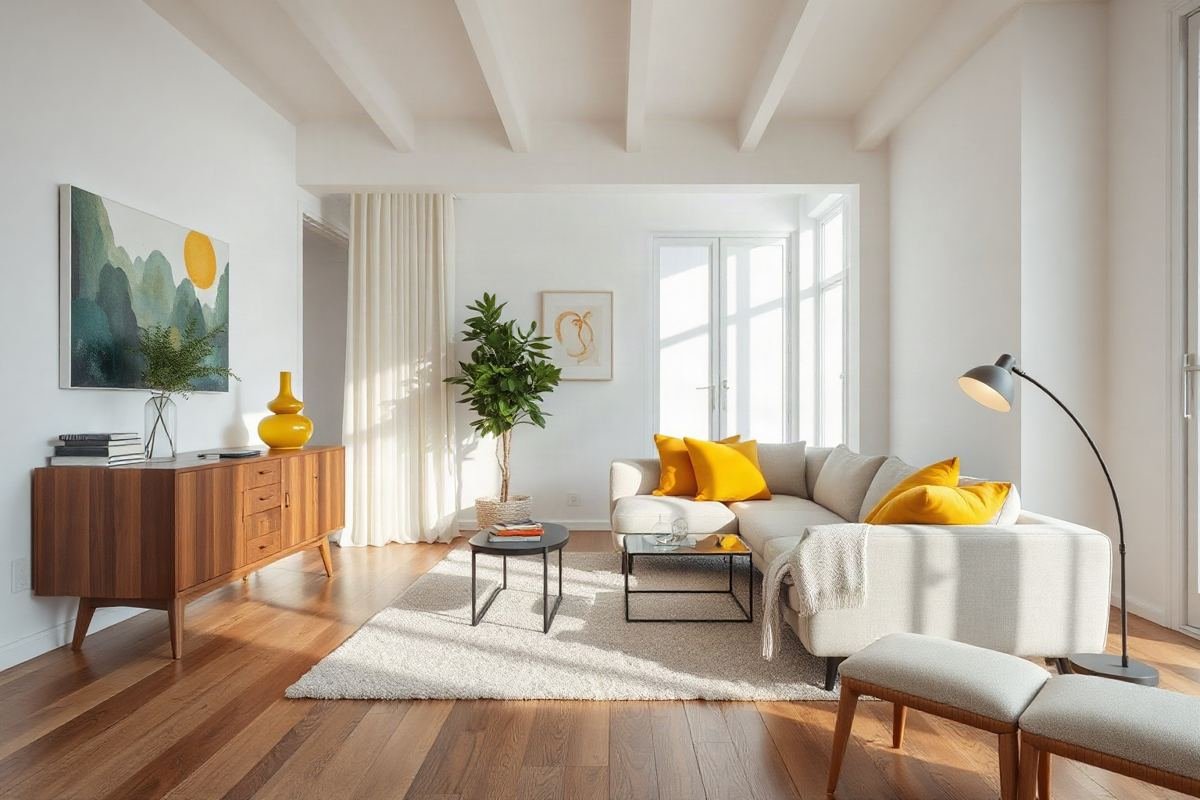
Mid-century modern has stayed popular because it solves real problems. Its furniture is slim, well made and easy to place, and its colors are warm enough for family rooms. In 2026 the look is moving away from museum-perfect showrooms toward rooms that feel relaxed, layered and personal.
This guide gathers the main directions into one practical playbook. For each of the 14 looks you will find what it is, why it works, how to do it in a real home, the budget options and the mistakes to avoid. At the end are combination rules, a budget table, a step-by-step plan, room-size advice and an FAQ.
The Big Picture: Why Mid-Century Modern Decor Is Changing in 2026
Three forces explain almost every trend below.
- Authentic design is back. After a stretch of fast furniture, buyers want quality that lasts. Mid-century pieces were built to be used for decades, and many are still in circulation, so vintage shopping is both practical and stylish.
- Warmth without clutter. The style offers calm, uncluttered rooms that still feel warm thanks to wood, wool and earthy color. People who like simplicity but dislike cold minimalism find it a comfortable middle ground.
- Indoors and outdoors together. Big windows, plants and natural materials link rooms to the garden. In smaller homes especially, borrowing light and views from outside is one of the best ways to make a space feel larger.
When you are deciding whether a look suits you, ask three questions. Does it keep the room light, does it add warmth, and will the piece last? If it fails all three, move on.
Warm Walnut and Teak Furniture
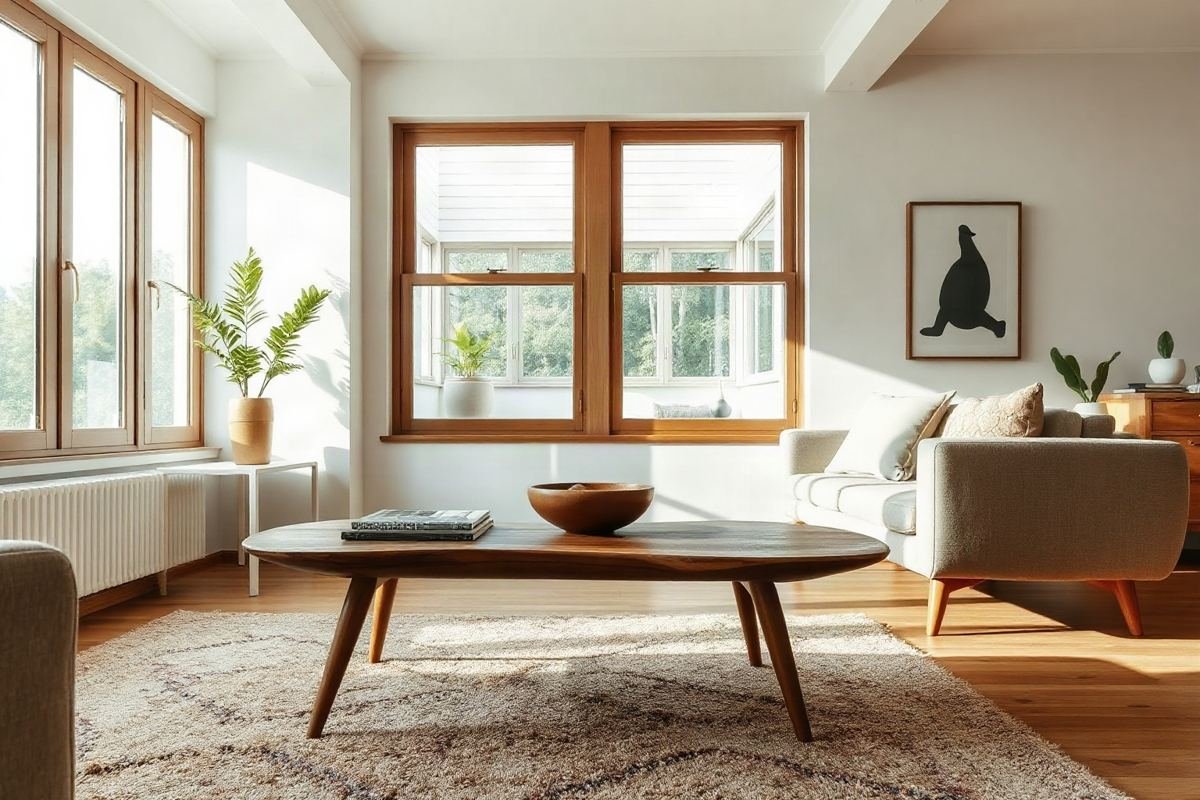
Warm wood in walnut, teak and oak is the backbone of mid-century modern decor. Pieces have clean lines, gently curved edges and slim, angled legs that lift the furniture off the floor.
The wood grain brings warmth to a style that could otherwise feel stark. Visible legs keep rooms airy, and quality solid wood furniture lasts for decades, which is why vintage pieces still sell well.
- Pick a lead wood. Choose one main tone, such as walnut, and let other woods sit within a similar warm family.
- Look for tapered legs. Slim, splayed or peg legs are the signature detail and keep the room feeling light.
- Check the joinery. Solid dovetail drawers and sturdy frames separate real vintage from imitations that wobble.
- Oil, do not strip. A little furniture oil or wax revives old finishes and keeps the patina designers love.
- Limit the matching. Buy two or three wood pieces and mix them with other materials, not a full set.
Budget options: Secondhand shops, estate sales and online listings are full of affordable teak and walnut. Veneer pieces are fine if the surface is intact.
Mistakes to avoid: Buying a whole matched bedroom or living room set, sanding away good original finish, and ignoring water rings that could have been treated early.
Low-Profile, Sculptural Sofas
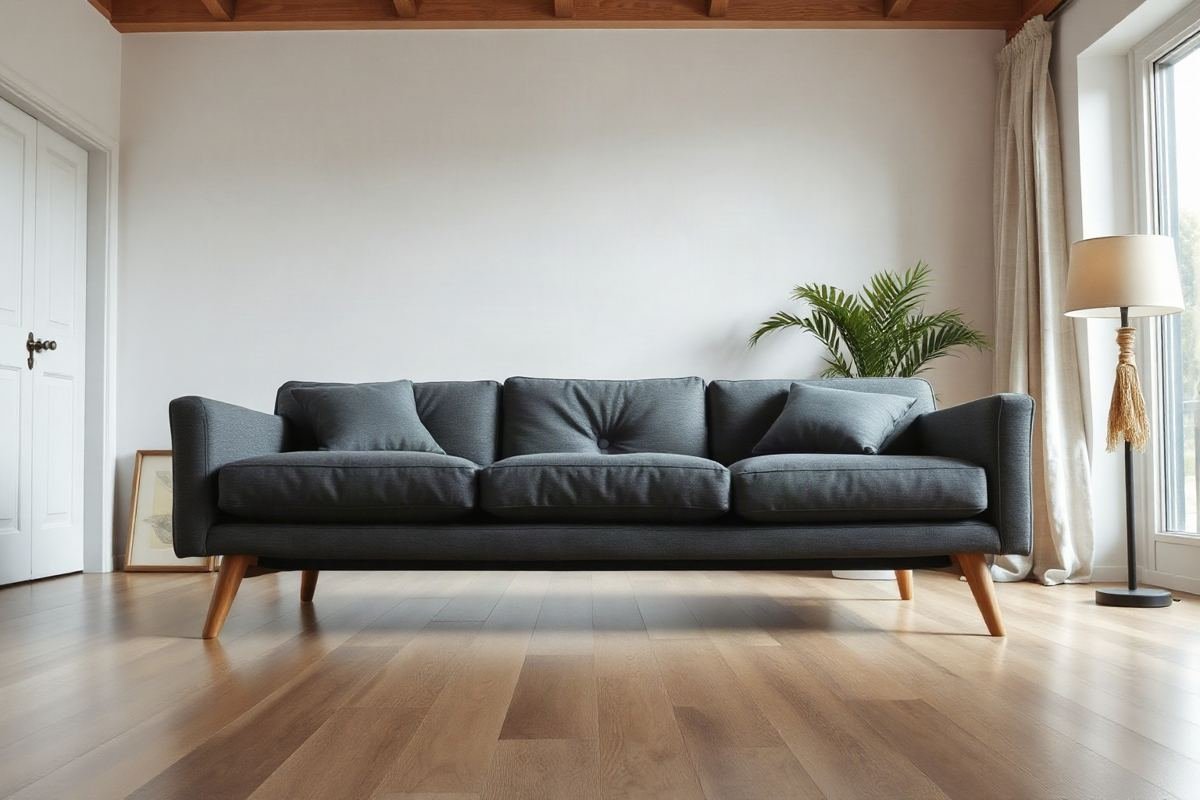
Sofas in this style sit low, with straight backs, slim arms and visible legs. Cushions are firm and simple, and some designs add modular sections or gentle curves for a sculptural feel.
A low profile makes the ceiling feel higher and leaves the walls open for art. The simple shape lets color and texture lead, so you can change the mood with cushions and throws.
- Choose exposed legs. Wooden legs show floor beneath the sofa, which makes the room feel larger and lighter.
- Go simple on arms. Slim, square or gently flared arms keep the profile clean and are comfortable for leaning.
- Pick wool or tweed. Textured wool, boucle or linen blends suit the style and hide wear better than flat fabrics.
- Try modular pieces. A modular sofa gives flexibility for small rooms and for moving homes.
- Test the seat. Low seats can be hard to rise from, so sit on the model before ordering.
Budget options: Look for a basic frame in a neutral fabric and add a bolster and two cushions in color. Slipcovers and replacement legs update an old sofa cheaply.
Mistakes to avoid: Choosing a deep, overstuffed sofa that fights the clean lines, ignoring seat comfort, and picking a color that clashes with the wood tone.
An Earthy Mid-Century Color Palette
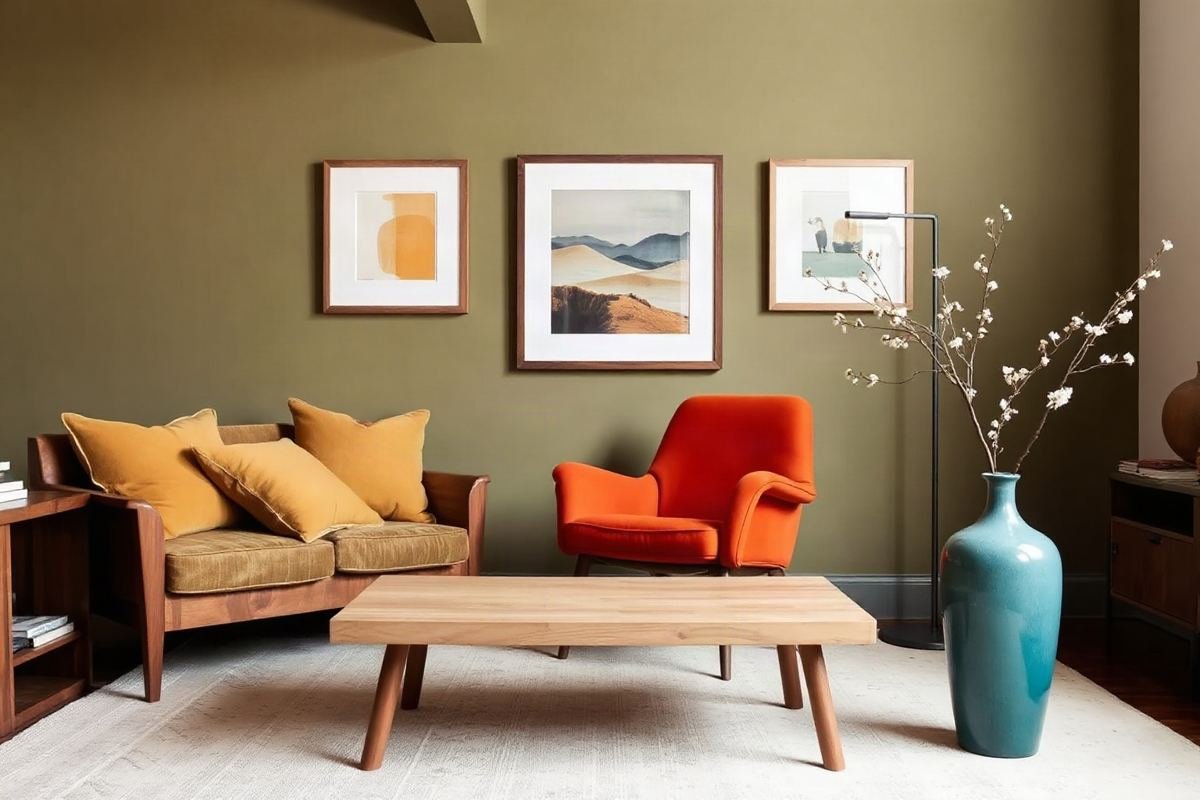
The palette is warm and earthy: mustard, olive, burnt orange, avocado, rust and chocolate, with a touch of teal or sky blue. Walls often stay warm white while color arrives through furniture and accessories.
These shades come from nature and sit comfortably beside wood. Used in small doses, they add energy without overwhelming the simple shapes, and many of them look better in warm evening light.
- Start with a neutral base. Warm white or soft cream walls let wood and color shine.
- Choose two accent colors. Pick two, such as mustard and teal, and repeat them in three places each.
- Add one bold wall. A deep olive or rust wall behind a sofa gives drama if you want more than accents.
- Use color in textiles. Cushions, throws and rugs are the easy, changeable way to introduce a bright hue.
- Ground it with brown. Wood, leather and dark brown anchor bright shades and stop the room feeling childish.
Budget options: Paint one wall or a single chair and add cushions. Spray paint turns a thrifted vase or lamp base into an accent piece for a few dollars.
Mistakes to avoid: Using every retro color at once, choosing a mustard that is too neon, and forgetting to test paint against the wood in your room.
The Statement Lounge Chair
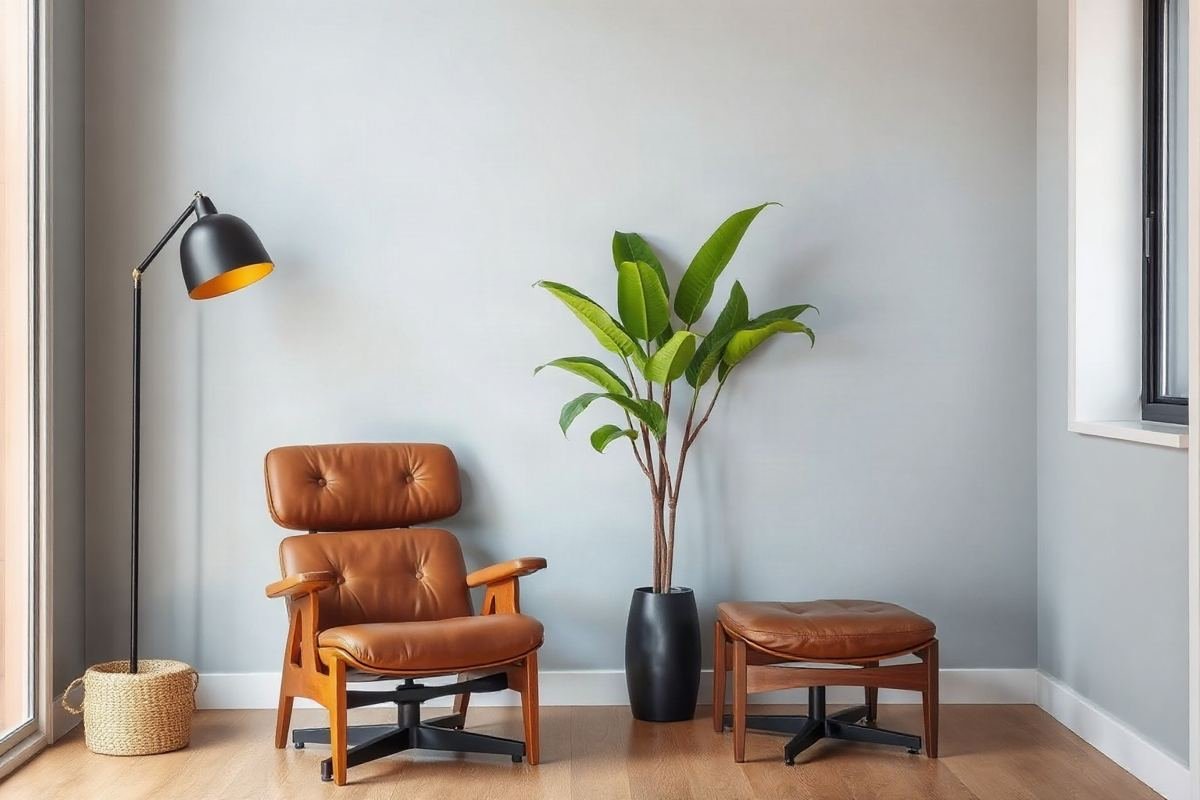
A single iconic-style lounge chair, in molded plywood, leather, or a sculptural shell, is the centerpiece of many mid-century rooms. It is often paired with an ottoman and placed in its own corner.
One great chair gives the room a focal point and a place to sit that is personal. Because it is a single piece, you can spend more on quality and make it the star.
- Treat it as sculpture. Place the chair on a diagonal or away from the wall so its shape can be seen from all sides.
- Add an ottoman. A matching footstool turns a chair into a real reading spot.
- Choose leather or wool. Both age well; leather develops patina, and wool bouclé adds softness.
- Light the corner. A floor lamp or arc lamp beside the chair makes a reading corner that feels finished.
- Buy an inspired version. Many licensed and well-made reproductions follow the form at a lower cost.
Budget options: A well-made secondhand lounge chair or a faithful reproduction costs far less than a signature original. Reupholstery can bring an old frame back.
Mistakes to avoid: Pushing the chair flat against a wall, buying a poor copy with uncomfortable proportions, and crowding it with too many other accent pieces.
Sideboards and Credenzas
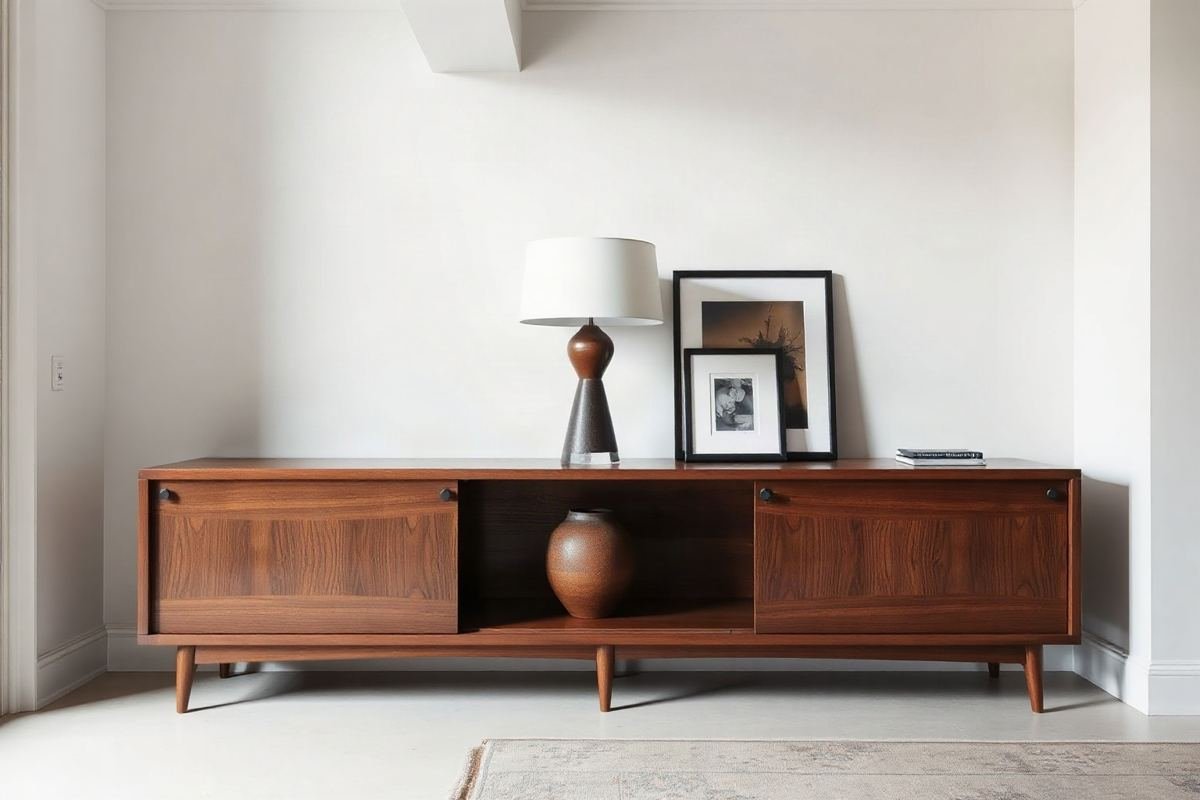
A long, low sideboard with sliding or flip-down doors and slim legs is a mid-century classic. It provides storage in a dining room, living room or entry, and its top becomes a display surface.
The low height keeps sight lines open and leaves the wall above for art or a mirror. It also gives a room a strong horizontal line that makes small spaces feel wider.
- Use it as a media console. A credenza can hold a television and hide cables behind doors.
- Style in threes. Place a lamp, a vase and a small stack of books or bowl for a balanced top.
- Hang art above. Center a large piece or a mirror about 6 to 8 inches above the sideboard.
- Check the interior. Adjustable shelves and felt-lined drawers make it more useful than a purely decorative piece.
- Fit it to the wall. Choose a length that covers around two thirds of the wall behind it.
Budget options: Vintage credenzas are plentiful in thrift and estate sales. Replace tired hardware or add a new top for a fresh, inexpensive upgrade.
Mistakes to avoid: Picking a piece that is too small for the wall, covering the top with clutter, and ignoring weight when moving a solid wood sideboard.
Starbursts, Sputniks and Atomic Accents
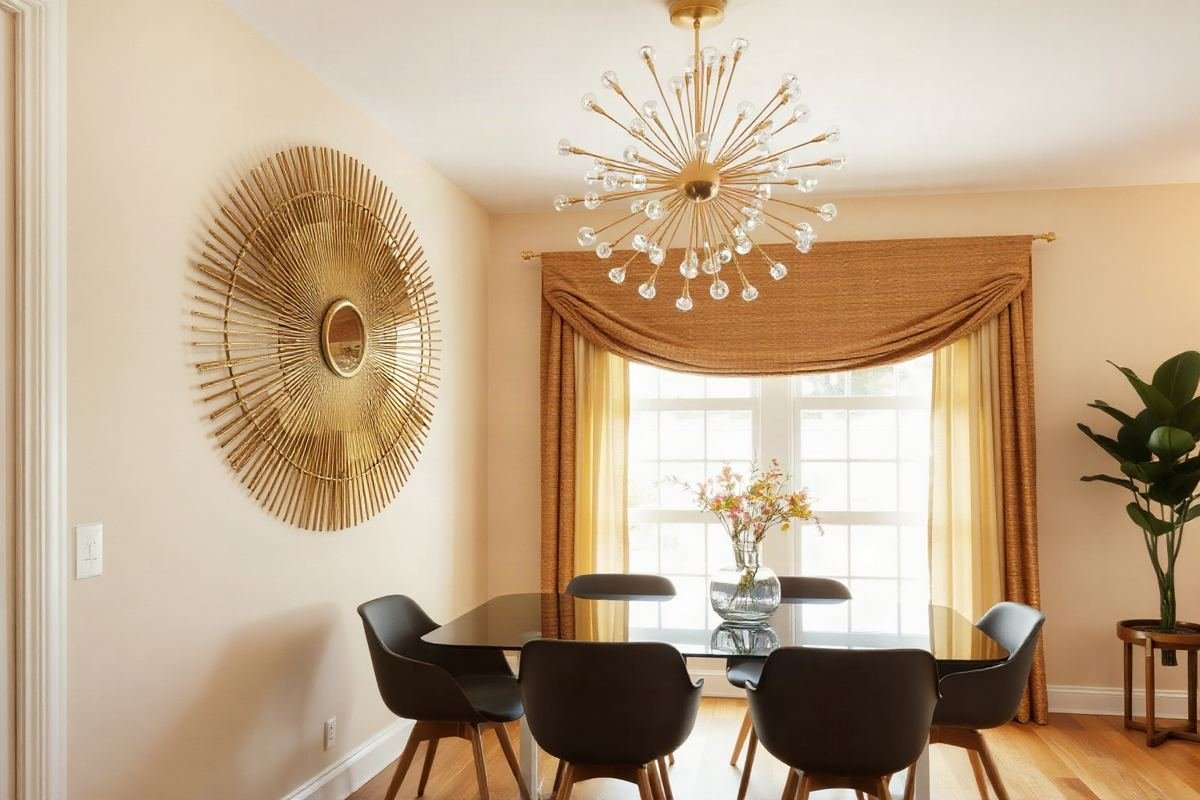
Starburst clocks and mirrors, Sputnik chandeliers and boomerang shapes recall the atomic age optimism of the 1950s. They are small, graphic and often brass or wood.
These accents add playful geometry to otherwise calm rooms. They act as jewelry for the walls and ceiling, and because they are small, they are easy to add or remove as taste changes.
- Hang one starburst. A single large mirror or clock over a sofa or console is more effective than several small ones.
- Choose a Sputnik chandelier. Use it in a dining room or entry where the arms have space and will not be bumped.
- Mix finishes. Brass, black and walnut combine well, but keep one dominant metal.
- Repeat a shape. Echo a boomerang or atom shape in a rug, tray or ashtray to tie the room together.
- Keep scale in mind. A big starburst needs a large wall; a smaller one suits a hallway.
Budget options: Reproduction starburst mirrors and clocks are inexpensive, and thrifted brass accents can be polished or left aged.
Mistakes to avoid: Using too many novelty atomic shapes, which can make a room look like a theme park, and hanging a low-ceiling chandelier where it feels crowded.
Abstract Art and Geometric Gallery Walls
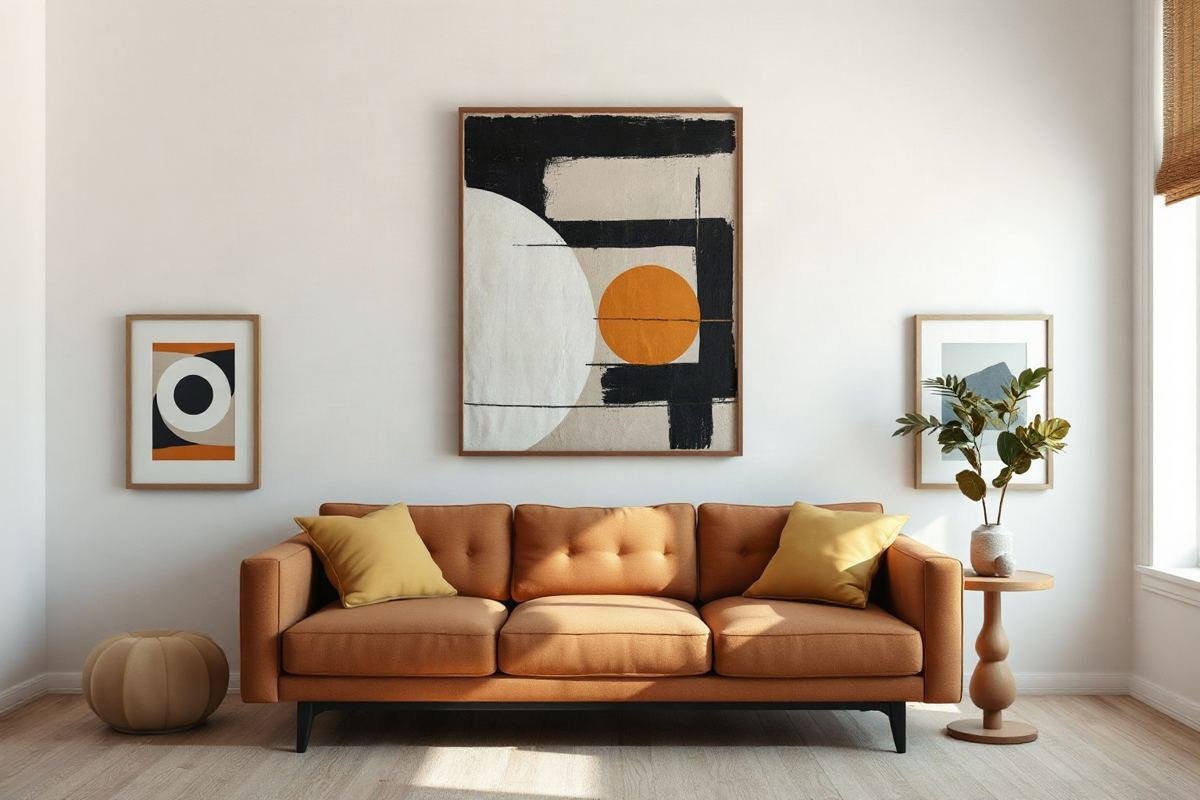
Bold abstract paintings, geometric prints, botanical studies and mid-century posters are hung simply, often in thin wood or black frames. Walls are kept calm so each work has room.
Art gives a minimalist room personality and color. The shapes echo the style’s love of geometry and organic forms, and a big piece can set the palette for the whole room.
- Choose one large piece. A big abstract above the sofa is more impactful than many small prints.
- Use simple frames. Thin walnut, oak or black frames suit the style and keep attention on the artwork.
- Hang at eye level. The center should be around 57 to 60 inches from the floor.
- Build a tidy grid. For a gallery wall, use matching frames and even spacing for a clean, graphic look.
- Pull colors out. Repeat one color from the art in cushions or ceramics to link the room.
Budget options: Download and print vintage-style posters, or frame fabric swatches, wallpaper samples and pages from old books for a low-cost gallery wall.
Mistakes to avoid: Hanging art too high, choosing pieces that are too small for the wall, and mixing so many frame styles that the geometry is lost.
Arc Lamps, Globe Lights and Sculptural Fixtures
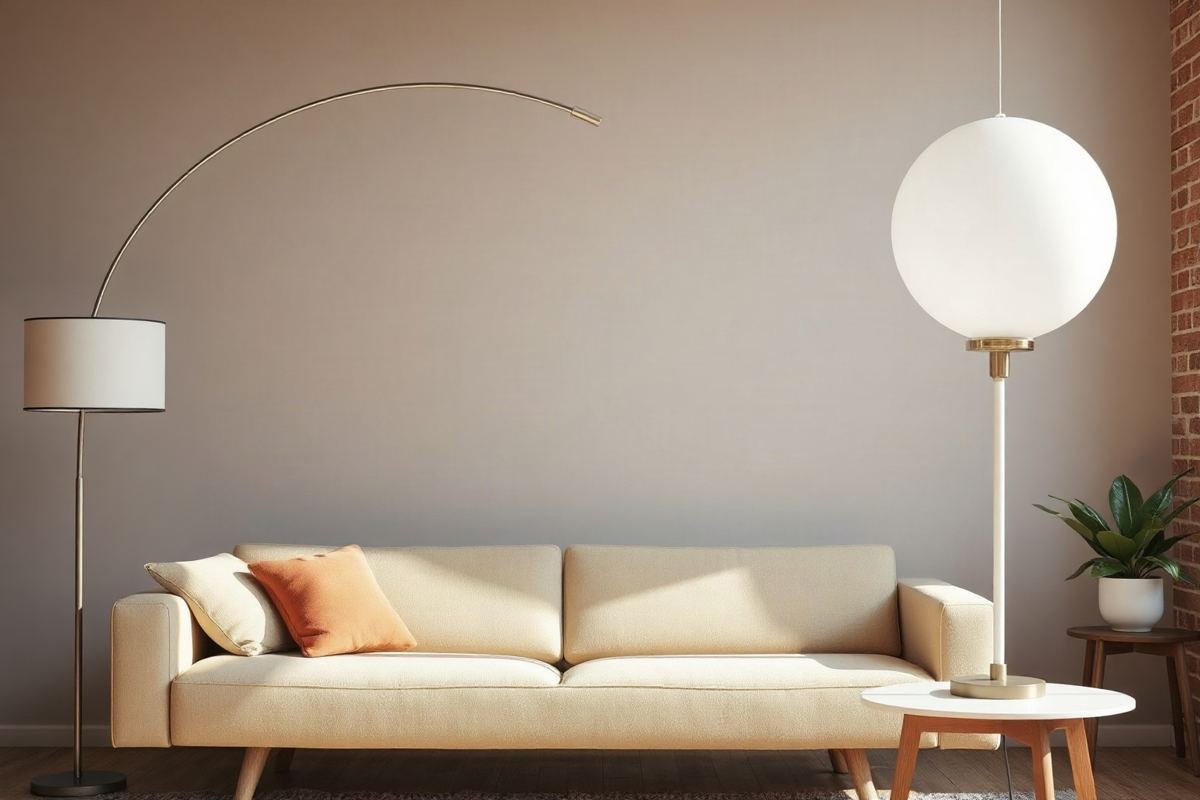
Arc floor lamps, opal glass globes, cone pendants, tripod table lamps and tulip shapes are sculpture as much as light. Their forms are simple, curved and slightly playful.
Lighting is the most effective way to create atmosphere. A good fixture gives a room a focal point in the daytime and a warm glow in the evening, which suits cozy wood interiors.
- Use an arc lamp for reach. It lights a sofa or dining table without wiring a ceiling fixture.
- Choose opal or frosted glass. A soft globe diffuses light and avoids glare.
- Layer three heights. Combine a floor lamp, a table lamp and a ceiling or wall light for balanced illumination.
- Add a dimmer. Smart or simple dimmers let a room shift from task light to evening mood.
- Pick warm bulbs. Use 2400K to 2700K bulbs so wood and brass glow instead of looking flat.
Budget options: Plug-in wall sconces and affordable arc lamps give the look without electrical work. Replace shades on thrifted lamps for a fresh style.
Mistakes to avoid: Hanging a pendant over a table at the wrong height (about 30 to 36 inches above the surface is typical), using cool bulbs, and relying on a single ceiling fixture.
Studio Pottery and Ceramic Accents
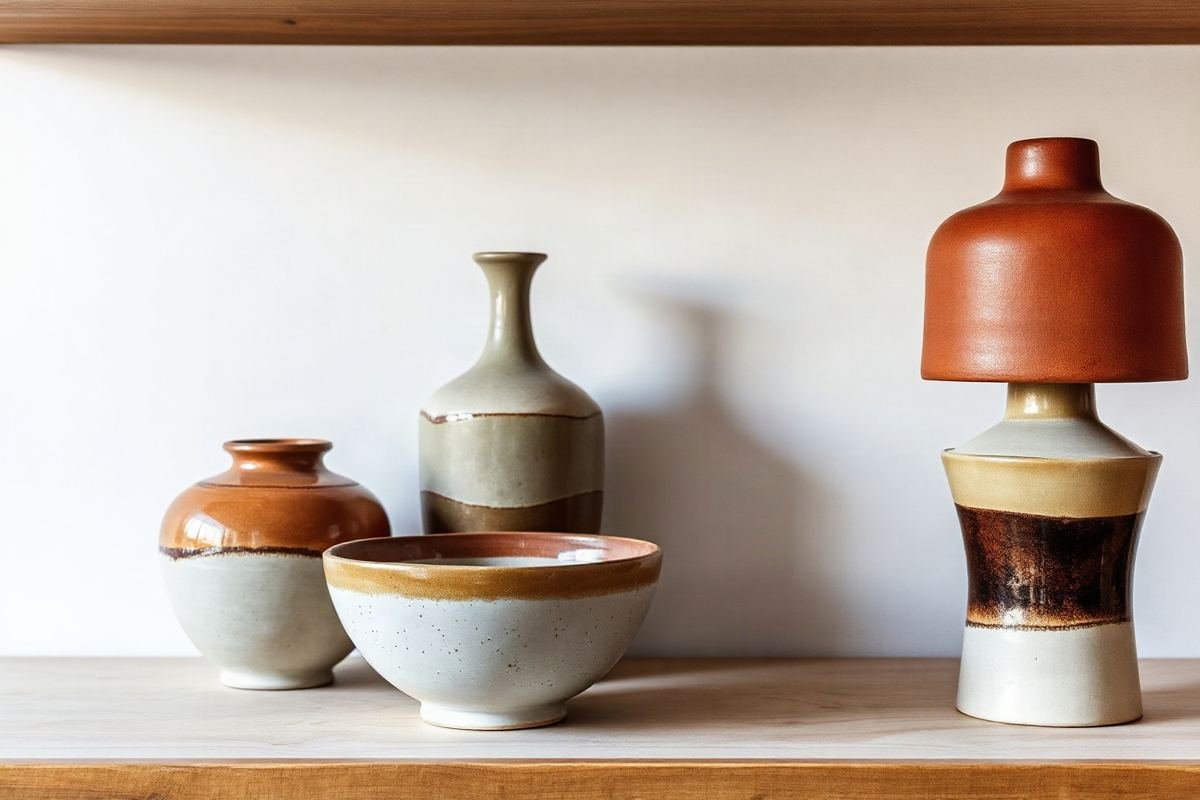
Hand-thrown vases, speckled bowls, stoneware planters and ceramic lamps in earthy glazes add a hand-made feel. Shapes are often rounded or bulbous, with matte or drip finishes.
Ceramics add texture and color against smooth wood and plain walls. Their slight imperfections keep a modern room from feeling cold, and a few good pieces go a long way.
- Group by color. Collect pieces in a similar palette, such as rust, cream and olive, so shelves look intentional.
- Vary the height. Place tall vases beside low bowls and add a stack of books for different levels.
- Use bowls functionally. A large ceramic bowl on a coffee table holds keys, fruit or decorative objects.
- Choose matte glazes. Matte and speckled finishes suit the era more than high-gloss modern glazes.
- Support makers. A single handmade piece gives character that mass-produced items lack.
Budget options: Thrifted vases and bowls, often just a few dollars, can be grouped in one tone. Craft fairs and student sales offer handmade pieces at kind prices.
Mistakes to avoid: Overfilling every shelf, choosing glazes that clash with your palette, and buying matching sets instead of varied pieces.
Plants in Planters and Stands
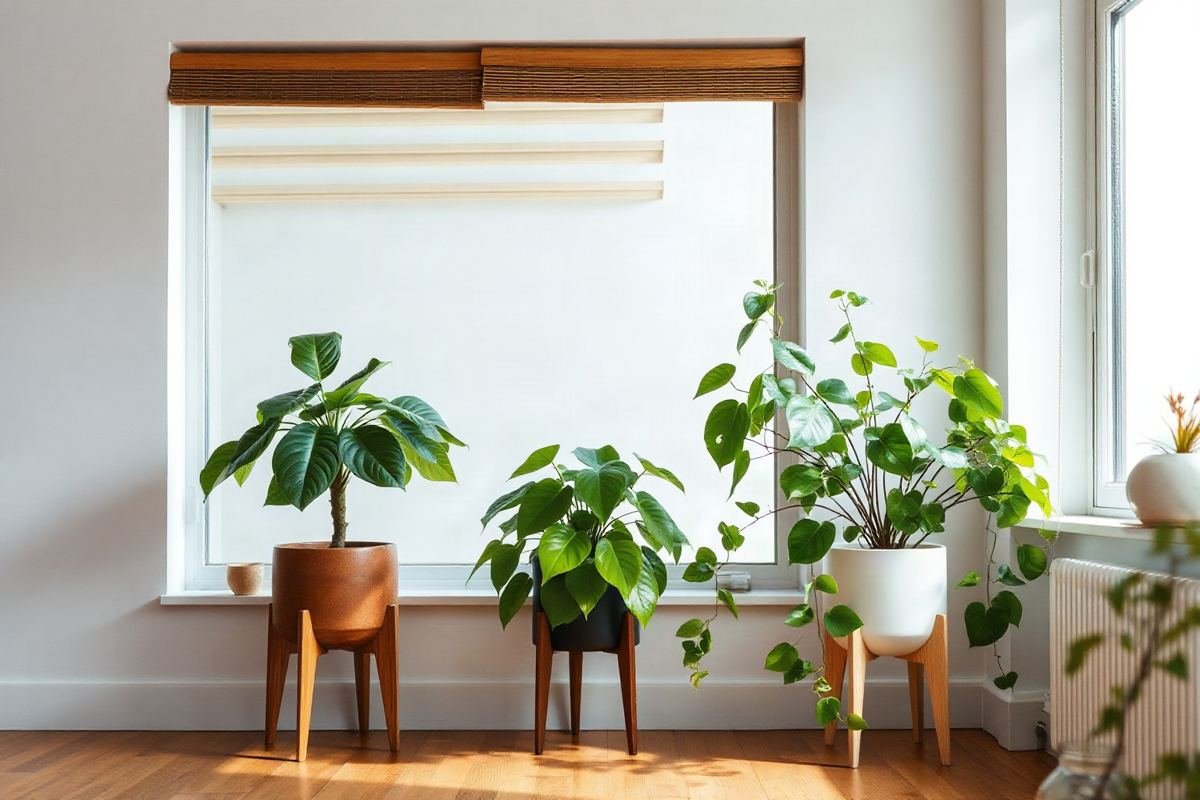
Large leafy plants in ceramic planters on slim wooden stands, hanging macrame holders and cacti in geometric pots are staples. Greenery softens the straight lines of the furniture.
Plants bring the organic shapes that mid-century design celebrated and connect indoors to the garden through large windows. Green also looks excellent against walnut and warm paint.
- Choose a plant stand. Wood stands with tapered legs lift pots off the floor and match the furniture.
- Use large leaves. Rubber plants, monstera and fiddle-leaf figs have graphic shapes that suit the style.
- Pick simple pots. Plain white, speckled or earthy ceramic planters keep focus on the plant.
- Add a trailing plant. Put a pothos or philodendron on a shelf or in a hanging planter for height.
- Match light to plant. Check each plant’s light needs before placing it by or away from the window.
Budget options: Propagate cuttings into jars or inexpensive pots, and use thrifted bowls as cachepots. Wooden stands are easy to find secondhand.
Mistakes to avoid: Putting low-light plants in a dark corner, using pots without drainage, and filling every surface with plants until the lines disappear.
Wood Paneling, Slatted Walls and Brick
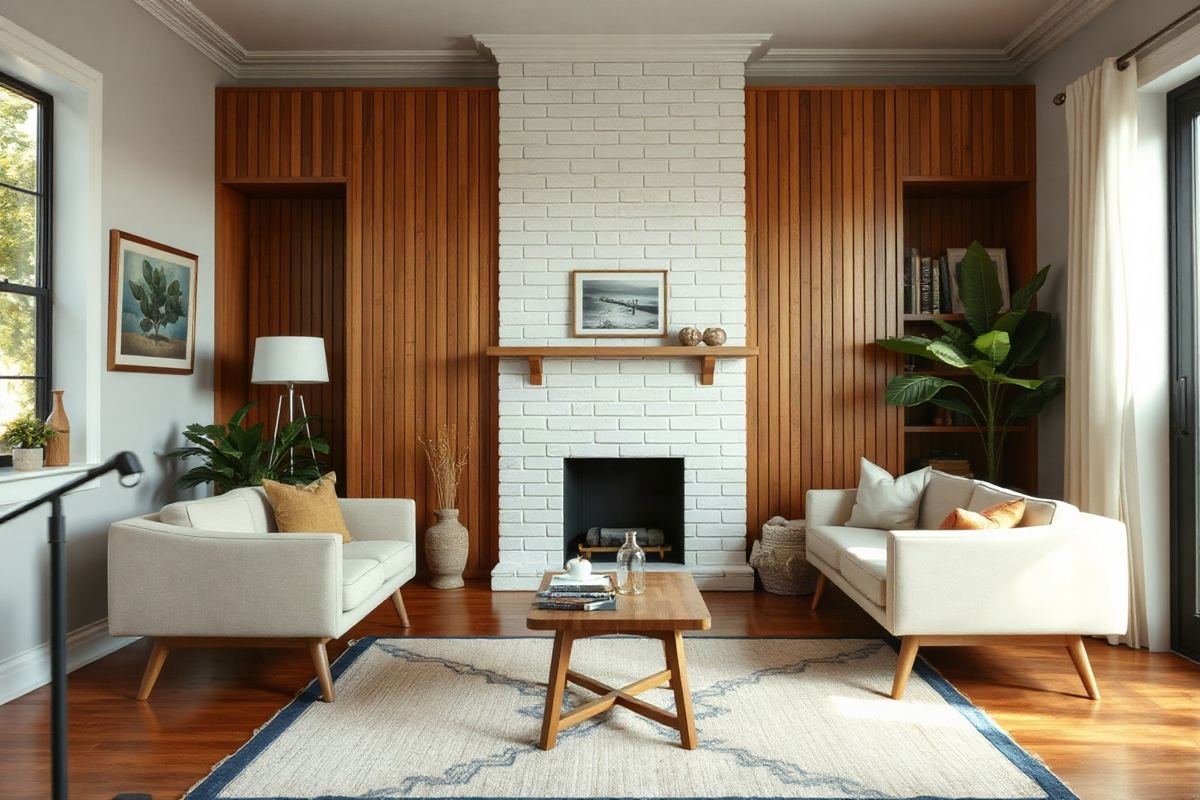
Vertical wood slats, wood-paneled walls, painted or natural brick, and stone fireplaces give a mid-century room architecture. They often appear on a single feature wall rather than the whole room.
Texture on the wall adds warmth and depth, and wood panels absorb sound, which suits open and hard-surfaced rooms. A single feature wall keeps the room from feeling heavy.
- Choose one feature wall. Pick the wall behind the sofa, bed or fireplace and keep the others plain.
- Use slats for sound. Acoustic slat panels reduce echo in rooms with hard floors and high ceilings.
- Keep the wood tone close. Match the paneling to your furniture woods or choose a deliberate contrast.
- Paint brick carefully. White-washed brick looks fresh, but original brick can be left natural for warmth.
- Add a simple mantel. A plain wooden mantel shelf holds art and a few objects without fuss.
Budget options: Peel-and-stick wood slat panels and thin wall planks give the look at a fraction of the cost. Test on a small area first.
Mistakes to avoid: Paneling every wall so the room feels like a cave, mismatched wood tones, and blocking electrical outlets or vents.
Terrazzo, Cane and Natural Textures
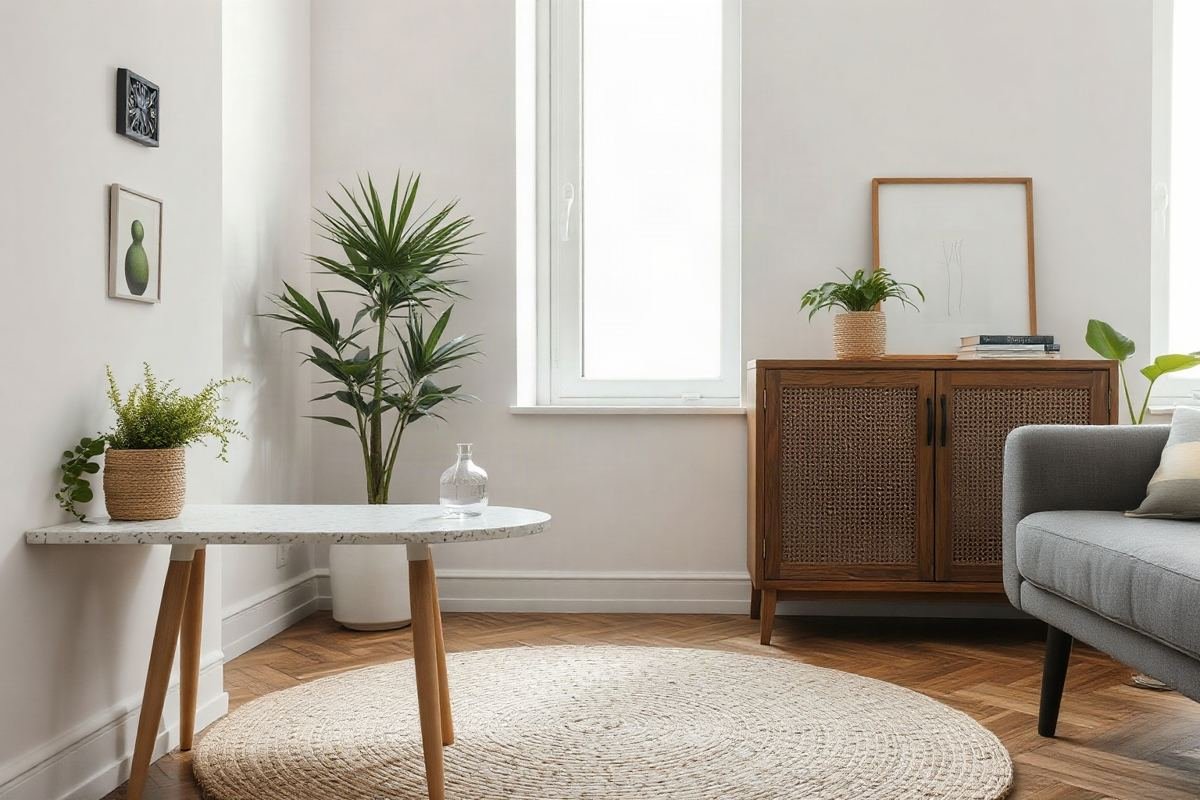
Terrazzo surfaces, cane webbing, rattan, rope, cork and woven jute bring natural variety to the mid-century interior. They appear on tabletops, cabinet fronts, chair seats and baskets.
These materials add texture and pattern without printed color. They also tie the style to current interest in natural materials, and many are lightweight and affordable.
- Try a terrazzo top. A small terrazzo side table or tray adds speckled pattern in a few square feet.
- Add cane doors. Cane panels on a cabinet or sideboard give a softer, lighter look than solid wood.
- Layer a jute rug. A natural fiber rug adds warmth underfoot and hides dirt.
- Use baskets for storage. Woven baskets hold blankets, magazines or plants and warm up a room.
- Keep it balanced. Mix two or three textures, not all of them, so the room feels curated.
Budget options: Cane webbing sheets and a basic cabinet make a simple DIY project. Terrazzo-look trays and coasters are available inexpensively.
Mistakes to avoid: Overusing rattan until the room feels coastal, choosing fragile cane for high-use seats, and mixing too many finishes.
Graphic Rugs and Wool Textiles
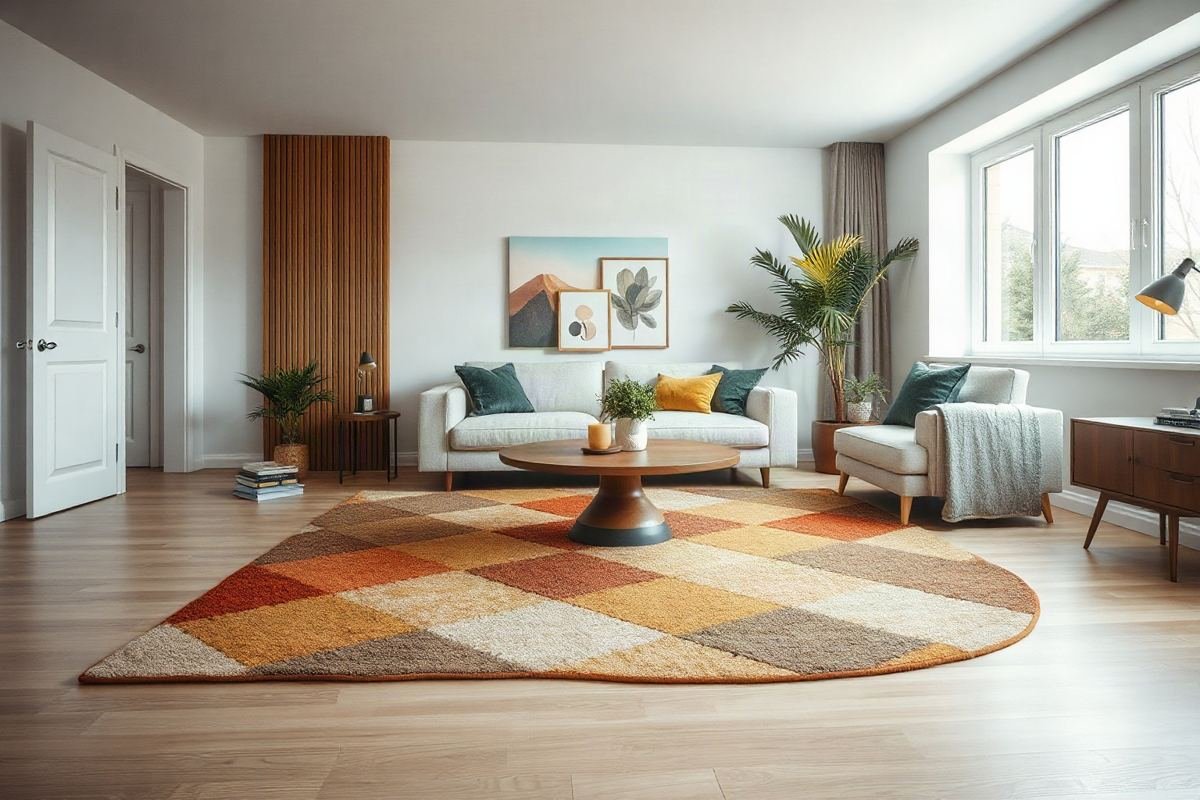
Rugs and textiles in bold geometric patterns, such as stripes, circles, diamonds and abstract shapes, bring graphic energy. Wool, mohair and woven cotton are common.
A pattern on the floor defines the seating area and links the colors in the room. Textiles also add comfort, and a good wool rug lasts for many years.
- Choose a clear pattern. Large-scale geometric designs read as modern art on the floor.
- Size it generously. The front legs of all seating should rest on the rug as a minimum.
- Pick colors from the room. Choose a rug that repeats two of your accent colors.
- Use wool for durability. Wool resists dirt and wear, and cleans better than most synthetics.
- Add cushions in solids. Plain or small-pattern cushions balance a strong pattern.
Budget options: Flatweave and tufted rugs in geometric patterns are widely available at moderate prices, and a rug pad is worth the small extra cost.
Mistakes to avoid: Buying a rug that is too small, choosing a pattern that fights the art, and using multiple strong patterns in one area.
Open Sightlines, Big Windows and Minimal Dressing
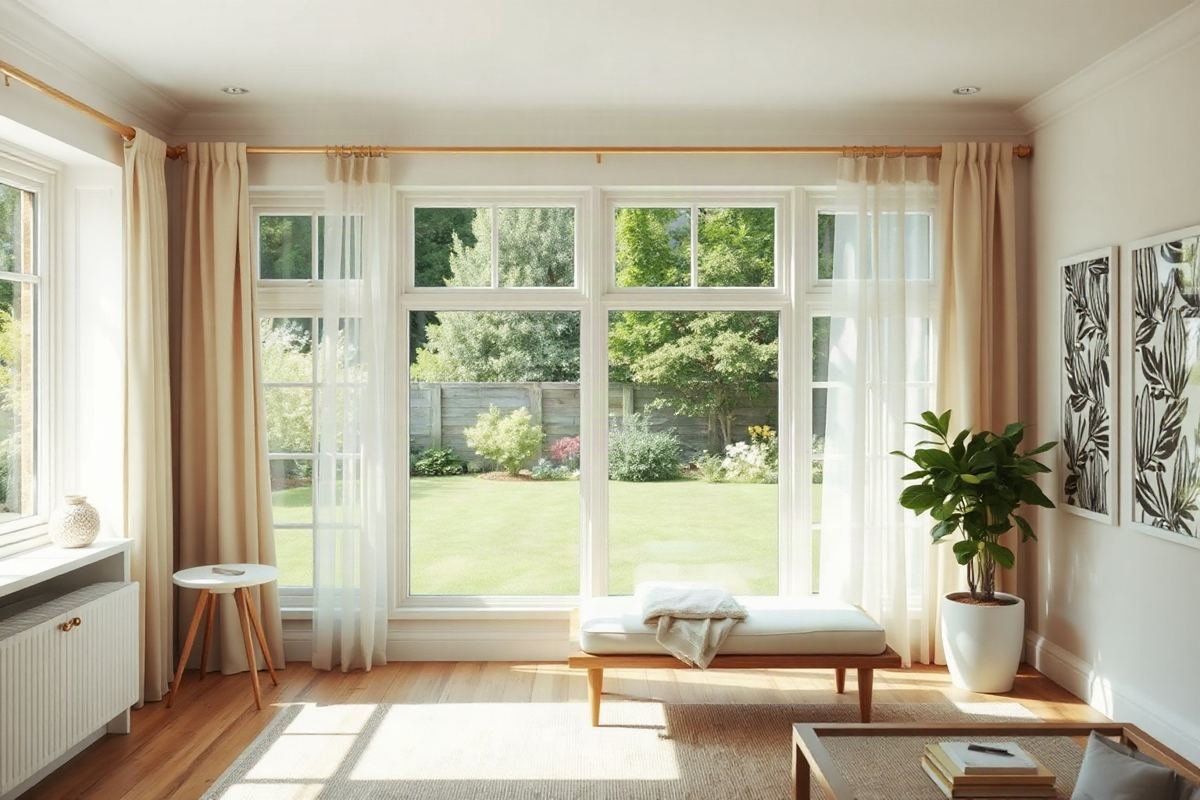
Large windows, glass doors and open plans are central to mid-century architecture. Window treatments are simple, such as sheer panels or slim blinds, and the room connects to the outdoors.
Light and views are the most valuable parts of the style. Keeping windows clear lets the garden become part of the decor and the room feel larger.
- Keep treatments simple. Sheer linen panels or thin roller shades let light in while protecting privacy.
- Use low furniture near windows. Keep benches and credenzas below sill height so views stay open.
- Mount curtains wide. Hang rods beyond the frame so the glass shows fully when open.
- Bring the garden in. Align seating to face the view and carry colors from outside indoors.
- Choose slim frames. Black or wood slim window frames keep the lines crisp if you are replacing windows.
Budget options: Sheer curtains and cordless blinds are inexpensive upgrades. Clean the windows and trim back outside plants to boost light.
Mistakes to avoid: Blocking windows with heavy drapery, putting tall furniture in front of glass, and ignoring privacy needs on street-facing walls.
What Is Going Out in 2026
- Fading | Replacing it
- Matching furniture sets | One or two hero vintage pieces mixed with new
- Heavy, bulky overstuffed sofas | Low sofas with visible legs
- Pure gray and white | Warm white with olive, mustard and rust
- Disposable flat-pack | Solid wood, vintage and secondhand pieces
- Recessed lighting only | Arc lamps, globes and sculptural fixtures
- Cluttered gallery walls | One large abstract or a tidy grid
- Fake plants in plastic pots | Real plants in ceramic planters on stands
- Heavy drapes | Sheer panels and open windows
How to Combine Trends Without Making a Mess
Because the style has so many signature elements, it is easy to overdo it. Use these rules to keep a room looking authentic instead of themed.
Rule 1: Pick one hero piece. Choose a lounge chair, sideboard or lamp as the focal point and let other items support it.
Rule 2: Keep wood tones related. Use one lead wood and one or two close companions instead of many different finishes.
Rule 3: Limit accent colors. Choose two bright shades and repeat each three times around the room.
Rule 4: Mix eras. Combine vintage mid-century with a few modern basics so the room feels collected, not like a museum.
Rule 5: Leave air around furniture. Exposed legs and clear walls are part of the style, so resist filling every space.
Rule 6: Edit at the end. Remove one decorative object from every surface before you call the room finished.
Three Sample Combinations
The Warm Walnut Room: Walnut sideboard, low wool sofa, mustard cushions, an arc lamp and one large abstract painting on a warm white wall.
The Plant-Filled Retreat: Cane cabinet, terrazzo side table, large leafy plants on wooden stands, olive cushions and a jute rug.
The Atomic Dining Space: Teak table, a Sputnik chandelier, a starburst mirror, bright ceramics on a credenza and graphic rug.
Budget Guide
- Budget | Where to spend | Where to save
- Under $300 | Paint, a lamp, cushions, a thrifted vase or ceramic bowl, a framed print | Everything else: keep existing furniture and add one hero accent
- $300 to $1,500 | A vintage sideboard or lounge chair, an arc lamp, a wool rug, a plant stand | Thrifted ceramics, prints and secondhand side tables
- $1,500 to $5,000 | A quality low sofa, a solid wood dining table, a statement pendant and large art | Mix vintage and new, reupholster instead of replacing good frames
- $5,000+ | Authentic or licensed iconic chairs, custom built-ins, wood paneling, new windows | Accessories and small decor, which can be added slowly
Smart buying tips:
- Spend the most on what you use daily and cannot easily change: seating, tables, storage and lighting. Add accessories over time.
- Vintage and secondhand shopping is the authentic route, but always check for sturdy joints, intact veneers and solid drawer runners.
- Buy fabric swatches and test seats in person, since low mid-century seating varies a lot in comfort.
Step-by-Step 2026 Mid-Century Modern Decor Refresh
- Define how you use the room. List your top three activities and design for those.
- Choose three mood words. Words such as warm, airy and graphic guide your choices.
- Pick a hero piece. Start with a chair, sideboard, lamp or artwork.
- Choose a lead wood. Match other woods to its undertone.
- Set the palette. Use a warm white base with two accent colors.
- Plan the layout. Keep 30 to 36 inches for walkways and angle one chair for interest.
- Paint and repair. Refresh walls and treat any old wood before moving furniture in.
- Add the big pieces. Place the sofa, rug, sideboard and main chair.
- Layer the lighting. Combine floor, table and ceiling light on dimmers with warm bulbs.
- Add art, plants and ceramics. Hang art at eye level and group objects in threes.
- Edit and live with it. Adjust after two weeks and remove anything that crowds the space.
Styling the Trends by Room Size and Layout
Trends behave differently depending on the room you have. Here is how to adapt the ideas above to the space you actually live in.
Small Mid-Century Rooms (under 150 sq ft)
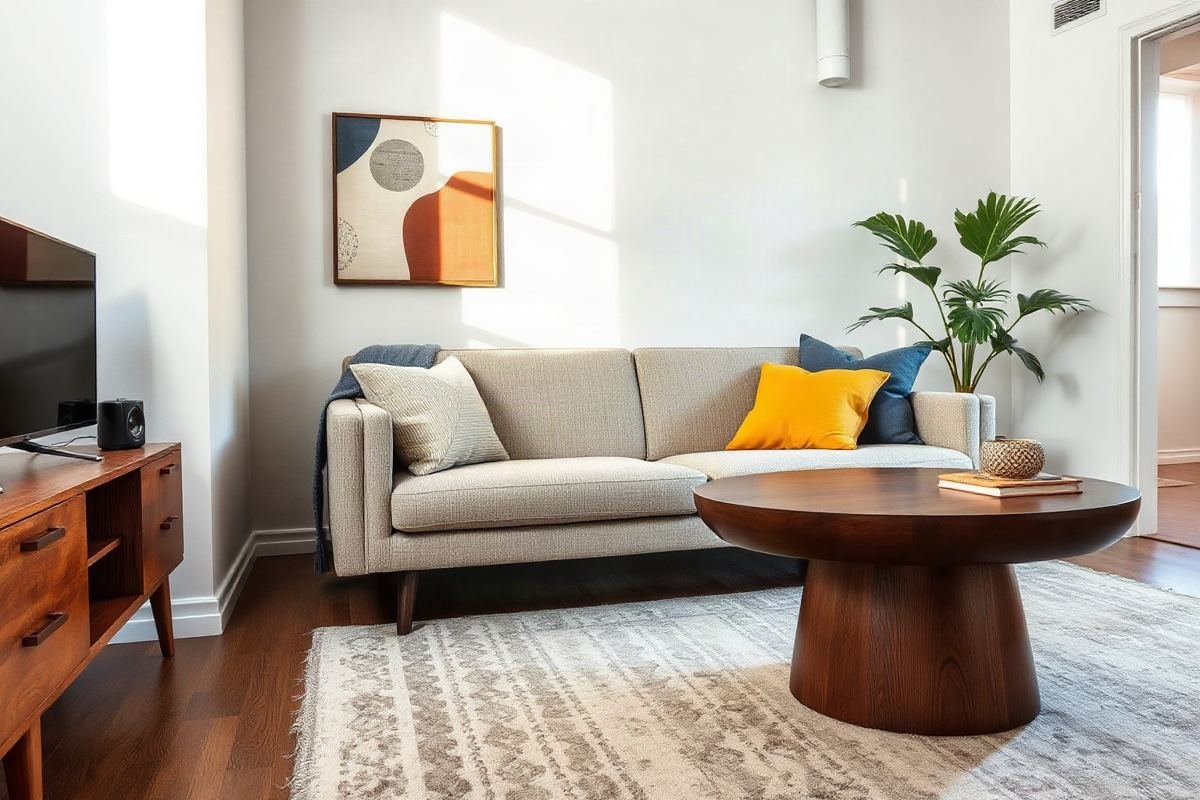
Choose a compact sofa. A loveseat or apartment sofa with slim legs keeps floor visible and the room open.
Use a round coffee table. It removes sharp corners and helps movement in tight spaces.
Go vertical. Hang art and a mirror higher on the wall and use tall slim shelving.
Pick one bold color. A single accent chair or rug gives personality without crowding.
Float lighting. An arc lamp saves table space and lights the seating area.
Open-Plan Mid-Century Homes
Divide with furniture. A low sideboard or open shelf separates living and dining without blocking light.
Define zones with rugs. A graphic rug under the seating area anchors it.
Repeat the wood. Use the same wood tone across zones so the open space feels unified.
Use big lighting. A chandelier or large pendant marks the dining zone from the sofa.
Keep sight lines low. Choose low furniture so the view across the room stays open.
Large or High-Ceilinged Rooms
Create two groups. Use one main sofa group and a reading corner with a lounge chair.
Scale up art. Choose oversized paintings or a gallery wall to fill big walls.
Add a feature wall. Wood slats, brick or paneling gives tall walls texture and interest.
Hang a large fixture. A big chandelier or cluster pendant fits the ceiling height.
Use big rugs. Large rugs anchor each seating group and soften hard floors.
Rentals and Temporary Homes
Rely on furniture. Choose a sideboard, chair and lamp that move with you.
Use removable wall treatments. Peel-and-stick slat panels or wallpaper add architecture.
Plug in the lighting. Floor lamps and plug-in sconces give mood without wiring.
Swap the hardware. Keep originals safe and replace pulls with brass or wooden styles.
Invest in rugs and textiles. Wool rugs and cushions carry the colors and travel with you.
FAQ
What is mid-century modern decor? It is a design style from roughly the 1940s to 1960s. It features clean lines, tapered legs, warm wood, organic and geometric shapes, simple forms and a connection to outdoors through large windows and plants.
What colors are used in mid-century modern? Common colors are mustard, olive, avocado, burnt orange, teal and rust, set against warm white and wood. Many rooms use two accents and let wood and neutrals do the rest.
Is mid-century modern still in style in 2026? Yes. Its focus on quality, warmth and simple forms keeps it popular, and designers are mixing it with softer textures, plants and personal objects so rooms feel lived in.
How do I tell real vintage from reproduction? Look for solid joinery, maker marks, wear consistent with age and heavier woods. Reproductions can be good, but veneer quality and drawer construction are often telling signs.
Can mid-century modern work in a small home? It suits small homes because pieces are slim and raised on legs. Pick a few well-chosen items and keep floors and walls clear.
Can I mix mid-century with other styles? Yes. It pairs well with Scandinavian, modern farmhouse and contemporary styles. Keep the lines simple and share a color or wood tone to tie everything together.
How do I decorate a mid-century room on a budget? Shop secondhand for wood pieces, paint walls warm white, add cushions and thrifted ceramics, and use plug-in lamps. Small changes to lighting and color have a big effect.
What flooring suits mid-century decor? Wood floors in oak or walnut, terrazzo, cork, and polished concrete all suit it. Add a wool rug for warmth, and keep rugs flat and graphic.
Final Thoughts
Mid-century modern works in 2026 because it is honest about how rooms are used: light, simple and built to last. You do not need a full set of famous chairs. Start with a single warm wood piece, a good lamp and one color you love, and build outward. The best mid-century rooms look relaxed and gather character with each decade.