
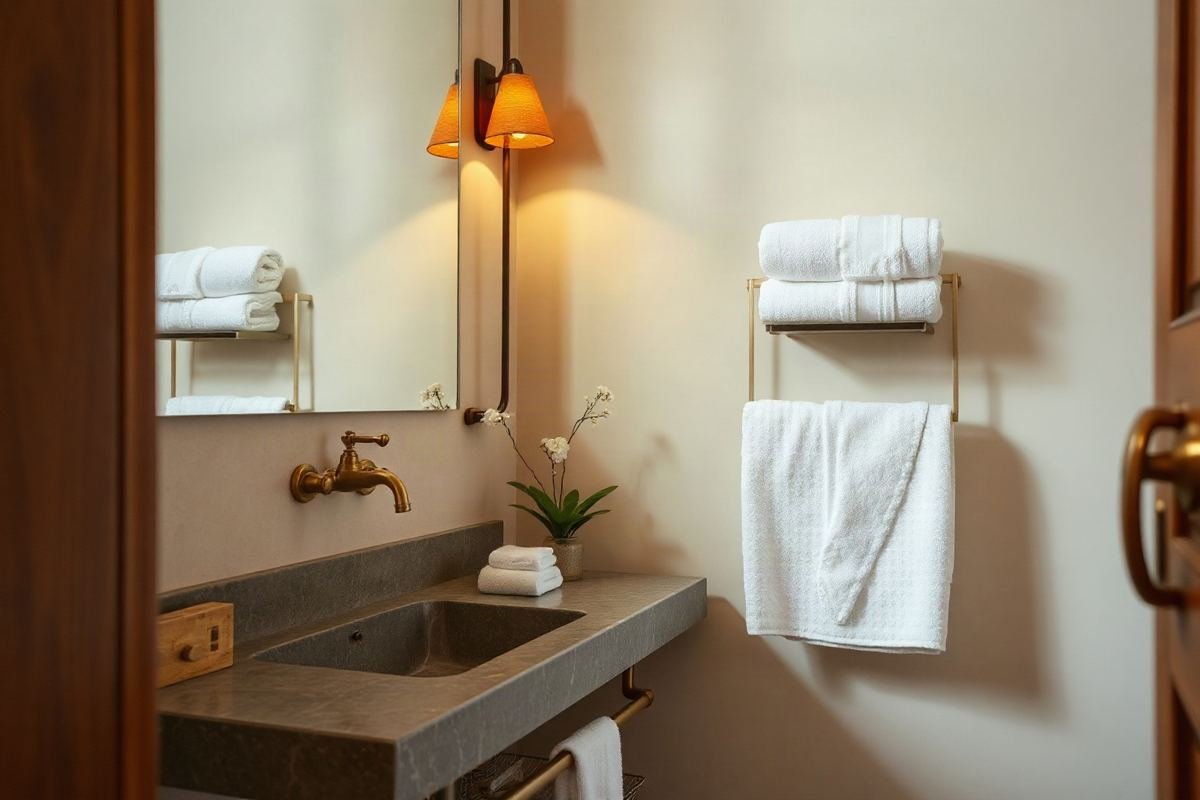
The defining 2026 spa-style bathroom decor trends are calm, tactile and quietly functional. Expect tadelakt-look plaster walls, freestanding soaking tubs, stone and travertine surfaces, warm wood vanities, rain showers with niches, layered towels, plants, soft layered lighting, unlacquered brass, in-room scent rituals and heated floors. The common thread: a bathroom that lowers your heart rate the moment you walk in, built from natural materials and edited down to what you actually use.
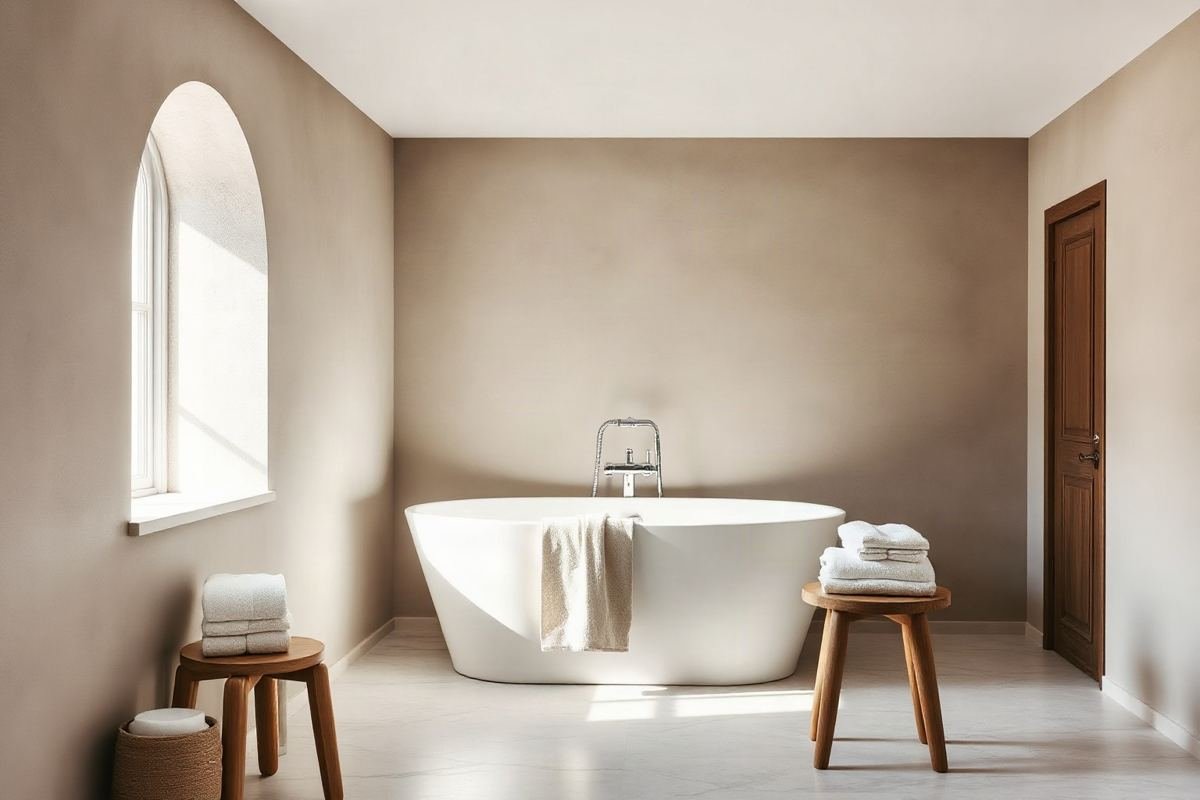
For years the bathroom was the room people rushed through. In 2026 it has become the room people protect. After long days of screens and noise, a few quiet minutes behind a closed door have real value, and homeowners are designing for that moment instead of treating the bathroom as a purely practical box of tile and chrome. That shift is not a passing mood, but a lasting change in what people value at home.
This guide walks through fourteen spa-style bathroom looks designers keep returning to. For each one you will find what it is, why it works, how to build it, a budget route and the mistakes that make it fall flat. Near the end you will find a combining guide, spending tiers by budget, advice for small bathrooms and rentals, a step-by-step plan and an FAQ.
The Big Picture: Why Spa-Style Bathroom Decor Is Changing in 2026
Three forces explain almost every trend below.
- Rest is a feature. People now want rooms that help them switch off. Designers often describe the bathroom as the one space with a door that locks, so it makes sense to fill it with softness, warmth and slow rituals rather than harsh light and clutter on every surface.
- Materials over gadgets. Instead of piling on technology, the spa look leans on honest textures: plaster, stone, wood, linen and cotton. These age gracefully, feel good underfoot and in the hand, and avoid the dated feel that shiny trends can acquire within a few years.
- Less visible stuff. A spa never shows you a dozen half-empty bottles. The strongest bathrooms in 2026 hide the practical mess in smart storage and display only a few beautiful, useful items, which makes even a modest room feel generous and calm.
When choosing what to adopt, ask whether a change lowers noise, adds warmth or hides clutter. If it does none of these, it probably does not belong in a spa-style room, however popular it looks online. Everything else is optional decoration, and the best rooms are usually the most edited ones.
Tadelakt-Look Plaster Walls
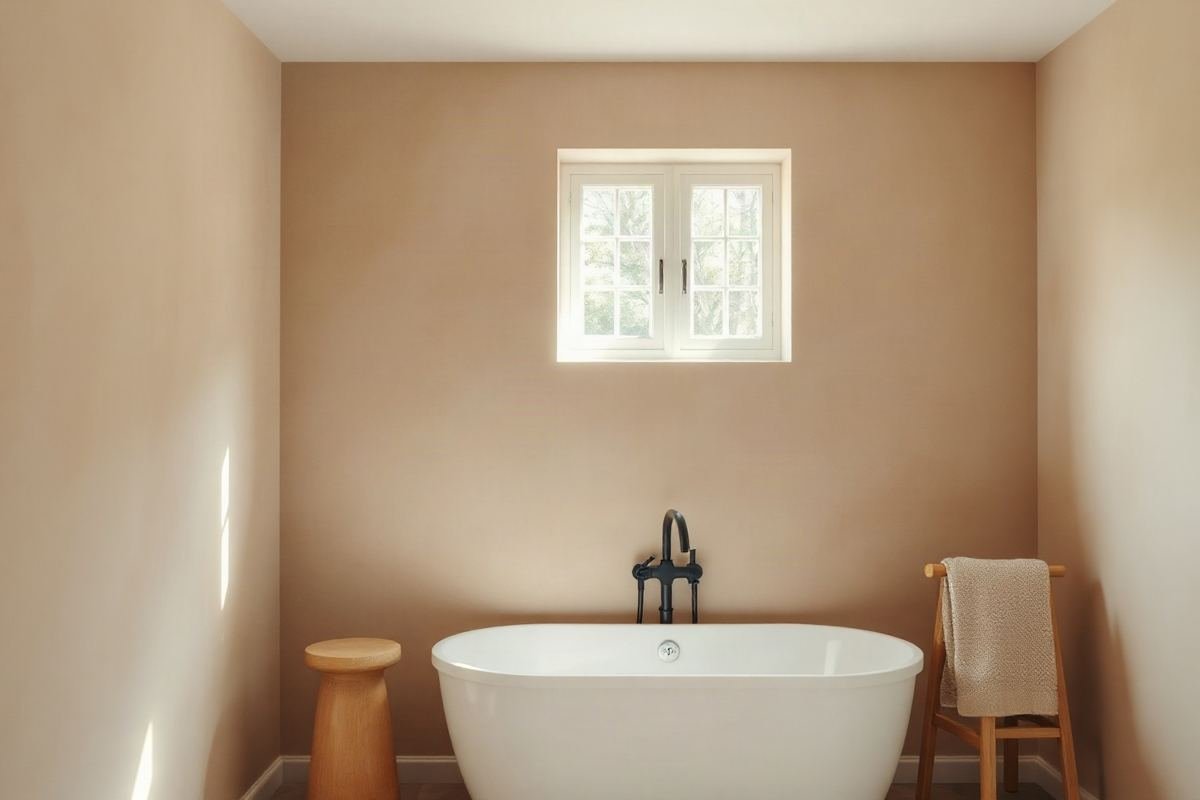
Plaster and plaster-effect finishes give walls a soft, cloud-like surface with no grout lines. Real tadelakt is a polished lime plaster that is naturally water resistant, while modern lookalikes use microcement or specialist paint to get a similar glow.
The look works because it removes visual busyness. One continuous surface wrapping the room makes it feel larger and calmer, and the subtle variation in tone adds depth that flat paint cannot match, especially in low, warm light.
- Choose a warm neutral. Sand, putty, clay and soft stone tones read as spa-like and flatter skin in the mirror.
- Seal wet zones. Use a waterproof sealer or hire a specialist for shower walls, where lime and microcement need proper protection.
- Wrap the room. Carrying the finish over walls and even the tub surround creates that unbroken cave-like calm.
- Keep fixtures simple. Plain tapware and a quiet mirror let the texture be the star.
- Mind the light. Plaster glows under warm bulbs but looks flat under cold ones, so choose 2700K lighting.
Budget options: Budget options: Limewash-effect paint rated for bathrooms, applied with a wide brush in crossed strokes, gives a similar mottled softness for the price of a few cans.
Mistakes to avoid: Mistakes to avoid: Skipping ventilation, applying decorative plaster to shower walls without waterproofing, and picking a cool gray that turns clinical.
The Freestanding Soaking Tub
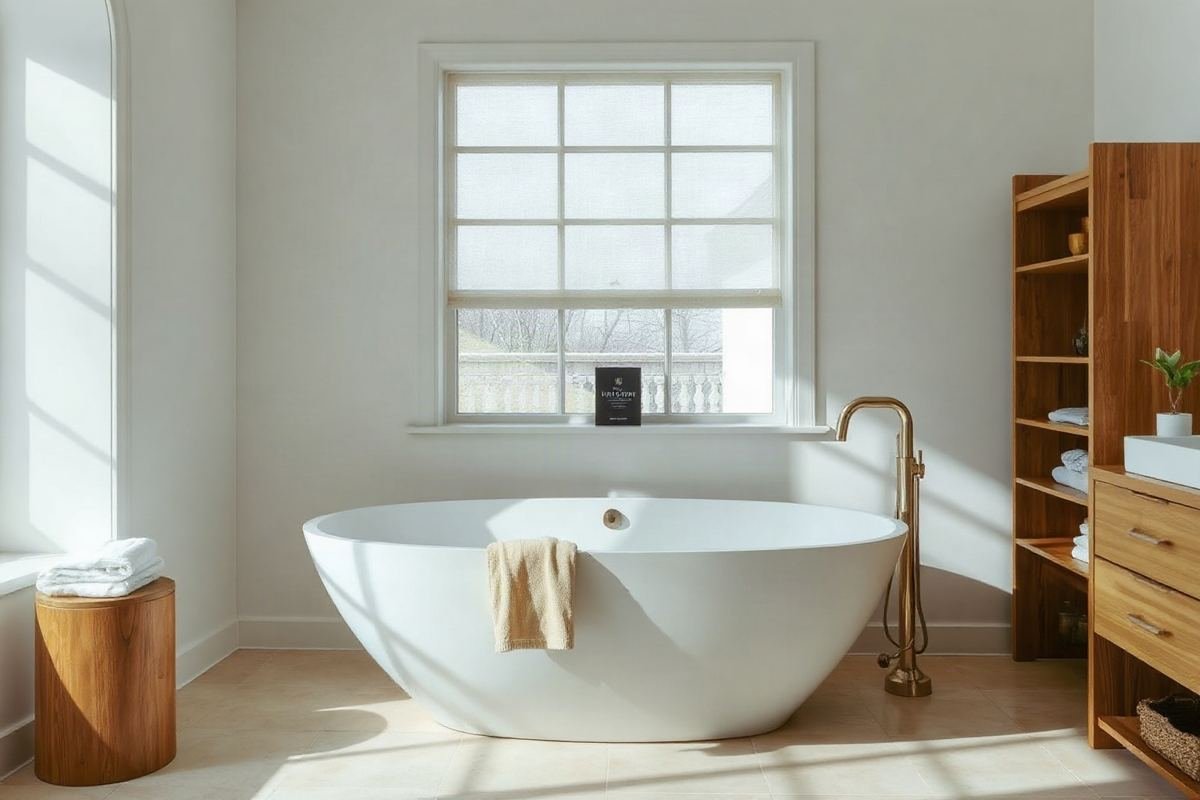
A deep freestanding tub turns the bathroom into a destination. Oval, sculptural shapes in white or stone-effect finishes are popular, often paired with a floor-mounted filler that looks like a piece of furniture rather than plumbing.
It works because bathing becomes an event instead of a chore. Even if you use it only a few times a month, the tub sets the tone of the entire room and gives you a natural focal point.
- Measure the floor. Allow room to walk around the tub and reach the filler, ideally with a few inches of clearance on every side.
- Check floor strength. Filled stone-resin and cast iron tubs are heavy, so confirm your structure can carry the load.
- Pick the filler early. Floor-mounted fillers need plumbing in the slab, so choose the model before the floor is finished.
- Add a tray or stool. A teak stool or slim caddy holds a book, candle and towel within reach.
- Choose comfort over style. Sit in a tub at the showroom, because backrest angle matters more than shape.
Budget options: Budget options: Acrylic freestanding tubs cost far less than stone resin and look nearly identical when paired with a wall-mounted filler that avoids slab plumbing.
Mistakes to avoid: Mistakes to avoid: Forcing a tub into a tight room, ignoring water heater capacity, and choosing a shallow model that never covers your shoulders.
Stone and Travertine Surfaces
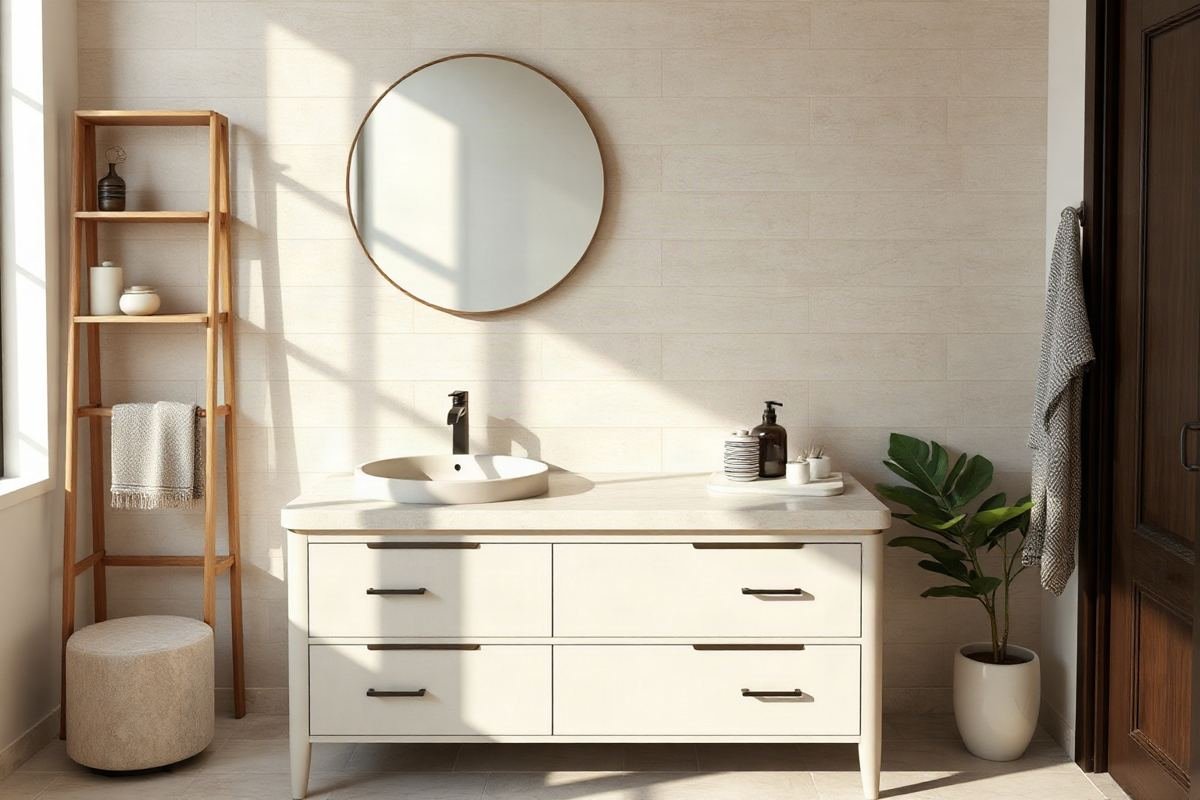
Natural stone, especially honed travertine, limestone and softly veined marble, is back in a big way. The finish is matte and slightly textured, which feels earthy and warm instead of showy and polished.
Stone suits spa design because it connects the room to nature and develops character over time. Even small touches, such as a stone vanity top or sink, bring weight and permanence to the space.
- Go honed, not polished. Matte finishes hide water spots better and feel softer to the touch.
- Use one hero piece. A single stone sink, bench or vanity top gives impact without the cost of covering every surface.
- Seal it regularly. Porous stones need sealing at installation and again every year or two, depending on the product.
- Pair with wood. Warm oak or walnut next to cool stone keeps the palette balanced.
- Choose large format. Big slabs and tiles reduce grout lines and look more luxurious.
Budget options: Budget options: Stone-look porcelain tile offers the same appearance with less maintenance, and a small stone tray or soap dish adds the feel for under fifty dollars.
Mistakes to avoid: Mistakes to avoid: Using unsealed stone near the tub, mixing too many veining patterns, and buying polished slabs that become slippery when wet.
Warm Wood Vanities
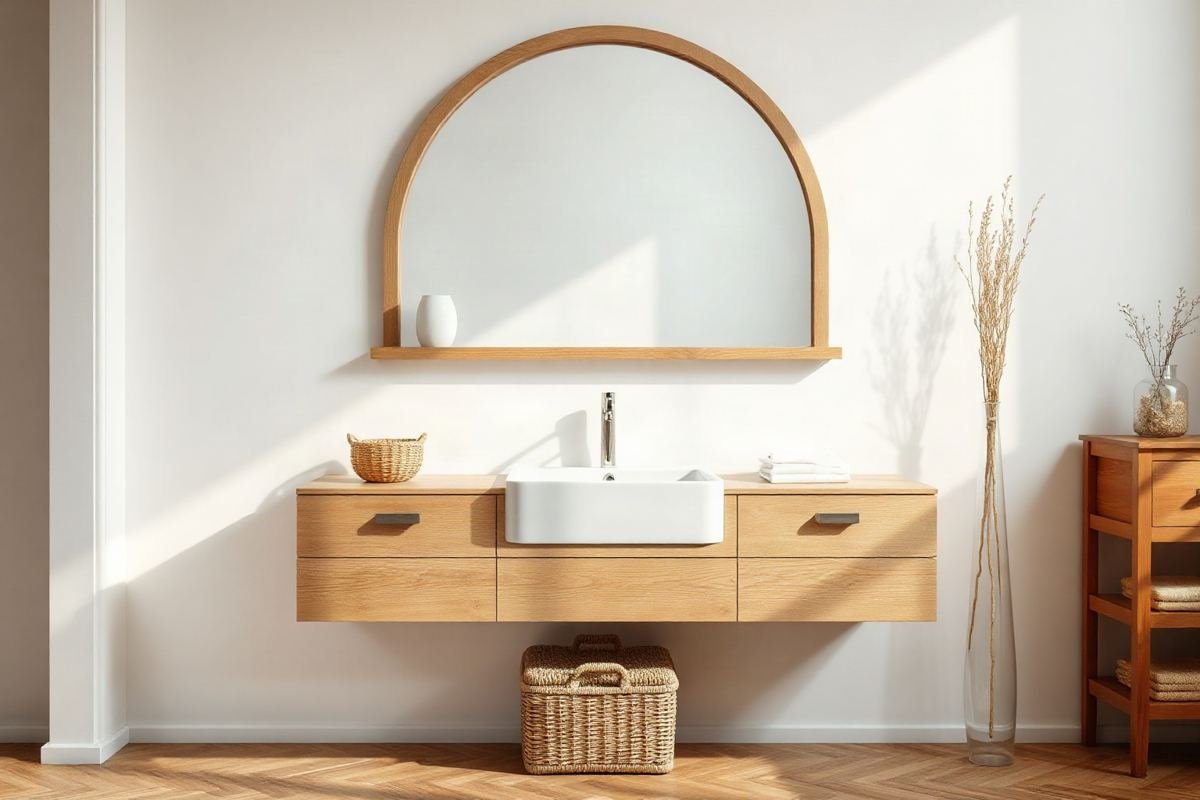
Wood is replacing white gloss cabinetry as the preferred vanity material. Light oak, ash and walnut with a natural, low-sheen finish bring warmth to a room that can otherwise feel cold.
The reason is simple: wood softens hard surfaces like tile, glass and porcelain. It also reads as furniture, which makes the bathroom feel like a considered room rather than a fitted utility space.
- Choose bathroom-rated wood. Look for veneer or solid wood with a durable moisture-resistant finish made for wet rooms.
- Float the vanity. Mounting it off the floor shows more flooring and makes cleaning easier.
- Keep grain visible. Matte, natural finishes feel spa-like, while heavy stains hide the character.
- Add a ribbed or fluted front. Vertical texture adds interest without adding color.
- Match wood tones. Repeat the vanity tone in a stool, mirror frame or shelf.
Budget options: Budget options: Pair an inexpensive plain vanity with a wood-veneer door upgrade, or buy a solid wood console and add a vessel sink with proper sealing.
Mistakes to avoid: Mistakes to avoid: Placing untreated wood directly beside a shower, mixing three different wood tones, and ignoring ventilation.
Walk-In Rain Showers
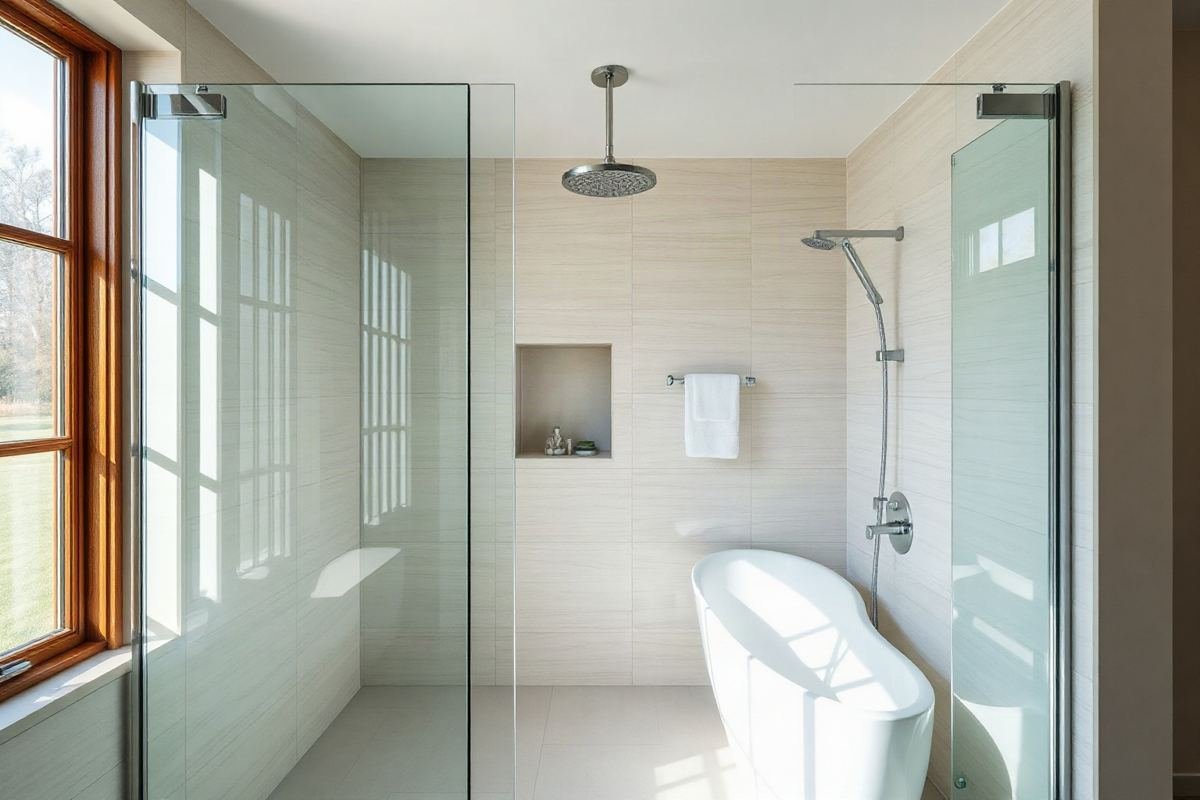
A spacious walk-in shower with a wide overhead rain head and no door clutter is the signature spa move. Frameless glass, curbless entries and large tiles keep sightlines clean.
It works because a shower is where most people spend their bathroom time. Gentle, generous water flow and a roomy enclosure turn a daily habit into something that feels restorative.
- Add a built-in niche. A recessed shelf keeps bottles off the floor and out of sight.
- Consider a handheld too. A rain head plus a handheld wand makes cleaning and rinsing easier.
- Use a linear drain. Slim drains allow gentle slopes and let large tiles run uninterrupted.
- Include a bench. A small built-in seat is useful for shaving and adds a spa feel.
- Upgrade the glass. Clear low-iron glass shows the tile color accurately and looks cleaner.
Budget options: Budget options: Replace the shower head with a large rain model, swap the curtain for a single glass panel and add a tension shelf for the same atmosphere.
Mistakes to avoid: Mistakes to avoid: Choosing a rain head without checking water pressure, skipping a proper slope, and using tiny mosaic floors that are hard to clean.
Layered Linen and Cotton Towels
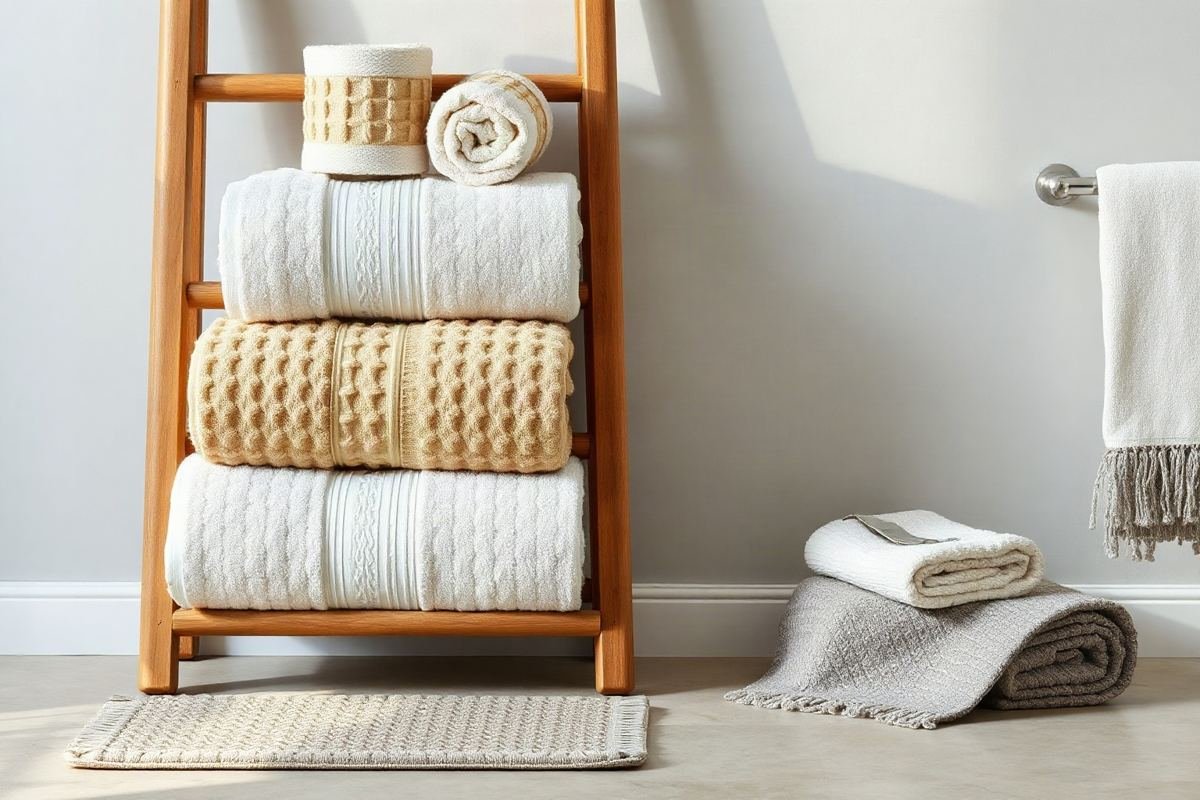
Towels are the quickest way to give a bathroom a spa feel. Think thick cotton, waffle weave and washed linen in cream, oatmeal, clay and soft gray, rolled or folded in neat stacks.
They matter because touch is a huge part of relaxation. A thick towel after a shower is a sensory reward, and a matching set makes the room look intentional with almost no effort.
- Stick to two or three colors. A tight palette in a single family looks calm and expensive.
- Roll, do not stack. Rolled towels in a basket or on a shelf look like a spa display.
- Buy fewer, better towels. Heavier cotton lasts longer and feels better than thin sets.
- Add a robe hook. A visible, matching robe on a hook adds hotel-style comfort.
- Wash correctly. Skip fabric softener, which reduces absorbency over time.
Budget options: Budget options: A single new set in one tone, plus a plain bath mat, transforms the room for a modest spend and can be refreshed each season.
Mistakes to avoid: Mistakes to avoid: Mixing many patterned towels, leaving damp towels bunched on hooks, and keeping stained or worn sets on display.
Plants and Botanical Touches
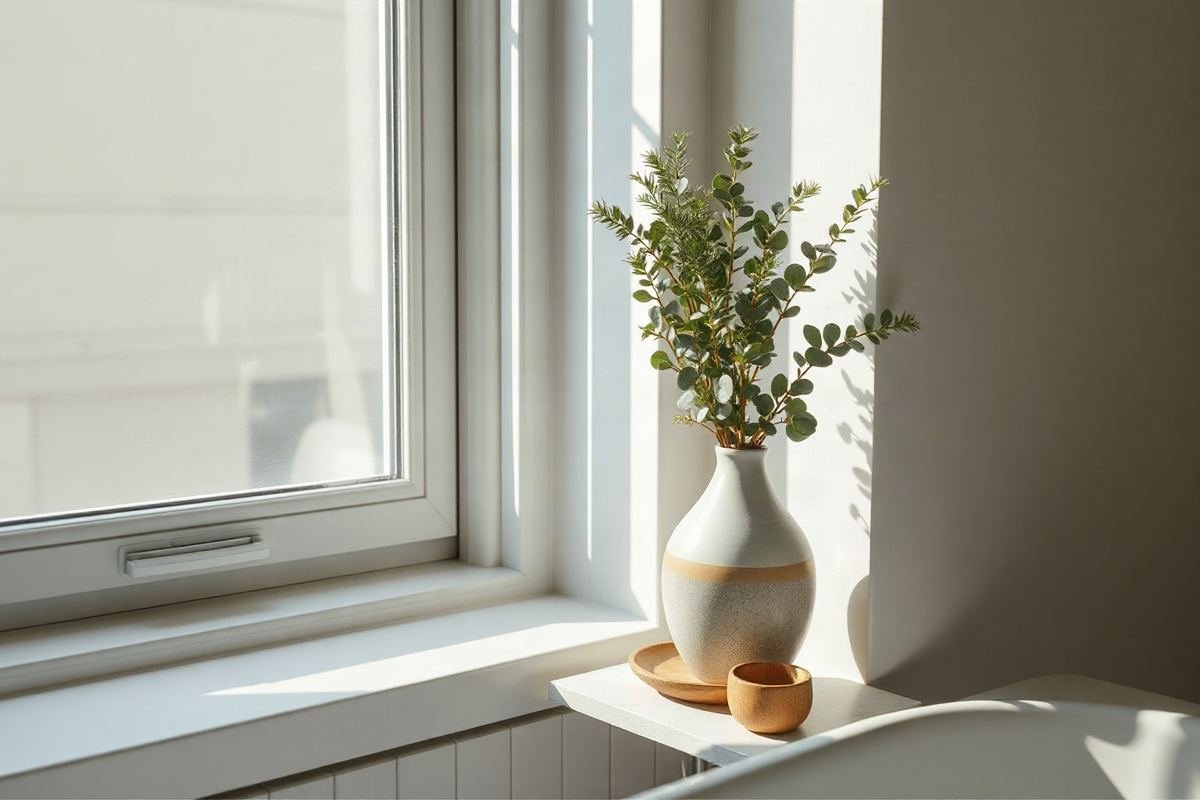
Humidity-loving plants such as ferns, orchids, pothos and snake plants are a staple of spa bathrooms, and dried or hung eucalyptus adds fragrance. The look is green, soft and unfussy.
Plants bring life and a sense of the outdoors, which helps the room feel like a retreat. They also soften hard lines and add color without clashing with a neutral palette.
- Match the light. Check how much natural light the room gets before choosing plants.
- Use hanging options. A hook near the shower head can hold a eucalyptus bundle.
- Pick simple pots. Plain ceramic or stone containers keep the focus on the leaves.
- Group in odd numbers. Three plants of different heights look natural and curated.
- Try faux carefully. High-quality artificial stems work in windowless rooms if kept dust-free.
Budget options: Budget options: Propagate pothos cuttings in glass jars on a shelf, or buy one large plant instead of several small ones.
Mistakes to avoid: Mistakes to avoid: Overwatering, choosing plants that need bright sun in a dim room, and leaving dead leaves on display.
Layered, Low-Glare Lighting
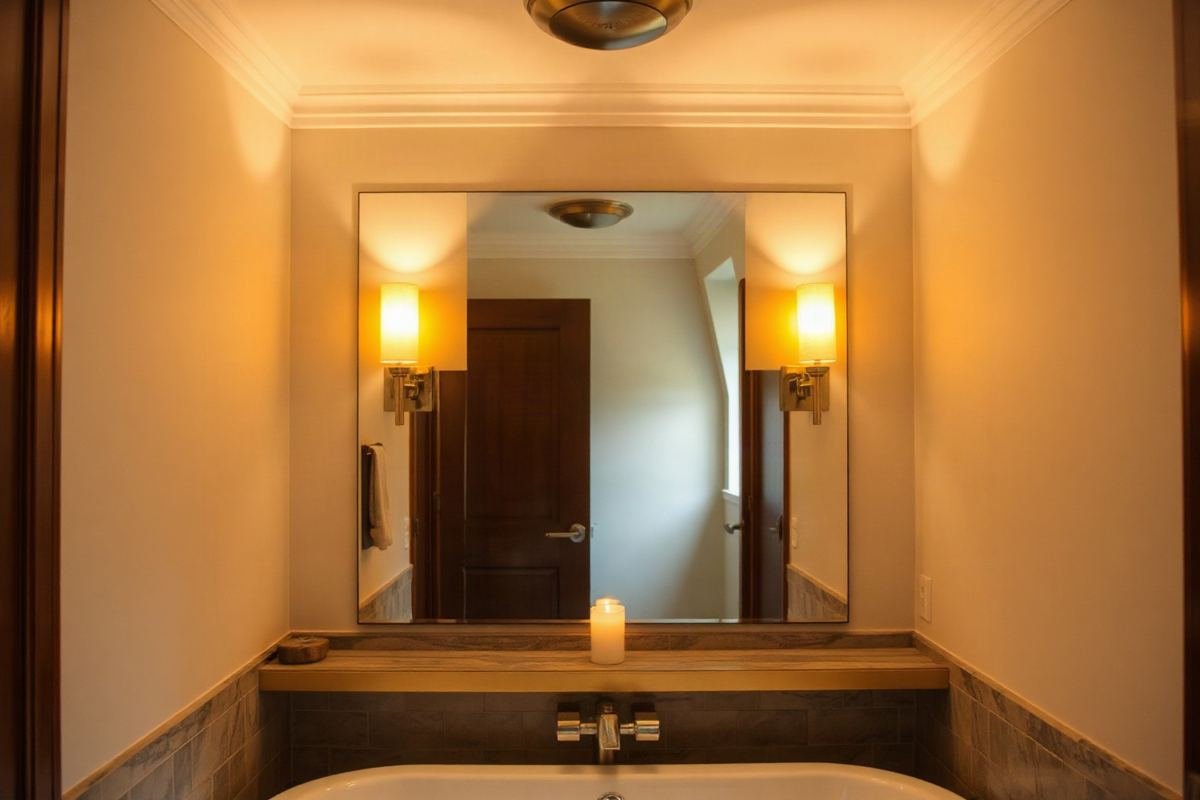
Spa lighting is soft, warm and adjustable. Instead of one bright ceiling fixture, designers layer sconces at face height, dimmable overhead lights and small accent sources like candles or LED strips under the vanity.
Light changes mood faster than anything else. Warm, low-level light at night makes a bath feel cozy and keeps you from waking fully if you visit during the evening.
- Install a dimmer. This single upgrade makes the biggest difference to atmosphere.
- Flank the mirror. Side sconces give more even, flattering light than a fixture above.
- Choose warm bulbs. Use 2700K to 3000K bulbs with a high color rendering score.
- Add a night setting. A low toe-kick light helps with late-night trips without glare.
- Use frosted shades. Diffused glass hides the bulb and spreads the glow.
Budget options: Budget options: Swap bulbs for warm dimmable ones, add plug-in sconces with a smart plug and use a battery-powered candle for ambiance.
Mistakes to avoid: Mistakes to avoid: Using a single harsh ceiling light, mixing bulb temperatures and placing lights only above the mirror, which casts shadows.
Unlacquered and Aged Brass Fixtures
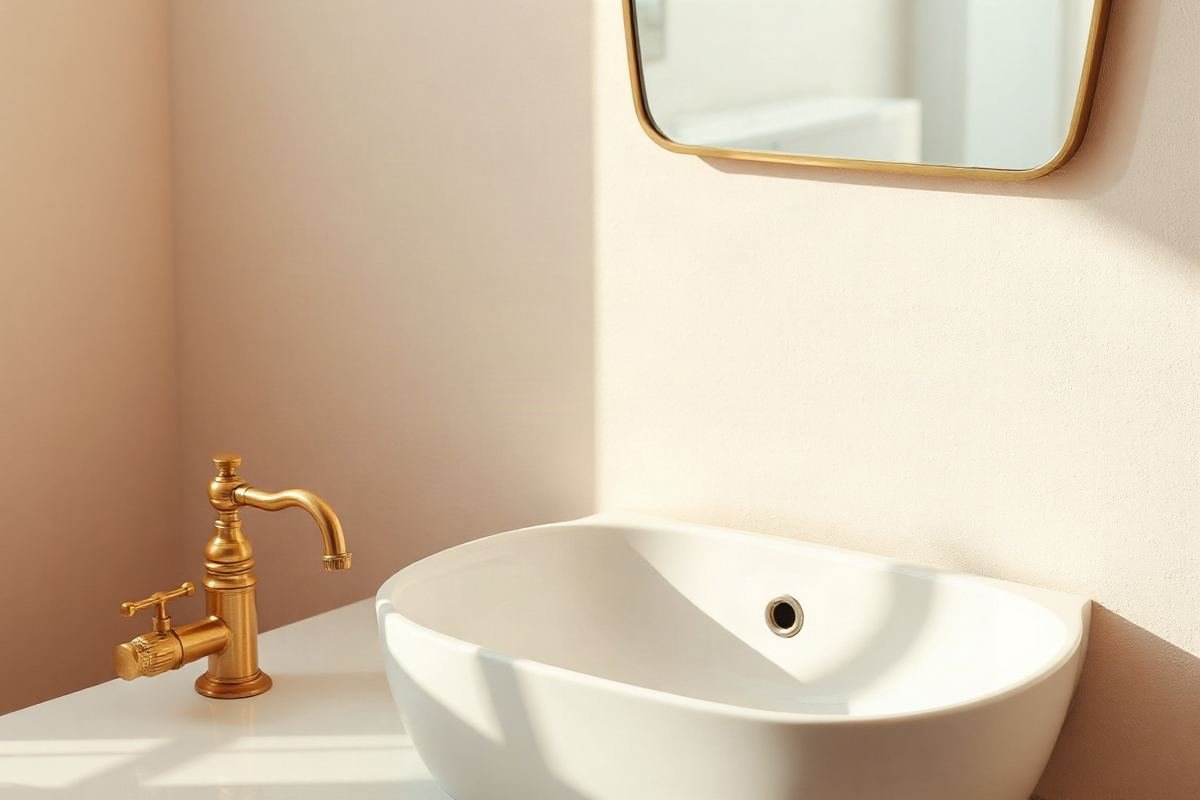
Matte black had a long run, but soft metals such as unlacquered brass, brushed bronze and aged nickel are now the preferred choice for spa bathrooms. They age with a gentle patina.
They work because warmth carries through the room. Soft metals pair naturally with stone, wood and plaster and avoid the stark contrast that can feel harsh in a restful space.
- Pick one metal. A single finish across faucets, hooks and hardware looks cohesive.
- Embrace patina. Unlacquered brass darkens over time, which is part of its charm.
- Choose simple shapes. Cylindrical and cross-handle designs feel timeless.
- Match hardware sizes. Cabinet pulls, towel bars and hooks should feel related.
- Check warranties. Finish durability varies, so ask what is covered.
Budget options: Budget options: Swap only the faucet and towel hooks for a warm metal, or use a brass-effect spray finish on old cabinet pulls.
Mistakes to avoid: Mistakes to avoid: Mixing too many finishes, buying cheap plated pieces that peel and ignoring how water quality affects the metal.
Hidden and Concealed Storage
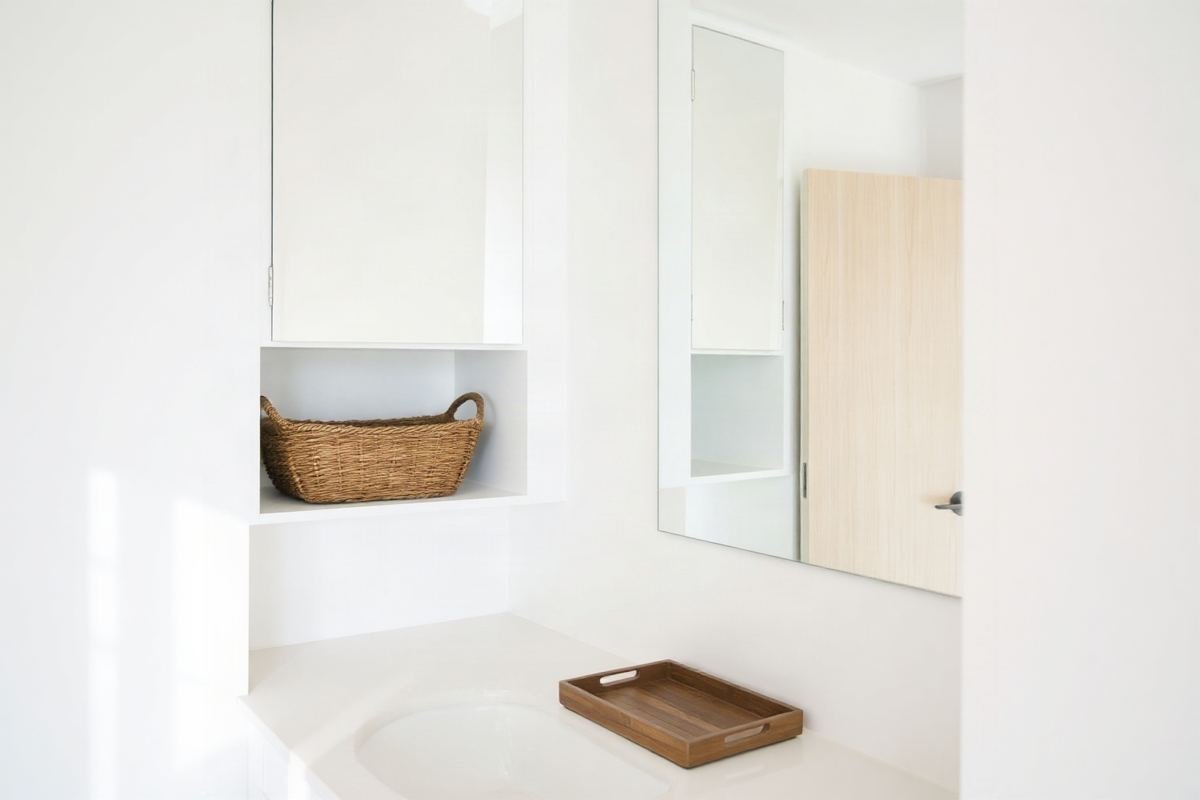
The spa bathroom hides the practical. Recessed cabinets, drawers with dividers, mirrored medicine cabinets and lidded baskets keep products out of sight so the room feels clear.
This matters because visual clutter raises stress. When only a few beautiful objects are visible, the room reads as calm even if it is small.
- Decant products. Pour soap and lotion into matching pump bottles so labels disappear.
- Use drawer inserts. Dividers keep daily items organized and quick to find.
- Recess a cabinet. A cabinet set between wall studs adds storage without adding depth.
- Edit regularly. Clear expired products every few months.
- Keep counters clear. Limit surface items to a tray, soap and a plant.
Budget options: Budget options: Use baskets with lids, over-the-door organizers and drawer dividers from a home store for a clean look at low cost.
Mistakes to avoid: Mistakes to avoid: Leaving open shelving full of mismatched bottles, overfilling baskets and buying storage before editing what you own.
Scent Rituals and Diffusers
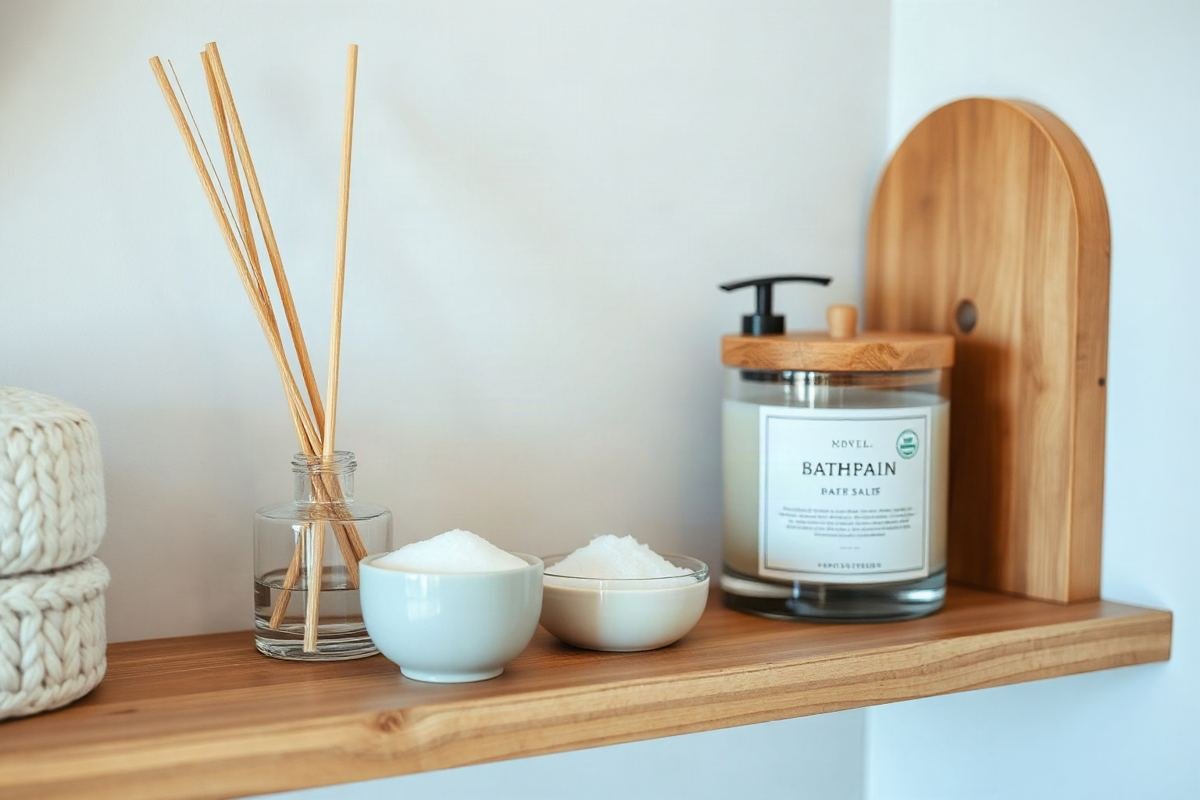
Fragrance is part of the spa experience. Reed diffusers, candles, linen sprays and bath salts in simple containers lend a signature scent in tones like eucalyptus, cedar, citrus and clean cotton.
Scent is closely tied to mood and memory. A consistent, gentle aroma tells your brain it is time to unwind, and it also makes the room feel clean.
- Choose one scent. A single fragrance family feels more refined than a mix.
- Keep it subtle. Light notes suit small, closed rooms better than heavy perfumes.
- Use safe candles. Place them on stable surfaces, away from towels and curtains.
- Display beautifully. Choose simple vessels in ceramic, glass or stone.
- Ventilate. A working fan prevents lingering damp smells.
Budget options: Budget options: Make your own bath salts with Epsom salt and essential oils in a jar, or place a bundle of dried lavender on a shelf.
Mistakes to avoid: Mistakes to avoid: Overpowering the room with strong fragrance, placing candles near flammable items and ignoring family allergies.
Heated Floors and Towel Warmers
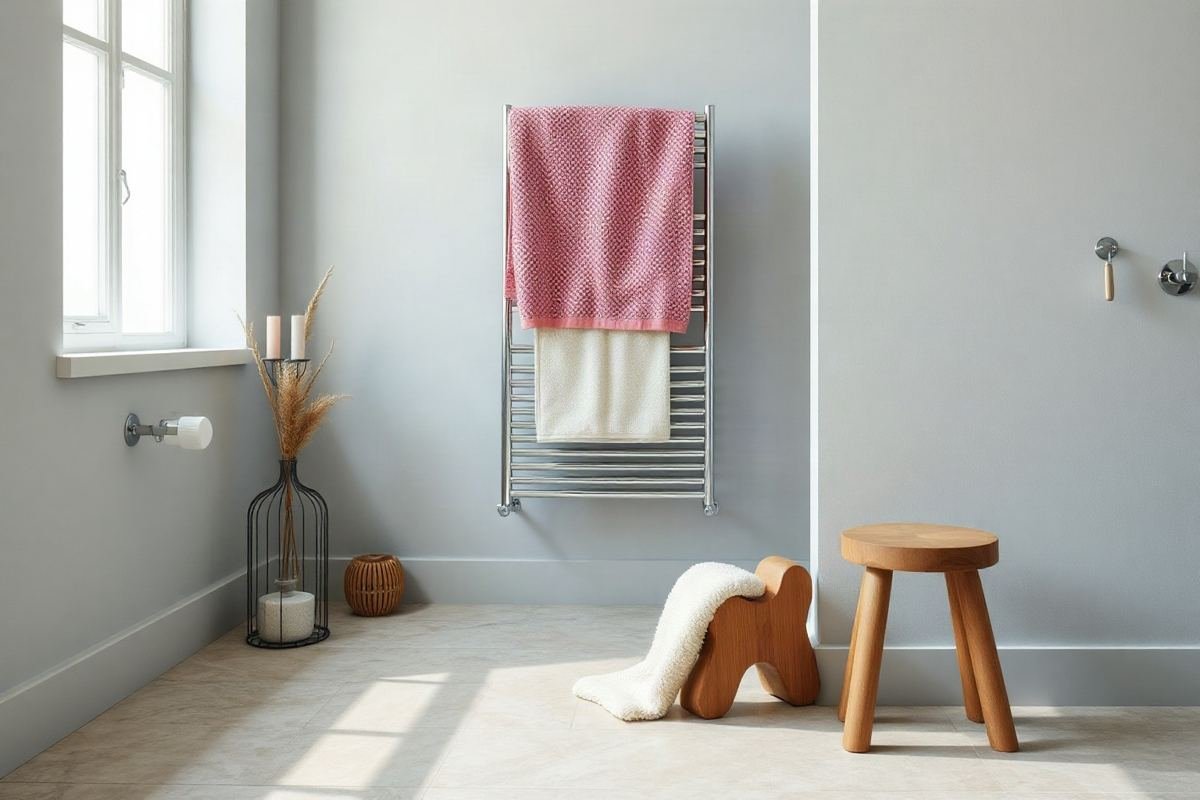
Warm floors and heated towel rails are quiet luxuries that make a bathroom comfortable in cold months. Electric mats under tile are now common in renovations of all sizes.
They matter because comfort is what you feel every day. Stepping onto a warm floor and wrapping up in a warm towel is a simple, genuine upgrade that guests notice.
- Plan during renovation. Heating mats go under tile, so install them when the floor is open.
- Add a thermostat. A programmable control lets you warm the floor before you wake up.
- Consider a plug-in rail. Freestanding or plug-in towel warmers need no plumbing.
- Insulate first. Underlay boards improve efficiency and cut running costs.
- Check circuits. Have an electrician confirm capacity and safety.
Budget options: Budget options: A plug-in towel warmer and a thick bath mat are the lowest-cost route to a warm feel.
Mistakes to avoid: Mistakes to avoid: Installing heating after tiling, forgetting a timer and ignoring the electrical load.
Calm Neutral Palettes with One Soft Accent
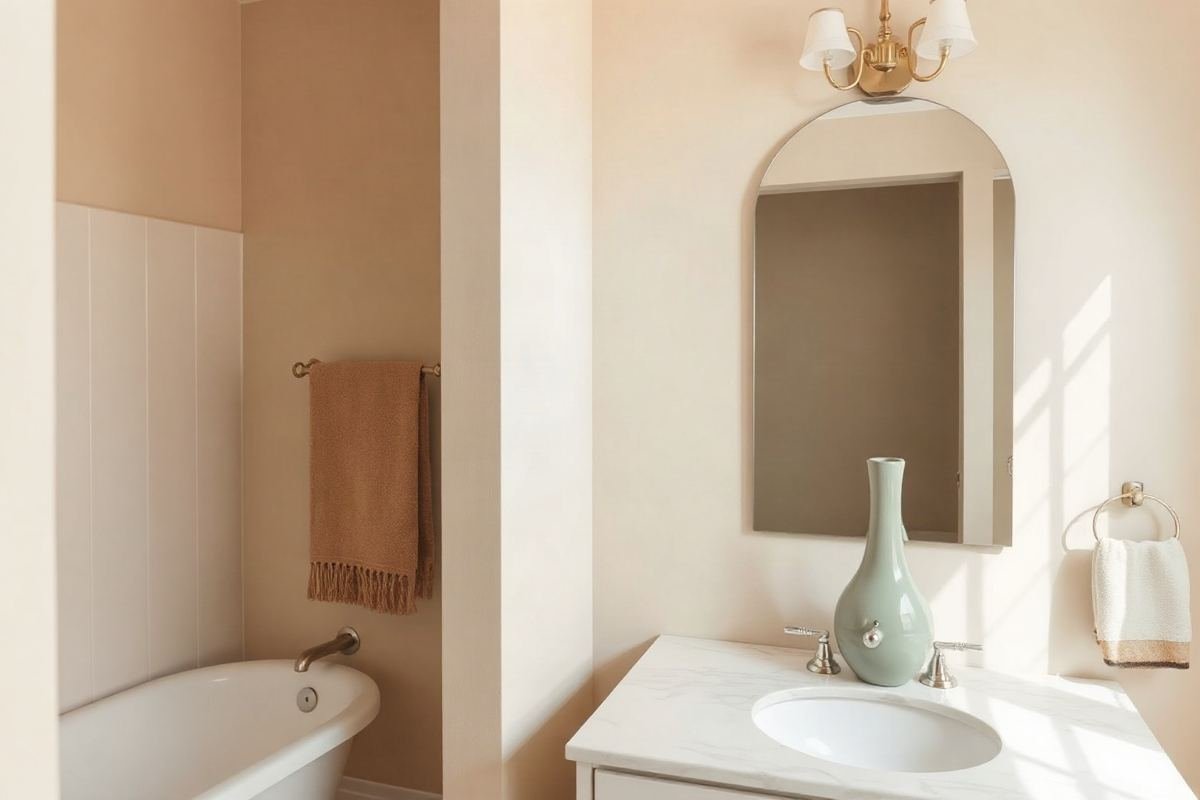
Spa palettes are built on warm whites, stone, clay and sand, with a soft accent such as sage, dusty blue or terracotta. Contrast is low and tones sit close together.
This restraint is what makes the room feel peaceful. When colors are gentle, the eye rests, and textures become the main source of interest.
- Pick a base. Choose one warm neutral for walls and tile.
- Add one accent. Sage, soft blue or clay works in towels, art or a vase.
- Test samples. Check paint swatches in morning and evening light.
- Layer tones. Use three shades of the same color for depth.
- Repeat the accent. Use it two or three times across the room.
Budget options: Budget options: Paint is the cheapest transformation, and a soft accent can come from a single set of towels or one ceramic piece.
Mistakes to avoid: Mistakes to avoid: Choosing cold whites, adding too many accents and skipping samples before painting.
Soft Window Treatments and Privacy Glass
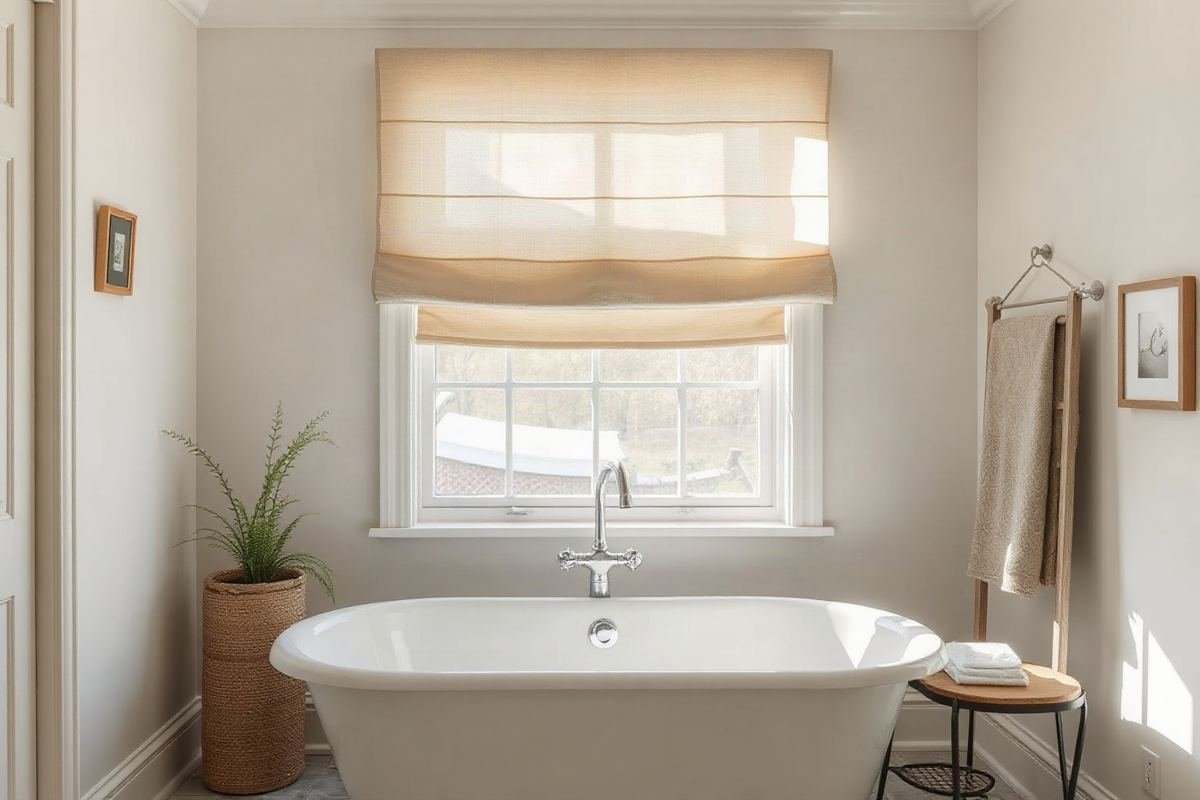
Spa bathrooms handle privacy without heavy blinds. Sheer linen shades, reeded or frosted glass and woven bamboo blinds let daylight in while blurring the view, so the room stays bright and private.
This works because natural light is the best mood booster in any bathroom. Filtering it softly avoids glare, keeps the palette warm and adds one more gentle texture to the room.
- Choose moisture-safe fabric. Polyester-linen blends and faux wood blinds handle humidity better than pure linen.
- Try reeded glass. Ribbed privacy glass in a window or shower screen diffuses light beautifully.
- Mount high. Hang shades near the ceiling so the window appears taller.
- Use frosted film. Removable privacy film is renter-friendly and quick to apply.
- Keep colors quiet. White, oat and soft gray let the light be the feature.
Budget options: Budget options: Frosted window film costs very little and lasts for years, while a simple cordless roller shade adds softness without custom measuring.
Mistakes to avoid: Mistakes to avoid: Hanging heavy drapes near a shower, blocking all light and choosing fabrics that mildew in damp air.
What Is Going Out in 2026
- Fading | Replacing it
- Matte black faucets everywhere | Warm unlacquered brass and bronze
- Polished white subway tile | Honed stone and plaster walls
- Bright cool-white lighting | Warm, dimmable layered light
- Cluttered open shelves of bottles | Concealed storage and clear counters
- Glass-walled showers with heavy frames | Frameless, spacious walk-in showers
- Shiny chrome accessories | Soft, aged metal finishes
- Thin, mismatched towels | Thick cotton and linen in one palette
- Plastic organizers on display | Baskets, trays and wood accents
How to Combine Trends Without Making a Mess
A spa bathroom works best when every choice supports the same mood. These rules help you mix looks without losing calm.
Rule 1: Choose a dominant material. Let plaster, stone or wood lead the room and treat the others as supporting acts.
Rule 2: Keep the palette narrow. Two or three related tones plus one accent is enough.
Rule 3: Layer light. Combine overhead, sconce and accent sources on dimmers.
Rule 4: Mix textures. Pair something smooth with something rough, and something hard with something soft.
Rule 5: Hide the practical. Store the daily mess and display only a few pieces.
Rule 6: Repeat a detail. Echo a metal, wood tone or shape at least twice.
Three Sample Combinations
The Quiet Retreat: Plaster walls, a freestanding tub, warm sconces, linen towels and one sage accent for a restful, hotel-like mood.
The Earthy Studio: Travertine vanity top, oak cabinetry, brass fixtures and plants, giving a warm, grounded look that suits most homes.
The Modern Sanctuary: A curbless rain shower, large stone-look tile, hidden storage and heated floors for a clean, high-comfort room.
Budget Guide
- Budget | Where to spend | Where to save
- Under $300 | Lighting bulbs and dimmer, towels, a rain shower head and a few plants. | Vanity, tile and tub; keep what works and change the finish with paint.
- $300 to $1,500 | Faucet and hardware in warm metal, a new mirror and sconces, plus a quality vanity top. | Accessories and trays, which can be inexpensive and still look refined.
- $1,500 to $5,000 | Walk-in shower glass, a wood vanity and large-format tile in the wet zone. | Wall finishes outside the shower, where limewash paint can replace plaster.
- $5,000+ | Freestanding tub, heated floors, waterproof plaster and custom storage. | Decor and fragrance, since the architecture does most of the work.
Smart buying tips:
- Spend where water touches. Tile, waterproofing and plumbing hardware are the hardest to change later, so pay for quality there and save on movable items. A well-chosen faucet will be used thousands of times, so it earns its price.
- Edit before you buy. Clearing counters and removing half-used products makes a bathroom look calmer for free, and shows you what storage you actually need.
- Test the room at night. Sit in the bathroom after dark with your chosen lights on to see whether it feels restful before committing to bulbs and fixtures.
Step-by-Step 2026 Spa-Style Bathroom Decor Refresh
- Declutter first. Remove everything and keep only what you use weekly.
- Define your mood. Write three words, such as warm, quiet and earthy, to guide choices.
- Pick a palette. Choose a base neutral and one soft accent.
- Fix function. Address ventilation, leaks and water pressure before decorating.
- Choose one hero. Decide on a tub, vanity, shower or wall finish as the focal point.
- Plan lighting. Add dimmers and warm sconces before choosing decor.
- Select materials. Pick two natural textures such as stone and wood.
- Upgrade textiles. Buy a coordinated set of thick towels and a mat.
- Add storage. Use baskets, drawers and recessed shelves to hide supplies.
- Bring in nature. Add a plant, dried stems or a stone tray.
- Finish with scent. Choose one fragrance and place it where it will not be spilled.
Styling the Trends by Room Size and Layout
Trends behave differently depending on the room you have. Here is how to adapt the ideas above to the space you actually live in.
Small Bathrooms (under 50 sq ft)
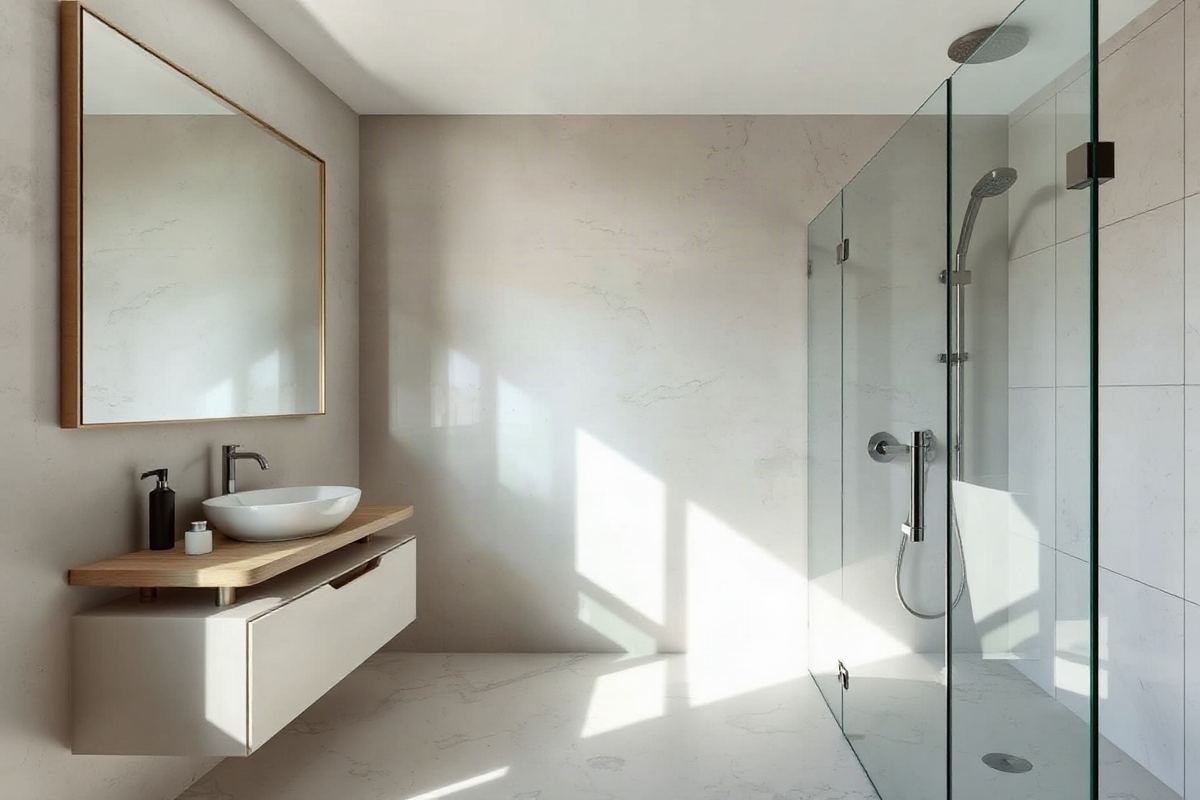
Go light and continuous. Use one wall color and tile tone to blur edges and enlarge the room.
Float everything. Wall-hung vanities and toilets show more floor.
Use a big mirror. A single large mirror doubles light and depth.
Choose glass over curtains. A clear panel keeps the sightline open.
Store vertically. Add a recessed cabinet or tall narrow shelf.
Mind the weight of water. Whatever the size, plan drainage, ventilation and waterproofing first, since these protect every finish you add afterward.
Primary Bathrooms and Open Layouts
Zone the room. Separate bathing, grooming and storage areas visually.
Anchor the tub. Place it under a window or against a feature wall.
Add a seat. A bench or chair makes the space feel like a lounge.
Use rugs sparingly. A washable runner softens tile.
Layer lights. Use sconces, ceiling and accent lights on separate dimmers.
Plan the traffic. Leave at least thirty inches of clear walking space so the room feels relaxed instead of cramped when two people share it.
Large or High-Ceilinged Bathrooms
Add warmth. Wood, plaster and textiles prevent a cavernous feel.
Use a statement light. A large pendant or chandelier fills vertical space.
Scale up fixtures. Larger mirrors and wide vanities suit big rooms.
Create a nook. Build a bench or alcove for intimacy.
Use bold stone. A slab wall behind the tub adds drama.
Keep scale in check. Oversized fixtures can look dramatic, but make sure everyday tasks such as reaching towels remain easy.
Rentals and Temporary Homes
Swap what you can. Replace shower heads, bulbs and towel hooks, and keep originals to reinstall.
Use peel-and-stick tile. Cover dated floors or backsplashes with removable options.
Add removable storage. Use adhesive shelves and freestanding trolleys.
Layer textiles. Rugs, towels and a shower curtain change the feel instantly.
Use plants and scent. These move with you and cost little.
Document before you change. Photograph the original fixtures and keep a list of what you swapped so reversing everything at move-out is simple.
FAQ
What makes a bathroom spa-style? A spa-style bathroom combines natural materials, warm neutral colors, soft layered lighting, clear surfaces and sensory comforts like thick towels and gentle scent. The aim is calm, so every item should support rest and ease.
Can I get this look on a small budget? Yes. Paint, warm dimmable bulbs, quality towels, a rain shower head and a few plants deliver most of the mood for a few hundred dollars. Save larger spending for tile, plumbing or a tub.
Is a freestanding tub practical? It can be, if you have space and structural support. Check floor strength, plumbing and water heater capacity. If you rarely bathe, invest in a better shower and treat the tub as optional.
Are plaster walls safe in wet areas? Real tadelakt and properly sealed microcement can handle moisture, but they must be installed and sealed correctly. In showers, ask a specialist or use waterproof tile instead and keep plaster for dry walls.
What colors feel most spa-like? Warm whites, sand, stone, clay, sage and soft blue-gray all work. Keep contrast low, test swatches in different light, and add one soft accent so the room feels calm but not blank.
How do I keep a bathroom humid-proof? Use a properly sized exhaust fan, run it during and after showers, choose moisture-rated finishes and wipe wet surfaces. Good ventilation protects wood, plaster and paint from mold and peeling.
Do plants really survive in bathrooms? Many do, especially ferns, pothos, snake plants and orchids, provided the room gets some light. In windowless rooms, use quality artificial stems or rotate real plants in and out.
What is the quickest upgrade? Lighting and towels. Warm dimmable bulbs and a coordinated set of thick towels change the atmosphere in an afternoon, cost little and can be moved to a new home later.
Final Thoughts
A spa-style bathroom is not about spending the most. It is about choosing materials that feel good, light that flatters, and storage that hides the noise of daily life. Start with one change, such as warm bulbs, a clear counter or better towels, and notice how the room feels. Add the next layer when you are ready. In 2026, the best bathroom is the one that gives you a quiet few minutes every day, and these looks make that possible at any budget. Take your time, live in the room for a few weeks between changes, and let the way you actually use it guide the next decision.