
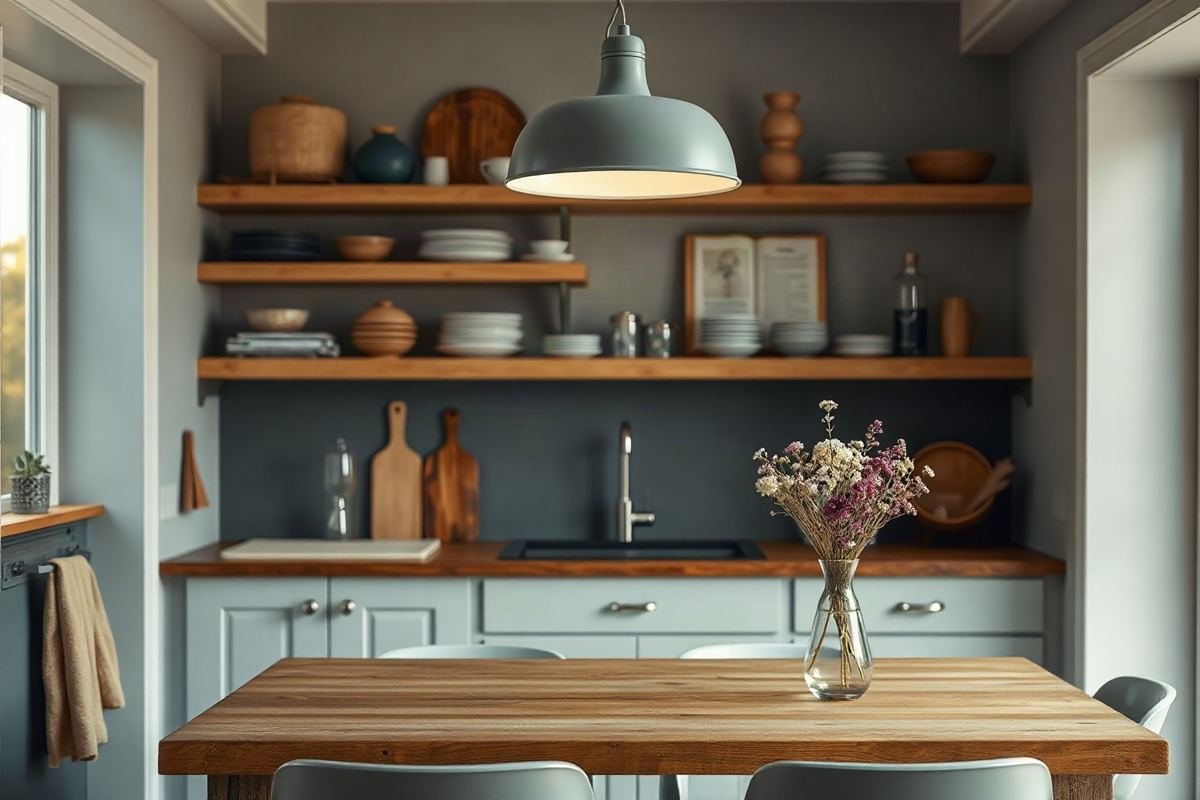
The defining 2026 cottagecore kitchen trends are soft, handmade and meant to be used. Expect unfitted furniture-style cabinets, sage and butter painted shaker doors, open shelves of everyday crockery, apron sinks, gingham and ticking textiles, butcher block counters, herbs and dried flowers, vintage enamelware, beadboard walls and warm layered lighting. The thread is a kitchen that feels gathered over time, not installed in a week.
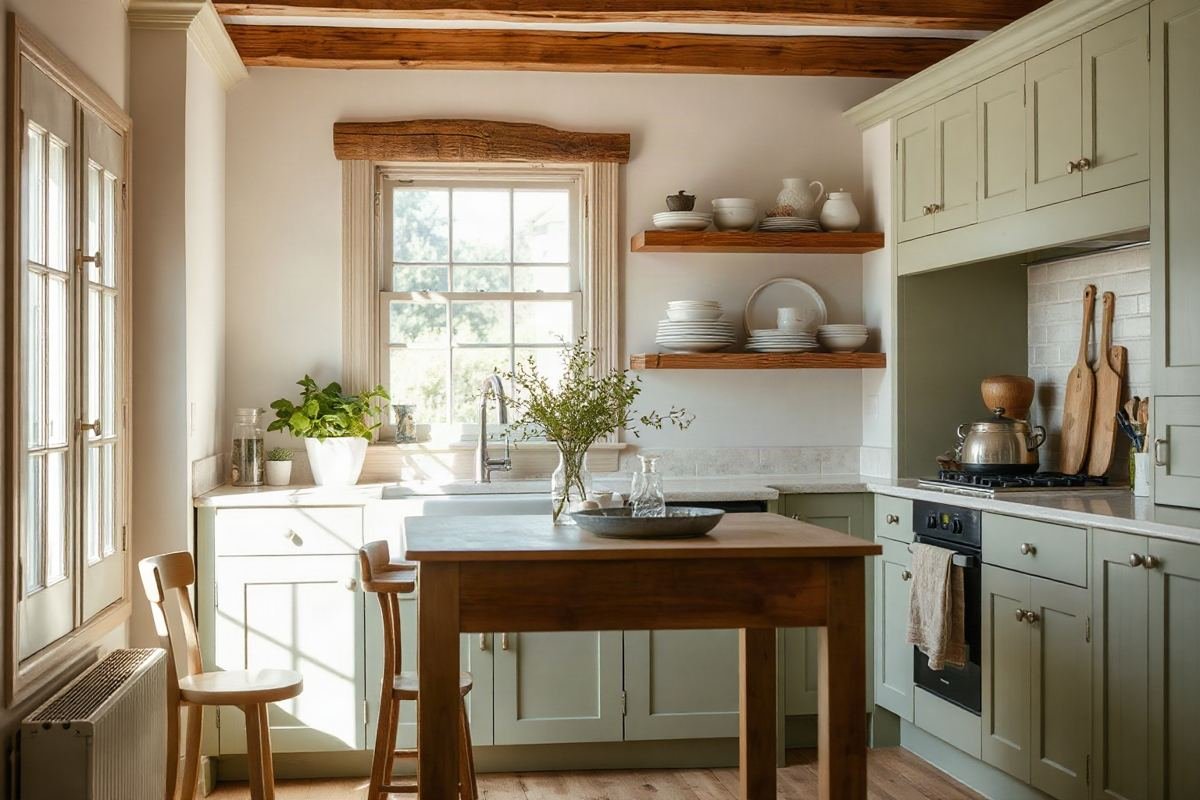
After years of sleek, handleless, high-gloss kitchens, many homeowners are craving the opposite. They want a room that feels warm, a little worn and full of things that have a history. Cottagecore, with its painted wood, linen and garden flowers, has settled from a social media mood into a lasting way of designing the most-used room in the house.
This guide pulls the main 2026 ideas into one practical playbook. For each of the 14 looks you will find what it is, why it works, how to do it in a real kitchen, the budget options and the mistakes to avoid. At the end you will find a combination guide, a budget table, a step-by-step plan, room-size advice and an FAQ.
The Big Picture: Why Cottagecore Kitchen Decor Is Changing in 2026
Three forces explain almost every trend below.
- The kitchen is the heart of the home. People cook, eat, work and talk in the same room, and want it to feel warm, not clinical. Furniture-like cabinets, wooden tables and soft textiles make a kitchen that invites people to stay.
- Slow living and handmade appeal. After years of fast, flat, matching design, many homeowners want things with a story: old enamel, hand-glazed tile, linen and wood. Imperfect, repairable and secondhand pieces feel more honest and more personal.
- Nature and seasons indoors. Herbs, dried flowers, baskets and garden jugs link cooking to the changing year. Bringing in plants, natural fibers and soft colors makes the kitchen calmer and ties daily routines to something real.
When you decide whether a look suits you, ask three questions. Does it make the kitchen warmer, does it make it more personal, and will it still work when you are cooking dinner? If the answer is no, leave it out.
Unfitted, Furniture-Style Kitchens
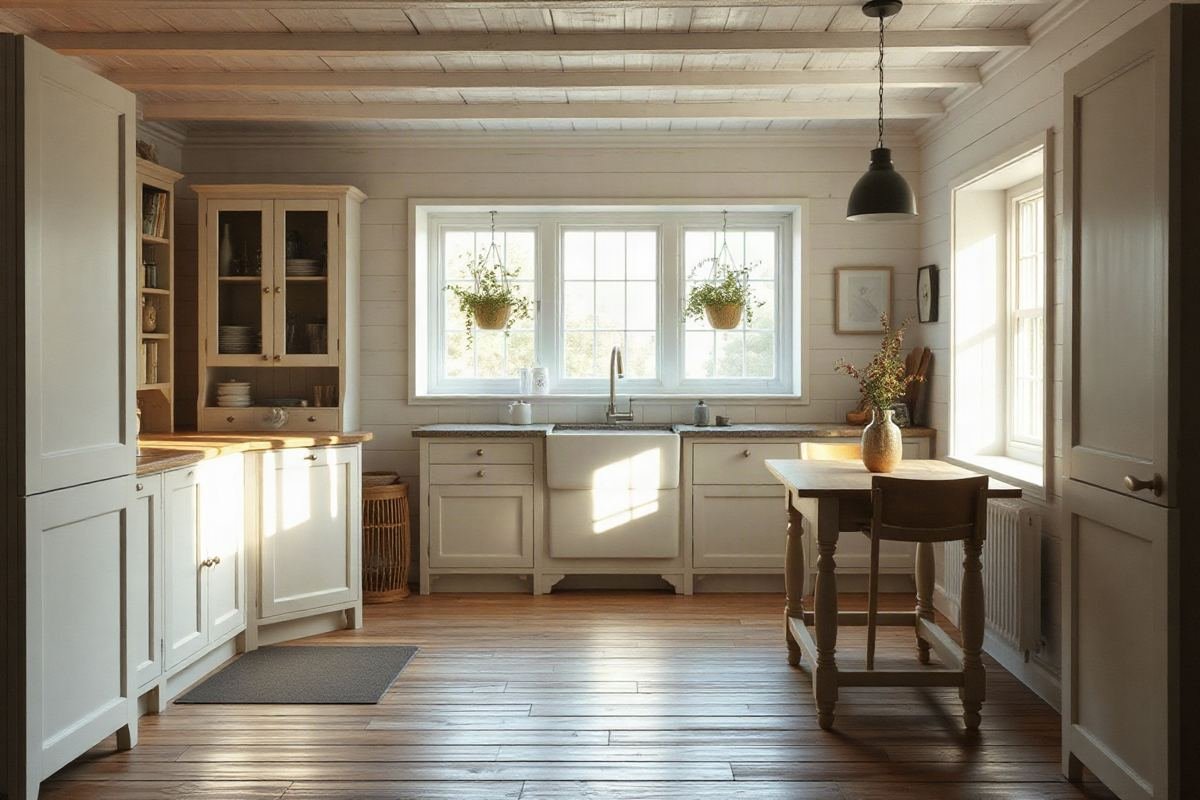
An unfitted kitchen swaps rows of identical wall-to-wall cabinets for separate pieces: a painted dresser, a freestanding sink unit, a worktable and a hutch. Each piece looks like furniture, and the room reads as lived in over decades rather than installed in a week.
It works because it is flexible and forgiving. Pieces can move with you, gaps between them let the walls show, and the mix of heights and finishes gives the room the collected, slightly uneven character that cottagecore depends on.
- Start with a hutch. A tall dresser or hutch for plates and glasses gives you instant character and storage without a full remodel.
- Add a worktable. A freestanding table or island with open space beneath replaces a bulky built-in and doubles as a prep and eating spot.
- Let gaps show. Leave a few inches of wall between units so the pieces read as individual furniture, not a fitted run.
- Vary the finish. Paint two or three pieces in related but different colors, such as sage, cream and soft gray-blue.
- Use furniture hardware. Porcelain knobs, simple latches and cup pulls finish the look and are cheap to swap.
Budget options: Secondhand sideboards, old bookcases and baker’s racks all convert easily with paint and a new top. Check local listings for solid-wood pieces.
Mistakes to avoid: Choosing pieces that are too deep for your walkway, skipping a splashback behind the sink, and forgetting that freestanding units need sealed tops where water lands.
Soft Painted Shaker Cabinets
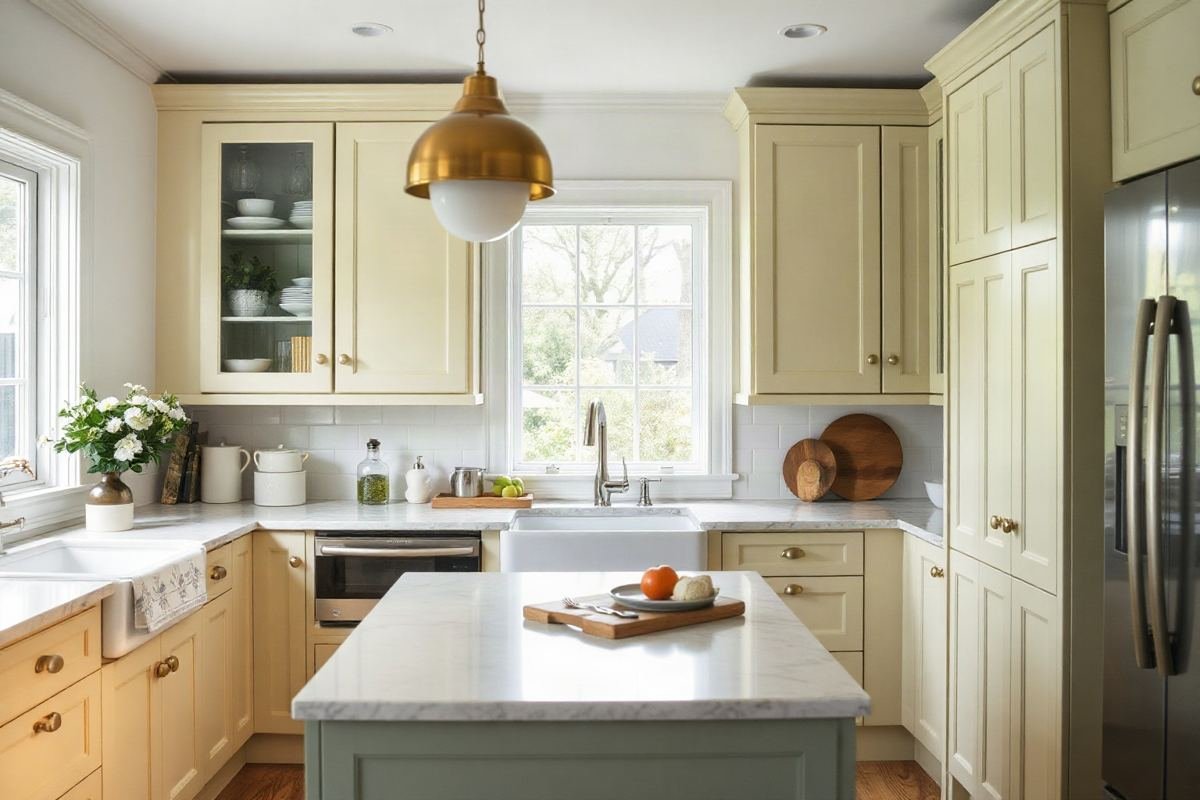
Painted shaker-style cabinets with a plain recessed panel remain the backbone of the look, now in softer, milky colors: sage, butter, oatmeal, powder blue and warm cream. The door style is simple enough to feel timeless and traditional without fuss.
Muted color gives a kitchen a gentle, pastoral mood without shouting. Because the door is flat and plain, the color does the talking, and you can change the feel later with new hardware or a fresh coat.
- Pick a chalky color. Soft, slightly grayed shades look more like old paint than bright new enamel and hide fingerprints well.
- Choose a satin or matte finish. Glossy cabinets look modern; a low sheen reads as farmhouse and is easier to touch up.
- Try two tones. Paint uppers a lighter shade than the base cabinets so the room feels taller and less heavy.
- Add cup and bin pulls. Simple pulls in aged brass, iron or porcelain suit the door style without competing with it.
- Sample on the door. Paint a spare door or large board and view it beside your floor and counters.
Budget options: Repainting existing cabinets is the single best-value change. Degrease, sand, prime with a bonding primer and use a cabinet-grade enamel for a durable finish.
Mistakes to avoid: Skipping the prep and primer, picking a color that clashes with the floor undertone, and choosing a very bright pastel that looks like a nursery.
Open Shelving With Everyday Crockery
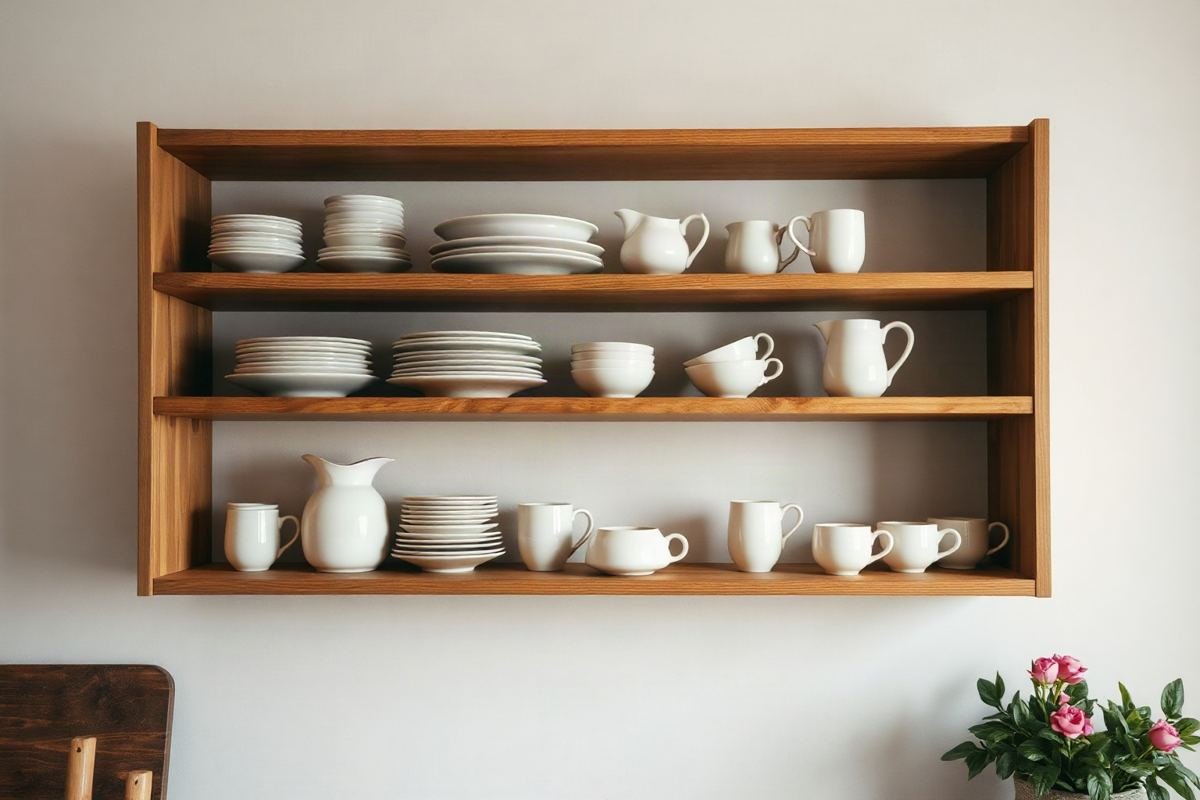
Instead of closed upper cabinets, simple wood shelves hold plates, bowls, jugs and jars within easy reach. The display is practical first: things you use every day, stacked and grouped, rather than a curated set of showpieces.
Open shelves make a small kitchen feel lighter and more personal. They also reward the real collections people already have, such as odd plates from a grandparent, a favorite teapot and a jar of wooden spoons.
- Keep it to daily items. Display plates, bowls and mugs you reach for weekly so the shelves stay tidy by use, not by effort.
- Stack in odd numbers. Stacks of three or five plates, with a jug or bowl beside them, look relaxed and natural.
- Use thick boards. A chunky shelf, around 1.5 to 2 inches, looks sturdier and more rustic than a thin floating shelf.
- Mount into studs. Loaded crockery is heavy, so use brackets screwed into studs or proper wall anchors.
- Leave breathing room. Fill about two thirds of each shelf and let the wall color show through.
Budget options: Scaffold boards, reclaimed planks or plain pine cut to length and stained make inexpensive shelves. Iron or wooden brackets from a hardware store keep costs down.
Mistakes to avoid: Placing open shelves directly above a stove where grease will settle, overfilling every inch, and displaying items you never use.
The Farmhouse Apron Sink and Bridge Faucet
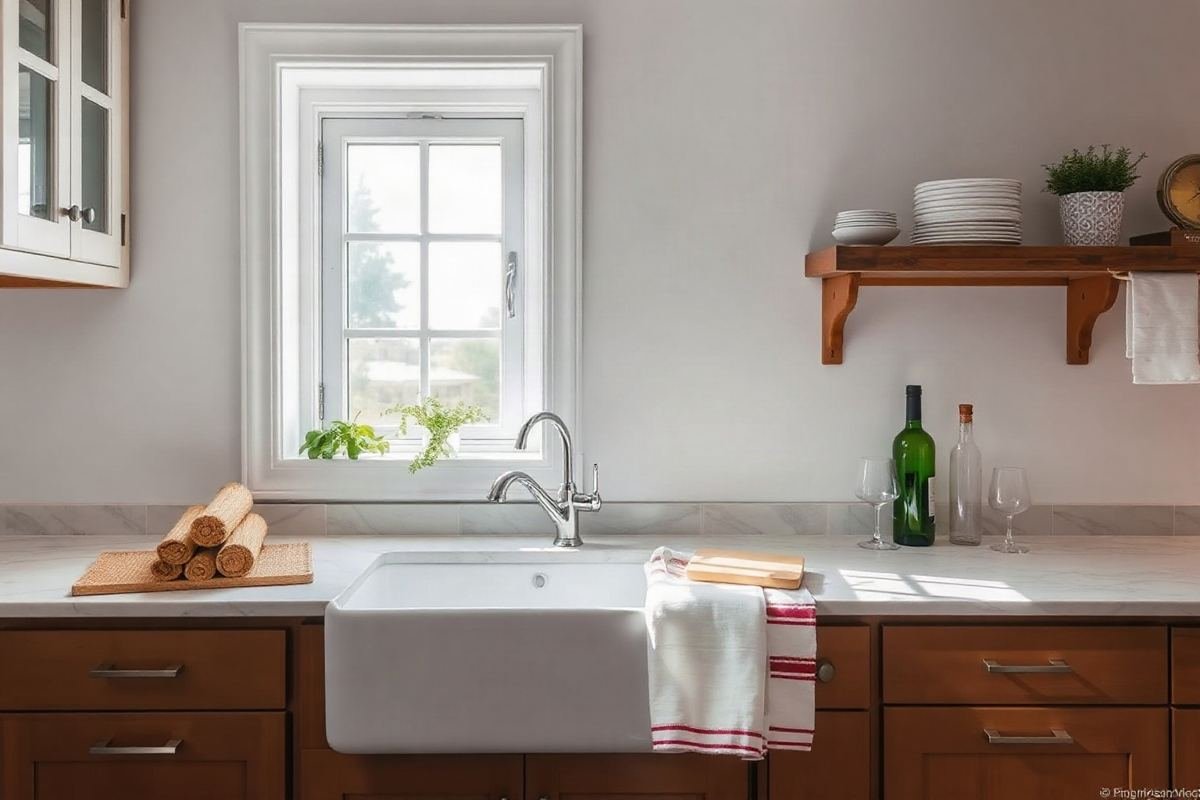
A deep, wide apron-front sink paired with a two-handle bridge faucet is the classic cottage focal point. The front of the sink is exposed, and the faucet spans both handles in one old-fashioned arc.
It works because the sink is the hardest-working spot in the kitchen and gets the most attention. A generous basin handles big pots, and the traditional shape ties the whole room to its farmhouse roots.
- Choose fireclay or porcelain. Both give the classic glossy, deep look and are easy to scrub, though cast iron is heavier and tougher.
- Mind the cabinet. An apron sink needs a base cabinet cut to fit, so measure before you buy and check support requirements.
- Pick the right faucet finish. Unlacquered brass, nickel and matte black each suit different cabinets; aim to echo your hardware.
- Add a window view. If you can, place the sink beneath a window so you can look at the garden while washing up.
- Include a sprayer. A pull-down or side spray keeps the vintage look while adding modern convenience.
Budget options: A single-bowl apron sink in a stock size and a basic bridge faucet are far cheaper than designer versions. A farmhouse-style stainless apron sink costs less than fireclay.
Mistakes to avoid: Buying a sink without checking the cabinet width, choosing a very modern faucet that feels out of place, and ignoring the weight of fireclay when installing.
Gingham, Ticking and Checked Textiles
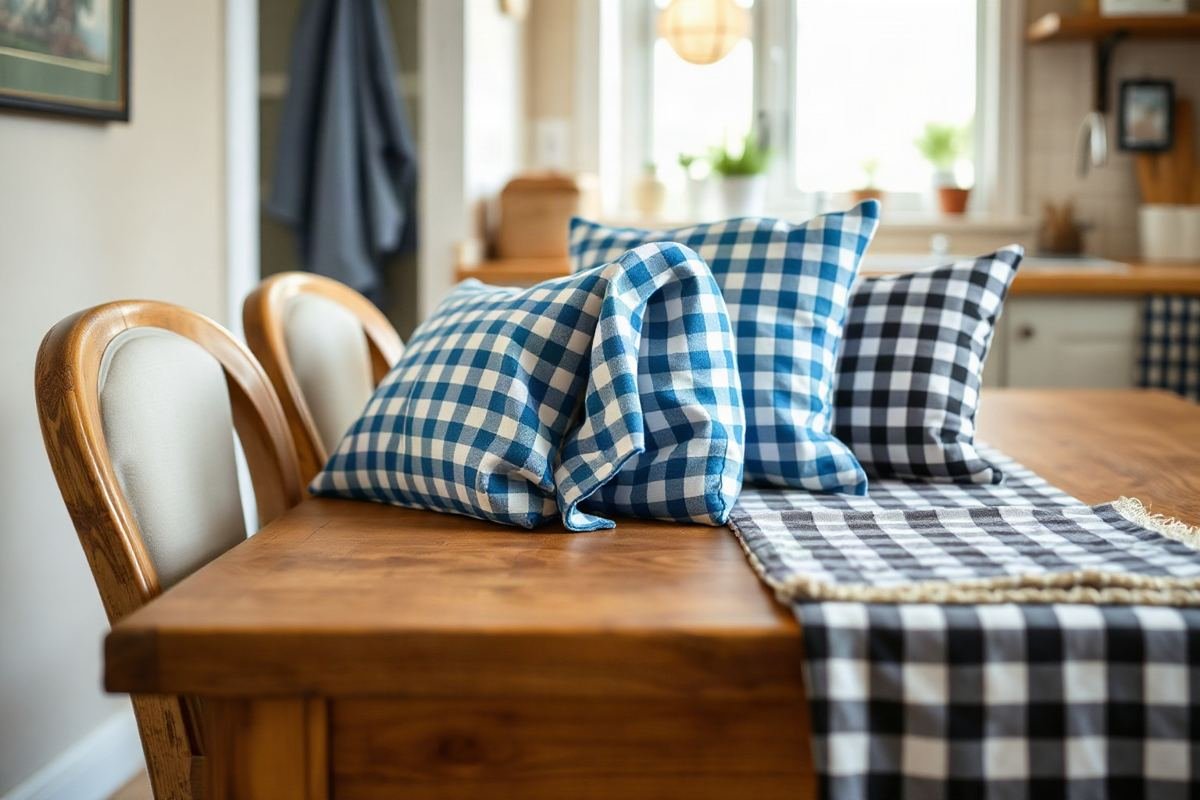
Cottage kitchens rely on humble woven patterns: gingham, mattress ticking stripe, small checks, tiny florals and plain linen. These were once everyday fabrics, and they are back as the easiest way to add a cheerful, nostalgic feel.
Textiles are the cheapest, most reversible way to change a kitchen. A tablecloth, a few towels and cushion covers can transform the mood in a weekend, and you can swap them seasonally.
- Stick to one scale. Choose a medium gingham or stripe and repeat it, rather than several competing scales of check.
- Use natural fibers. Cotton, linen and hemp wash well, soften over time and look better with age than synthetics.
- Add a table runner or cloth. A simple linen cloth on the kitchen table immediately softens a hard wooden surface.
- Make seat cushions. Tie-on cushions in ticking on wooden chairs add comfort and pattern together.
- Keep a solid anchor. Pair patterns with plain walls and cabinets so the room feels cheerful, not busy.
Budget options: Buy yardage of cotton gingham or ticking and hem it yourself, or shop secondhand linens. Napkins and tea towels are inexpensive anywhere.
Mistakes to avoid: Mixing four different checks in one small space, choosing synthetic fabrics that never soften, and using cloths that are too small for the table.
Butcher Block and Scrubbed Wood Counters
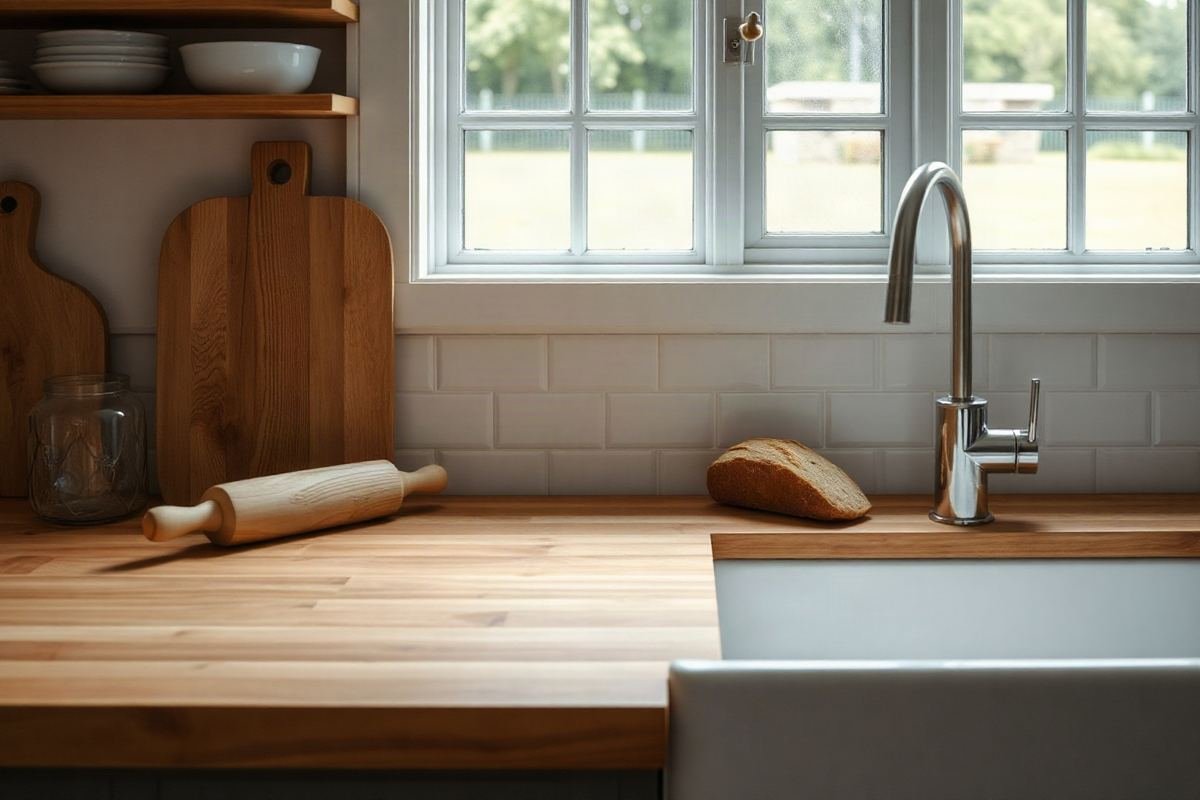
Thick wood counters, whether butcher block or planks left lightly scrubbed and oiled, give a kitchen a warm, workmanlike surface. They sit well against painted cabinets and bring in natural color and grain.
Wood is forgiving, repairable and gets better as it ages. Knife marks and water rings become part of the story, which fits the cottagecore idea that a home should look used and loved.
- Choose the right species. Maple, oak and walnut are common; beech and birch are budget friendly and wear well.
- Oil, do not lacquer. Food-safe mineral oil or hardwax oil keeps wood warm to the touch and is easy to refresh at home.
- Mix with another surface. Use wood on an island and a stone or soapstone top by the sink to balance practicality.
- Seal around water. Pay special attention to sealing around the sink and edges to prevent staining and swelling.
- Accept the patina. Sand lightly and re-oil once or twice a year instead of aiming for a perfect finish.
Budget options: Unfinished butcher block from a big-box store, oiled by you, costs far less than stone. A single wood island top is an affordable way to try it.
Mistakes to avoid: Leaving the surface unsealed near the sink, cutting directly with sharp knives without a board when you want it pristine, and using harsh cleaners that strip the oil.
Herbs, Dried Flowers and a Kitchen Garden Window
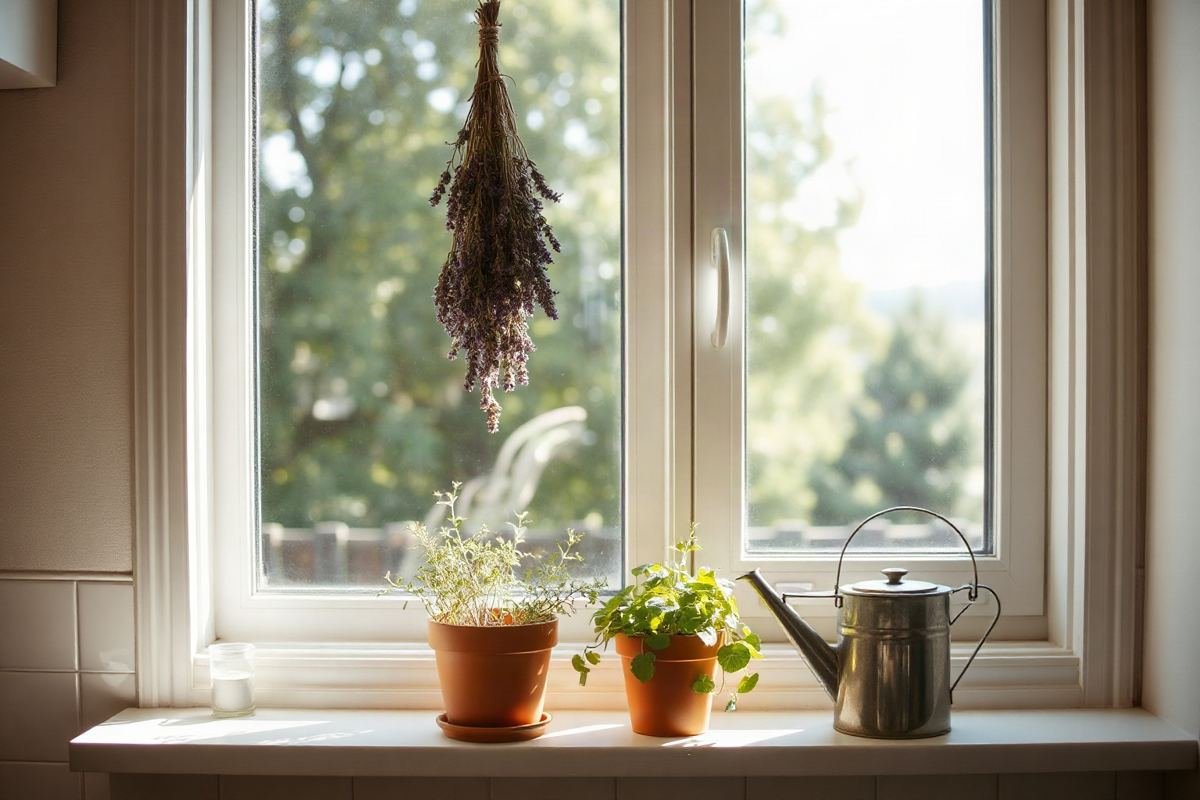
Fresh herbs on the sill, bunches of dried flowers hanging from a rack and a jug of garden stems on the table bring the outdoors into the kitchen. The kitchen becomes a place where plants are used, not just displayed.
It works because plants add color, scent and softness, and they connect cooking to the seasons. Even a small collection makes a kitchen feel alive and gives you a reason to open the window.
- Grow what you cook with. Basil, thyme, parsley, chives and mint all do well in pots on a bright sill.
- Hang bunches to dry. A simple rail or wooden pole near the ceiling holds herbs, lavender and wheat in a relaxed way.
- Use plain containers. Terracotta pots, enamel tins and old jugs look better than shiny plastic.
- Pick a seasonal jug. Fill a pitcher with garden stems, branches or grasses and refresh it as seasons change.
- Mind the light. Place herbs where they get at least a few hours of sun and avoid hanging dried flowers over the stove.
Budget options: Supermarket herbs repotted into terracotta, and cut stems from your yard, cost almost nothing. Dry bunches yourself using string and a spare hook.
Mistakes to avoid: Crowding the sill so you cannot open the window, hanging dried flowers near cooking heat, and overwatering herbs in pots without drainage.
Vintage Enamelware, Copper and Stoneware
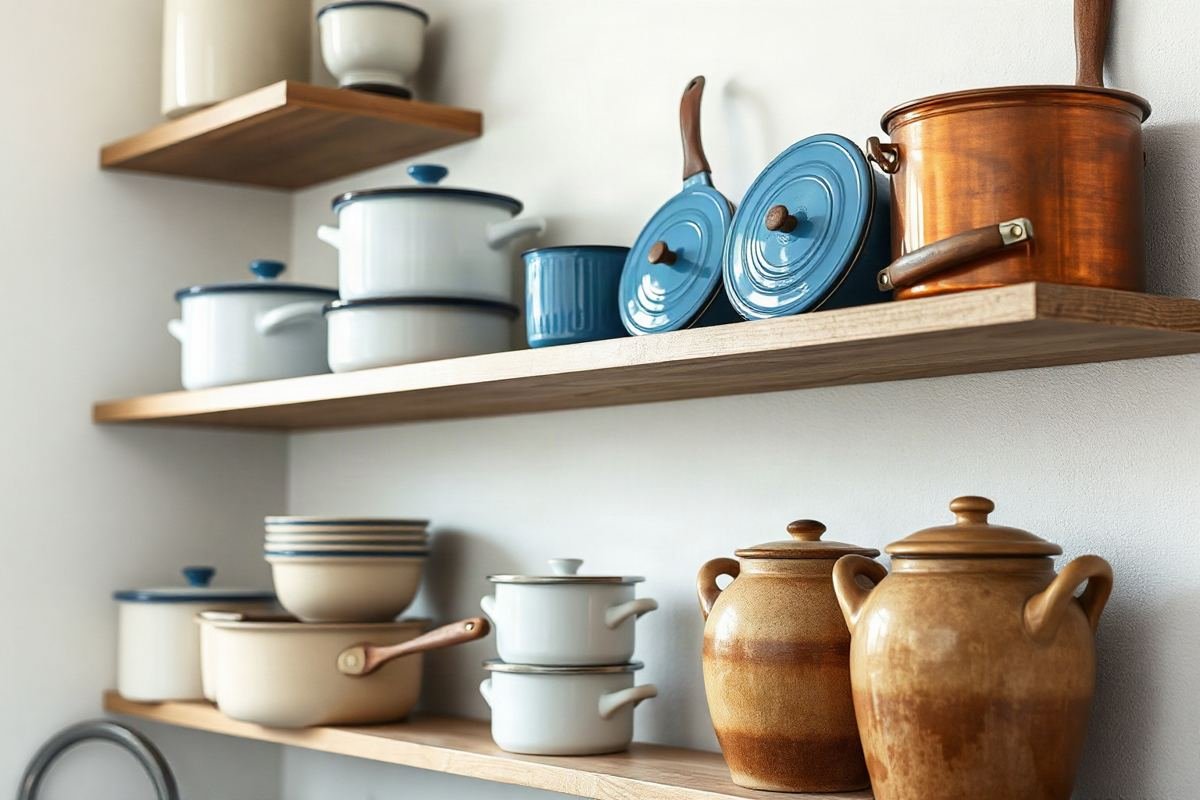
Chipped enamel pots, copper pans, brown stoneware crocks, wooden spoons and ironstone jugs are the props of a cottage kitchen. They are working kitchenware, chosen for character and age rather than a matching set.
These pieces carry history and patina that new cookware lacks. They add depth to simple painted kitchens, and because they are used, the display stays honest and uncluttered.
- Buy by use. Choose enamel colander, kettle, pot or bread bin that you will actually use on the stove or counter.
- Hang what is handsome. A rail with hooks lets you hang copper pans, ladles and strainers within reach.
- Group by material. Keep stoneware crocks together by the stove and enamel on a shelf so each group has a purpose.
- Check for safety. Avoid heavily chipped interior enamel for cooking and check copper linings before use.
- Mix new and old. Pair vintage pieces with a few modern basics so everything works and looks lived in.
Budget options: Flea markets, estate sales and online secondhand shops often sell enamelware and stoneware for a few dollars. Look for chips mainly on the outside.
Mistakes to avoid: Cooking in damaged enamel or unlined copper, buying a full matching vintage-look set, and displaying so much that nothing is accessible.
The Walk-In Pantry and Glass-Front Larder
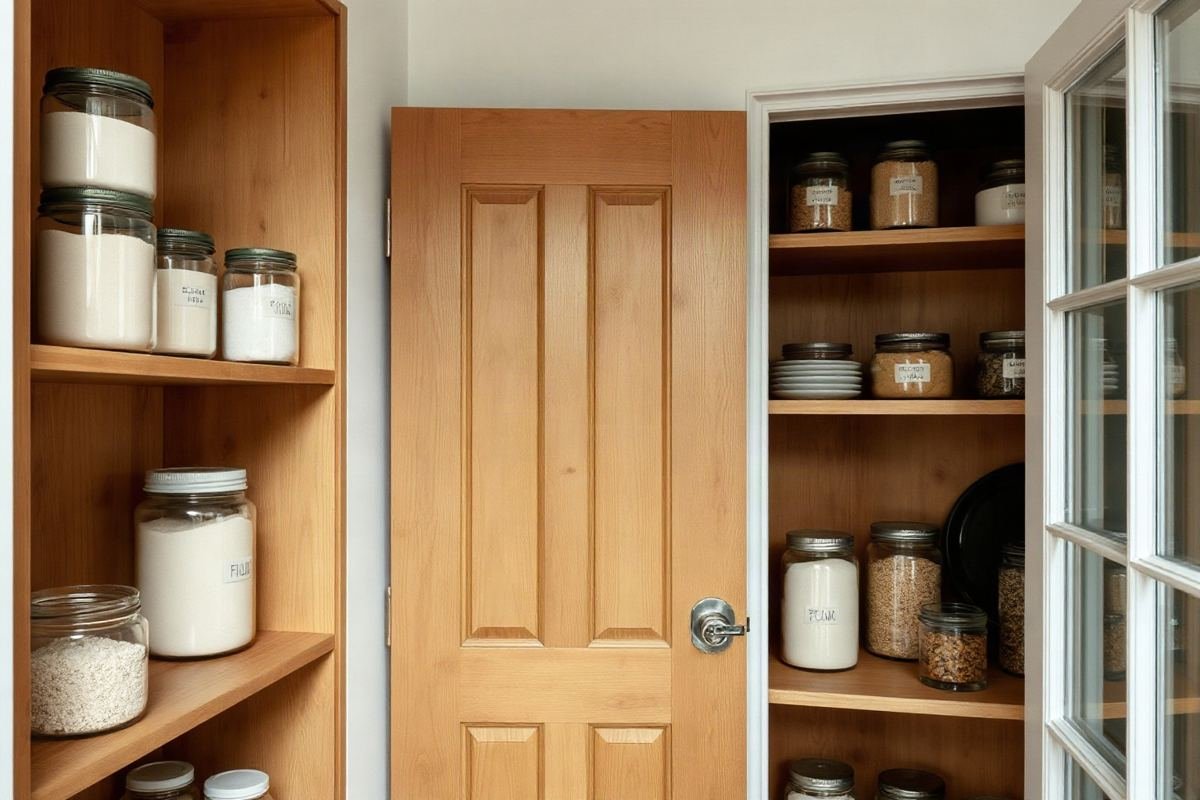
A pantry or larder cabinet, with glass doors, deep shelves and jars of flour, grains and preserves, is a signature feature. It stores food in a visible, orderly way and recalls the old stillroom.
It works because it gives bulk food a proper home and moves clutter off the counters. The jars, baskets and labels also provide a quiet, tidy beauty that suits the whole kitchen.
- Use clear glass jars. Matching jars for flour, sugar, oats and pasta keep food fresh and make the shelves look neat.
- Add baskets and crates. Wire baskets and wooden crates hold potatoes, onions and loose items and add texture.
- Install glass doors. Glass-front doors on one or two cabinets show off your pantry while keeping dust off.
- Label by hand. Simple paper tags, chalk or small labels look personal and keep things organized.
- Light the inside. Battery or plug-in strip lights inside make a pantry easier to use and more inviting.
Budget options: A freestanding bookcase or old wardrobe, fitted with shelves and painted, makes a cheap larder in a corner. Reuse jam jars and thrifted canisters instead of buying new.
Mistakes to avoid: Decanting everything and forgetting to keep original cooking instructions, storing items in direct sun, and leaving lids that do not seal.
Beadboard and Tongue-and-Groove Walls
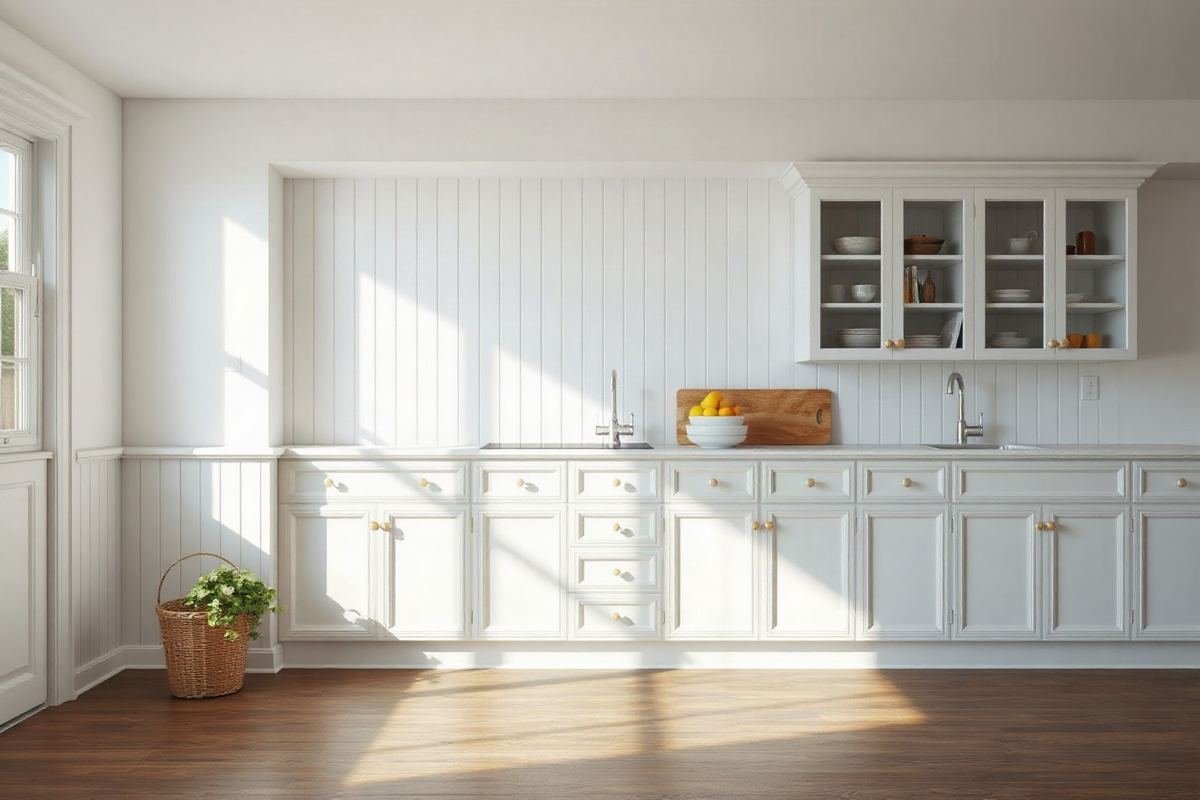
Narrow vertical boards cover the lower walls, a ceiling or a cabinet back. Paired with a simple plate rail or shelf above, it gives a kitchen the classic cottage cladding found in old farmhouses.
Paneling adds texture and cozy detail without pattern. It protects the wall from splashes and scuffs, and its repeating lines make even a plain room look finished.
- Go half height. Panel to around 36 to 42 inches, then cap with a rail and paint the wall above in a soft color.
- Use sheets for ease. Beadboard sheets or wallpaper panels are simpler to install than individual boards and cost less.
- Paint it one color. A soft white, cream or the same color as the cabinets looks cohesive and calm.
- Add a plate rail. A narrow ledge above the paneling is handy for small plates, jugs and cookbooks.
- Cover the ceiling. For a bolder step, wood boards on the ceiling add warmth to a low cottage room.
Budget options: Thin beadboard sheets from a hardware store, cut, glued and painted, are a weekend project. Peel-and-stick beadboard wallpaper is a rental-friendly option.
Mistakes to avoid: Using unprimed panels in damp areas, ending the paneling at an awkward height, and painting in a glossy finish that highlights every flaw.
Café Curtains and Skirted Sink Fronts
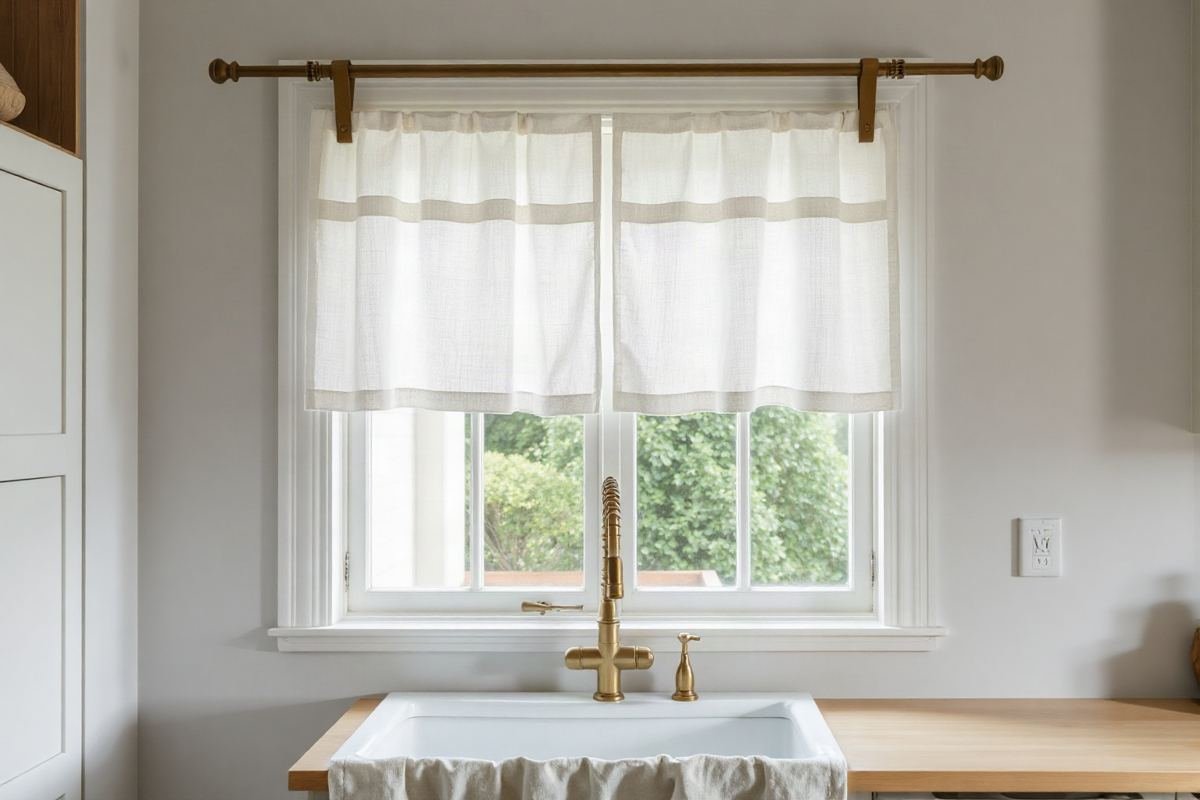
Short curtains on a rod across the lower half of a window, or a gathered fabric skirt under the sink, are traditional cottage kitchen details. They give privacy while letting in light and hide cleaning supplies.
Soft fabric tames the many hard surfaces in a kitchen and adds a tender, homemade note. It also gives you a low-cost way to introduce color and pattern at eye level.
- Hang café curtains midway. Mount a rod about halfway up the window so light enters above and you have privacy below.
- Choose light fabrics. Linen, cotton and lace filter sunlight and are easy to wash, which matters near a stove.
- Add a sink skirt. A gathered or pleated skirt on a tension rod hides pipes and bins under an open sink.
- Keep fire safety in mind. Use short, snug fabric and keep it well away from burners and open flames.
- Use scallops or trims. A small scalloped edge or ribbon trim adds a hint of charm without making the room fussy.
Budget options: Make curtains from a tablecloth, vintage napkins or yardage and use clip rings on a simple rod. A tension rod with a skirt is under thirty dollars.
Mistakes to avoid: Hanging long curtains near the cooktop, using heavy fabric that blocks light, and choosing trim that cannot go in the wash.
Mismatched Chairs and a Farmhouse Table
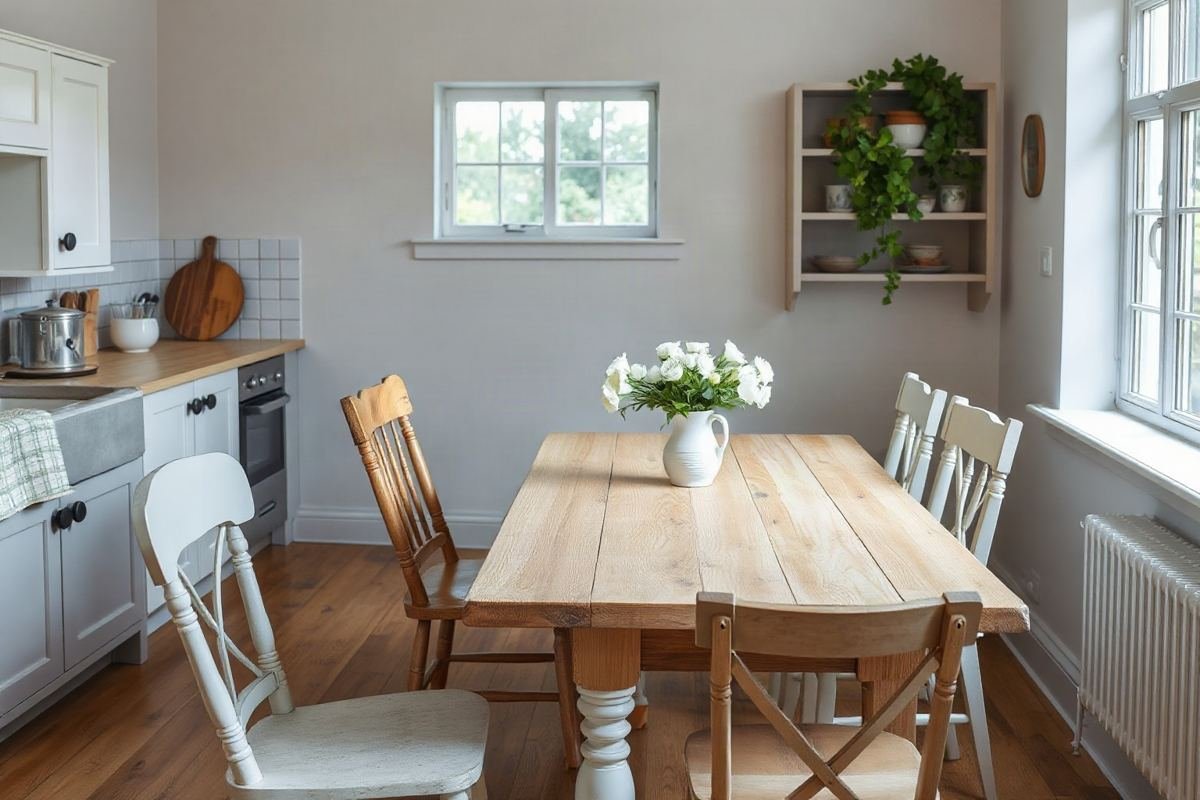
A big, plain wooden table surrounded by chairs that do not match is the heart of the cottagecore kitchen. It is where food is prepared, meals are shared and homework or letters get done.
Mixed chairs make a room feel gathered over time and welcome guests as they are. A table with scratches and character invites use instead of worry, which is the whole mood.
- Anchor with a solid table. Choose pine, oak or elm with a simple base and a top you will not fear marking.
- Unite chairs by color or wood tone. Paint different chairs one color, or keep them different shapes in the same wood.
- Add seat cushions. Tie-on pads in linen or ticking make older chairs comfortable and cover wear.
- Include a bench. A bench on one side fits more people and gives a relaxed, farmhouse look.
- Size the table for the room. Leave about 36 inches between the table edge and walls or cabinets for chairs to pull out.
Budget options: Secondhand tables and odd chairs cost little. Sand, paint or wax them, and add cushions made from fabric you like.
Mistakes to avoid: Buying a delicate table you cannot use daily, mixing too many styles with no common thread, and choosing chairs that are the wrong height for the table.
Warm, Layered Kitchen Lighting

Schoolhouse pendants, opal glass shades, plug-in wall sconces and small table lamps on the counter make the kitchen glow. The aim is soft pools of warm light rather than one bright ceiling fixture.
Light shapes mood more than any other detail, and warm light makes painted cabinets, wood and linen look their best in the evening. Layering also helps tasks without harsh glare.
- Choose a classic pendant. A white opal or clear glass schoolhouse pendant over the table or island suits most cottage kitchens.
- Add a lamp on the counter. A small table lamp or picture light gives a gentle evening glow while you clear up.
- Use warm bulbs. Pick 2200K to 2700K bulbs so wood, brass and creamy paint look inviting.
- Put everything on dimmers. Dimmers let the kitchen shift from bright cooking light to soft dinner light.
- Light under the cabinets. Warm LED strips under wall cabinets brighten the counters for chopping without a harsh overhead.
Budget options: Plug-in sconces and a simple lamp need no wiring. Swap shades or bulbs before replacing a fixture, since warm bulbs change the look dramatically.
Mistakes to avoid: Hanging a pendant too low or too high (around 30 to 36 inches above a table is typical), using cool white bulbs, and relying only on overhead light.
Handmade Tile, Backsplashes and Checkerboard Floors
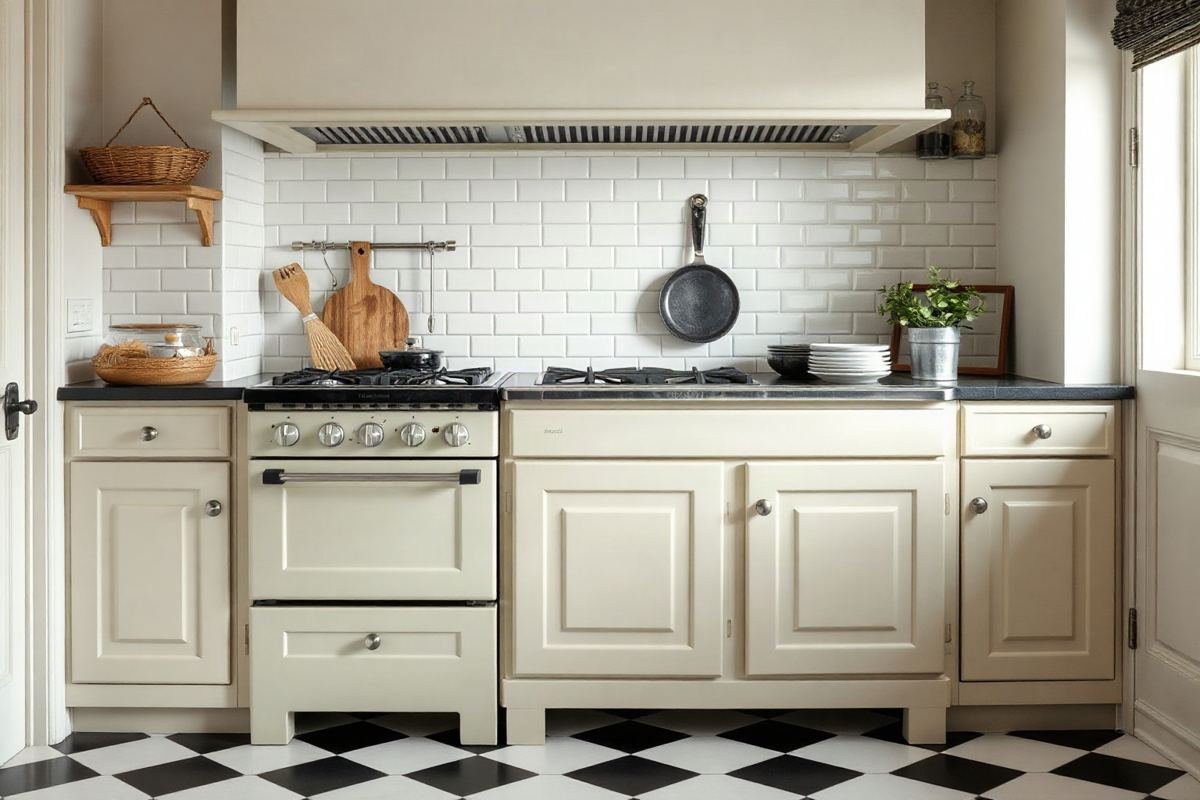
Glazed tile with slight color variation, from white subway to soft green or blue, sits behind the range and sink. Underfoot, checkerboard, brick or old-style tile gives a country feel and a timeless pattern.
Handmade-look tile reflects light unevenly, which gives surfaces depth and quiet interest. A traditional floor pattern adds an anchor of character that stands up to heavy use.
- Choose a crackle or wavy glaze. Slightly uneven tile has depth that perfectly flat tile lacks and suits imperfect cottage walls.
- Match grout to tile. A grout close to the tile color looks softer and hides stains better than stark white.
- Try a checkerboard floor. Cream and soft black, or two warm neutrals, give a classic country look.
- Keep the pattern simple. Pair patterned floors with plain tile on walls so the room does not feel too busy.
- Run tile to the ceiling behind the range. A full-height panel behind the stove is easy to clean and creates a strong focal point.
Budget options: Standard white ceramic subway tile in a warm white is affordable. Peel-and-stick tile or vinyl checkerboard flooring is a budget and rental choice.
Mistakes to avoid: Choosing glossy ultra-uniform tile, using white grout that stains quickly, and combining a very busy floor with bold wall tile.
What Is Going Out in 2026
- Fading | Replacing it
- Handleless, high-gloss slab cabinets | Painted shaker cabinets with cup pulls
- Matching fitted cabinet runs | Unfitted, furniture-style pieces
- Closed uppers on every wall | Open shelves with everyday crockery
- Sleek waterfall quartz | Butcher block and honed stone
- Cool white and gray palettes | Sage, butter, cream and soft blue
- Perfect uniform tile | Handmade crackle-glaze tile
- Recessed lighting only | Layered pendants, sconces and lamps
- Matching dining sets | Mismatched chairs and a farmhouse table
How to Combine Trends Without Making a Mess
Mixing too many looks in one kitchen quickly feels like a theme restaurant. Use these rules to keep it calm.
Rule 1: Choose one hero. Pick a single statement, such as an apron sink, a hutch or painted cabinets, and let everything else support it.
Rule 2: Keep the palette small. Use two or three soft colors plus wood, and repeat them in cabinets, textiles and crockery.
Rule 3: Mix old and new. Add one or two vintage pieces to every new element so the room feels gathered instead of showroom perfect.
Rule 4: Repeat patterns once. Use gingham or ticking in two or three places, such as curtains, cushions and towels, then stop.
Rule 5: Protect the working zone. Keep counters near the stove and sink clear and practical, and put decoration on shelves and tables.
Rule 6: Edit at the end. Remove one item from each surface and check that you can still reach everything you use daily.
Three Sample Combinations
The Cottage Classic: Soft sage shaker cabinets, an apron sink, butcher block counters, a gingham table cloth and a hanging bunch of dried herbs.
The Unfitted Farmhouse: A painted hutch, a worktable, open shelves, mismatched chairs and a schoolhouse pendant over a long wooden table.
The Modern Cottage: Cream cabinets, handmade tile, a pared-back checkerboard floor, linen curtains and a few well-chosen vintage pieces.
Budget Guide
- Budget | Where to spend | Where to save
- Under $300 | Paint for cabinets or a hutch, new knobs, linen towels, a gingham cloth, herbs in pots | Everything else: use cookware, plates and furniture you own
- $300 to $1,500 | A butcher block island top, a pendant and plug-in lighting, open shelves, a bridge faucet | Secondhand table and chairs, thrifted enamelware and crockery
- $1,500 to $5,000 | An apron sink, handmade tile backsplash, a freestanding hutch or unfitted pieces | Mix reclaimed wood and secondhand finds, paint instead of replacing cabinets
- $5,000+ | Custom or semi-custom painted cabinets, a pantry larder, a restored range, new flooring | Accessories and textiles, which can be collected slowly over time
Smart buying tips:
- Spend where you touch and where it is hard to change: the sink, faucet, counters, cabinets and floor. Everything else can be added gradually.
- Buy samples, paint a board and look at it morning and evening before committing to cabinet color or tile.
- Secondhand shops, estate sales and online listings are the most authentic and affordable sources of tables, chairs and crockery.
Step-by-Step 2026 Cottagecore Kitchen Decor Refresh
- List how you use the kitchen. Note your top three daily activities and design around them first.
- Choose three mood words. Words like warm, soft and lived-in will guide every purchase.
- Declutter first. Clear counters and cabinets so you can see what you really own and use.
- Pick one starting point. It might be a cabinet color, a table, a sink or a piece of crockery you love.
- Set your palette. Choose two or three soft colors plus wood and keep to them.
- Fix the layout. Leave 36 to 42 inches for walkways and keep the sink, stove and fridge easy to reach.
- Paint and repair. Prep and paint cabinets, walls and trim, and fix hardware before adding decoration.
- Add the big pieces. Install the sink, counters, table, hutch or shelving that anchor the room.
- Layer the lighting. Combine overhead, task and accent light at different heights, all on warm bulbs.
- Add textiles and plants. Hang curtains, lay a runner, add towels, herbs and a jug of stems.
- Edit and live in it. Use the room for two weeks and adjust anything that gets in your way.
Styling the Trends by Room Size and Layout
Trends behave differently depending on the room you have. Here is how to adapt the ideas above to the space you actually live in.
Small Cottage Kitchens (under 100 sq ft)
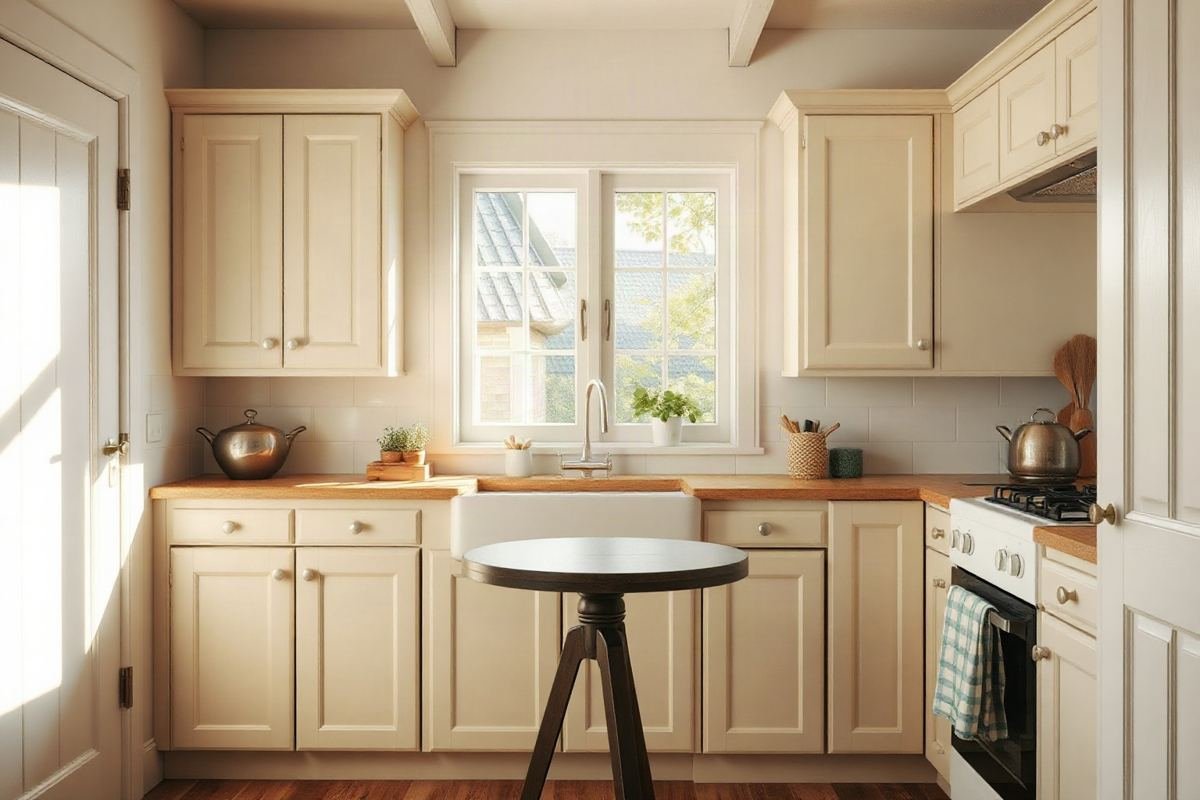
Choose one hero. A painted cabinet color or open shelf is enough; do not try every trend in a tiny room.
Go light and soft. Pale sage, cream and butter reflect light and make walls feel further apart.
Use a slim table. A drop-leaf or small round table gives a gathering spot without blocking movement.
Hang things up. Rails and hooks keep pots and utensils on the wall and counters clear.
Skip heavy curtains. Short café curtains or a simple blind let in the most light.
Open-Plan Kitchens
Use an island as furniture. A freestanding worktable divides the zone and looks less like a built-in.
Repeat materials. Echo the wood and paint colors in the dining and living spaces so the home feels unified.
Soften the sight lines. Plants, shelves and fabrics break up the hard look of a large kitchen from the sofa.
Layer the lighting. Combine pendants over work areas with lamps in the living space so each zone feels cozy.
Hide the mess. Use a pantry or closed base cabinets for daily clutter and keep the displays on open shelves.
Large or High-Ceilinged Kitchens
Scale up the pieces. Use a big table, a tall hutch and oversized pendants so furniture fills the space.
Break the walls. Beadboard, plate rails and open shelves add detail to large expanses of wall.
Create zones. Define a cooking area, a prep table and a seating nook so the room feels cozy.
Add warmth overhead. Wood beams, painted boards or a deeper ceiling color bring the height down.
Use rugs. Runners and flatweave rugs soften hard floors and define work areas.
Rentals and Temporary Homes
Use removable surfaces. Peel-and-stick tile and removable wallpaper change walls and backsplashes without damage.
Swap the hardware. Replace knobs and pulls with cottage styles and keep the originals to put back.
Choose freestanding storage. Baker’s racks, hutches and bookcases add furniture character and move with you.
Rely on textiles. Curtains, towels, cloths and a rug carry much of the cottage look and are portable.
Plug in your lighting. Table lamps and plug-in sconces add warm layers without wiring.
FAQ
What is a cottagecore kitchen? A cottagecore kitchen is a warm, simple room inspired by country life. It features painted cabinets, wood surfaces, open shelves, natural textiles, herbs and flowers, and vintage kitchenware, all chosen for comfort and character instead of polish.
What colors work for a cottagecore kitchen? Soft sage, butter yellow, cream, powder blue, warm white and gentle clay are the most popular. Pair them with natural wood and one or two muted accents so the room feels calm instead of sugary.
Can I get this look with modern appliances? Yes. Panel a dishwasher or fridge, choose cream or stainless models, or hide appliances behind cabinet doors. A vintage-style range is optional, and the overall room matters more than any single appliance.
How do I do cottagecore on a small budget? Paint cabinets, swap knobs, add linen towels, hang a shelf and bring in thrifted crockery and herbs. These changes cost little and deliver most of the effect without any construction.
Will this style look dated soon? Styles built on natural materials, painted wood and traditional forms last well. Keep trendy touches, such as specific colors or patterns, in easily changed items like cloths, curtains and accessories.
Is open shelving practical? It can be, if you display daily items you use often. Plan for dusting and grease, keep shelves away from the stove and mix with a few closed cabinets for things you rarely use.
How do I stop it looking cluttered? Edit by use. Keep only items you cook with or love, group by material, leave space on shelves and keep counters near the stove clear of anything decorative.
What flooring suits a cottage kitchen? Wood planks, brick, stone, checkerboard tile or good vinyl all work. Choose a durable, easy-to-clean surface in a warm tone and add a washable runner near the sink.
Final Thoughts
A cottagecore kitchen is not about buying a fantasy; it is about making the room where you cook feel generous and unhurried. Start with one change, whether that is repainting cabinets, hanging a shelf of your plates or putting herbs on the sill, and add slowly. The best versions look as if they grew over years and are happiest when they are being used.