
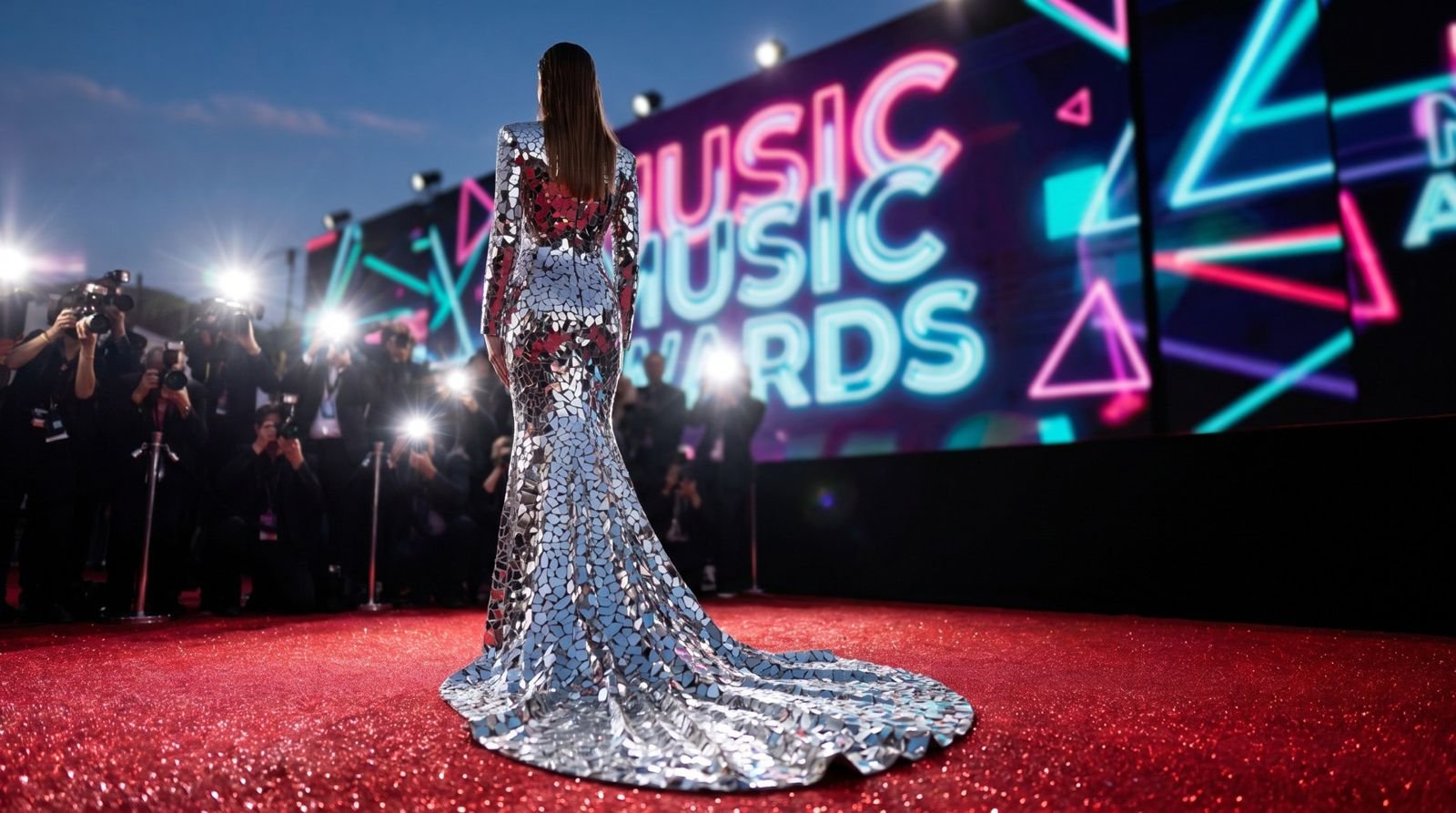
A practical guide to the gowns, colors, fabrics and attitude of the September 2026 VMAs carpet, and how to borrow the best ideas for your own events.
The MTV Video Music Awards have never been a quiet night. The carpet is where pop, hip-hop, rock and fashion collide, and the September 2026 ceremony kept that tradition alive. Gowns were sheer, metallic, sculpted and playful, often all at once. Stars treated the carpet as a stage, and the dresses were built to be seen from every angle.
This guide breaks the VMAs 2026 red carpet dress story into clear ideas. You will find the big themes, thirteen distinct looks, a color guide, a fabric and fit guide, outfit formulas, common mistakes, answers to frequent questions and a bonus chapter on bringing the mood to real life. InStyle ranked its best-dressed list from the night, and coverage also noted a Calvin Klein take on the naked dress, so both ideas appear throughout.
It is written for anyone who loves awards-season fashion: readers planning a party dress, shoppers who want to decode what they saw online, and anyone who enjoys the craft behind a carpet moment. You do not need a stylist or a big budget. You need a few principles, and this guide supplies them in plain English.
1. The Big Picture: What the VMAs 2026 Carpet Said
Before the individual looks, here are six ideas that explain the night. Each one returns later in more detail.
- Skin is a design tool. The naked dress, with sheer panels and strategic embellishment, remained a major story. Coverage noted a Calvin Klein version, and the lesson was restraint: the cleanest versions were minimal rather than loud.
- Shine is the music-awards language. Sequins, mirrored paillettes, chainmail and liquid metal suit a show built around performance and flashing cameras.
- Silhouette beats decoration. The strongest gowns had a clear shape: a long column, a sharp corset, a huge skirt or a dramatic cutout.
- Short is still glamorous. Minidresses held their place beside full-length gowns, especially for performers and presenters who needed to move.
- Back views matter. Open backs, trains and low-slung details meant the dress told a second story as the star turned toward the photographers.
- Personality wins. InStyle’s best-dressed approach rewarded looks that felt chosen by the wearer, not assembled by committee.
2. Look 1: The Naked Dress, Refined
What it is
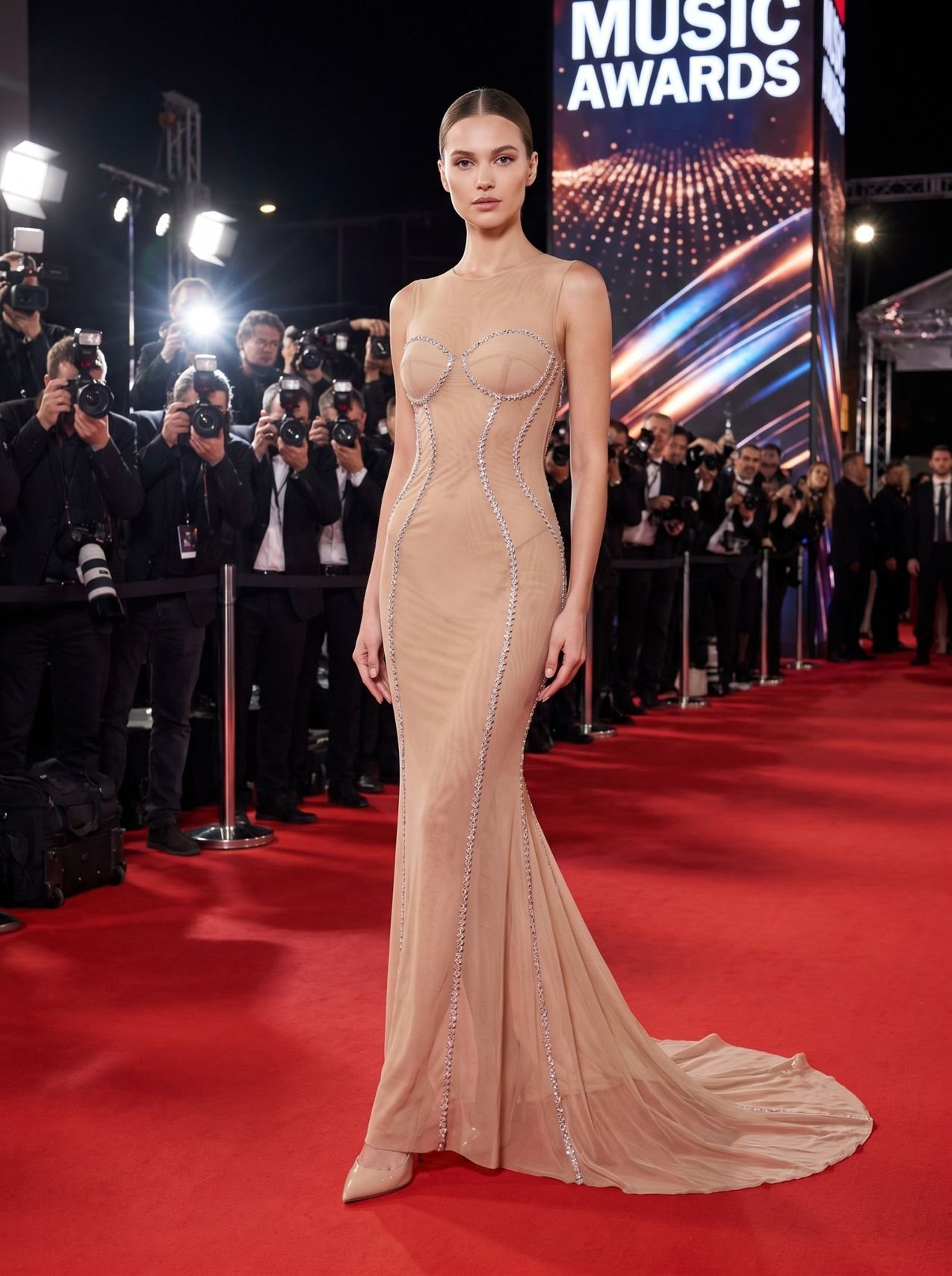
The naked dress uses sheer fabric, usually tulle, mesh or fine chiffon, in a shade close to skin. Embroidery, crystals or draping provide the coverage. At the VMAs 2026, coverage noted a Calvin Klein take on the idea, a reminder that the label built its reputation on clean, body-aware design.
Why it works
A sheer dress photographs as a single smooth line. Under flash it reads as luminous rather than bare, provided the embellishment is placed with care and the underlayers are seamless.
What to look for
- Smart coverage. Embroidery should sit where coverage matters, with the rest left light.
- Seamless lining. A tone-matched slip or bodysuit keeps the line clean.
- Quiet accessories. Small earrings and a simple clutch keep attention on the dress.
Mistakes to avoid
- Wrong undertone. A slip a shade too pale or too dark breaks the illusion.
- Too many extras. Heavy jewelry fights the delicate fabric.
How to wear it
- Start with the underlayer. Try the dress with the exact bodysuit or slip you plan to wear, in daylight and under a phone flash.
- Keep hair and skin polished. A sheer gown shows everything, so skincare and an even tone matter as much as the fit.
- Choose shoes that disappear. Nude or clear styles lengthen the line of the leg.
If a fully sheer gown feels like too much, look for a version with opaque panels at the bodice and hip. You still get the airy fabric and the graceful outline, with far more comfort for a long evening.
3. Look 2: Mirror Sequins and Liquid Metal
What it is
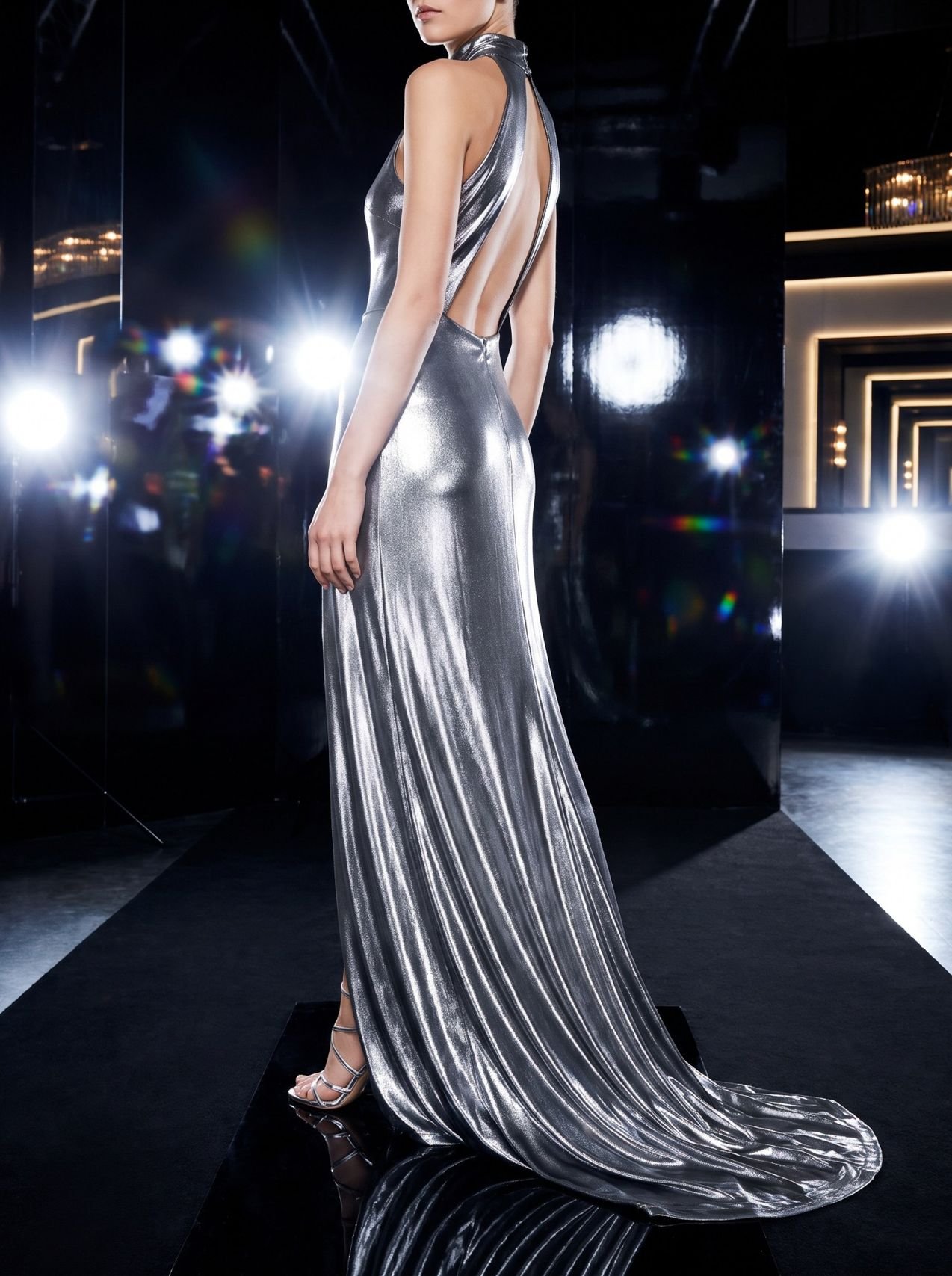
Metallic dressing covers mirrored sequins, paillette discs, chainmail and fabrics with a liquid finish. These are the textures that look best moving under stage lights, which is why they suit a music ceremony so well.
Why it works
Light does half the styling. A reflective surface shows every turn of the body, so the dress seems to change as the wearer walks. Simple cuts let the finish carry the look.
How to wear it
- Keep the cut simple. A column or slip shape lets the shine speak.
- Choose one metal. Silver with silver, or gold with gold, looks deliberate.
- Go minimal on jewelry. Studs or a single cuff are plenty.
- Check comfort. Sequins can scratch, so ask about lining at the arms and waist.
Styling tip
Matte makeup balances a reflective dress. Let the skin look polished rather than shiny so the camera has one source of glow, not two.
Mistakes to avoid
- Choosing noisy sequins. Cheap discs can rattle and snag, so test the fabric by running a hand across it.
- Mixing silver and gold. Two metals in one outfit usually look accidental.
- Forgetting to sit. Reflective dresses can crease and pull, so practice before the night.
A good metallic dress should feel light for its size. If it is heavy and stiff on the hanger, it will feel the same after three hours of standing.
4. Look 3: The Sculpted Corset Gown
What it is
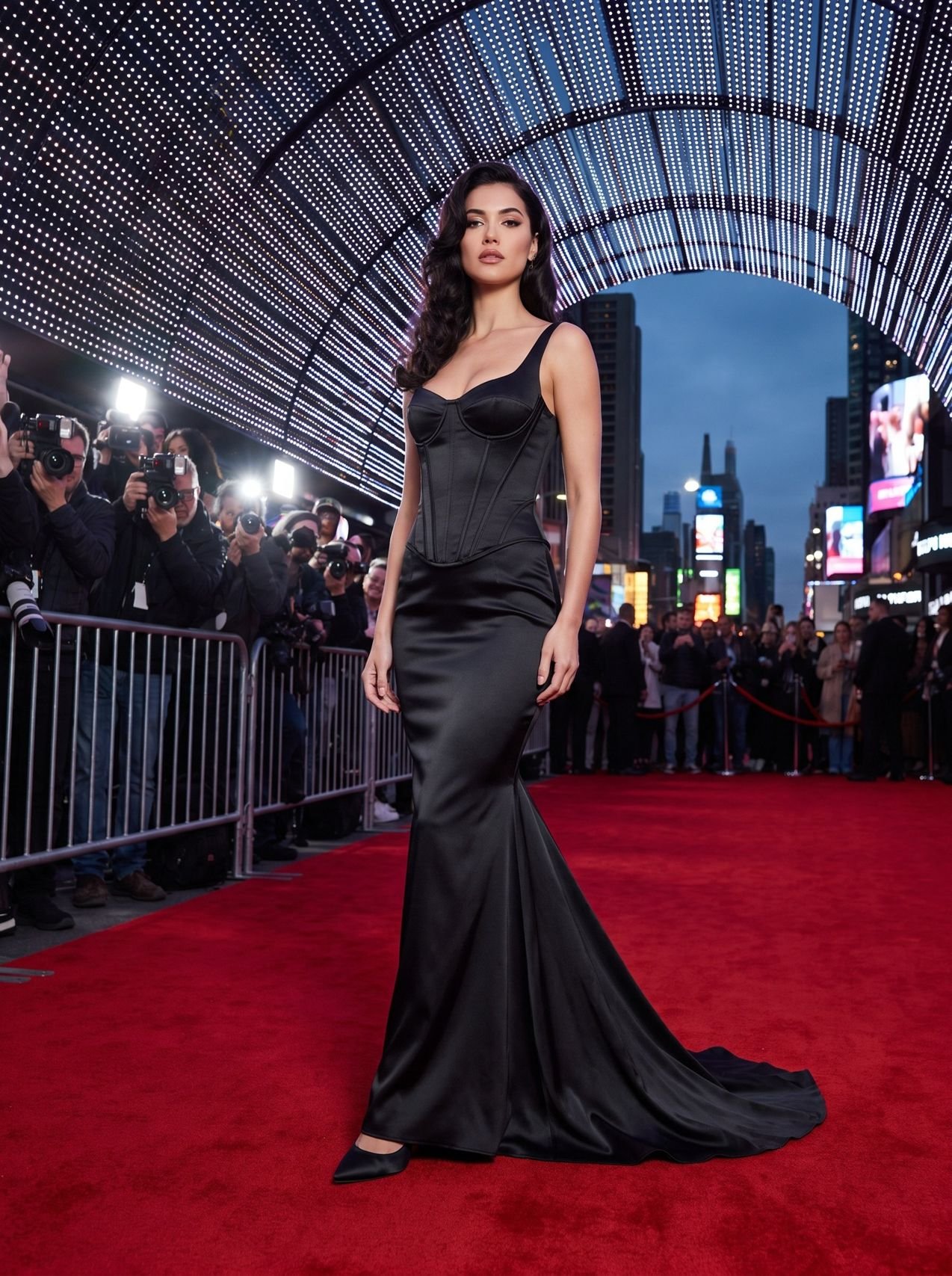
A corset gown pairs a structured, boned bodice with a skirt that flares, trails or clings. The bodice defines the waist and lifts the line of the torso, while the skirt supplies movement.
Why it works
Structure gives confidence. A well-built bodice supports the wearer, and the rigid top against a fluid skirt creates contrast that cameras love.
What to look for
- Internal boning. It should hold the shape without digging in.
- A fitted waist seam. The seam should land at your natural waist.
- Room to sit. You will want to take your seat at some point in the night.
Fabrics and colors
Satin, duchess satin and crepe hold structure best. Black, deep red and ivory are the strongest choices for a corset.
Styling tip
A corset dress already creates a strong shape, so keep the rest of the look calm. Smooth hair, a single pair of earrings and a clean clutch let the bodice stay the focus. If you wear it for dancing, ask your tailor to add a small stay inside the top edge so it does not slip.
Choose a color with intent. Black reads sharp, red reads bold and ivory reads polished, but all three depend on the quality of the satin.
5. Look 4: The Cutout Column
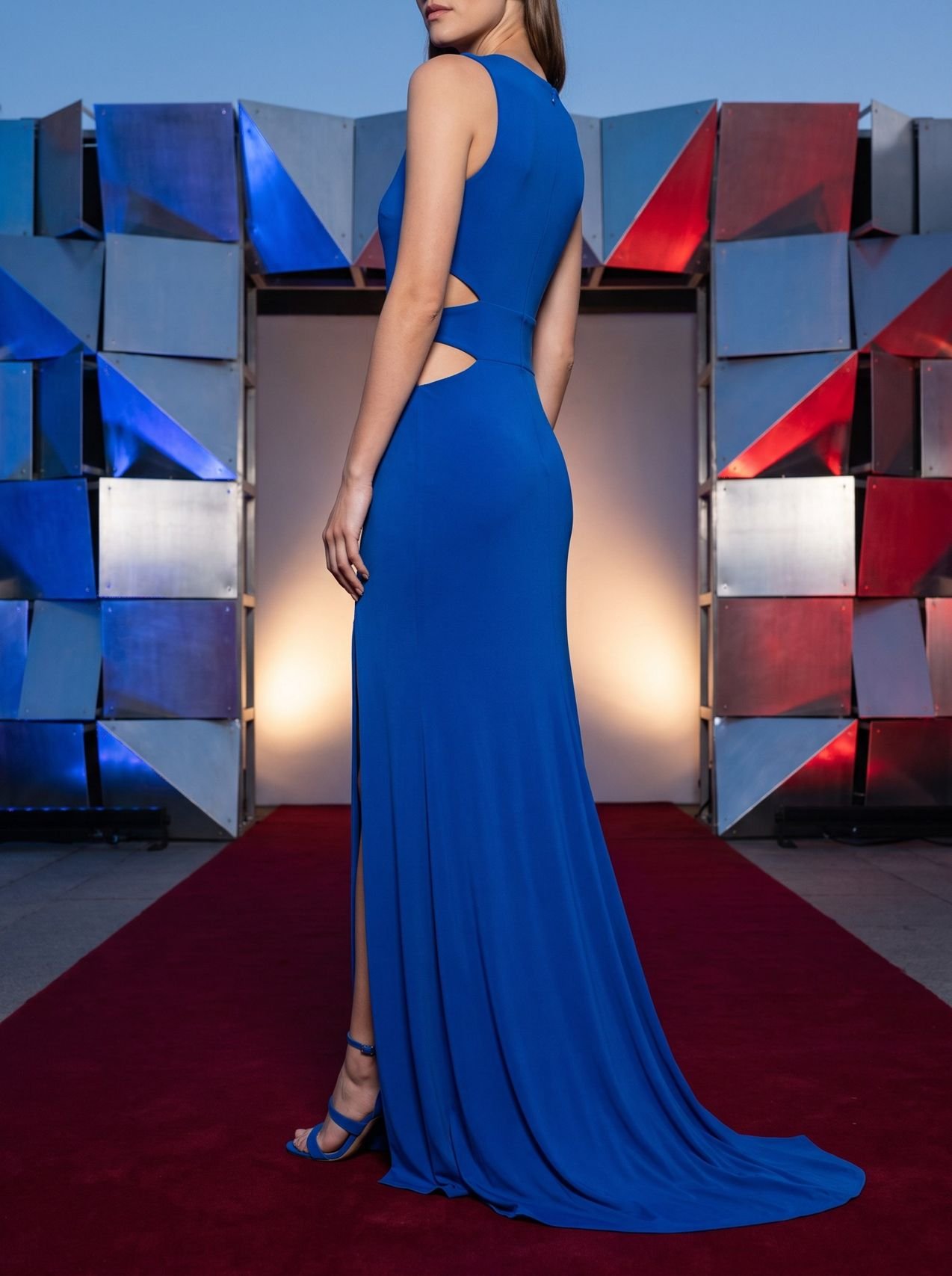
What it is
The cutout column is a long, narrow gown with openings at the waist, ribs, back or hip. It is minimal in color and shape, with the drama in the negative space.
Why it works
Cutouts frame the body without relying on sheer fabric. They give a dress an edge while still allowing a clean outline, which is why they appear on carpets year after year.
How to wear it
- Match the cutout to your comfort. Waist and back openings are easiest to wear.
- Use tape or a plan. Fashion tape keeps edges flat when you move.
- Keep hair off the back. An updo shows the design.
Mistakes to avoid
- Visible underwear lines. Choose seamless pieces or skin-tone alternatives.
- Cutouts that gape. A fitting should confirm the dress stays closed when you sit.
Fabrics and colors
Jersey, matte crepe and stretch satin work best because they move with the body and keep the cutouts flat. Strong, single colors such as cobalt, red, white and black give the shape room to speak. Avoid busy prints, which distract from the negative space.
Before the event, sit, twist and reach in the dress. A good cutout dress stays in place through all three.
6. Look 5: The Statement Minidress
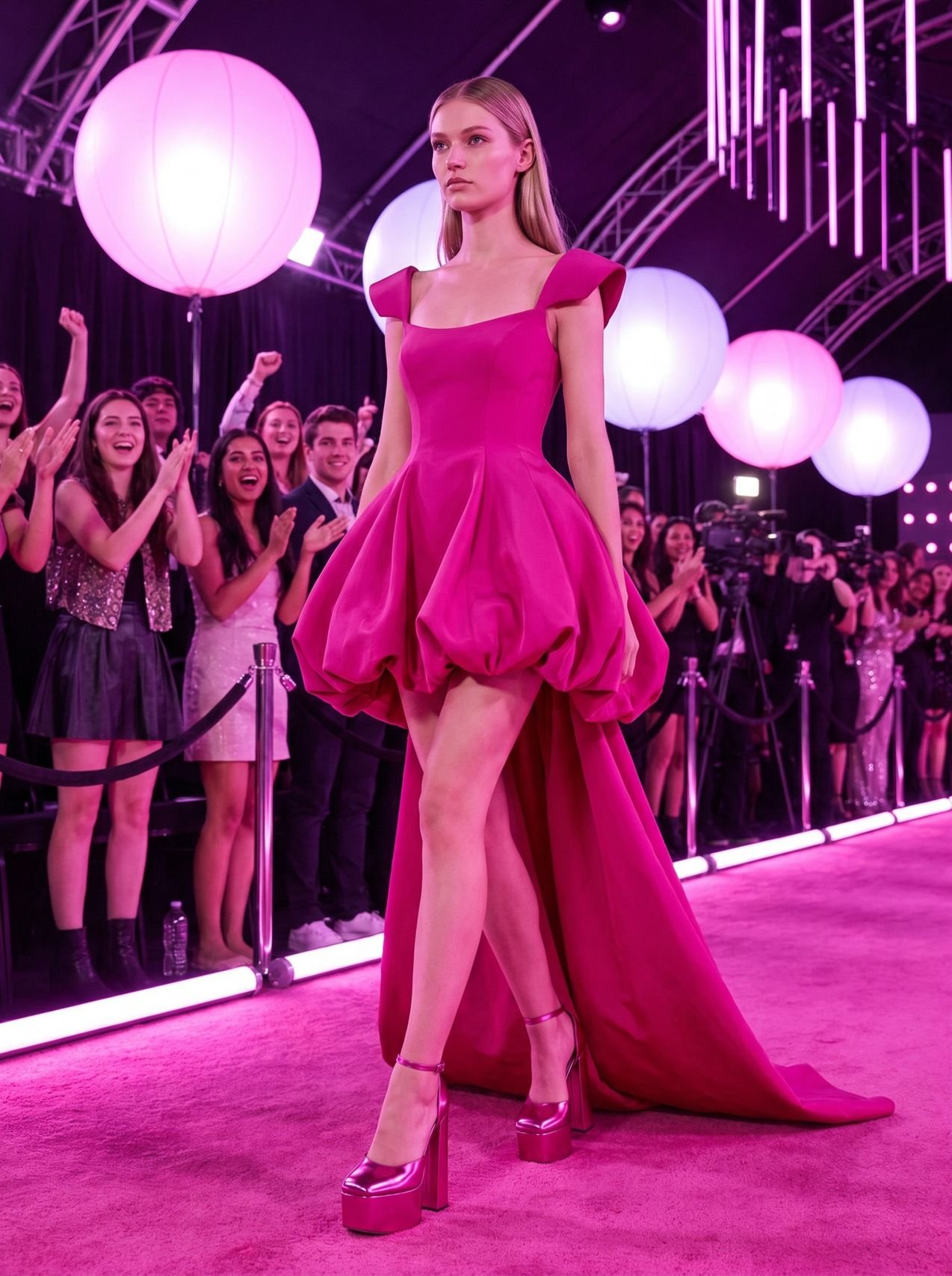
What it is
A statement minidress is short, but it is not simple. It may have a sculpted hem, an oversized bow, a feathered skirt or a heavily beaded surface. On a music-awards carpet the mini suits performers who need freedom to move, and it adds playfulness to a ceremony that never takes itself too seriously.
Why it works
Short hemlines show off shoes and legs, and they let a bold shape stay light. A mini also makes an easy transition from carpet to after-party, which matters on a night with many stops.
What to look for
- A structured hem. Shape keeps a short dress from looking casual.
- Comfortable length. You should be able to sit, climb stairs and hug friends.
- One focal point. A bow, a texture or a color is enough.
Styling tip
With a mini, put the effort into the shoe. A tall platform or a sharp pump finishes the look and adds the height that a short hem can otherwise lose.
Mistakes to avoid
- Choosing a hem that rides up. Do a full sit-and-walk test.
- Overdoing the extras. A busy mini needs very simple accessories.
- Ignoring weather. A short hem in cool air needs a plan, such as a coat for arrival.
The most successful minis at an awards night tend to have one clever idea and a firm structure, so the dress looks designed rather than just short.
7. Look 6: Dramatic Trains and Sweeping Skirts
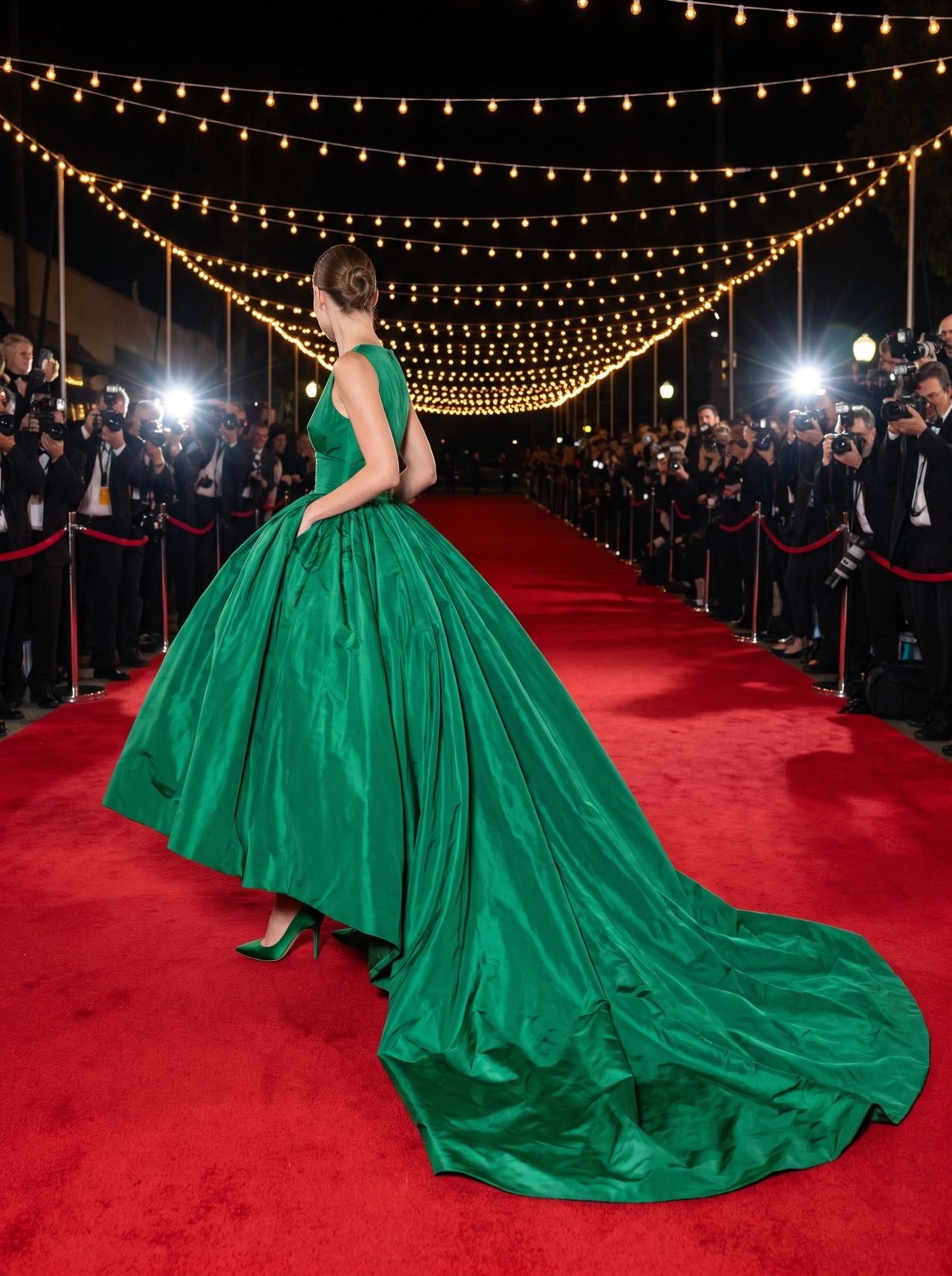
What it is
Train gowns include any dress with extra fabric that follows the wearer. Some are modest, a few inches of sweep, and others stretch several feet behind. At an event as theatrical as the VMAs, a big skirt feels like part of the show.
Why it works
A train gives photographers a reason to ask for a turn. It creates movement that stills can capture, and it makes the walk down the carpet feel like an entrance.
How to wear it
- Practice the walk. Take small steps and let the fabric follow.
- Bring a helper. A friend who can lift the train in tight spaces is invaluable.
- Choose the right shoe. A slightly lower heel protects your balance.
Mistakes to avoid
- Skipping the fitting. Hem length matters more with a train than with any other dress.
- Forgetting the exit. Plan how you will get into a car without crushing the skirt.
Fabrics and colors
Silk taffeta, organza and heavy satin hold volume and rustle in a pleasing way. Deep jewel colors such as emerald, sapphire and ruby suit flash photography, while pale shades need very clean fabric to avoid looking flat.
If you cannot manage a full train, choose a short sweep brush train. It gives the same elegant movement with much less to handle.
8. Look 7: Bold Color Blocking
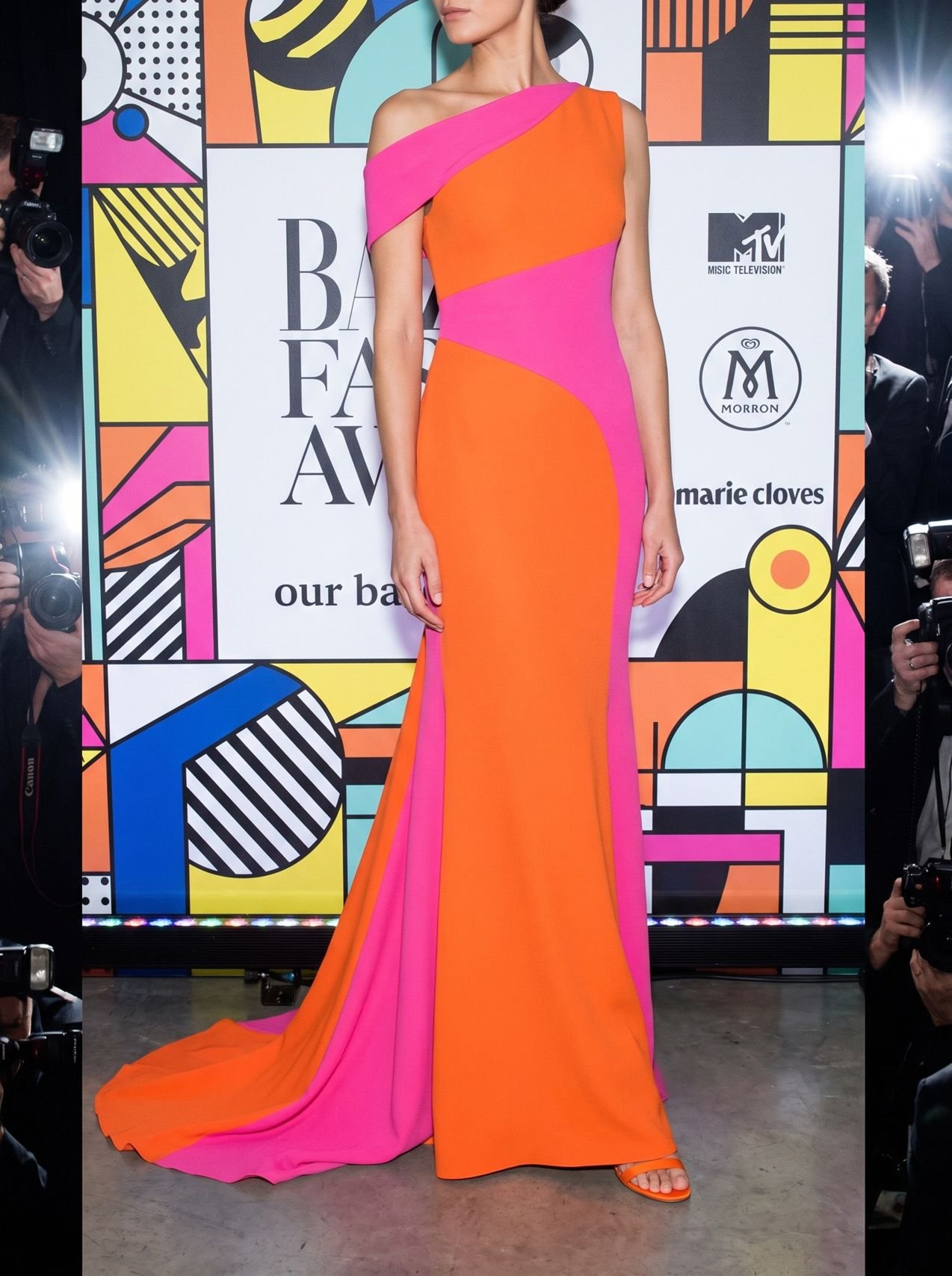
What it is
Color blocking sets two or more strong shades against each other in clean shapes. It is a graphic idea that sits well with pop culture, and it reads instantly even from far away.
Why it works
Strong color is memorable. In a crowd of black and metallic gowns, a vivid color-blocked dress gets noticed, and it shows confidence without needing extra decoration.
What to look for
- Clean seams. Blocks should meet in sharp lines.
- Shades with a link. Neighbors on the color wheel feel harmonious; opposites feel loud.
- A simple neckline. Let the color do the talking.
Styling tip
Pick up one of the colors in your shoe or bag and keep everything else neutral. The dress will stay the star.
Fabrics and colors
Crepe, satin and cotton-silk blends keep color crisp. Look for blocks with contrast in tone as well as hue, such as a deep and a light shade, so the design holds up in black-and-white photographs as well as in color.
Mistakes to avoid
- Three clashing colors. Two or three related shades is plenty.
- Matching everything. A matching shoe, bag and earring set can make the look flat.
- Cheap fabric. Thin material makes bright colors look harsh.
9. Look 8: Black Gowns With an Edge
What it is
Black remains the carpet’s safest choice and, at its best, its sharpest. The VMAs versions lean toward leather-look textures, asymmetric hems, sheer inserts and hardware details such as chains and buckles.
Why it works
Black absorbs light and defines the body clearly. Because the color is so familiar, the details do the work, and a small twist, like a cutout or a metal clasp, makes it feel current.
How to wear it
- Mix textures. Satin with mesh or leather-look panels adds depth.
- Add one hard detail. A chain strap or a buckled belt gives edge.
- Choose a bold lip. Red or deep berry works well.
Mistakes to avoid
- Flat fabric. A thin black dress can look dull in photographs.
- Too many details. Pick two edgy touches at most.
Styling tip
If your dress is black, choose accessories with a clear finish: polished metal, glossy leather or smooth stone. A matte gown with shiny jewelry has built-in contrast. Keep the hair sleek and let the neckline or back detail be the one moment of surprise.
10. Look 9: Feathers, Fringe and Movement
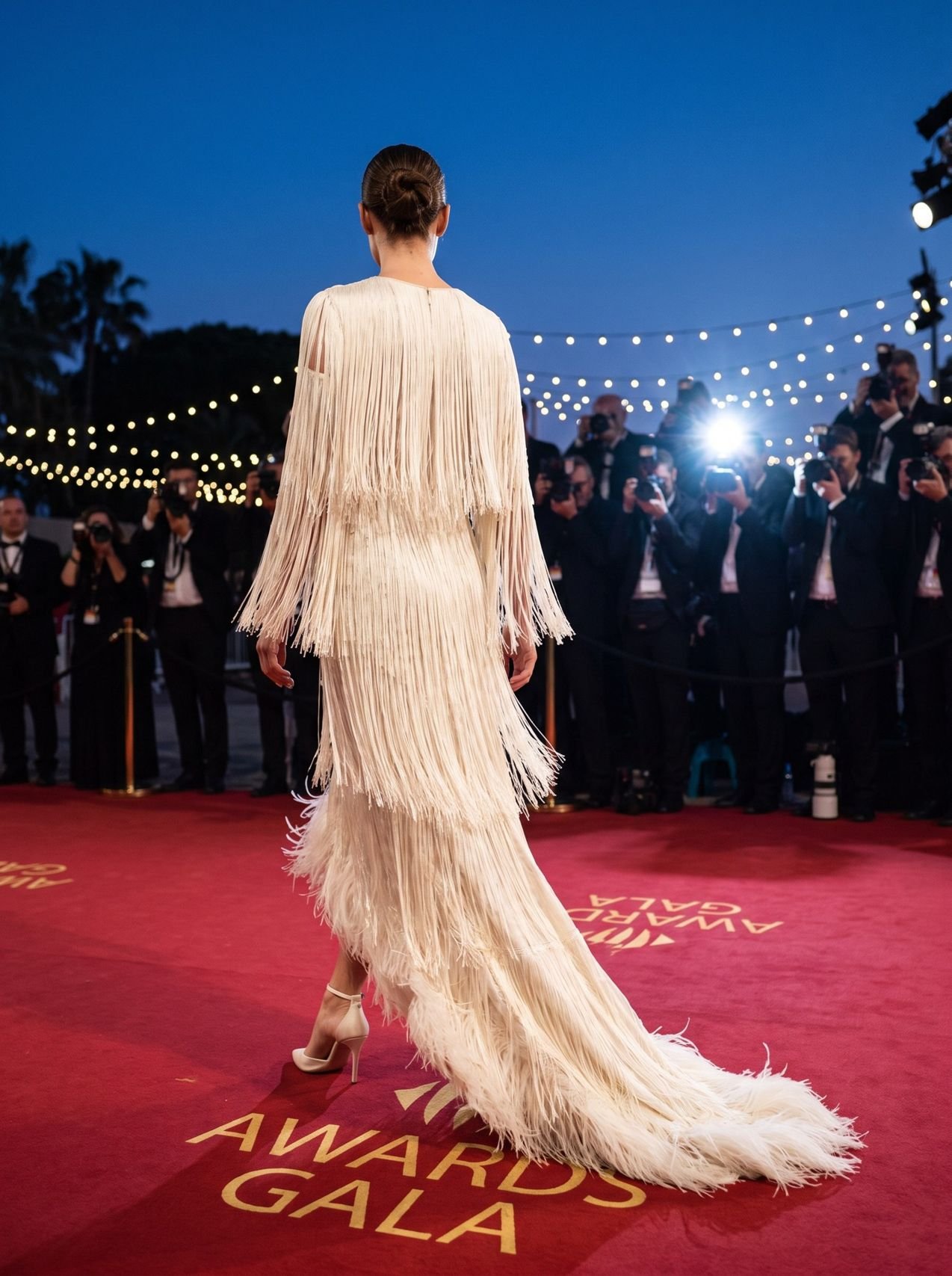
What it is
Fringe, feathers and beaded tassels bring motion to a gown. They suit a ceremony with live performances, because they echo the energy of dance and music.
Why it works
Movement is what turns a still photograph into a memory. A gown that swings as the wearer turns gives the camera a moment, and it feels celebratory in a way a stiff dress rarely does.
What to look for
- Weight and drape. Good fringe falls cleanly rather than clumping.
- Secure attachment. Beads and feathers should be firmly sewn.
- Light linings. Heavy trim needs a breathable base.
Styling tip
Keep jewelry simple, since the dress already supplies texture. Hair worn off the shoulders prevents tangles with trim.
Mistakes to avoid
- Skipping a movement test. Dance and turn in the dress before you commit.
- Layering other textures. Fringe plus a fur wrap creates visual noise.
- Sitting without a plan. Gather loose trim before you take a seat.
The best fringe and feather dresses feel playful rather than costume-like. A clean neckline and a sleek shoe keep the look grown-up.
11. Look 10: Soft Pastels and Romantic Tulle
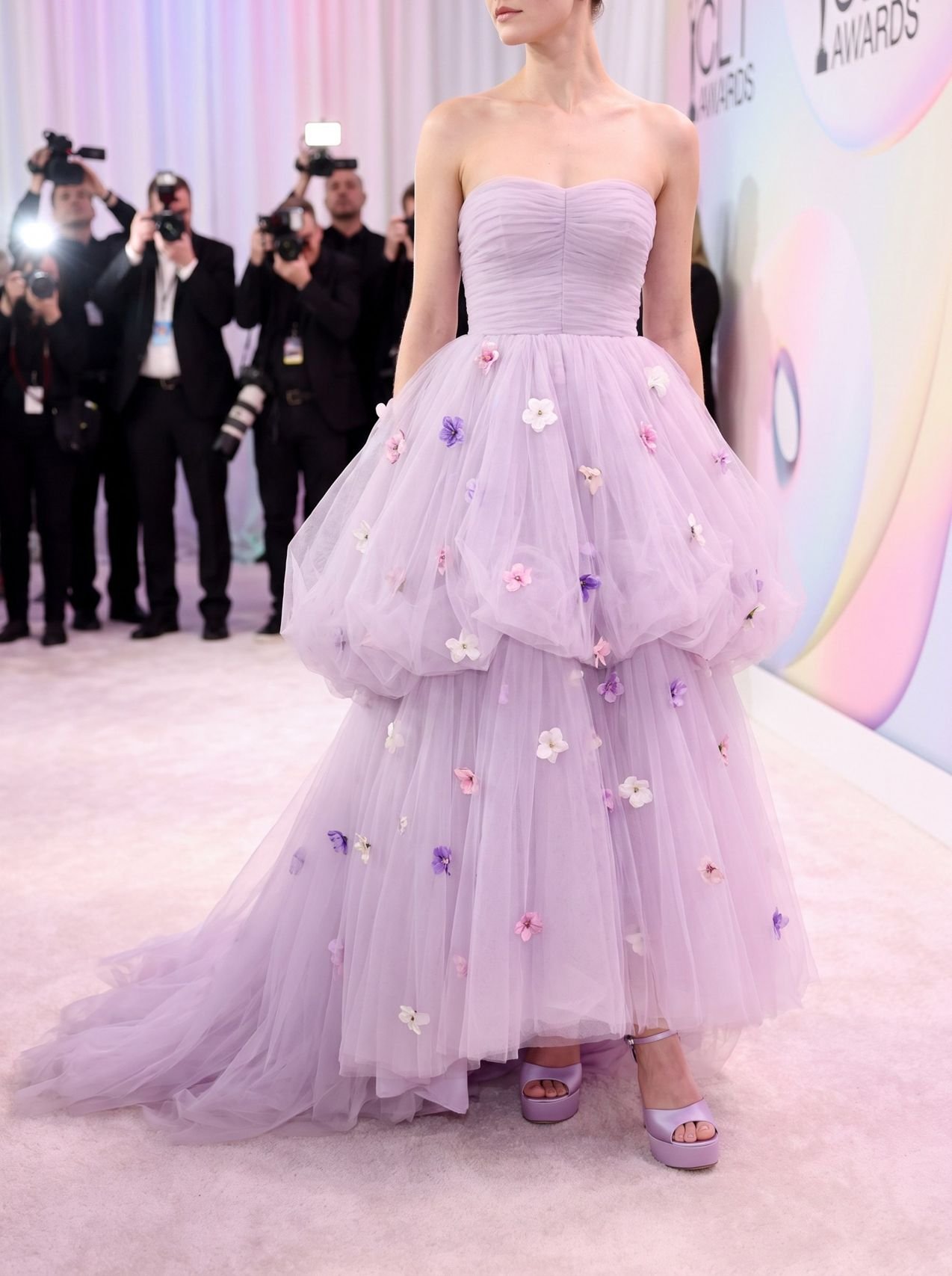
What it is
Not every VMAs look is loud. Pastel tulle, ballerina layers and floral details give a softer counterpoint to the metal and leather around them. The effect is dreamy, and it stands out precisely because the setting is so intense.
Why it works
Contrast catches the eye. A pale, airy dress among sharp gowns becomes a calm center, and soft colors flatter most skin tones under stage lighting.
How to wear it
- Choose a clear pastel. Lilac, powder blue and soft pink photograph well.
- Add a touch of edge. Chunky boots or dark nails stop it from feeling sweet.
- Keep the hair sleek. A clean style balances the volume.
Mistakes to avoid
- Washed-out tones. Very pale colors can disappear on camera.
- Crushed tulle. Steam the skirt before you leave.
Styling tip
Pastels reward careful skin and beauty. A soft blush, a defined brow and a simple lip keep the face from fading into the color. A small metallic accessory adds a touch of glint without ruining the softness.
12. Look 11: Suiting, Tuxedo Dresses and Hybrid Looks
What it is
The tuxedo dress borrows from tailoring: sharp shoulders, satin lapels, a nipped waist and a short or long skirt. Hybrids, such as a blazer worn as a dress or a suit with a train, show how formal and playful can overlap.
Why it works
Tailoring signals polish, and its borrowed masculinity makes a feminine silhouette feel unexpected. It is also easy to move in, which suits long evenings.
What to look for
- Shoulder fit. The seam should sit at your shoulder point.
- A defined waist. Belting or darting keeps the shape.
- Quality lapels. Satin or velvet facings add richness.
Styling tip
Wear it with minimal jewelry and a strong shoe. A single bold ring or earring is all that the look needs.
Fabrics and colors
Black, white, navy and charcoal crepe are the classic choices, though a bright satin tuxedo dress makes a fine party option. Velvet works well in cooler months. Choose a fabric with weight so the structure holds.
Mistakes to avoid
- Oversized fit. A blazer dress needs shape to avoid looking like borrowed clothing.
- Forgetting the hem. A tailored mini needs a clean, even finish.
13. Look 12: Crystals, Beading and Handwork
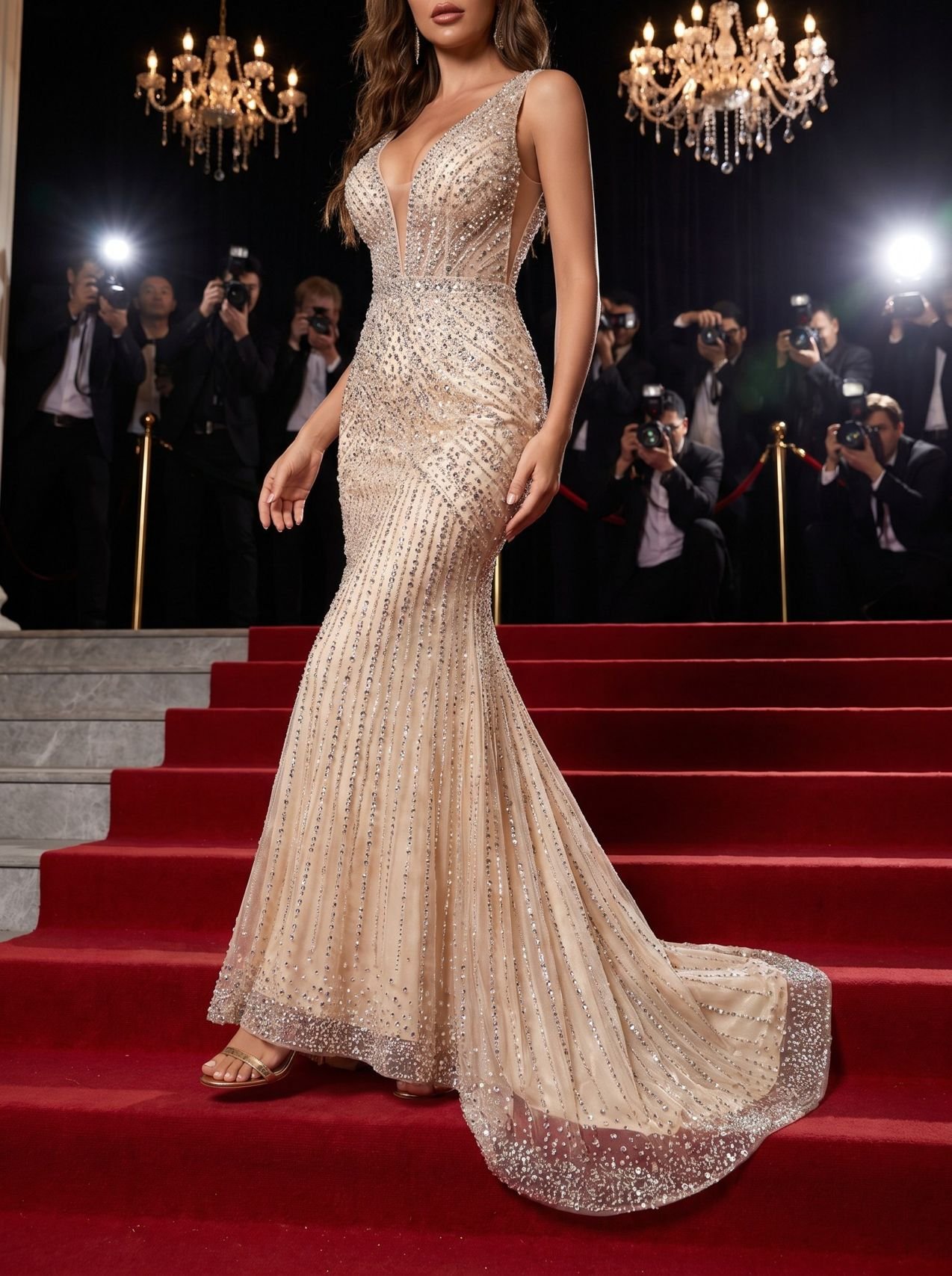
What it is
Heavy beading and crystal work remain the traditional route to carpet glamour. Hand-embroidered bodices, scattered stones and fully beaded skirts take weeks to make, and the detail rewards close-up photography.
Why it works
Craft carries weight. A beaded gown looks expensive in the way that matters, through texture and density, and it reflects light in a softer, richer way than flat sequins.
What to look for
- Even coverage. Stones should be evenly spaced and secure.
- Comfortable lining. Beading is heavy, so the inside should be soft.
- Support. A built-in bodice helps carry the weight.
Mistakes to avoid
- Pairing with more sparkle. Let the dress shine alone.
- Ignoring the weight. Test sitting and dancing before the event.
Styling tip
Choose one area of focus, such as the neckline, and keep other areas quiet. If you are wearing a heavily beaded dress, hold the jewelry to a simple pair of studs or a bracelet. Soft, glowing makeup keeps the overall effect warm rather than cold.
14. Look 13: Accessories, Shoes and Finishing Touches
What it is
Accessories complete a carpet look. At the VMAs, they ranged from sculptural earrings and stacked cuffs to platform boots and statement gloves. The best choices amplified the dress without competing with it.
Why it works
A good finish shows intent. Even a perfect gown can feel unfinished without considered shoes, a bag and jewelry that match its mood.
How to wear it
- Choose one focus. Earrings or necklace, not both.
- Match metals to the dress. Silver beads call for silver jewelry.
- Mind the bag. A small clutch keeps the silhouette clean.
- Think about comfort. You will stand for hours.
Styling tip
Take a full-length photo before you leave. Seeing the whole look reveals what to remove.
Mistakes to avoid
- Wearing new shoes for the first time. Break them in early.
- Carrying a large bag. It breaks the silhouette.
- Ignoring the sound. Bangles and beaded bags can be noisy in a quiet room.
Accessories should feel like a conclusion, not an interruption. If you doubt a piece, take it off.
The VMAs 2026 Color Guide
Color decides a dress’s mood before any detail is noticed. Use this table to choose a shade and decide what to pair it with.
- Color | Mood | Pair with
- Silver and chrome | Futuristic, high-energy | Matte makeup, simple jewelry, silver heels
- Skin-tone nude | Sleek, modern, daring | Nude shoes, small earrings, a minimal clutch
- Black | Sharp, classic, confident | Red lip, metal hardware, textured fabrics
- Hot pink | Playful, bold, pop | Neutral shoes, clean hair, gold jewelry
- Cobalt blue | Cool, striking, graphic | Silver accents, bare skin, sleek styling
- Emerald green | Rich, dramatic, regal | Gold jewelry, warm makeup, matching heels
- Pastels | Dreamy, soft, romantic | Pearls, sleek hair, a touch of dark contrast
- Ivory and champagne | Elegant, luminous | Gold, soft glam makeup, neutral shoes
A quick rule for choosing: decide whether you want the dress to shine, to shock or to soothe. Shine calls for silver, gold and champagne. Shock calls for hot pink, cobalt and black. Soothe calls for pastels and ivory. Once the mood is chosen, the shade becomes easy to narrow down, and your accessories follow from it.
Remember that photographs flatten color. Take a quick snapshot of any dress you are considering, in the light where you will wear it, and look at the picture as well as the mirror.
Fabric and Fit Guide
Fabrics that photograph well
Satin, crepe, tulle, mesh, sequins and heavy beading all handle flash well. Matte fabrics define shape, while shiny fabrics add dazzle. A mix of the two gives depth.
Fabrics that need care
Thin jersey, unlined silk and very light chiffon show every line and wrinkle. If you choose them, add a smooth lining and steam carefully.
Getting the fit right
- Fit the largest point first. A tailor can take in a dress more easily than let it out.
- Test movement. Walk, sit, raise your arms and hug someone.
- Check the hem. Stand in your shoes when pinning.
- Plan your underlayers. Choose seamless garments in your skin tone.
Bringing it together
A dress that fits well does more for you than an expensive dress that does not. Always put fit before fashion.
Caring for the dress
Store beaded and sequined gowns flat or folded in tissue, since hanging can stretch the shoulders. Steam tulle and satin from a distance rather than pressing them. Spot-clean marks early, and use a professional cleaner for anything with handwork.
Shoes and posture
Heel height changes how a gown falls. Always try the hem with the exact shoes you will wear, and practice standing tall with relaxed shoulders. Good posture makes an ordinary dress look expensive.
How to Build a Dress Look: Formulas
These formulas turn the VMAs mood into repeatable outfits.
- The glow formula. Metallic dress, matte makeup, minimal jewelry, sleek hair.
- The sheer formula. Nude mesh dress, tone-matched lining, small earrings, soft glam.
- The drama formula. Big skirt, fitted bodice, bold lip, no necklace.
- The pop formula. Bright color, neutral shoes, polished hair, gold accents.
- The edge formula. Black dress, one hardware detail, boots or sharp heels.
- The soft formula. Pastel tulle, pearls, a dark shoe for contrast.
Use these as starting points rather than strict rules. Swap one element at a time, such as the shoe or the lip color, and see how the mood shifts. If a formula feels wrong on you, trust that feeling and change it.
Mistakes to Avoid
- Copying a look exactly. Adapt the idea to your own body and taste.
- Ignoring comfort. You cannot enjoy a party you cannot sit through.
- Overaccessorizing. One focal point is enough.
- Skipping a trial run. Wear the dress and shoes at home first.
- Choosing a color that fights your skin tone. Test it in natural light.
- Forgetting photos. Check how the dress looks under a phone flash.
Most dressing mistakes come from rushing. Give yourself time to try the full look, take photographs, and make changes. A calm last-minute edit, such as removing a necklace, often improves the result more than adding anything.
Frequently Asked Questions
What defined the VMAs 2026 red carpet? Sheer and metallic dresses, sculpted shapes, short hemlines and strong personality. The carpet leaned playful and bold rather than formal.
What is a naked dress? A gown in sheer, skin-tone fabric with embellishment or draping providing coverage. Coverage of the night noted a Calvin Klein take on the idea.
Who was best dressed? InStyle published a best-dressed ranking from the night. Rankings are opinions, so treat them as inspiration rather than rules.
Can I wear a naked dress to a normal event? Yes, if you choose a version with generous lining and a modest cut. Always consider the dress code.
What shoes suit a metallic gown? Metallic or nude sandals and pumps. Keep the style simple.
How do I stop a train from dragging? Have the hem fitted in your shoes, and use a small loop to lift the train when you dance.
Are minidresses acceptable for formal events? At a music awards show, yes. For strict black-tie events, check the invitation.
How do I choose a color? Hold fabric near your face in daylight. Choose the shade that makes your skin look bright and rested.
How can I get the look on a budget? Rent, buy secondhand, or borrow. Focus on the silhouette, then add one standout accessory.
Final Thoughts
The VMAs 2026 carpet was a reminder that red carpet dressing can be fun. The best dresses were not necessarily the most expensive. They were the ones that knew what they wanted to say, whether through a sleek naked dress, a pool of silver metal or a bright block of color. Take that clarity into your own wardrobe and the rest becomes easy.
Whether you loved the sheer minimalism, the glittering metals or the pop color, the lesson is the same: choose a dress you feel brave in, fit it well and give it room to be seen. The carpet is only a few hundred feet long, but the ideas travel much further.
Bonus Chapter: Bringing the Carpet Into Real Life
At work events and parties
Scale the idea down. A metallic skirt with a plain top, or a tailored dress with one sparkling accessory, delivers the mood without the drama. For a work party, choose a cleaner cut and keep skin coverage moderate.
Dressing for your body
- Petite frames. Choose minidresses and vertical lines, and keep trains short.
- Tall frames. Use long columns, big skirts and bold cutouts.
- Curvy frames. Corset bodices and stretch crepe flatter.
- Athletic frames. Ruffles, tulle and draped fabrics add softness.
Shopping on a budget
Rental services, resale sites and sample sales all offer party dresses at a fraction of retail. Prioritize fit, and pay a tailor to alter if needed.
A seven-day plan before an event
- Day 7. Choose the dress and book alterations.
- Day 6. Pick shoes and test them around the house.
- Day 5. Decide on jewelry and a bag.
- Day 4. Final fitting, and check underlayers.
- Day 3. Book hair and makeup, or plan your own.
- Day 2. Steam the dress and prepare a small repair kit.
- Day 1. Rest, hydrate and lay everything out.
Hair and makeup
Match your beauty to the dress. Shiny dresses suit matte skin, sheer dresses suit soft glow, and bold colors suit simple lips. Hair up shows a back detail, while hair down softens a strong silhouette.
Sustainable choices
Rent, borrow, buy vintage or restyle something you own. A gown worn twice is better than a gown worn once, and a good tailor can extend its life.
Confidence checklist
- Can I sit, walk and dance?
- Does the color suit my skin?
- Is there one clear focal point?
- Do the shoes feel good after an hour?
- Do I feel like myself?
A closing note
Treat the VMAs as a source of ideas rather than a shopping list. Take one thing you loved, such as a sheer layer, a mirror finish or a bold color, and bring it into an outfit that already feels like you. That is how a carpet moment becomes your own style.