

A practical guide to men’s wide leg trousers in 2026: how to choose the right rise, break and fabric, which shoes and tops balance the volume, and what to avoid.

For a long time, men’s trousers moved in only one direction: narrower. Slim, then skinny, then slimmer again. Wide leg trousers reverse that. They hang from the waist with plenty of room through the thigh and fall in a straight, generous line to the shoe. The result is a silhouette that feels both older and newer than what came before. It looks like something from a mid-century photograph, but it also feels perfect for modern days spent sitting, walking and travelling.
This guide shows you how to make the shape work. We start with the main ideas, then cover ten ways to wear wide leg trousers: the pleated tailored pair, the relaxed chino, the denim version, the linen summer pair, the corduroy and wool winter options, the suit-trouser look, the casual workwear approach, the smart evening outfit and the minimalist capsule approach. Each section covers what the style is, why it works, what to look for, how to wear it and what to avoid. After that you will find a colour guide, a fabric and fit guide, outfit formulas, a mistakes list, common questions and a bonus chapter.
Wide trousers ask for a bit more thought than slim ones, because proportion matters more. You do not need to master all of it at once. Read the fit chapter, choose one pair, and try the formulas. Within a few outfits you will know what works on you.
1. The Big Picture: Why Wide Legs Work for Men Now
1. Comfort leads A wide leg gives freedom around the hips, thighs and knees. Sitting, cycling and walking all feel easier, and the fabric does not cling in warm weather.
2. Proportion makes the look Volume on the legs balances broad shoulders and visually lengthens a lean frame. Good proportion is what separates a considered outfit from a sloppy one.
3. Tailoring has become relaxed Men want clothes that look smart without feeling stiff. A pleated, high-rise wide trouser gives you the formality of tailoring with the ease of a loose cut.
4. They suit every body type when well fitted Slimmer men gain presence, and broader men gain balance, as long as the waist fits properly and the length is right.
5. They work across dress codes In wool with a jacket they look formal, in cotton with a polo they look casual, in linen they look like holiday clothes. The cut is flexible.
6. They pair with many shoes A wide hem can sit over a chunky loafer, a trainer or a boot, which makes the trouser easy to integrate into a wardrobe.
2. The Pleated Tailored Wide Leg Trouser

What it is
A trouser with one or two forward pleats at the waist, a high or mid rise and a wide, straight leg with a clean hem. It is the formal base of the trend and the style that most flatters a range of builds.
Why it works
The pleats give extra room across the hip and thigh, which allows the leg to fall straight instead of pulling. A higher rise lengthens the legs and brings the waist to a natural place.
What to look for
- A waistband that sits at or just above the navel and fits without a belt pulling it in
- Pleats that lie flat when you stand and do not gape
- A leg that falls straight from the knee, with no sharp taper
- A hem with a slight break, resting gently on the shoe
How to wear it
- With a tucked shirt A crisp oxford or poplin shirt, with the tail fully tucked.
- With a fine knit A thin merino sweater adds softness without bulk.
- With a belt A slim leather belt in a colour that matches your shoes.
- With leather shoes Derbies, loafers or plain-toe shoes with enough weight to balance the hem.
Mistakes to avoid
- Wearing an untucked, loose shirt that hides the high rise
- Choosing a hem too long, which stacks over the shoe and drags
3. The Relaxed Cotton Chino

What it is
A softer, less formal wide trouser in cotton twill. It often has a flat front or a single pleat and a mid rise. It is the everyday version.
Why it works
Cotton twill is robust, breathes well and softens with wear. It makes the wide shape look easy and approachable, and it is the best starting point for anyone new to the cut.
What to look for
- A mid-weight twill that holds a crease but is not stiff
- A relaxed leg that is wide without ballooning
- A pocket that lies flat and does not gape
How to wear it
- With a plain tee A heavy cotton tee, tucked or half-tucked.
- With an overshirt A light jacket-shirt adds structure.
- With white trainers Clean, low-profile, in leather or canvas.
- With a canvas tote Casual and practical.
Mistakes to avoid
- Wearing wide chinos with an equally baggy tee that merges into one shape
- Letting the fabric go too thin, which shows pocket linings and underwear
4. Wide Leg Denim and Jeans

What it is
Jeans cut with a generous leg from hip to hem. They can be straight and wide or slightly flared, in washes from dark indigo to pale blue.
Why it works
Denim gives the wide shape a rugged, easy feel. It is durable, familiar and works with almost anything in a casual wardrobe.
What to look for
- A heavier denim that drapes without sagging
- A waist that fits properly without a belt
- A hem that sits at the top of the shoe or breaks just slightly
How to wear it
- With a fitted top A shrunken tee or sweatshirt balances the legs.
- With boots Chunky boots anchor wide hems.
- With a bomber or a denim jacket In a contrasting wash.
- With a belt A plain leather belt in a neat width.
Mistakes to avoid
- Wearing jeans so long they drag and fray on pavement
- Pairing with a loose, boxy top that makes you look formless
5. Linen and Lightweight Summer Wide Legs
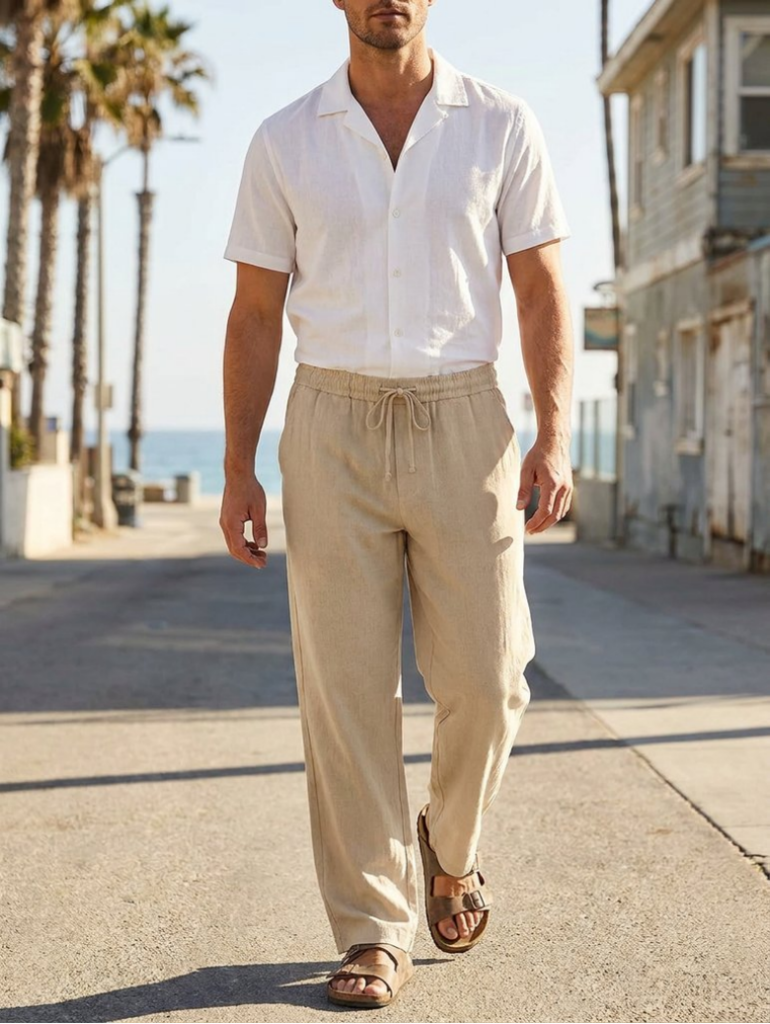
What it is
Wide trousers in linen, cotton-linen or other breathable weaves, often with a soft waist or drawstring. They are made for heat.
Why it works
The airflow keeps you cool, and the easy drape looks effortless. A little creasing is part of the charm.
What to look for
- A weave that is dense enough not to be see-through
- A lined front or an opaque colour if the fabric is thin
- A comfortable waistband that works with a tucked or untucked shirt
How to wear it
- With a camp-collar shirt Short-sleeved and relaxed.
- With a fine-knit polo Smart for lunches or dinners.
- With leather sandals or loafers Without socks in hot weather.
- With a straw hat For holiday dressing.
Mistakes to avoid
- Wearing very pale linen without checking the opacity
- Ironing every crease out, which removes the character
6. Wool and Corduroy Wide Legs for Cold Weather
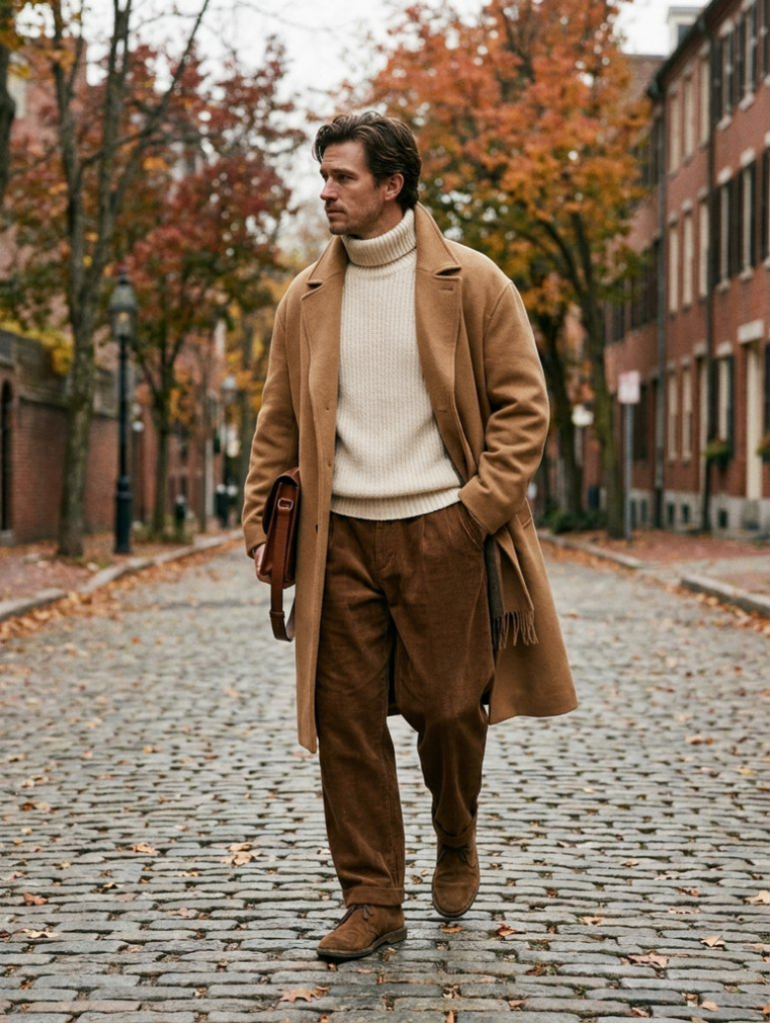
What it is
Heavier trousers in flannel, tweed, wool or corduroy, with a wide cut and often a high rise. They bring warmth and texture to the winter wardrobe.
Why it works
The weight lets them hang straight and hold their shape in cold weather. The texture adds depth, so a plain outfit looks richer.
What to look for
- Wool with enough weight to drape well
- Corduroy with a medium wale, which looks modern
- A lining at the front for comfort and shape
How to wear it
- With a roll-neck A thick knit in cream, grey or navy.
- With a long coat A wool overcoat in a tone that complements.
- With boots Leather or suede, with a sturdy sole.
- With a scarf A wool scarf in a muted pattern.
Mistakes to avoid
- Choosing a fabric so heavy that it feels clumsy
- Wearing it with bulky sweaters and an oversized coat together
7. The Wide Leg Suit Trouser

What it is
A wide trouser worn as part of a matching suit. The jacket is cut with a roomy shoulder and the trousers fall in a long straight line.
Why it works
A relaxed cut makes a suit feel modern and less stiff, which suits weddings, business and events. The full leg also keeps the silhouette balanced against a boxy jacket.
What to look for
- A jacket and trouser cut in the same proportion
- A trouser hem that is long enough to look generous, but clear of the floor
- A fabric with some drape, such as a wool crepe or a fine flannel
How to wear it
- With an open-collar shirt No tie for a relaxed look.
- With a tie A knitted or silk tie in a plain tone for formal events.
- With leather loafers Or lace-ups for a classic finish.
- With a simple watch Nothing flashy.
Mistakes to avoid
- Mixing a boxy wide trouser with a short, cropped jacket
- Having the hem too short, which makes the suit look unbalanced
8. Workwear-Inspired Wide Leg Trousers
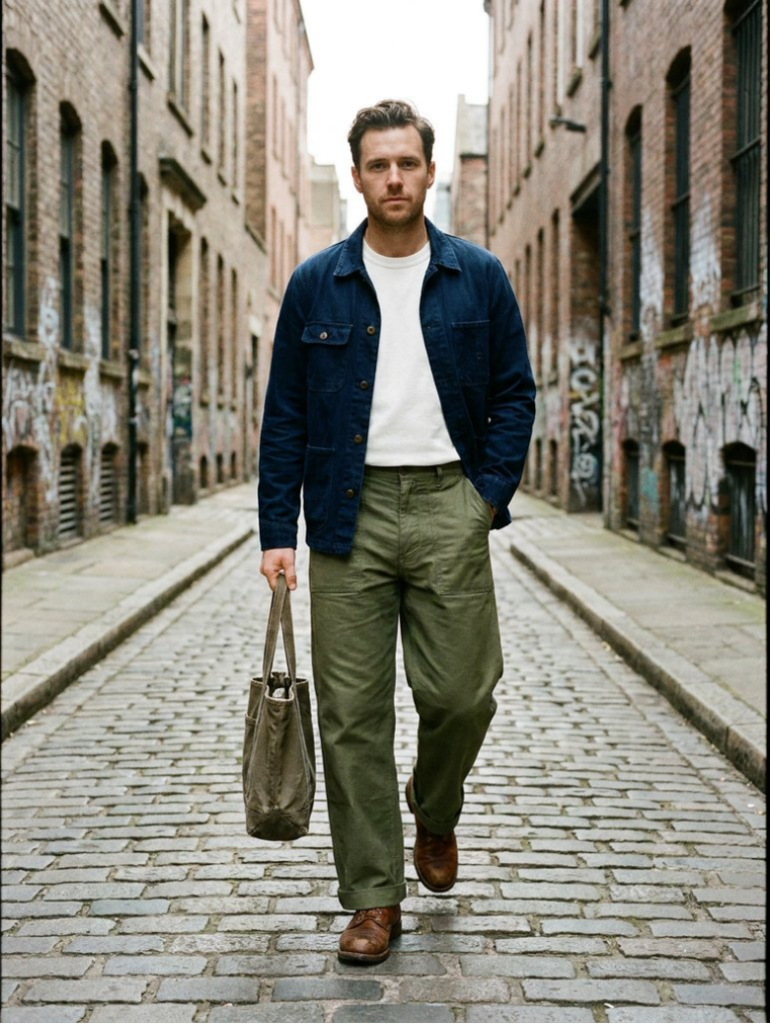
What it is
Trousers with a hard-wearing fabric, a straight wide cut and practical details such as patch pockets and reinforced seams. They are inspired by traditional work clothing.
Why it works
The rugged fabric looks good with age, and the relaxed cut allows movement. These are built for use, and the practical details give outfits personality.
What to look for
- A tough cotton canvas or twill
- Strong stitching at stress points
- A fit that is full but not shapeless
How to wear it
- With a chore jacket Matching tones for a long line.
- With a heavy tee Plain, in white, grey or navy.
- With boots Sturdy leather lace-ups.
- With a cap A plain wool or cotton one.
Mistakes to avoid
- Wearing brand-new, stiff trousers that look like fancy dress
- Overloading with workwear pieces from head to toe
9. Smart-Casual Evening Outfits With Wide Legs

What it is
A polished, relaxed approach for dinners and nights out, using dark colours and refined fabrics.
Why it works
Wide trousers in dark shades look sleek, and a fine knit on top keeps the shape clean. The drape of the trouser gives a sense of ease without losing polish.
What to look for
- Dark, matte fabrics with a slight drape
- A fine knit top in merino or cotton
- Leather shoes with a clean profile
How to wear it
- With a fine-knit polo Tucked or half-tucked.
- With a suede jacket Or a sleek bomber.
- With loafers Black or dark brown.
- With minimal accessories A simple watch and a plain belt.
Mistakes to avoid
- Wearing sportswear pieces that clash with the formality
- Choosing a shiny fabric that looks cheap under lights
10. Proportion Rules: Tops, Tucks and Layering

What it is
The art of balancing the volume of a wide leg with the right top. It is the most useful skill for wearing the style.
Why it works
When one half of the outfit is wide, the other half looks best slightly closer to the body. The eye sees a defined shape, and the outfit looks deliberate.
How to wear it
- Fitted or regular tops A tee or knit that skims the body and ends at the belt line or just below.
- Cropped jackets A short jacket makes the leg appear longer.
- Tuck it in A full or partial tuck reveals the waist and the rise.
- Layer lightly A thin overshirt or knit, not a heavy puffer.
Mistakes to avoid
- Wearing a large, loose top that merges with the trouser
- Tucking a bulky sweater, which adds bulk at the waist
11. Wide Trousers and Footwear

What it is
Choosing shoes with the right weight and shape to carry a wide hem.
Why it works
A wide hem needs a shoe with presence, otherwise the foot looks small and lost. A slightly chunky sole fixes the balance.
Options
- Chunky loafers Smart and strong, ideal with tailored wide legs.
- Derby shoes A classic choice with a bit of heft.
- Clean trainers Chunky or classic, in white or grey.
- Boots Chelsea or lace-up, with a substantial sole.
- Sandals Leather, for summer, with a neat hem.
How to wear it
- Let the hem rest on the top of the shoe, with a slight break.
- Match the shoe to the belt.
- Choose socks that echo the trouser colour.
- Avoid very slim or pointy shoes.
Mistakes to avoid
- Wearing narrow, delicate shoes that look lost
- Having the hem so long that it hides the shoe entirely
12. Color Guide

Colour decides how formal or casual a wide trouser looks.
- Charcoal The most versatile smart option, works with blue, white and black.
- Navy Classic and reliable, pairs with cream, grey and light blue.
- Black Sleek for evenings, but needs texture to avoid looking flat.
- Stone and beige A relaxed neutral for spring and summer.
- Cream and ecru Fresh and bold, with a knit or a navy top.
- Olive A casual option for workwear and overshirts.
- Brown Warm, ideal in corduroy or wool, with cream and blue.
- Grey A soft tone for smart casual outfits.
Choose one neutral trouser that you will wear weekly, then add a second shade for variety. A tonal outfit, such as stone trousers with a cream knit, is hard to get wrong.
13. Fabric and Fit Guide
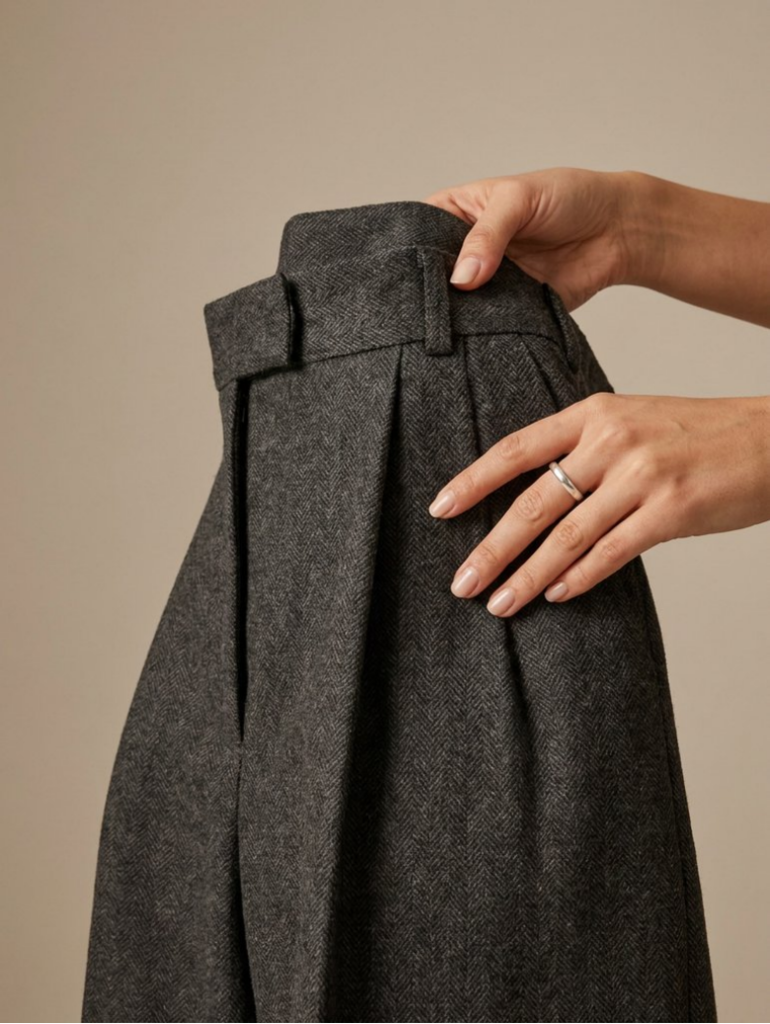
The right fabric and fit make the difference between a strong outfit and an awkward one.
Fabric options
- Wool and wool blends Excellent drape, smart, good for all seasons.
- Cotton twill Strong, versatile, easy care.
- Linen and linen blends Cool and relaxed, best for summer.
- Corduroy Warm and textured, good for autumn and winter.
- Denim Rugged and casual.
- Technical blends Crease-resistant and light, good for travel.
Fit guide
- Waist It should fit snugly without a belt, since the leg carries the volume.
- Rise A mid or high rise suits most men and works with tucked tops.
- Seat and thigh Room to move, but no sagging.
- Hem A slight break, with the trouser touching the shoe.
- Shorter men Choose a high rise, a clean hem and avoid extra-wide cuts.
- Taller men Look for long inseams and generous widths.
Have the trousers hemmed with the shoes you plan to wear. A good tailor can adjust the hem and the waist, and the cost is small compared with the improvement.
Getting the hem right
The hem decides whether a wide trouser looks tailored or accidental. There are three lengths worth knowing. A slight break means the front of the hem touches the top of the shoe and folds once, which is the safest choice for smart outfits. A clean, no-break length ends just at the top of the shoe, which looks sharper and suits loafers and trainers. A cropped length ends above the ankle, which suits summer and sandals but needs a deliberate sock or bare ankle.
Always check the back of the hem too. In a wide leg the fabric tends to hang longer at the back, so the hem should slope slightly from front to back, ending about halfway down the heel of the shoe. If you are unsure, stand in front of a mirror in your usual shoes and ask a friend or tailor to pin it while you stand naturally.
A simple capsule of three pairs
If you are building from nothing, three pairs cover almost everything. Start with a charcoal or navy pleated wool-blend pair for work and smart events. Add a stone or cream cotton twill pair for weekends and warm weather. Finish with a dark mid-weight denim or an olive workwear pair for casual days and boots. With a white shirt, a fine knit, a plain tee and an overshirt, those three trousers produce more than a dozen outfits, and every one of them follows the same proportion rule.
14. How to Build an Outfit: Formulas
These recipes put the proportion rules into practice.
- Smart office Grey pleated trousers, a light blue shirt, a belt and leather loafers.
- Casual weekend Stone chinos, white tee, navy overshirt, white trainers.
- Denim day Mid-blue wide jeans, grey sweatshirt, chunky boots.
- Summer holiday Linen trousers, camp-collar shirt, leather sandals.
- Winter layers Brown corduroy trousers, roll-neck, camel coat, boots.
- Evening out Black wide trousers, fine-knit polo, suede jacket, loafers.
- Relaxed suit A wide-leg suit, open-collar shirt, loafers.
- Tonal neutral Cream trousers, oatmeal knit, tan shoes.
In each outfit, the top is simpler than the trouser, and the shoe has enough weight to balance the hem. If you are in doubt, copy that pattern.
15. Mistakes to Avoid
These errors are common and easy to correct.
- Wearing the wrong length A hem that pools on the floor ruins the line. Aim for a slight break.
- Buying a waist too big A trouser that slides down looks sloppy. Choose the waist, then have the leg adjusted.
- Mixing wide with oversized everything Keep one part of the outfit closer to the body.
- Skipping the belt or the tuck A tucked top shows the rise and the leg length.
- Wearing slim shoes Narrow shoes make wide trousers look top-heavy.
- Ignoring fabric weight Thin fabric clings and looks cheap. Heavy fabric looks bulky in summer.
- Neglecting care Crumpled, stained or worn hems are very visible on a wide leg.
16. Frequently Asked Questions
- Are wide leg trousers in style for men in 2026? Yes. They have become a standard cut, and many tailors and brands offer them in several widths.
- Do wide leg trousers suit short men? They can, with a high rise, a clean hem and a moderate width. Avoid very long, stacked hems.
- What shoes work best? Loafers, derbies, chunky trainers and boots. Choose shoes with some weight.
- Should I tuck my shirt in? Usually yes, at least partly. A tuck shows the rise and helps the proportions.
- How wide should the leg be? Wide enough to look intentional, but not so wide that it swallows you. Judge it in the mirror rather than by a number: the hem should look clearly wider than your thigh tapers, yet still leave a visible gap between the trouser and your shoe.
- How do I care for them? Follow the label. Hang tailored trousers, steam out creases, and dry-clean wool only when needed.
17. Final Thoughts
Wide leg trousers reward a little care. Pick a pair that fits your waist, has a rise that suits you and falls to the shoe with a slight break. Balance the volume with a closer-fitting top, wear shoes with some weight, and stick to colours that suit your wardrobe. Start with a neutral pair in wool or cotton twill, and expand from there.
The best thing about the style is that it can be adjusted to your life. It can be smart for the office, easy for the weekend and relaxed for travel. Once you find a good pair, you will probably wonder why you wore anything else.
18. Bonus Chapter: Grooming, Care and Confidence
Hair, grooming and finishing touches
Wide trousers have a relaxed, slightly retro feel, so tidy and natural grooming suits them best. A neat haircut, a light beard trim or a clean shave, and a plain watch are enough. Choose a leather belt that matches your shoes, a simple bag and a few well-chosen accessories such as a plain ring or a thin chain. Keep the details quiet, and let the shape of the trousers do the work.
Sustainable style choices
Good wide leg trousers can last for years, especially in wool, cotton twill and denim. Buy quality fabric with strong seams and a generous hem allowance. Look for second-hand tailoring, since the cut has been popular before. Have the hem and waist altered rather than buying a new pair, and repair small tears and loose buttons promptly. Store trousers on proper hangers and allow them to rest between wears.
Confidence checklist
- Does the waist fit without a belt pulling it in?
- Is the hem resting gently on my shoes?
- Is my top closer to the body than the trousers?
- Are my shoes substantial enough to balance the hem?
- Do I feel at ease sitting, walking and climbing stairs?
When trousers fit well and feel comfortable, you carry yourself differently. That ease is the real aim of the trend, and it is available to anyone willing to adjust a hem and choose a shoe with a little weight.