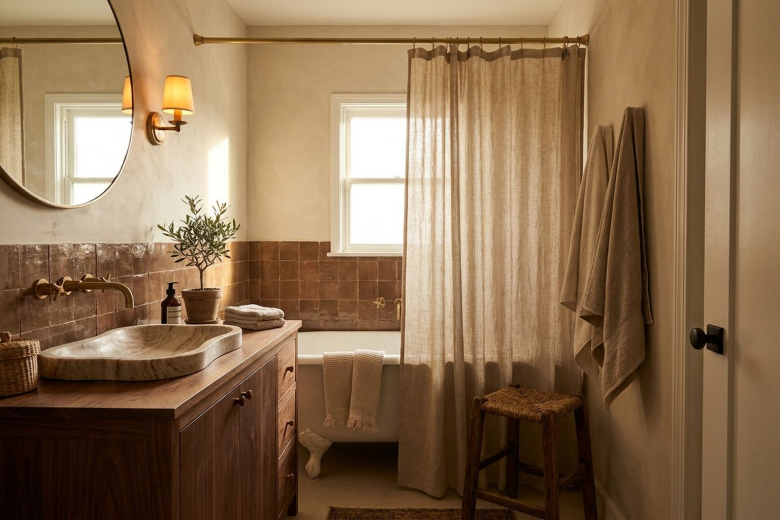
The defining 2027 bathroom trends treat the bathroom as a room, not a utility zone. Expect furniture-style vanities, deep earthy colors led by rich brown, mixed tile and patterned floors, sculptural sinks, plaster and zellige textures, spa-inspired wellness features, linen shower curtains, layered lighting and hidden technology. The common thread: bathrooms that feel collected, warm and personal, with function tucked quietly out of sight.

If the last decade of bathrooms was about the all-white, hotel-style spa, 2027 is the correction. Homes & Gardens says the biggest takeaway from its forecast is “treating them more like rooms than functional zones.” Southern Living writes that “the bathroom has officially become more than just a place to get ready in the morning,” and Veranda says bathrooms “are reflecting the style of the rest of the home more than ever—and the latest tech is a must.”
This guide pulls those forecasts together into one practical playbook. For every trend you will find what it is, why it is happening, how to do it in a real bathroom, what it costs in effort, and the mistakes to avoid. At the end you will find a styling checklist, a budget guide and an FAQ.
The Big Picture: Why Bathrooms Are Changing in 2027
Three forces explain almost every trend below.
1. The bathroom is becoming a retreat. Houzz’s May 2026 US report shows “spa” searches up 68%, “wellness room” up 164% and “biophilic design” up 112%. Houzz UK data comparing the first quarter of 2025 with 2026 shows “bathroom sauna” up 113%, “steam room” up 94% and “accessible bathroom” up 408%. Homeowners are investing in private, retreat-worthy rooms, not just functional ones.
2. Fatigue with sterile white. Designer Kailee Blalock of House of Hive told Homes & Gardens: “The days of the completely white, spa-inspired bathroom being the default are behind us.” Houzz US also reports “chocolate brown” up 153% and “rust colors” up 178%.
3. A desire for pieces with a story. John Law of Woodhouse & Law says there is “a growing appetite for interiors that feel collected and personal, rather than overly uniform.” Austin Carrier and Alex Mutter-Rottmayer of Hommeboys add that natural materials that patina beautifully over time provide “a value that lasts and is less wasteful.”
Keep those three ideas in mind. When you are deciding whether a trend suits you, ask: does it make the bathroom more restful, more personal, or warmer? If it does none of those, skip it. It is also worth knowing that forecasters disagree. Homes & Gardens says minimalist bathrooms are out in 2027, while Southern Living’s Christopher Boutlier says dramatic slabs and large floating vanities are “starting to feel overly trendy” and predicts quieter, more classic bathrooms. Trend 14 covers that counter-view.
A note on the numbers: the search-growth figures in this guide come from Houzz’s own reports, and the US and UK figures measure different markets and different periods, so they are used here as signals of direction, not as precise forecasts. Where a trend rests on a single designer’s observation, such as the preference for built-in tubs over freestanding ones, the guide says so. Bathrooms are expensive to change, so the smartest approach is to commit to the permanent surfaces slowly and let the easy, reversible layers, such as curtains, hardware, lighting and objects, carry the trend while you decide how far you want to go.
Another way to use this guide is to sort the 14 trends by how hard they are to undo. Paint, hardware, a linen curtain, a rug and a stool are reversible in an afternoon. A new vanity, tile layout or sink takes a plumber and a few weeks. A wet room, a built-in tub or a sauna is a renovation. Start at the reversible end, live with the room for a season, and only then decide whether the bigger changes are worth it.
Bathrooms That Feel Like Rooms
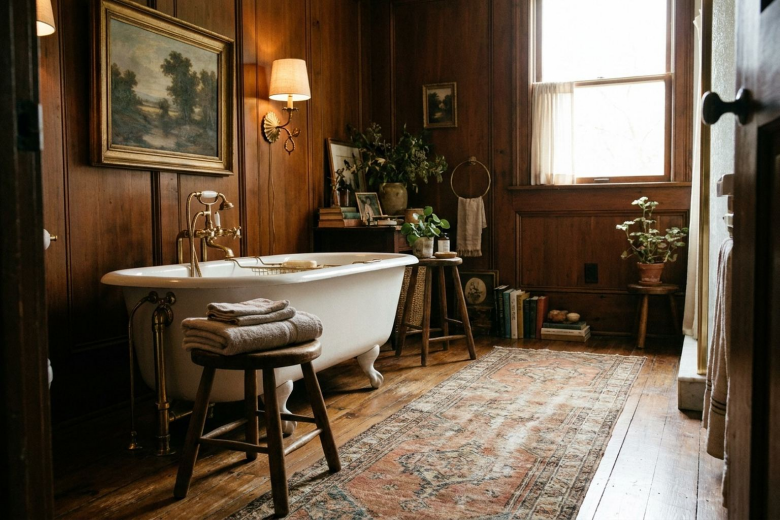
Antique stools, art, vintage rugs and furniture inside the bathroom, plus a separate vanity zone. Blalock told Homes & Gardens: “We love bringing in elements you wouldn’t traditionally expect to see in a bathroom, whether that’s an antique stool, a beautiful piece of art, decorative lighting, or even a vintage rug.”
Why it works: She adds that there is “something so special about a bathroom that feels collected and lived-in rather than overly sterile.” Gina Elkins of Studio Casa Vita told Veranda she is seeing the vanity area separated from the shower and other functional zones, “often with cased openings, molding and trim, and wood flooring in the vanity area that transitions to stone at the wet areas.”
- Add one non-bathroom object. A stool beside the tub or a framed print beside the mirror.
- Try a vintage rug. Check the backing and make sure it can dry fully.
- Separate the zones. A cased opening or trim can divide vanity from shower.
- Repurpose old furniture. Caroline Levenson told Southern Living she likes antique cabinets repurposed for linen storage.
- Use bathroom-rated lighting. Decorative fixtures near water must be rated for it.
Budget options: A thrifted stool, a vintage runner and a framed print cost far less than any renovation.
Mistakes to avoid: Putting unsealed wood or paper in splash zones, and using fixtures that are not rated for damp areas.
Furniture-Style Vanities


Vanities that look like pieces of furniture rather than built-in cabinets. Blalock says, “We want vanities to feel like pieces of furniture that were thoughtfully selected for the space, not just cabinets that happen to hold a sink.” Melanie Arguello of Saint Louise Design told Southern Living the details she keeps specifying are “turned wood legs, integrated reeded drawers, and unlacquered brass hardware that ages gracefully over time.”
Why it works: Leah Hook of Gray Oak Studio says “a natural walnut vanity will instantly elevate and add depth to space.” A vanity with legs also lets floor and light show underneath, which makes a small room feel larger (writer’s observation).
- Choose legs or feet. They lift the piece and show the floor.
- Pick a natural wood or deep color. Walnut or a rich painted finish adds depth.
- Add reeded or fluted drawers. A texture detail that reads as furniture.
- Use unlacquered brass pulls. They develop patina over time.
- Seal the wood. Bathroom humidity needs a water-resistant finish.
Budget options: Homes & Gardens lists Anthropologie’s Tetra marble-top single vanity at $1,998. A cheaper route is to repaint a plain vanity in a deep color and add feet and new pulls.
Mistakes to avoid: Leaving solid wood unsealed, and choosing a vanity too deep for the clearances in a small room.
Warmer, Moodier Colors, Especially Brown

Rich brown, tobacco, oxblood, olive and terracotta replacing white and grey. Blalock says: “We’re loving deeper, earthier colors like tobacco brown, oxblood, olive, terracotta, and really beautiful warm neutrals.”
Why it works: Amy TerMarsch of Amy Elizabeth Designs says, “Since brown is rooted in nature, layering shades of brown, cream, and beige will create a room that feels warm, relaxed, and inviting.” Blalock notes that it “doesn’t necessarily mean painting every surface a dark color,” and can be as simple as “a rich chocolate tile, a beautifully colored stone, or an unexpected sink.”
- Pair with white paneling. Arianna Barone of Benjamin Moore suggests pairing brown with white wainscoting or beadboard, naming Silhouette AF-655 and Swiss Coffee OC-45.
- Try Smoked Oyster for powder rooms. Barone names Smoked Oyster 2109-40.
- Choose tile format with care. Lesley Taylor of Baked Tiles says a deep brown in small-format gloss tile feels rich and decorative, while the same shade in a larger matt format is calmer.
- Vary the shades. Liz Williams says varying shades keeps things looking collected rather than matchy.
- Use brown details. Towels, a bath rug, a tray or a hamper are the easy route.
Budget options: Brown accessories are the cheapest entry point, with paint next.
Mistakes to avoid: Using dark paint with no ventilation or light. Check the paint is rated for bathrooms.
Adventurous Tile and Material Mixing

Combining tile shapes, scales, textures and finishes. Blalock says: “We would love to see people become a little less concerned with everything matching perfectly… The trick is making sure there’s still a common thread connecting everything.” Stephanie Kraus says designers are “treating shower walls and floors as a canvas,” with long, slender tile, a chair rail and framed panels that “mimic millwork.”
Why it works: A mix of finishes gives depth and a hand-built look that single-tile rooms lack.
- Find the common thread. A shared color or a repeated shape ties it together.
- Confine the mix. One wall or a shower niche is enough.
- Use an accent band. A small glossy tile as a stripe in a larger field.
- Add framed panels. Trim gives a millwork feel in the shower.
- Choose grout carefully. A close tone is quieter.
A counterpoint: Boutlier says dramatic slabs are starting to feel overly trendy.
Budget options: Mix one decorative tile into a plain field rather than tiling the whole room.
Mistakes to avoid: Mixing without a common thread.
Patterned Tile Layouts and Floors
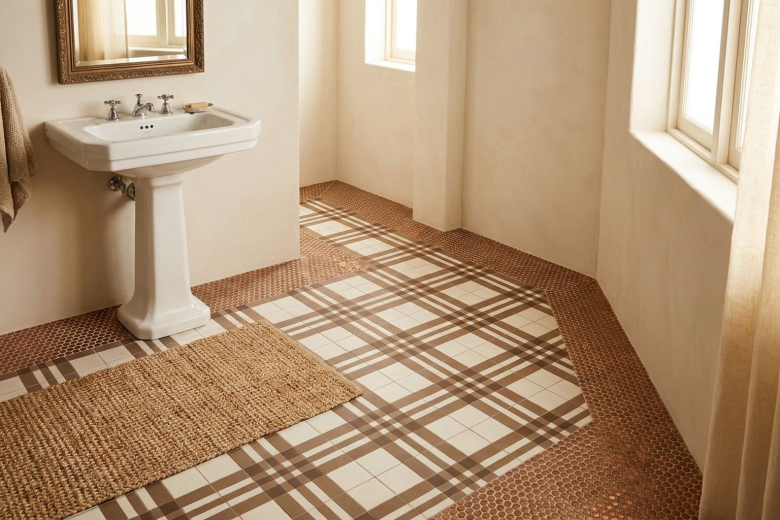
Traditional tile laid in new patterns: plaid, diamonds, stars and borders. Rachel Cannon told Veranda her team likes to “take a timeless tile material and present the placement in a pattern that feels fresh and new,” citing white-and-coffee-colored plaid tile flooring in a family’s second home.
Why it works: Alexandra Azat of Plaster & Patina says designers are seeing “traditional tiles used in varying sizes, colors, and configurations to create something truly unique and personal.” Houzz’s most-saved 2026 powder rooms feature a multicolor penny tile floor and hex penny tile laid in a diamond pattern, and Houzz US reports scalloped tile searches up more than threefold.
- Change the layout, not the tile. Herringbone or offset brick instead of a straight lay.
- Add a border. Colored stars, diamonds or stripes in a neutral floor.
- Try plaid. Two tones of one material form a quiet check.
- Keep walls plain. Let the floor be the pattern.
- Plan the cut. Patterns need an installer who lays out from the center.
Budget options: Layout is a labor choice, not a materials one, so a standard tile in a new pattern costs mainly installer time.
Mistakes to avoid: Combining a busy floor, busy wall tile and busy wallpaper.
Design-Forward Plumbing and Hardware
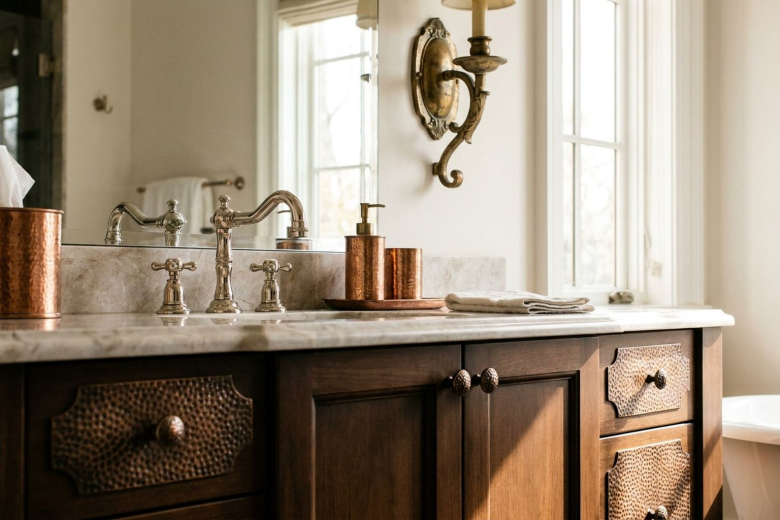
Cross-handle faucets, ornate wall-mounted fixtures, backplates and mixed metals. Blalock says: “We think people are going to start paying much more attention to the smaller details, especially plumbing fixtures and hardware… These details are almost like jewelry for a bathroom.”
Why it works: Cannon told Veranda: “Pairing a knob with a backplate is one of my favorite looks—it instantly elevates a simple cabinet front.” Boutlier says polished nickel “has a timeless quality that feels quieter and more understated.”
- Start with cabinet hardware. Swap pulls and towel bars first.
- Add a backplate. Knob plus backplate lifts a plain door.
- Mix metals deliberately. Veranda says it is fine to mix metals; keep to two or three finishes (writer’s tip).
- Choose one hero fixture. A statement faucet or wall-mounted tap.
- Hire a plumber for faucets. Hardware is a DIY job; plumbing is not.
Budget options: Homes & Gardens lists Rejuvenation’s Bradshaw hand towel bar at $109.
Mistakes to avoid: Mixing too many finishes.
Sculptural Sinks
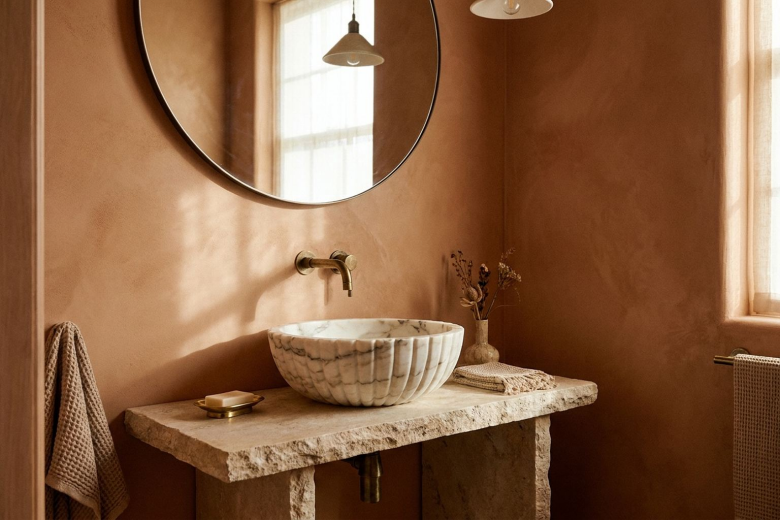
Carved marble basins, terracotta sinks, unusual shapes and integrated slab sinks. Blalock says: “We think sinks are going to become much more of a design moment… Sometimes one really special fixture can do more for a room than adding a dozen decorative details.”
Why it works: Ania Agárdy of Luxury Living notes “more use of integrated sinks in the slab, creating a seamless look and feel.” Houzz’s list of most-saved 2026 powder rooms includes a fluted marble rectangular vessel sink and a marble console sink.
- Splurge in the powder room. It is the cheapest room to commit to one special sink.
- Choose one hero. Let the sink be the statement.
- Pair with quiet surroundings. Plain walls make the sink read.
- Consider an integrated slab sink. It gives a seamless look.
- Ask about care. Terracotta and porous stone need sealing.
Budget options: A vessel sink on an existing vanity is a smaller upgrade than a custom basin.
Mistakes to avoid: Choosing handcrafted porous materials without sealing and care instructions.
Textured Natural Materials: Zellige, Plaster, Limewash and Wood

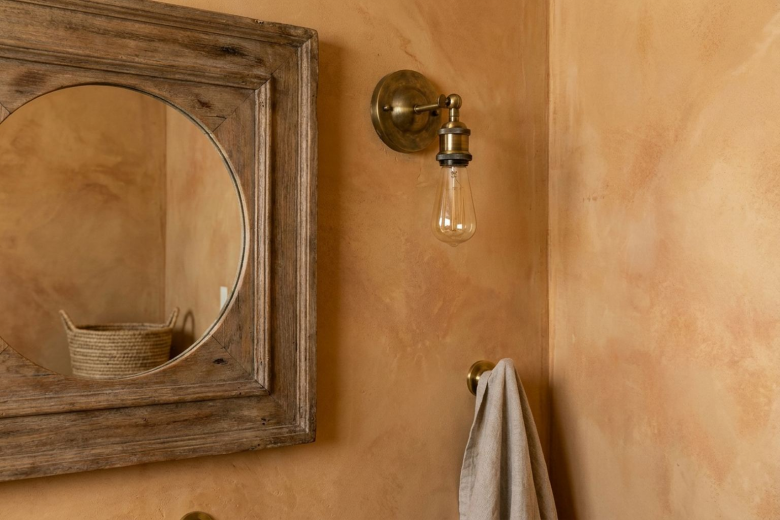
Hand-molded zellige, terracotta, limewash and plaster. Christina Cruz told Southern Living designers want “timeless, textural materials that can stand on their own and set the tone for the entire space,” while Arguello has “a soft spot for hand-molded zellige, terracotta, and soft limewash plaster walls.”
Why it works: Houzz US reports “Venetian plaster” searches up 94%, “limewash interior paint” up 53%, “linen wallpaper” up 104% and “terracotta flooring” up 55%. Hommeboys say natural materials that patina beautifully provide value that is “less wasteful.”
- Use limewash-effect paint. It is the budget route, but choose water-rated products in wet zones.
- Add zellige to one area. A vanity backsplash or shower niche.
- Add wood. A shelf or mirror frame warms stone.
- Choose terracotta carefully. Seal it and plan for patina.
- Layer finishes. Plaster walls with glossy tile.
Budget options: A limewash-effect paint on one wall delivers the look cheaply.
Mistakes to avoid: Putting natural-fiber wallcoverings inside the shower splash zone.
Wellness and Spa-Inspired Organic Design

Saunas, cold plunges, wet rooms and accessible design. Agárdy told Homes & Gardens: “If I could sum it up in almost one word, I would say the 2027 bathroom trend is spa-inspired organic… The idea is to create sensory wellness with tactile surfaces, visual interest, and layered lighting.”
Why it works: Nicole Zarr told Southern Living that red light saunas and cold plunges are “being thoughtfully integrated into the home with elevated materials and beautiful design.” Arguello cites curbless showers, soft perimeter lighting, built-in stone benches and zero-threshold wet zones.
- Start with sensory touches. A heated towel rail, dimmable warm lighting and a teak stool.
- Consider a wet room. Houzz UK reports “wet room” up 19% and “shower with seat” up 84%.
- Plan for accessibility. Houzz UK “accessible bathroom” is up 408%.
- Add a bench. Built-in stone benches suit steam and shower alike.
- Layer lighting. Soft perimeter light.
Budget options: A heated towel rail, warm dimmable lighting and a teak stool are the cheap version. Full saunas are a major build.
Mistakes to avoid: Installing a curbless shower without a waterproofing and slope plan.
Shower Curtains Replace Glass Screens
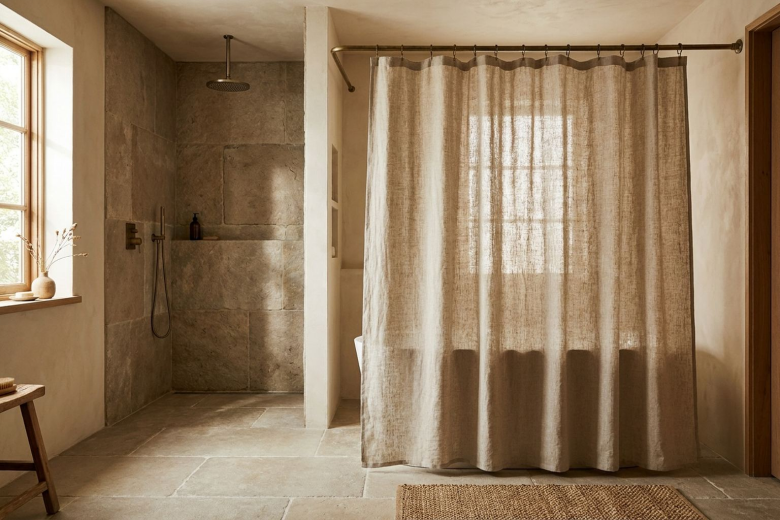
Linen shower curtains, or no door at all. Bethany Adams told Homes & Gardens: “The typical clear glass shower door is feeling pretty stale these days… I’ve been foregoing doors altogether (I promise, you won’t be cold!) or adding naturally anti-microbial 100% linen curtains to my showers.”
Why it works: Adams adds: “If you’re building a new, open shower, do yourself a favor and run your heated floors right into it… your tile will dry in an instant, meaning no mold or mildew.” Homes & Gardens still notes that a glass enclosure around a walk-in shower “feels incredibly chic.”
- Try the curtain first. It is the easiest trend to do this weekend.
- Choose washable fabric. Linen should be laundered regularly.
- Hang it high. A rod near the ceiling makes the room feel taller.
- Air it out. Do not leave a damp curtain bunched.
- Consider heated floors. Adams recommends them for open showers.
Budget options: Homes & Gardens lists McGee & Co’s Atherton shower curtain at $138. A plain linen curtain, rod and rings cost less.
Mistakes to avoid: Using non-washable fabric.
Built-In Tubs
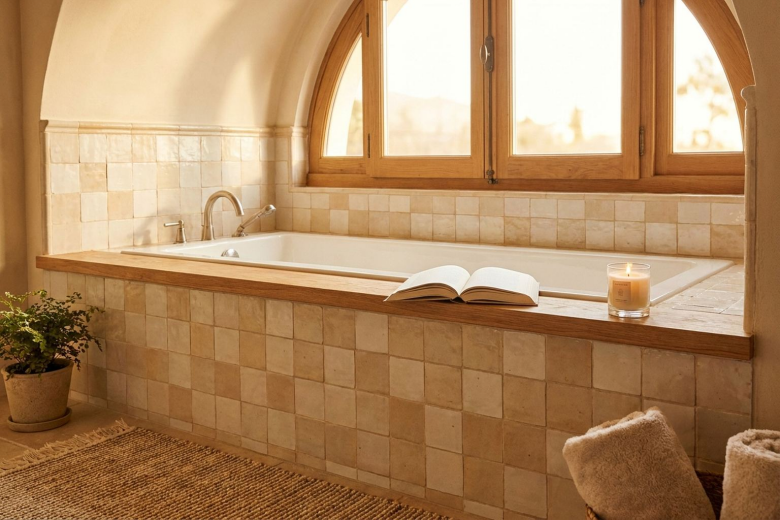
Tubs set into a surround instead of freestanding. Lindsey Herod told Southern Living: “They’re simply more functional—you have a place to sit and set a book or candle, and they feel much more integrated into the architecture of the room.” Southern Living notes freestanding tubs have long been a favorite.
Why it works: The surround gives a ledge, hides plumbing and makes the tub part of the room. This is one designer’s observation in one publication, so treat it as an emerging preference rather than consensus.
- Add a ledge. For a book, candle or tray.
- Tile the surround to match. Continuity makes it feel built in.
- Consider alcove placement. Walls on three sides reduce cleaning.
- Plan access. Keep a panel for plumbing.
- Add a niche or window. For light and storage.
Budget options: A drop-in or alcove tub is generally simpler to plumb than a freestanding showpiece (writer’s observation).
Mistakes to avoid: Ignoring floor loading and access panels.
Layered Lighting

Lighting designed in layers for makeup, nighttime and ambiance. Elkins told Veranda that layered lighting “lights makeup areas, provides soft light for nighttime, and brings in natural light.” Her team tucks “an integrated night light into the baseboard of the water closet” and adds toe-kick lighting, and she loves “a lamp on a vanity or tucked into a built-in.”
Why it works: Agárdy says sconces “will be used more as statement pieces for visual impact.”
- Flank the mirror. Sconces at face height give even light.
- Add a nightlight. A plug-in or baseboard light avoids harsh overheads at night.
- Use a lamp. Choose a bathroom-rated one on the vanity.
- Consider toe-kick lighting. It lights the path at night.
- Put it on dimmers. Warm bulbs for evenings.
Budget options: Plug-in nightlights and rated sconces. Hire an electrician for toe-kick or baseboard installations.
Mistakes to avoid: Relying on one overhead light, and using unrated fixtures near the shower.
Bespoke Storage and Quiet Technology

Custom cabinetry, docking drawers and hidden technology. Cannon told Veranda she sees “fully-custom cabinetry in bathrooms, focusing not just on aesthetics but also on how the space is organized and functions.” Elkins lists “docking drawers with outlets, dedicated slots for hair tools, and thoughtfully placed storage for hanging towels and small makeup essentials.”
Why it works: Boutlier told Southern Living: “Luxury is becoming less about what you see and more about how seamlessly the room works every day.” Elkins mentions automated shower controls, touch-free faucets and motorized shades that “make the shift from day to night effortless.”
- Plan the outlets. Before the vanity is ordered.
- Use drawer organizers. Dedicated slots for hair tools.
- Add hooks. Thoughtful towel storage.
- Pick tech you will use. Touch-free faucets or shades.
- Hire a licensed electrician. Especially for wet zones.
Budget options: Drawer organizers and a GFCI-protected outlet inside a drawer, installed by a pro.
Mistakes to avoid: Adding outlets without a licensed electrician.
The Classic, Quieter Counter-Trend
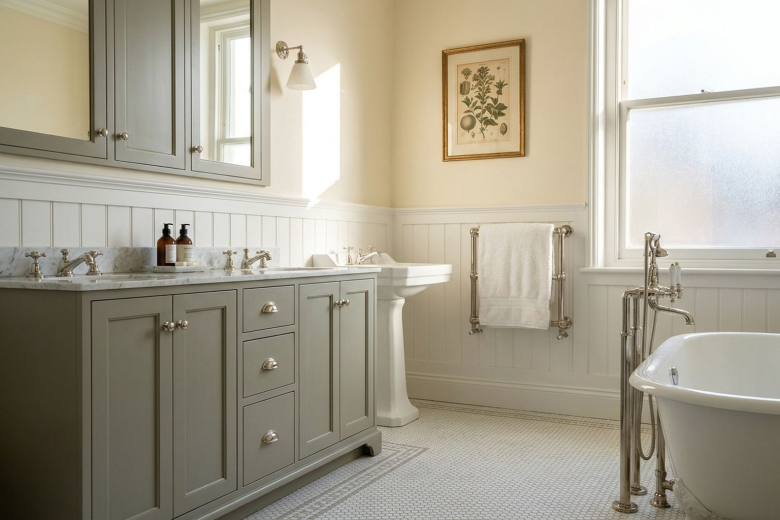
Shaker cabinetry, traditional details and 1920s to 1930s restraint. Azat says: “I’m seeing a return to classic Shaker-style cabinetry, but with more unexpected, nuanced color choices.” Boutlier says: “The best bathrooms of 2027 won’t be the loudest—they’ll feel like they’ve always belonged there.”
Why it works: Houzz UK reports “period bathroom” up 291%, and several of Houzz’s most-saved 2026 powder rooms feature wainscoting and shiplap. Hommeboys call it “a deepening of the return to more traditional details and enduring, layered design.”
- Choose Shaker doors. In a nuanced, unexpected color.
- Add wainscoting or beadboard. A popular DIY.
- Use polished nickel. Understated and timeless.
- Keep proportions generous. Quality over decoration.
- Restrain the detail. One or two traditional touches.
Budget options: Wainscoting or beadboard is a popular DIY.
Mistakes to avoid: Chasing both bold slab drama and restrained classic in one small room.
What Is Going Out in 2027
| Fading | Replacing it |
| The all-white spa bathroom | Brown, olive, oxblood and warm neutrals |
| Plain built-in vanities | Furniture-style vanities with legs |
| Clear glass shower doors | Linen curtains or open walk-in showers |
| Matching everything | Mixed tile, patterned floors and mixed metals |
| One overhead light | Sconces, lamps and nightlights |
| Hidden character | Antique stools, art and vintage rugs |
| Visible clutter | Custom storage with docking drawers |
How to Combine Trends Without Making a Mess
Mixing six trends in one bathroom can quickly feel chaotic. Use these rules.
Rule 1: Pick one hero and two supports. For example, a sculptural sink (hero), brown tile (support) and a linen curtain (support).
Rule 2: Keep a 60-30-10 color split. Sixty percent dominant color (walls and floor), 30% secondary (vanity and tile), 10% accent (towels, brass, art).
Rule 3: Repeat materials in threes. If you use brass, echo it in the faucet, sconce and mirror frame.
Rule 4: Mix eras. Pair one vintage piece with each new piece.
Rule 5: Give the eye a rest. Patterned floor, plain walls.
Rule 6: Edit at the end. Remove one object from every surface.
Three Sample Combinations
- The Collected Retreat: a furniture-style walnut vanity, an antique stool, a vintage rug and plaster walls.
- The Quiet Classic: Shaker cabinetry, wainscoting, polished nickel and a plaid tile floor.
- The Organic Spa: brown zellige, a built-in tub, a linen curtain, warm perimeter lighting and a teak stool.
Budget Guide
| Budget | Where to spend | Where to save |
| Under $300 | Hardware, a linen curtain, brown towels, a rug and a stool | Keep existing tile and fixtures |
| $300 to $1,500 | A repainted vanity with new pulls, sconces, a limewash-effect wall | Keep the tub and layout |
| $1,500 to $7,500 | A furniture-style vanity, new tile layout, a sculptural sink | Reuse existing plumbing locations |
| $7,500+ | A wet room, built-in tub, custom storage and heated floors | Add accessories gradually |
Smart buying tips:
- Spend most on waterproofing, plumbing and what is hard to change, then on what you touch daily.
- Get tile samples and look at them in the actual light.
- Vintage and secondhand pieces give the collected look authentically and cost less.
Step-by-Step 2027 Bathroom Refresh
- Define how you use the room. Quick morning routine, long baths or both.
- Choose your mood words. Three words, such as “warm, textured, calm.”
- Pick the starting point. A tile, a vanity or a paint color.
- Decide the palette. Use the 60-30-10 ratio.
- Fix the layout. Check clearances and plumbing.
- Paint or tile. Sample in the room first.
- Add the big pieces. Vanity, sink and lighting.
- Layer lighting. Sconces, nightlights and dimmers.
- Add textiles and objects. Curtain, rug, towels and a stool.
- Edit. Live in it for two weeks and adjust.
Styling the Trends by Bathroom Size and Layout
Trends behave differently depending on the room you have. Here is how to adapt the ideas above.
Small Bathrooms (under 40 sq ft)

- Choose one hero. A sink, a tile or a color is enough.
- Pick a vanity with legs. It shows floor and feels lighter.
- Use a curtain. It saves the space a door swing takes.
- Add sconces. They free the counter.
- Keep the palette tight. Two or three related colors.
Powder Rooms and Guest Baths
- Splurge here. One special sink or a bold paint.
- Use brown or plaster. Small rooms handle depth well.
- Add art. A framed print makes it feel like a room.
- Keep lighting soft. A sconce and a candle.
Large Primary Bathrooms
- Create zones. Separate vanity, shower and tub areas.
- Add a wellness feature. A bench, steam or a sauna.
- Layer lighting. Sconces, lamps and perimeter light.
- Add furniture. A chair or bench makes the room feel used.
Rentals and Temporary Homes
- Swap hardware. Keep originals to reinstall.
- Hang a linen curtain. It changes the room instantly.
- Use plug-in lighting. Rated sconces or a plug-in nightlight.
- Rely on textiles and objects. Rugs, towels, stools and art move with you.
FAQ
- What is the biggest bathroom trend for 2027? Treating the bathroom like a room: warmer colors, furniture-style vanities and collected details, with a spa-inspired, organic feel.
- Is white out in bathrooms? Not entirely, but the all-white spa default is fading. Designers prefer deeper, earthier colors with warm neutrals.
- What colors are trending for bathrooms? Brown, tobacco, oxblood, olive and terracotta.
- Are glass shower doors out? Homes & Gardens says the typical clear glass door is feeling stale, but a glass enclosure around a walk-in shower still feels chic.
- Is minimalism dead in bathrooms? Homes & Gardens says minimalist bathrooms are out, while Southern Living predicts quieter, classic bathrooms. Both agree on warmth and quality.
- How can I follow trends on a small budget? Swap hardware, add a linen curtain, hang a mirror with character and use brown accessories.
- What is a wet room? A fully waterproofed bathroom, often with a curbless shower. Houzz UK reports searches up 19%.
- How do I make a bathroom feel like a spa? Soft layered lighting, tactile surfaces, a heated towel rail and calm natural materials.
Final Thoughts / Thumbnail:
The 2027 bathroom is not about buying a new look. It is about building a room that feels warm and collected, works quietly in the background and gets better with age. Start with the trend that feels most like you, whether that is a walnut vanity, a brown tile or a linen curtain, and build outwards slowly.