

A practical guide to gorpcore outfits in 2026: how to mix technical outdoor pieces with everyday clothes, what to buy first and how to keep the look polished in the city.

Gorpcore takes its name from the trail snack, good old raisins and peanuts, and the idea is just as simple. You wear clothes made for hiking, camping and bad weather in places where nobody is going near a mountain. A waterproof shell on a commute, a fleece on a coffee run, a pair of trail shoes on a city weekend. What began as a niche habit among outdoor fans has become a regular part of how people dress, because the clothes are comfortable, hard-wearing and often better made than their fashion equivalents.
This guide shows how to build gorpcore outfits that look intentional rather than costume-like. We begin with the main ideas behind the style, then work through ten approaches: the technical shell, the fleece, the utility trouser, the trail shoe, the vest, the layered base, the crossbody and hiking accessories, the dressed-up mix, the warm-weather version and the evening-ready take. Each includes what the style is, why it works, what to look for, how to wear it and what to avoid. After that you will find a colour guide, a fabric and fit guide, outfit formulas, common mistakes, frequently asked questions and a bonus chapter.
Gorpcore is practical by nature, so you can apply it gradually. Start with one piece, such as a shell or a pair of trail shoes, and pair it with clothes you already own. As you learn what you like, you can add layers and build a complete set. Read the sections that fit your life and skip the rest.
1. The Big Picture: Why Outdoor Clothing Went Everyday
1. Function comes first Every feature has a job. Taped seams keep out rain, a drawcord adjusts the hem, a zipped pocket keeps your phone safe. When clothes work properly, they look honest, and that honesty is what makes them attractive.
2. Comfort is a priority Soft fleece, stretch panels and lightweight shells suit people who walk, cycle and commute. After years of stiff, restrictive dressing, practical comfort feels like a relief.
3. The colours are easy to wear Moss, rust, stone, navy and charcoal come from the landscape and go together without effort. Brighter accents appear in small amounts, so the palette stays calm.
4. It suits unpredictable weather Layers let you adapt through the day, and a good shell turns a surprise shower into a minor event.
5. It rewards buying well Technical pieces are built to last years of use, which makes them a better long-term purchase than many trend items.
6. It mixes with everything A technical jacket over a tailored shirt or a fleece over a slip skirt is a combination that looks fresh because it is unexpected. The contrast is the style.
2. The Technical Shell Jacket
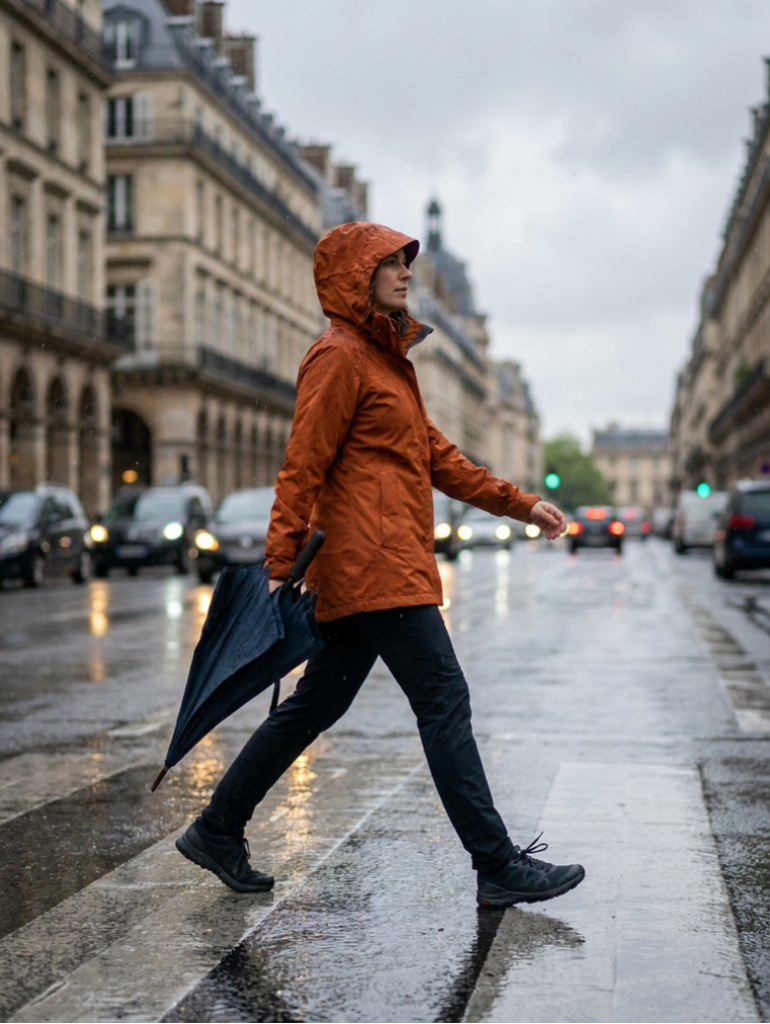
What it is
A lightweight waterproof or water-resistant jacket, usually with a hood, taped seams and an adjustable hem. It is the central piece of gorpcore and the one most worth investing in.
Why it works
A shell works over almost anything. It protects from wind and rain, and it looks sharper than a plain raincoat. The slightly shiny surface contrasts with matte knitwear, and the technical shape gives a casual outfit structure.
What to look for
- Taped seams, which stop water from leaking through stitching
- A hood that adjusts and sits clear of your eyes
- Zipped pockets and a storm flap over the front zip
- A fit roomy enough for a fleece underneath
How to wear it
- Over a hoodie A grey or navy hoodie keeps things easy.
- With straight trousers Dark, simple and slightly cropped.
- With trail shoes The match is natural and practical.
- With a beanie A plain wool beanie finishes the layers.
Mistakes to avoid
- Buying a shell that is too tight to layer under
- Choosing a heavy mountaineering jacket when you only need a light commuter layer
3. The Fleece as a Fashion Layer
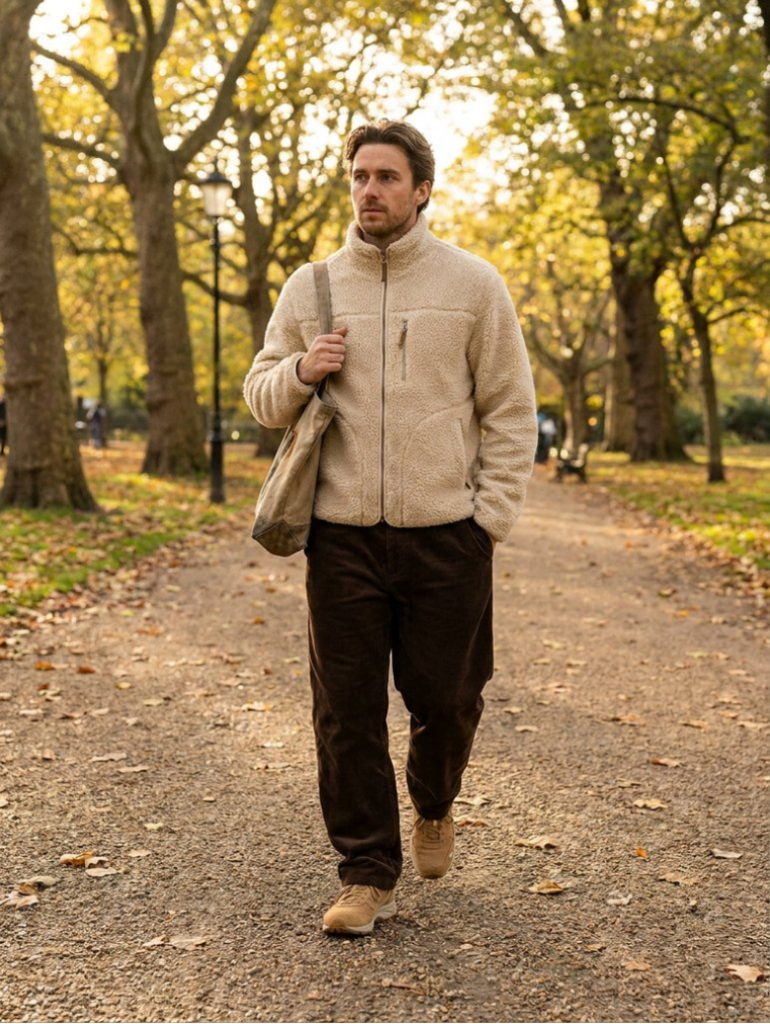
What it is
A soft, warm mid-layer made of polyester pile, sherpa or grid fleece. It ranges from lightweight zip-neck pullovers to thick, teddy-style jackets.
Why it works
Fleece is cosy and visually soft, which balances the sharper lines of technical trousers and shells. It adds texture and a hint of nostalgia, and it is one of the cheapest ways to try the style.
What to look for
- A dense pile that does not pill after a few washes
- A zip that runs smoothly and has a cover at the chin
- A cut that is boxy but not tent-like
- Colours that suit your palette, such as cream, moss, grey or navy
How to wear it
- Alone Over a tee, with trousers and trainers.
- Under a shell A warm base for winter.
- Over a shirt A collar peeking from a quarter-zip makes a neat, preppy touch.
- With denim Dark or mid-blue jeans balance the texture.
Mistakes to avoid
- Wearing a very thick fleece under a thick shell, which is bulky and hot
- Letting an old, bobbled fleece pass as a style piece
4. Utility and Cargo Trousers
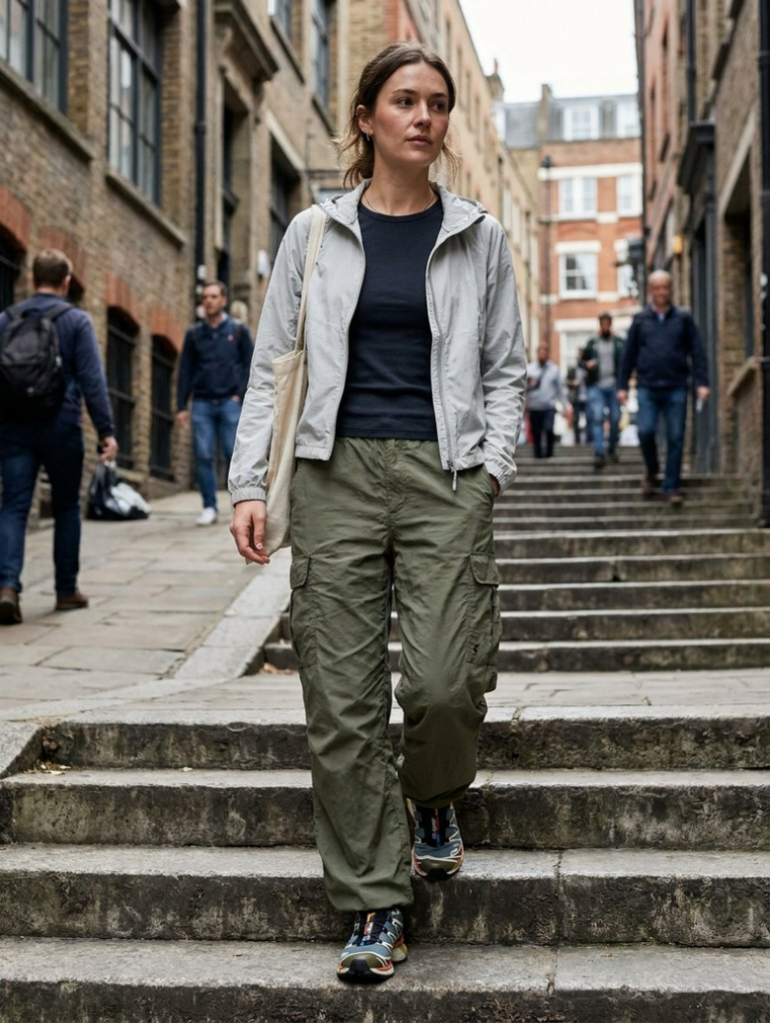
What it is
Trousers with functional pockets and hard-wearing, often quick-drying, fabric. Hiking trousers, convertible styles with zip-off legs and cargo cuts all belong here.
Why it works
They are comfortable, they move well, and they suit warm and cool days alike. The pockets add visual interest without needing any extra detail.
What to look for
- A stretch nylon or ripstop that dries quickly
- Articulated knees for easy movement
- Pockets that lie flat, not pouches that bulge
- An adjustable waist or hem, which gives a neat finish
How to wear it
- With a fitted top A tee or a thin knit offsets the volume.
- With a shell Match the technical details.
- With trail shoes Tuck or let the hem rest at the ankle.
- With a belt A webbing belt in a neutral shade.
Mistakes to avoid
- Filling every pocket until the trousers look lumpy
- Wearing baggy cargos with an oversized top and shapeless shoes
5. Trail Shoes and Hiking Boots

What it is
Shoes designed for uneven ground: trail runners, approach shoes and light hiking boots. They have thick, grippy soles and breathable uppers.
Why it works
They are comfortable for long days on foot, and the chunky outline gives an outfit weight at the bottom. Their colours often bring in the one note of brightness the rest of the look needs.
What to look for
- A cushioned midsole that suits pavement as well as trails
- A sole with enough tread to be safe on wet ground
- A neutral colour or a muted two-tone design
- A secure heel and a toe box with room
How to wear it
- With straight trousers The shoe becomes a clear feature.
- With wide trousers A hem that grazes the top of the shoe.
- With a dress A slip dress or a shirt dress with trail shoes is a modern contrast.
- With chunky socks A visible sock at the ankle adds a sporty note.
Mistakes to avoid
- Pairing mud-caked trail shoes with fresh city outfits
- Choosing a boot too heavy for daily walking
6. The Technical Vest and Gilet

What it is
A sleeveless insulated or fleece layer that keeps the core warm. It comes in puffer, fleece and softshell versions, and it is easy to layer.
Why it works
It adds warmth without bulk in the arms, so you can wear it under a jacket or by itself. It also breaks up the line of an outfit in a flattering way.
What to look for
- A light fill that does not make you look boxy
- A high collar for warmth
- Zipped pockets for small items
How to wear it
- Over a long-sleeve tee Simple and practical.
- Over a shirt A dress shirt under a gilet is a smart-casual look.
- Under a shell An extra layer for cold days.
- With cargo trousers A matching outdoor palette.
Mistakes to avoid
- Wearing a very puffy gilet over a thick sweater, which can look inflated
- Selecting a bright colour that fights with your other pieces
7. Layering From the Base Up
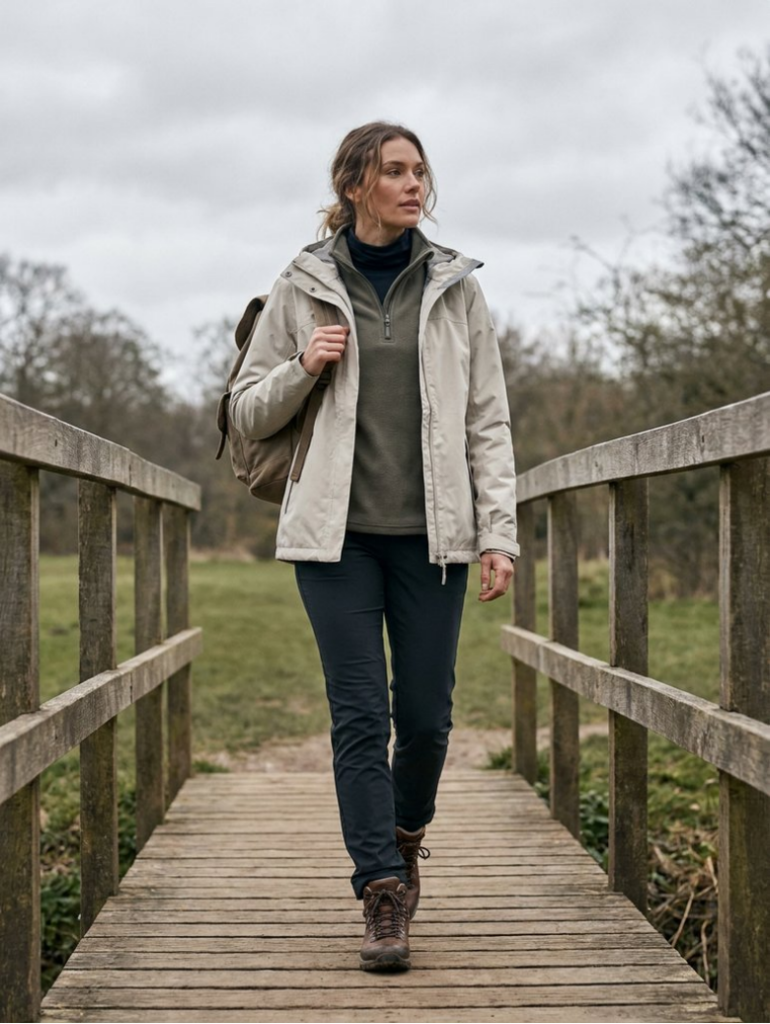
What it is
The three-layer system borrowed from hikers: a thin base, an insulating mid-layer and a protective shell. It works as well for a commute as for a mountain.
Why it works
You can add or remove layers as the weather changes, and each layer adds colour and texture. It also gives you a built-in outfit structure.
How to wear it
- Base layer A fine merino or technical tee in a plain colour.
- Mid-layer A fleece, a quarter-zip or a light knit.
- Outer layer A shell or a lightweight jacket.
- Accessories A beanie, gloves or a neck gaiter, depending on the weather.
Mistakes to avoid
- Using cotton as a base layer in cold, damp weather, because it holds moisture
- Wearing too many layers of the same colour, so the outline disappears
8. Accessories: Bags, Hats and Small Gear

What it is
Technical bags, chest packs, bucket hats, caps, carabiners and socks. These small details make an outfit look committed to the style.
Why it works
Accessories are the easiest way to experiment. They add practicality, and they alter the mood of a simple outfit with little cost.
What to look for
- A bag with a secure zip and an adjustable strap
- A hat that offers shade or warmth and suits your face shape
- Socks with a cushioned sole and a visible cuff
How to wear it
- Crossbody bag Worn across the chest, close to the body.
- Bucket hat In nylon or canvas, with a plain jacket.
- Beanie In wool, folded once.
- Carabiner A small clip for keys, used sparingly.
Mistakes to avoid
- Hanging several gadgets from one bag, which looks cluttered
- Wearing a hat that hides your face and the whole outfit at once
9. Mixing Gorpcore With Tailoring and Dressier Pieces

What it is
A technical piece combined with something polished: a shell over a blazer, a fleece over a slip dress, trail shoes with tailored trousers.
Why it works
Contrast makes outfits interesting. A formal item adds refinement, and a technical item adds ease. Neither feels out of place because the colours and fit are controlled.
How to wear it
- Shell over a suit A trim, hip-length jacket keeps the line neat.
- Fleece with a skirt A boxy fleece over a satin or pleated skirt.
- Trail shoes with trousers Tailored trousers with a slight taper.
- Keep colours tonal Greys, navy and olive hold the look together.
Mistakes to avoid
- Mixing a very sporty jacket with formal shoes that clash in tone
- Combining too many technical pieces with formalwear, which looks messy
10. Gorpcore for Warm Weather

What it is
A lighter approach using hiking shorts, windbreakers, sport sandals and breathable fabrics. It suits summer travel and city heat.
Why it works
Quick-drying fabrics and open footwear keep you comfortable, and a packable windbreaker covers a sudden cool breeze.
What to look for
- Lightweight, quick-dry fabrics
- Sandals with a secure ankle strap and good grip
- A windbreaker that packs into its own pocket
How to wear it
- Hiking shorts with a tank Simple and clean.
- Sport sandals with socks A thin sock gives a sporty edge.
- Windbreaker Tied around the waist or worn open.
- Sunglasses and a cap To shade the sun.
Mistakes to avoid
- Wearing sandals not designed for long walks
- Forgetting sun protection on exposed skin
11. Evening-Ready Gorpcore

What it is
A refined version in darker tones: black, charcoal and deep green, with sleek materials and clean shapes.
Why it works
Darker colours and smoother fabrics make technical pieces look more formal. It suits dinners, gallery visits and nights out where practicality still matters.
How to wear it
- Vest over a knit dress Add chunky boots.
- Black shell with wide trousers A silky top beneath.
- Dark trail shoes With sleek trousers or skirts.
- Minimal jewellery Small silver pieces look sharp.
Mistakes to avoid
- Adding bright accents that undo the sleek tone
- Choosing creased or faded technical pieces for a formal evening
12. Color Guide
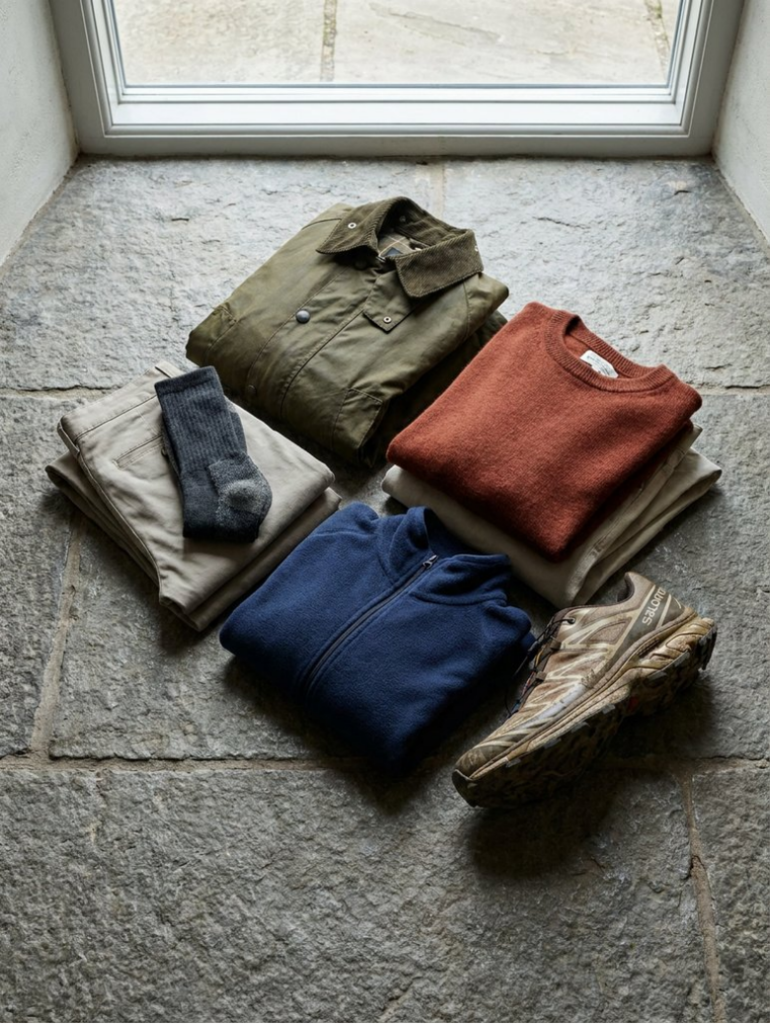
The palette is drawn from nature, and it makes outfits easy to combine.
- Olive and moss The signature colour. Works with black, cream and rust.
- Stone and sand A soft neutral that suits almost everything.
- Rust and burnt orange A warm accent, best in one piece only.
- Navy Smart and reliable, pairs with grey and orange.
- Charcoal and black Sleek and urban, good for evening.
- Forest green Deep and rich, pairs with cream and brown.
- Bright accents Orange, yellow, lime or red in a bag, a shoe or a hat.
A useful rule is to use two neutrals and one accent. For example, olive and stone, with a rust bag.
13. Fabric and Fit Guide

Gorpcore depends on the right materials and the right proportions.
Fabric options
- Ripstop nylon Light, strong and quick-drying.
- Waterproof membrane fabrics Best for shells in wet weather.
- Fleece Warm and soft, available in several weights.
- Merino wool Naturally warm, breathable and resists odours.
- Softshell Stretchy and wind-resistant for active days.
- Recycled synthetics Often as good as new materials and more mindful.
Fit guide
- Shells Roomy enough for layers but not floppy.
- Trousers A relaxed fit through the thigh, tapered below the knee.
- Fleeces Boxy and slightly cropped for balance.
- Shoes A snug heel and space in the toe box.
- Petite Choose shorter jackets and cropped trousers.
- Tall Look for long sleeves and longer inseams.
Always try technical pieces on with the layers you plan to wear underneath, and check that you can raise your arms without the hem climbing up.
14. How to Build an Outfit: Formulas
Start here, then adapt to your own clothes.
- City commute Shell, fleece, straight trousers, trail shoes.
- Weekend walk Gilet, long-sleeve tee, cargo trousers, hiking shoes.
- Smart contrast Shell, tailored trousers, white shirt, minimalist trail sneakers.
- Cosy day Sherpa fleece, jeans, beanie, suede trail shoes.
- Rainy day Hooded shell, dark trousers, waterproof boots, crossbody bag.
- Summer travel Hiking shorts, tank, windbreaker, sport sandals.
- Dress-up Slip dress, fleece, chunky boots.
- Evening Black vest, black knit, wide trousers, dark trail shoes.
The simplest rule is to limit technical pieces to two or three per outfit, and let everything else be plain. That keeps the look intentional.
A buying order that makes sense
Gorpcore can get expensive if you buy everything at once, so it helps to build in stages. Each stage should leave you with outfits you can actually wear, not a pile of pieces waiting for partners.
- Stage one A neutral shell jacket and a pair of trail shoes. These two pieces change the look of almost any outfit you already own, and they do the most work in bad weather.
- Stage two A fleece or quarter-zip in cream, grey or moss, and one pair of utility trousers in a dark neutral. Now you can make a complete outfit from technical pieces alone.
- Stage three A gilet, a merino base layer and a few accessories, such as a beanie, a crossbody bag and good socks. These fill the gaps and give you layers for colder weeks.
- Stage four Seasonal extras such as hiking shorts, sport sandals, a windbreaker or a warmer insulated jacket, bought as the weather demands.
Where to save and where to spend
Spend on the pieces that touch weather and ground: the shell, the shoes and the socks. A leaking jacket or a shoe that hurts after an hour will annoy you every time. Save on the mid-layers and accessories, since a simple fleece or a plain cap performs well at almost any price. Second-hand outdoor shops, resale sites and end-of-season sales are all good sources, because technical clothing is built to survive years of use and often arrives in excellent condition.
A final thought about proportion. Gorpcore pieces tend to be boxy, so the outfit needs a point of definition. A cropped fleece over a longer tee, a tapered trouser leg above a chunky shoe, a belt through cargo loops or a shell zipped to the chest all help the eye find a shape. When an outfit feels formless, check which of those four you are missing and add one.
Reading the label before you buy
Technical labels carry real information. A waterproof rating tells you how much water pressure a fabric resists, and a breathability rating tells you how well sweat escapes. You do not need to memorise numbers, but you should know the difference between water-resistant, which handles light showers, and waterproof with taped seams, which handles steady rain. Choose according to your climate and your commute rather than to a mountain you will never climb. For a city that rains lightly and often, a mid-range shell with a good hood is plenty.
15. Mistakes to Avoid
A few habits separate a sharp gorpcore outfit from a messy one.
- Overdoing the gear A full hiking kit on a city street can look like a costume. Mix technical pieces with everyday ones.
- Ignoring fit Oversized does not mean shapeless. Keep one fitted element in every outfit.
- Too many colours Stick to two neutrals and one accent.
- Buying cheap imitations Poor technical fabrics trap sweat and fall apart. Buy fewer, better pieces.
- Neglecting care Dirty shells lose their waterproofing. Wash and reproof them as the label advises.
- Mismatched shoes Delicate shoes can look odd with heavy technical clothes. Keep the weight consistent.
- Wearing it wrong for the weather A light shell in heavy snow will not do.
16. Frequently Asked Questions
- What does gorpcore mean? It describes wearing outdoor and hiking clothes as everyday fashion. The name comes from the trail mix known as gorp.
- Is gorpcore still popular in 2026? Yes. The mix of comfort, durability and weather protection continues to appeal, and the style has become part of ordinary wardrobes.
- Do I need expensive gear? No. Start with one good shell or pair of shoes. Mid-priced technical pieces often perform well, and second-hand outdoor clothing is plentiful.
- Can I wear gorpcore to work? In a relaxed office, yes. Choose dark colours, a clean shell and tailored trousers.
- How do I wash technical jackets? Follow the care label, use a gentle technical wash and avoid fabric softener. Reproof if water stops beading.
- What is the best first piece? A lightweight shell jacket in a neutral colour. It is useful in almost any weather.
17. Final Thoughts
Gorpcore has lasted because it is useful. The clothes keep you comfortable, they stand up to weather and they pair easily with the rest of your wardrobe. Start with one reliable shell or pair of shoes, add a fleece, and use neutral colours so everything works together. Treat the outdoor pieces as ingredients rather than a uniform, mix them with everyday clothes, and the result will look natural.
You do not need to climb a mountain to enjoy the style. You only need to like clothes that work as hard as you do. Choose well, care for them, and they will repay you for years.
18. Bonus Chapter: Finishing Touches, Care and Confidence
Hair, makeup and finishing touches
Gorpcore looks best with an uncomplicated, fresh appearance. Tie hair in a low ponytail, a braid or tuck it under a beanie. Keep makeup light, with sunscreen, a tinted balm and a little mascara. A simple watch, a small pair of hoops or a plain cap complete the look. Skip heavy accessories, which compete with the practical details.
Sustainable style choices
Outdoor clothing is made to last, so the most sustainable choice is to buy well and use it for years. Look for repairable items, brands that offer repair services and recycled materials. Buy second-hand shells and fleeces, since they are widely available. Wash on gentle cycles and reproof rather than replace. When a piece reaches the end of its life, see if it can be repaired or recycled through a take-back scheme.
Confidence checklist
- Is each technical piece one I would actually use in bad weather?
- Do I have at least one fitted piece in the outfit?
- Are my colours limited to two neutrals and one accent?
- Can I move, sit and walk comfortably?
- Do I enjoy wearing it, not just looking at it?
Style works when it fits your life. If your clothes are comfortable, practical and make you feel like yourself, they are doing their job, and that is the whole point of gorpcore.