
Introduction
There’s a common misconception that dressing well becomes more restricted as you age. Many women believe that reaching 60 means you have to adopt a more conservative, less interesting approach to fashion. The opposite is actually true. By your 60s, you’ve accumulated enough self-knowledge, confidence, and experience to dress in a way that’s more authentically you than you ever could in your 40s. The differences between dressing in your 40s and dressing in your 60s aren’t about restriction—they’re about refinement, confidence, and understanding what genuinely serves you.
Your 40s are often a transitional decade. You may still be influenced by what you think you should wear, what your profession demands, what might make you appear younger or more relevant. There’s often a lingering concern with trends, with appearing current, with whether you’re making the right impression. You might still be experimenting, still finding your style, still trying to do too much.
By your 60s, something shifts. The urgency to prove something—your relevance, your style credentials, your desirability—fades. What becomes important is how you feel in your clothes, whether the pieces actually work for your life, and whether your appearance reflects who you actually are rather than who you think you should be. This shift makes dressing in your 60s not more limited, but more authentic, more intentional, and ultimately more elegant.
Understanding what actually changes between your 40s and your 60s isn’t about lowering your standards or accepting limitations. It’s about making smarter choices, investing in better pieces, and dressing with a clarity of purpose that you may never have experienced before.
Look #1: Silhouette Evolution from Fitted to Structured
Description:
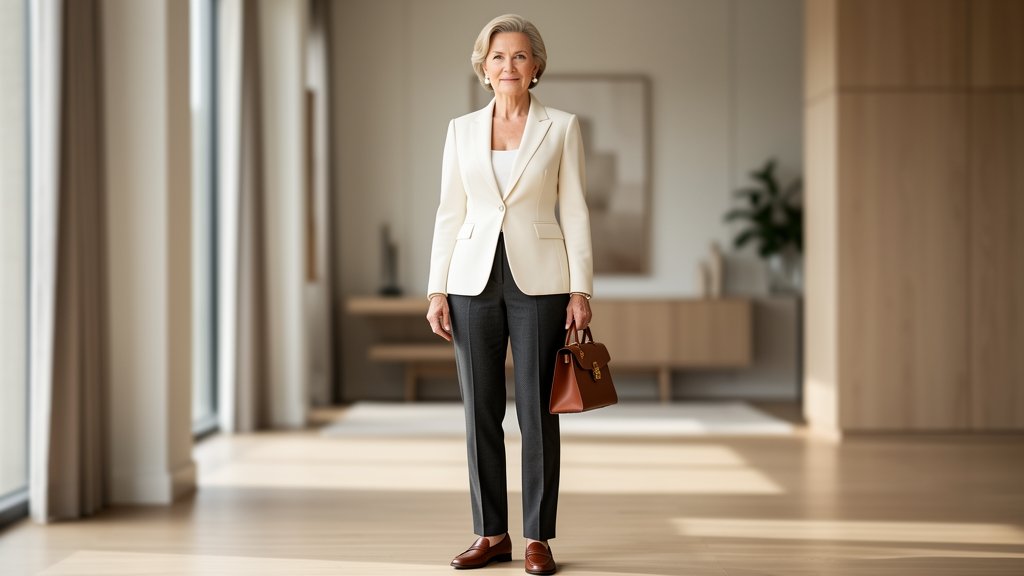
In your 40s, fitted clothing often dominates your wardrobe—body-conscious cuts that emphasize curves and show off your figure. By your 60s, the goal shifts to structured clothing that flatters your frame without necessarily clinging to every contour. This doesn’t mean wearing oversized, shapeless clothing. Instead, it means choosing pieces with intentional structure: tailored items that sit on your body with shape and definition but without excessive cling. A structured cardigan with darts and shaping is more flattering than a body-conscious fitted knit. Tailored trousers are more elegant than skinny jeans. The structure comes from the cut and tailoring rather than from the fabric’s stretch and cling.
Look #2: Sleeve and Length Adjustments
Description:
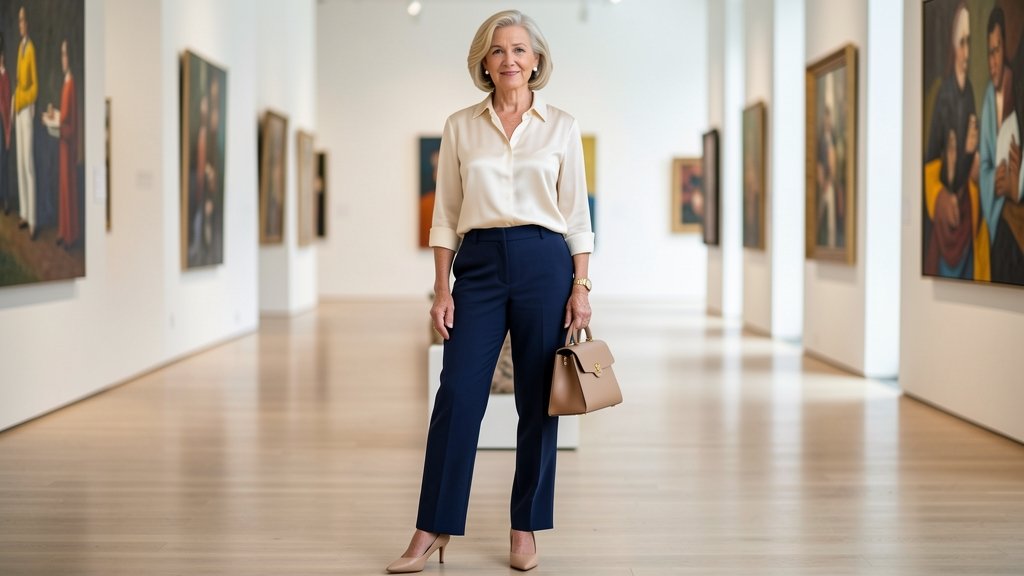
The way you approach sleeves and lengths shifts significantly between your 40s and 60s. In your 40s, shorter sleeves (cap sleeves, sleeveless options) might feel age-appropriate or flattering. By your 60s, longer sleeves—whether three-quarter, long, or covering the upper arm—often feel more comfortable and sophisticated. Sleeve length becomes about sun protection, coverage that feels appropriate, and the sophistication that longer sleeves provide. Similarly, hemlines shift. In your 40s, you might wear shorter skirts, cropped pants, or exposed ankles as a way to appear younger or trend-forward. In your 60s, a knee-length or just-below-knee hemline, or full-length trousers, often feels more elegant and age-appropriate. These changes aren’t about hiding; they’re about understanding what’s actually flattering and comfortable.
Look #3: Jewelry Strategy: From Bold to Intentional
Description:
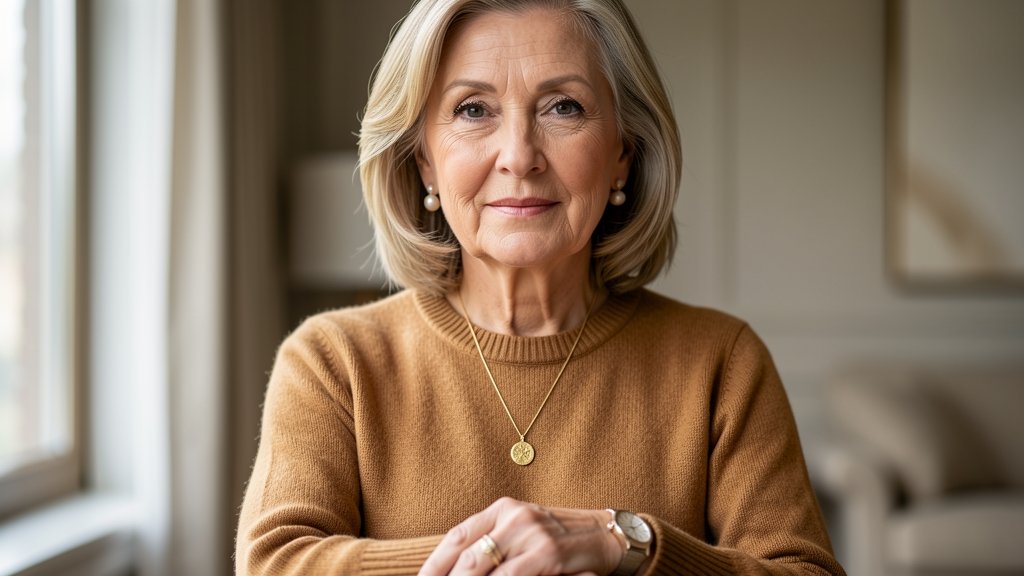
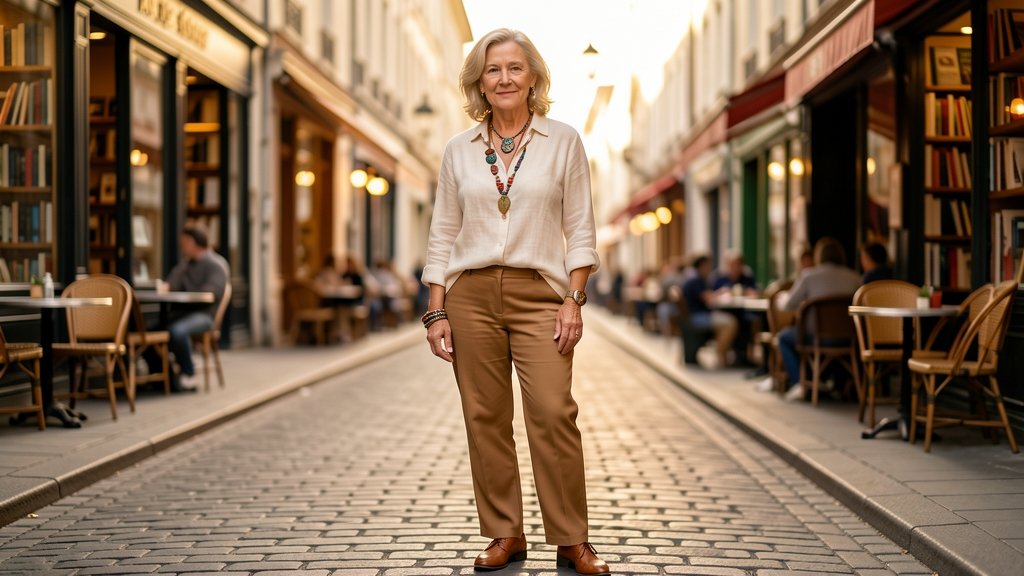
In your 40s, jewelry might be more experimental—mixing metals, wearing statement pieces, trying bold colors and styles. By your 60s, your jewelry strategy becomes more curated and intentional. Rather than wearing many pieces at once, you select one or two pieces that matter. Rather than mixing metals, you might choose to work primarily in gold or silver. Rather than trendy, costume pieces, you invest in quality jewelry that you’ll actually wear. Your 40s jewelry might make a statement; your 60s jewelry should be something you genuinely love and that genuinely suits you. The shift is from variety and boldness to intentionality and quality.
Look #4: Hair and Makeup Impact on Clothing Choices
Description:
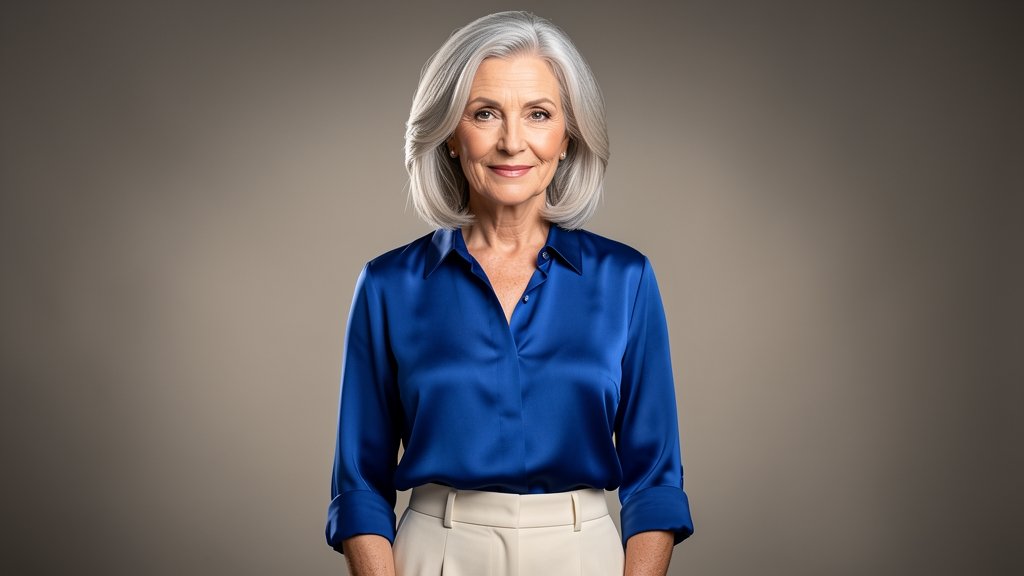
By your 60s, your hair and makeup choices significantly influence your clothing decisions in ways they might not have in your 40s. If you’ve embraced silver or gray hair (or chosen to keep it), your color palette for clothing might shift to work beautifully with your hair color rather than against it. Your makeup style in your 60s might be different—perhaps more minimal, perhaps more focused on skin quality than coverage—and this might make you want to choose necklines and clothing styles that don’t hide what you’re doing with your face and skin. In your 40s, you might have worked to make your clothing dramatic or attention-grabbing; in your 60s, you might prefer to let your face and skin be part of the visual story, which means choosing clothing that complements rather than competes.
Look #5: Fabric Weight and Quality Becomes Paramount
Description:
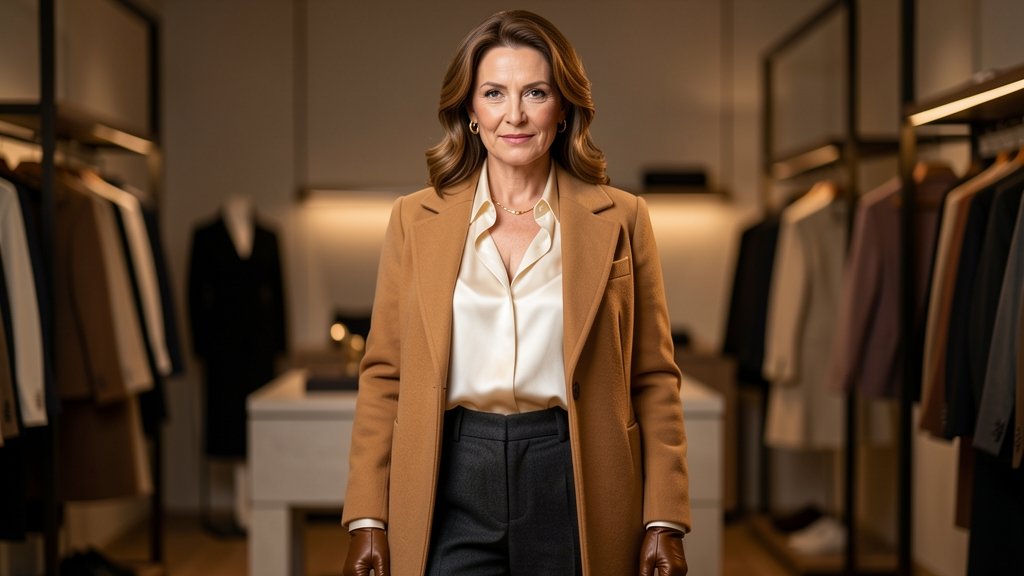
In your 40s, you might have worked with a wider variety of fabrics—lightweight synthetics, trendy fabrics, lower-quality materials that looked good in the moment. By your 60s, you develop a strong preference for heavier, higher-quality fabrics. Cotton with real weight rather than thin, flimsy cotton. Wool blends rather than synthetic blends. Silk rather than polyester satin. Real linen rather than linen-look synthetics. This shift happens because quality fabrics simply look and feel better, they age better, they’re more comfortable, and they drape more beautifully on a mature body. A thin, flimsy fabric often emphasizes every line and curve; a substantial, quality fabric drapes beautifully and creates a polished appearance.
Look #6: Color Palette Refinement
Description:
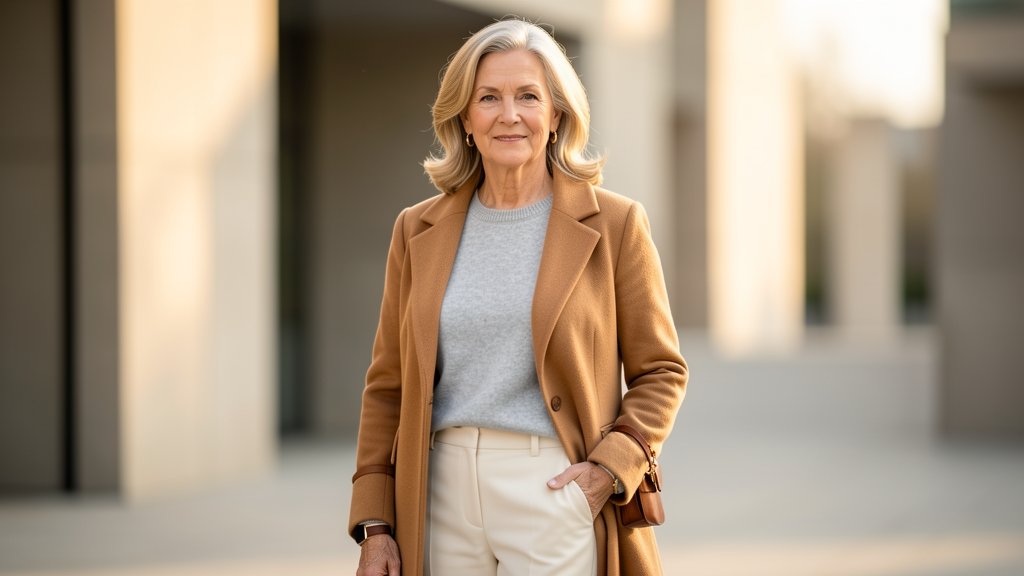
Your 40s might have included a wider range of colors and color combinations in your wardrobe. By your 60s, most women find their color palette narrows and refines. You’re working with colors that genuinely flatter you rather than trying every color trend. Your 40s might have included bright, trendy colors; your 60s typically shift toward sophisticated neutrals, jewel tones, pastels, or classic colors. This isn’t about restriction—it’s about discovering that working within a defined color palette is actually more luxurious and sophisticated. When your entire wardrobe works in a limited color palette, pieces coordinate easily, you can own fewer pieces because they all work together, and you always look intentional and put-together.
Look #7: Pattern and Print Approach Changes
Description:
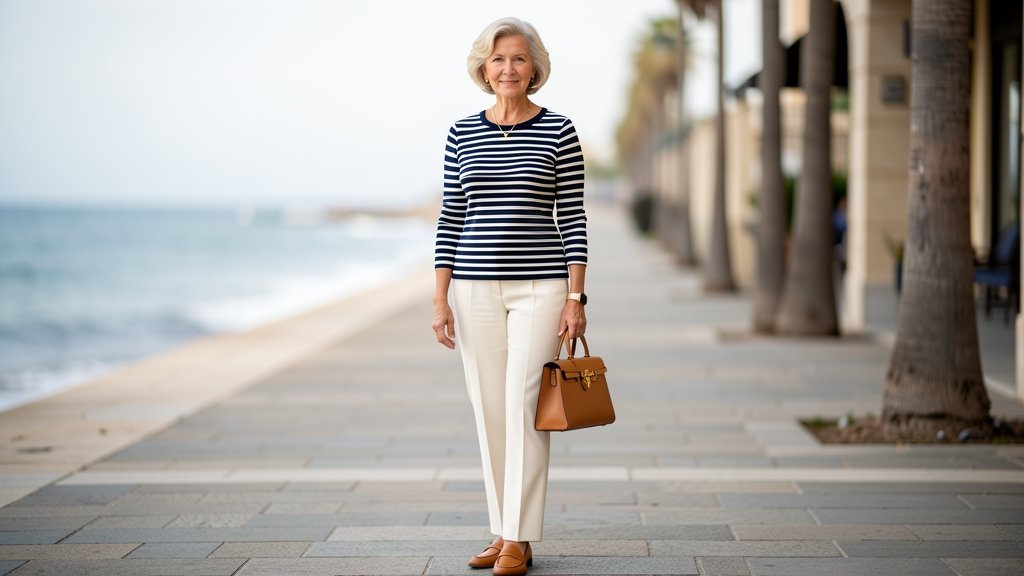
In your 40s, you might have experimented with bold patterns, trend-driven prints, or attention-grabbing designs. By your 60s, most women shift to more subtle, sophisticated patterns. Classic stripes, refined florals, sophisticated geometrics, or timeless patterns replace bold animal prints, trendy color combinations, or joke prints. When you do wear pattern, it’s typically one main pattern in an outfit rather than multiple conflicting patterns. The shift is from pattern as statement-making to pattern as refinement and interest.
Look #8: Comfort Becomes Non-Negotiable
Description:
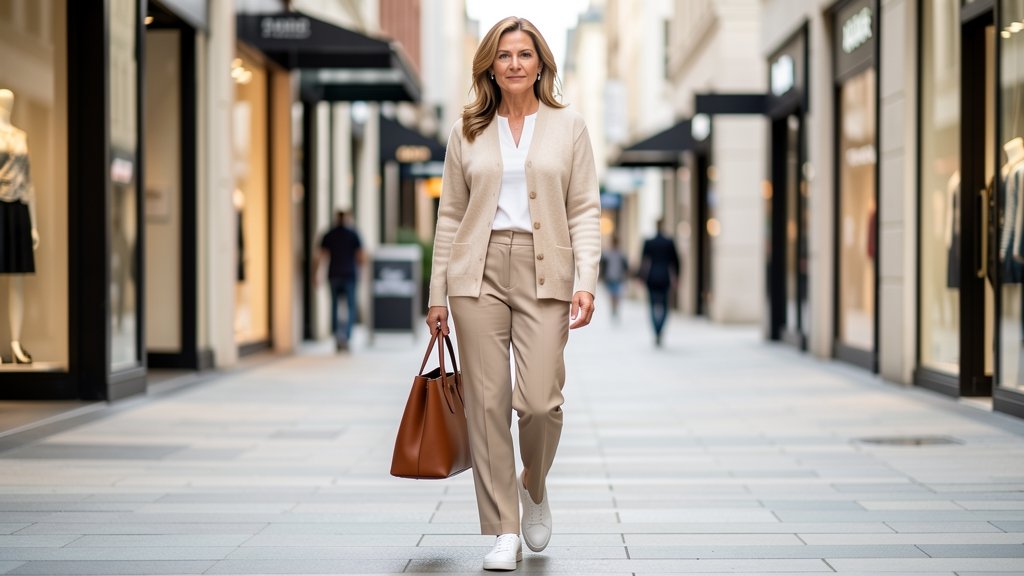
In your 40s, you might have suffered through uncomfortable shoes, tight waistbands, or restrictive fabrics in service of looking good. By your 60s, comfort becomes non-negotiable. You’re not willing to wear shoes that hurt, choose sizes too small, or wear fabrics that don’t breathe or stretch comfortably. But importantly, this doesn’t mean your clothing becomes casual or unstylish. It means you find comfortable options that are also elegant: flats that are as stylish as heels, quality elastic that creates comfort without looking casual, breathable fabrics that are still sophisticated. The shift is finding that comfort and elegance aren’t mutually exclusive.
Look #9: Professional Dressing Evolution
Description:
If you work, your professional dress code in your 60s is likely different than it was in your 40s. In your 40s, you might have dressed to compete, to appear powerful, or to prove your competence. By your 60s, you’re likely dressing to represent yourself and your role with confidence and authority that doesn’t need to be proven through clothing. This might mean slightly less formal business wear, or alternatively, it might mean more refined, intentional professional clothing. The goal is projection of confidence and competence rather than overcompensation.
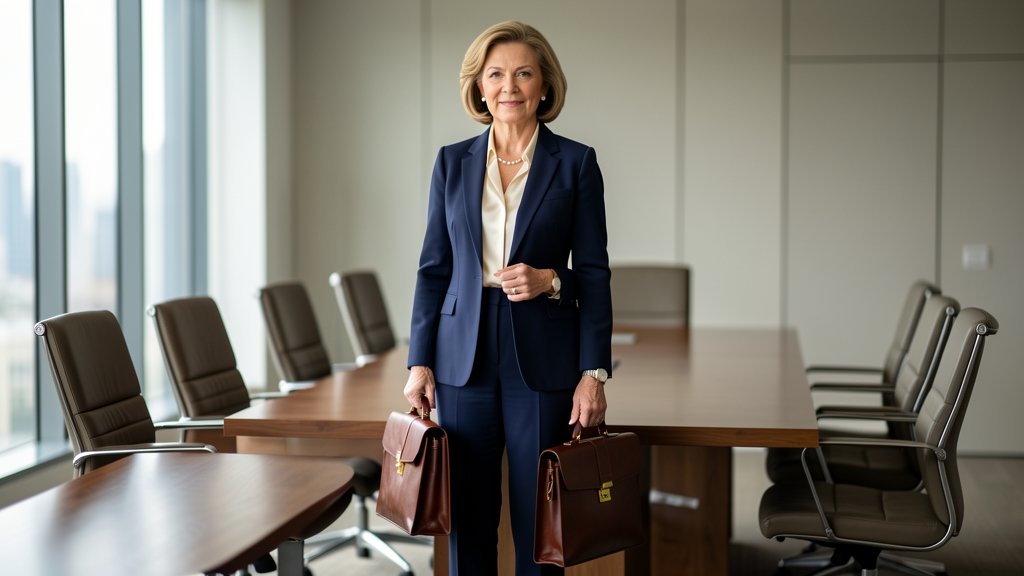
Look #10: Accessory Strategy Shifts
Description:
In your 40s, you might have worn more accessories—multiple bags, lots of jewelry, various belts and scarves. By your 60s, the accessory strategy becomes more curated. Rather than multiple pieces, you choose one or two statement accessories that matter. Rather than trying to add interest through various accessories, you let quality basics speak for themselves and add one or two intentional accessories. A structured handbag, a quality watch, and perhaps a statement necklace is often enough. This shift reflects the understanding that less is often more, and that every piece should earn its place in your outfit.
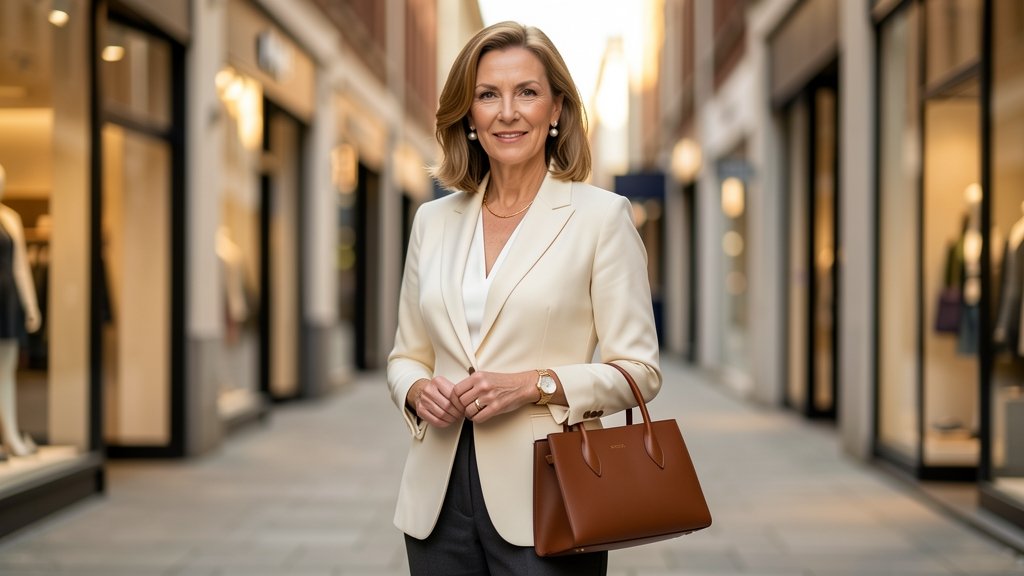
Look #11: Underpinning Choices Become Invisible
Description:
In your 40s, shapewear and underpinning might have been visible or discussed as part of your look. By your 60s, the goal is often for underpinnings to be completely invisible—supporting your silhouette without creating bulges, panty lines, or obvious underwear shapes. This might mean investing in quality shapewear that actually works, choosing clothing that doesn’t require heavy undergarments, or understanding what actually flatters your body without trying to force it into an unnatural shape. The goal is a smooth, elegant silhouette that looks like it’s your body, not your body plus visible support structure.
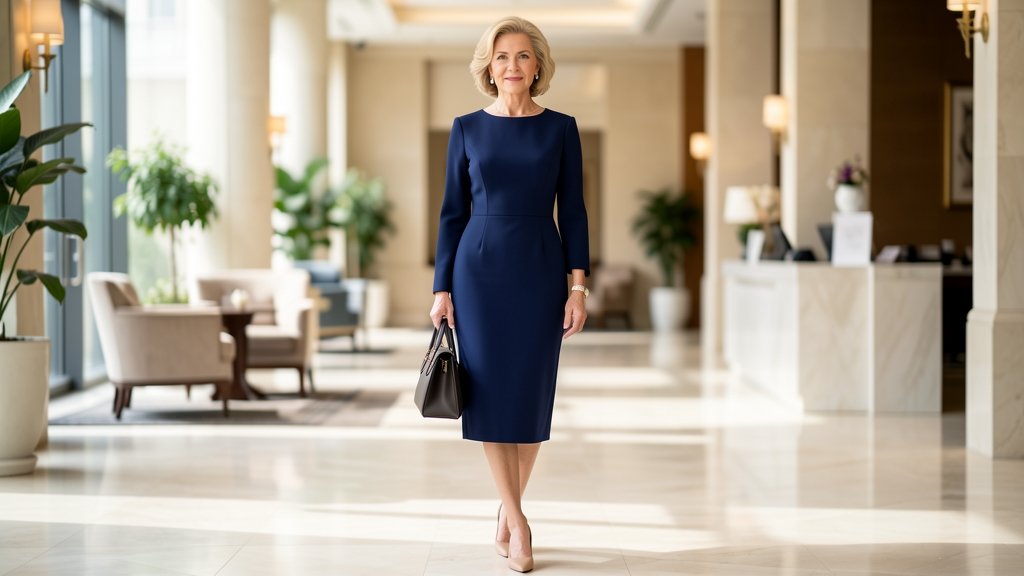
Look #12: Personal Authenticity Over Trends
Description:
Perhaps the biggest shift between dressing in your 40s and dressing in your 60s is moving from trend-consciousness to personal authenticity. In your 40s, you might have asked yourself: “Is this current? Does this make me look younger? Is this what I’m supposed to wear?” By your 60s, you’re more likely asking: “Do I love this? Does it fit my life? Does it reflect who I actually am?” This shift is incredibly liberating. It means you’re no longer dressing to manage how others perceive your age or relevance. You’re dressing to express yourself and to feel comfortable and confident.
Conclusion
Dressing in your 60s isn’t about doing less or accepting limitation. It’s about doing what genuinely matters, investing in quality over quantity, and dressing with intention and confidence that you may never have achieved in your 40s. The changes between how you dressed then and how you dress now aren’t losses—they’re refinements. They’re the wisdom that comes from experience. They’re the confidence that emerges from knowing who you are and not feeling the need to prove it.
By your 60s, you’ve earned the right to dress for yourself rather than for external validation. You understand what works for your body, your lifestyle, and your personality. You’ve learned from decades of experiments what actually lasts and what becomes dated. You understand quality. You understand authenticity. And you understand that the most elegant, powerful thing you can wear is confidence in who you are—and that confidence shines through when your clothing actually reflects you rather than trying to be something else.