
By Fashion History Editor | Updated: 2024 | Historical Fashion Guide | 8 Mins Read
Introduction: Fashion in the Age of Revolution
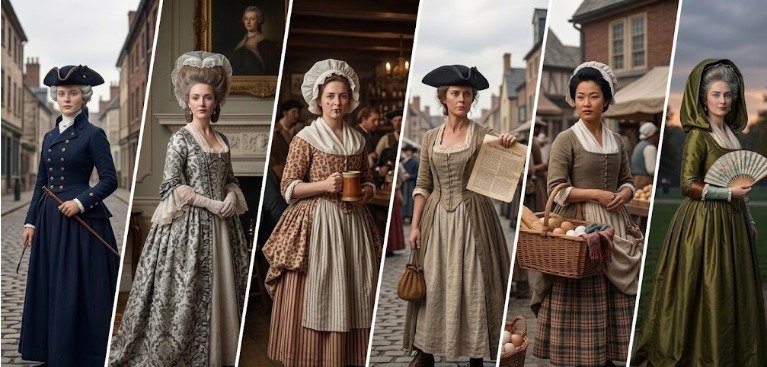
The year 1776 stands as a pivotal moment in world history—not just for politics, but for fashion as well. As America declared independence and the world entered a period of dramatic social upheaval, women’s fashion became a powerful form of self-expression and political statement. The styles of 1776 reflected the ideals of the Enlightenment: elegance, simplicity, and a subtle rebellion against the excesses of the past. This comprehensive guide explores the revolutionary fashion of women during this transformative era, examining silhouettes, fabrics, accessories, and the cultural significance that made these garments much more than mere clothing—they were declarations of freedom and progressive thinking.

The Silhouette: High Waistlines and Flowing Skirts
The most distinctive feature of 1776 women’s fashion was the rising hemline of the waist, which moved significantly upward from where it had been positioned earlier in the century. This shift toward the high-waisted silhouette represented more than aesthetic preference—it symbolized a move toward comfort and practicality, qualities that appealed to the emerging middle class and the increasingly independent women of the revolutionary era.
The chemise gown, also known as the “sack gown,” began to give way to more structured designs that emphasized the natural line of the body. The fitted bodice created a defined waistline, often sitting just below the bust, while the skirts flowed gracefully downward in gathered layers. This silhouette was revolutionary in its own right, allowing women greater freedom of movement while maintaining an appearance of decorum and elegance.
Skirts during this period were typically voluminous, requiring multiple layers of petticoats to achieve the desired shape. However, the excess of the 1750s was gradually being refined into something more proportionate. Women of means often wore five to seven petticoats, creating a bell-like silhouette that moved with grace when walking. The front of the skirt was often open, revealing the petticoat beneath, which was frequently elaborately decorated with lace, embroidery, or contrasting fabric.
Fabrics and Colors: Natural Elegance
The fabrics available to women in 1776 reflected the trade routes and manufacturing capabilities of the era. Silk remained the most prestigious and expensive option, typically reserved for formal occasions and women of considerable wealth. Imported from Asia via London, silk fabrics came in various weights and weaves: taffeta for its crisp texture, satin for its lustrous finish, and damask for its woven patterns.
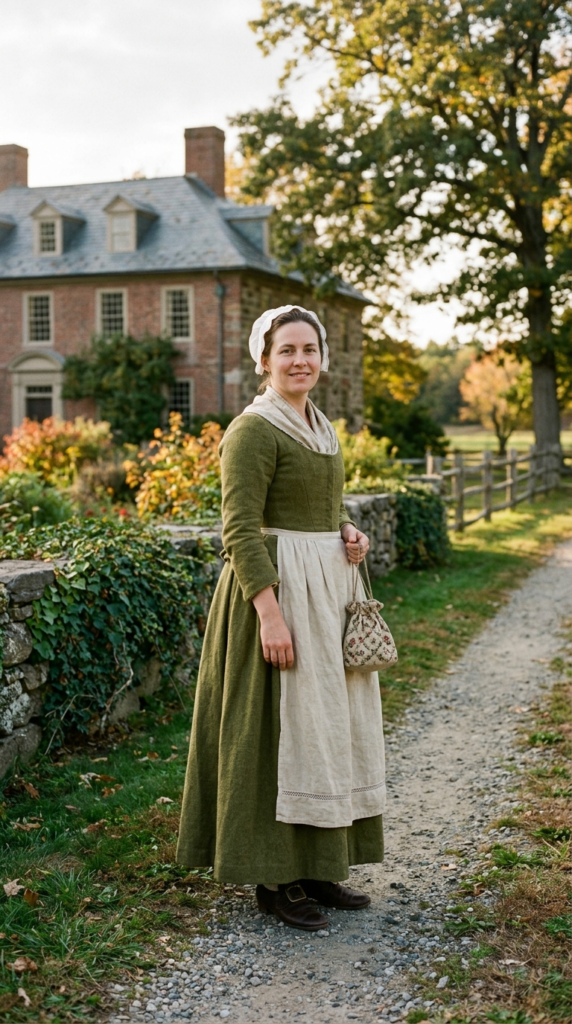
Cotton and linen were increasingly available and affordable, making these practical fabrics ideal for everyday wear. The cotton trade was beginning to expand significantly, particularly with the early industrial developments in Britain. Indian-printed cottons, called calicos and chintzes, were highly fashionable and represented the height of exotic elegance for middle-class women. These brightly colored and intricately patterned fabrics featured florals, paisleys, and geometric designs that captivated the imagination of women across the social spectrum.
Colors during 1776 ranged from soft pastels to deep, rich jewel tones. The wealthy could access the finest dyes, including precious madder for reds, indigo for blues, and cochineal for carmines. Popular colors included pale pink, cream, soft lavender, sage green, dusty rose, cornflower blue, and deep burgundy. The revolutionary era saw a subtle shift toward more muted, sophisticated tones compared to the bright colors favored in earlier decades, reflecting the intellectual and philosophical currents of the Enlightenment.
Bodices and Necklines: Elegance and Propriety
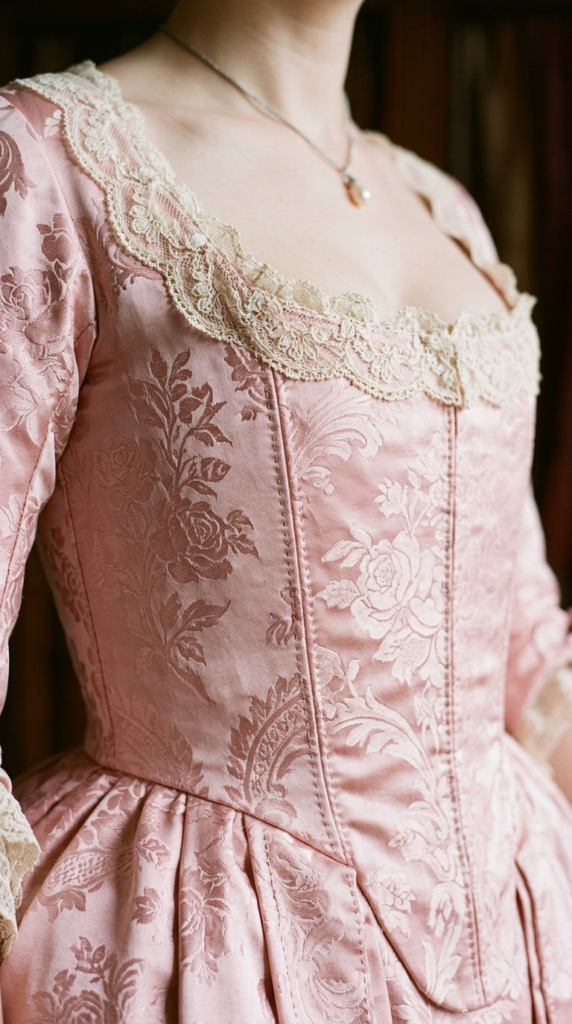
The bodices of 1776 gowns were carefully constructed to achieve a refined silhouette. Most bodices featured a front closure of hooks and eyes or laces, as buttons were still considered unnecessarily ornate for everyday wear. The bodice typically ended at the natural waistline or just slightly below, creating the distinctive high-waisted look that characterized the era.
Necklines were modest by modern standards but represented a shift toward more revealing styles compared to the earlier part of the eighteenth century. The most common neckline was a shallow square neck, often finished with a strip of contrasting lace or linen. Some gowns featured rounded necklines, while others, particularly for more formal occasions, displayed a deeper square decolletage that required the wearing of a modesty piece—a triangular insert of fine linen or lace called a fichu.
The fichu was an essential accessory for respectable women, serving both practical and social functions. Made from the finest linen or cotton, sometimes with delicate drawn-thread work or embroidery, the fichu draped across the chest and over the shoulders, providing both warmth and the appearance of proper decorum. Women often owned multiple fichus, allowing them to coordinate with different gowns and to demonstrate their wealth and refined taste through the quality of the linen and the intricacy of the needlework.

Sleeves: From Practical to Decorative
The sleeves of 1776 women’s gowns underwent significant changes throughout the decade. Early in the year, three-quarter-length sleeves were common, often finished with a deep cuff of contrasting fabric or lace. These cuffs, called engageantes, were frequently ruffled or pleated, creating a charming decorative element while serving the practical purpose of protecting the more delicate upper sleeve from wear.
As the decade progressed, sleeves began to lengthen, with full-length sleeves becoming increasingly popular. These long sleeves were typically fitted to the arm, demonstrating the quality of the tailoring. For more formal occasions, sleeves were often made from sheer materials like muslin or fine linen, sometimes with decorative bands of ribbon or lace sewn at intervals, creating a laddered or striped effect that was both elegant and economical in its use of precious fabrics.
Short sleeves, cut to just below the shoulder, were occasionally seen on younger women or for informal occasions, though they were still considered somewhat daring. When short sleeves were worn, they were typically paired with long fitted sleeves underneath, usually made from white linen or cotton, creating a charming two-layer effect that became increasingly fashionable as the century progressed.

Skirts and Undergarments: Structure and Support
The full skirts that defined 1776 fashion required careful construction and an elaborate system of undergarments. The foundation of this silhouette was the stays, a structured garment reinforced with whalebone or cane that created the rigid bodice necessary for the fashionable silhouette. These stays extended from the bust to well below the waist, creating the distinctive high-waisted effect.
Below the stays, women wore a chemise—a simple, loose garment made from fine linen that served as both undergarment and the foundation for all outer clothing. The chemise was essential for hygiene and modesty, keeping the valuable outer garments from coming into direct contact with the body. Over the chemise, women donned multiple petticoats, typically made from linen or wool depending on the season.
The petticoats were carefully constructed to create the proper silhouette. Structured petticoats with panels of stiffened buckram or crinoline (a fabric made from horsehair and linen) provided the framework for the fashionable bell shape. The outermost petticoat was often highly decorative, made from silk or expensive linen and sometimes featuring embroidery or applied decoration, as it was visible through the open front of the gown.

Fasteners and Closures: The Art of Getting Dressed
The means by which women’s gowns were fastened together was as much a testament to craftsmanship as the gowns themselves. Buttons, when used, were typically covered with fabric matching the gown, made from wood or bone, or occasionally from precious materials like mother-of-pearl for the wealthiest women. However, most everyday gowns relied on a combination of hooks and eyes, laces, and strategic pinning to achieve closure.
The process of dressing in 1776 required assistance from a lady’s maid or family member, particularly for the lacing of stays and the fastening of the gown itself. This dependence on help highlighted both the complexity of fashion and the social hierarchies of the era. A woman of means would spend considerable time each morning being dressed, an ritual that marked her status in society. The quality of one’s clothing and the time invested in one’s appearance were direct indicators of wealth and social standing.
For traveling or more practical occasions, women wore gowns with simpler closures, often featuring buttons down the front that could be fastened without assistance. These practical gowns were nonetheless fashionable and well-made, reflecting the increasing influence of a growing middle class that demanded both style and functionality.

Outerwear: Cloaks, Capes, and Pelisses
The outerwear options available to women in 1776 reflected the practical needs of the era while maintaining fashionable appearance. The cloak was the most common form of outdoor covering, typically made from wool for warmth or lighter fabrics like taffeta for formal occasions. These cloaks hung loosely from the shoulders, allowing for the full petticoats and skirts beneath to maintain their silhouette.
More fashionable and fitted was the pelisse, a garment that was beginning to gain popularity during this period. The pelisse was a short, fitted jacket that fell to approximately the hips, featuring long sleeves and a collar. Often lined in contrasting fabric or fur, the pelisse was both practical and demonstrative of fashion awareness. For wealthier women, pelisses were made from the finest wool or silk, sometimes embellished with frogging, braid, or decorative buttons.
The redingote, another form of outerwear that was emerging during the 1770s, was essentially a dress coat worn over the gown. These fitted garments featured long tails at the back and were typically reserved for formal occasions or travel. They represented a new practicality in fashion, allowing women to engage in more active lifestyles while maintaining fashionable appearance.

Accessories: The Finishing Touches
Accessories in 1776 were far more than mere decoration—they were essential elements of a complete ensemble and significant indicators of wealth and taste. Caps were nearly universal among respectable women, serving both practical and social functions. Made from fine linen, cotton, or silk, caps ranged from simple close-fitting styles to elaborate constructions featuring multiple layers of fabric, lace, and ribbon.
The most popular cap style during 1776 was the mob cap, a loosely gathered cap that covered most or all of the hair, often with a deep frill that framed the face. These caps were particularly popular for informal daytime wear and were often decorated with ribbon, lace, or embroidery. For more formal occasions, women wore smaller, more decorative caps, sometimes featuring plumes or jeweled decorations, or they abandoned caps altogether in favor of elaborate hairstyles.
Jewelry was an important aspect of a woman’s appearance, though it was generally subdued compared to the ornate pieces of earlier decades. Earrings, typically in matching pairs, were worn by most women of means. Common styles included small hoop earrings in gold or silver, drop earrings with pearls or gemstones, and delicate chandelier-style earrings. Necklaces were less common, as the modest necklines and fichus of the era left little space for them. However, small pendants or lockets were sometimes worn, often containing miniature portraits or locks of hair from loved ones.

Footwear: Practical and Fashionable
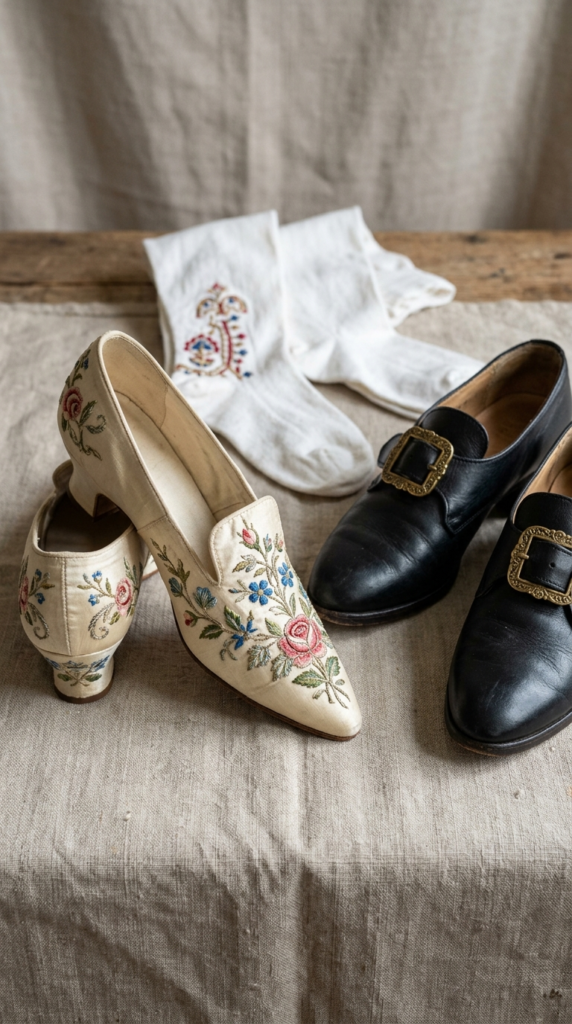
The shoes worn by women in 1776 were designed to complement the fashionable silhouette while maintaining the practicality necessary for daily wear. The most common style featured a thin, curved heel—the French heel—that elevated the foot and created an arched line of the leg. Shoes were typically made from leather or heavy fabric, often in colors that matched or complemented the gown.
Black was a practical choice for everyday shoes, as it concealed dirt and wear. However, fashionable women also wore shoes in colors such as cream, soft pink, pale green, or deep red. The toe of the shoe was typically rounded or slightly pointed, and the top of the shoe was cut low, usually reaching just above the ankle. Small buckles, ribbons, or fabric bows often decorated the instep, adding an elegant finishing touch.
For indoor wear and dances, women wore thinner shoes, sometimes called slippers or pumps, made from silk or satin. These delicate shoes were often elaborately decorated with embroidery, beading, or applied ribbon. They were not designed for longevity but rather to demonstrate wealth and status—the fact that one could afford delicate shoes that would be quickly worn out was itself a status symbol.
Hairstyles: Height, Curls, and Decoration
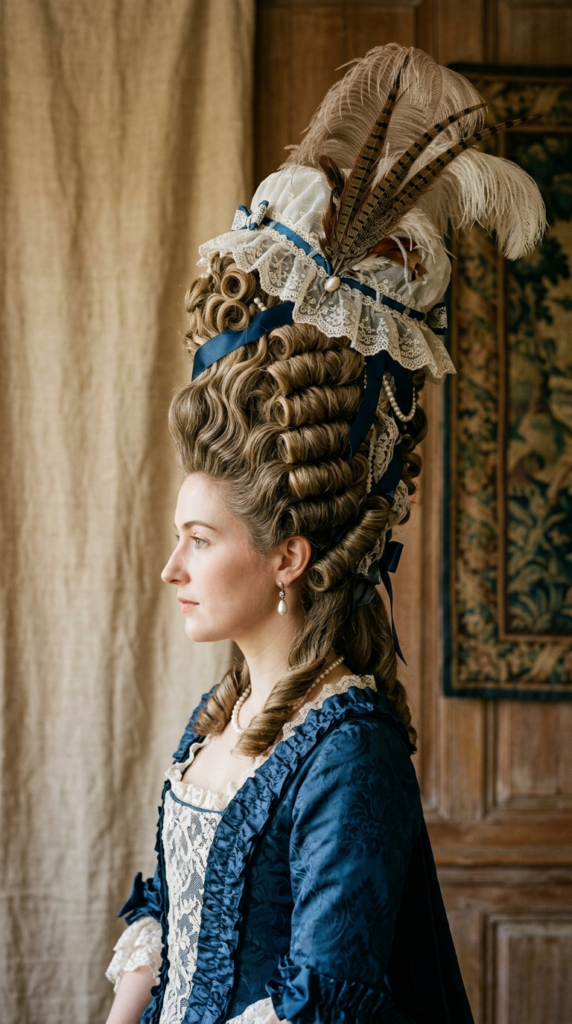
The hairstyles of 1776 were among the most distinctive and remarkable features of the fashion of the era. Height was paramount, with women constructing elaborate coiffures that often rose six to twelve inches above the natural hairline. This was achieved through the use of wire frames, wool, and pomatum—a greasy pomade made from lard and perfumed oils—that allowed hair to be structured and maintained in these impressive heights.
Ringlets and curls were essential to fashionable hair of 1776. Women would spend hours having their hair set in curls using hot tongs or by sleeping in curl papers. The front of the hair was typically arranged in careful waves and ringlets that framed the face, while the back was either gathered into a knot, braid, or queue (a long braid, often enclosed in a decorative silk bag), or left hanging in loose curls.
Hairpieces and additions were common, with women purchasing false curls made from human hair or horsehair to enhance their natural locks. The wealthy sometimes kept these hairpieces for years, carefully tending them as valued possessions. Decorative elements, such as feathers, ribbons, lace, flowers, and even small ornaments, were placed among the curls to create an effect of cultivated elegance and demonstrable expenditure.
Makeup and Complexion: The Fashionable Face
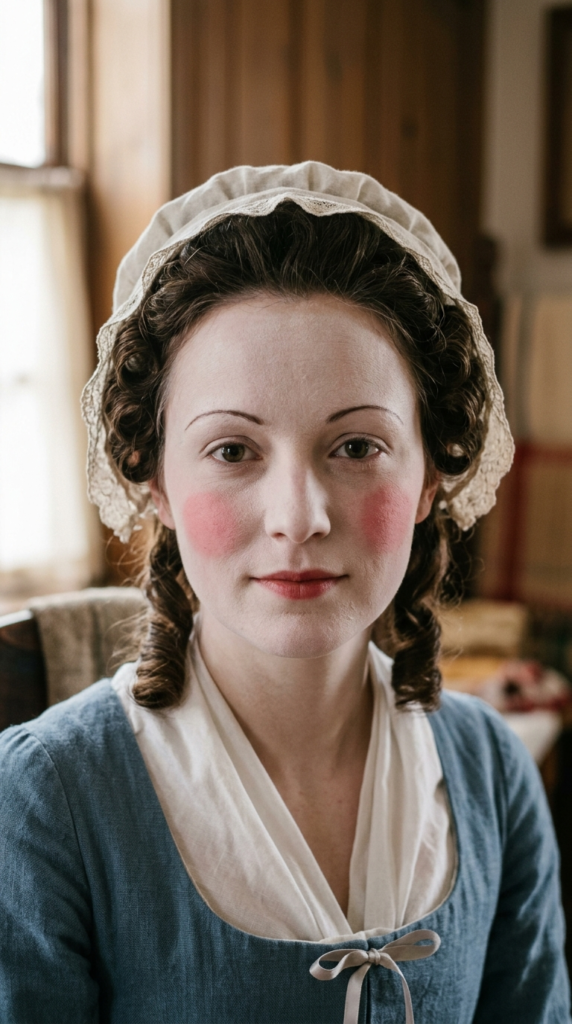
The face of a fashionable woman in 1776 was carefully painted and prepared according to the standards of beauty of the era. A pale complexion was considered the height of beauty, indicating that one did not labor in the sun and had the leisure to remain indoors. To achieve this fashionable paleness, women used white lead paint, applied in thick layers. This practice, while common and accepted, was extremely dangerous, as lead poisoning caused serious health problems, including nerve damage, infertility, and eventual death.
Despite the dangers, white lead paint was ubiquitous among fashionable women of the era. Applied as a thick paste to the face and neck, it was sometimes set with a light powder of chalk or rice starch. Over this white base, women applied rouge in two circles on the cheeks, creating a distinctive appearance that was instantly recognizable as fashionable. The rouge was typically made from cochineal or vermillion, applied with a small brush to create neat, precise circles.
Eyebrows were often plucked to create a higher arching line, considered more elegant than the natural brow. Some women even drawn on eyebrows using a mixture of lamp-black and oil if their natural brows were not sufficiently dark. Lips were sometimes tinted with a combination of rouge and natural plant oils, though the heavy white lead paint meant that lip color was often obscured.
The Filmy Gown: A Late-Century Innovation
As the 1770s progressed and the decade drew to a close, a new silhouette began to emerge that would eventually revolutionize fashion. The high-waisted gown made from sheer muslin or cotton, often with minimal ornamentation, began to appear alongside the more traditional structured gowns. This simpler style reflected both the philosophical ideals of the Enlightenment and the increasing influence of Neoclassical art and design.
These simple, flowing gowns, often made from white muslin, represented a radical departure from the earlier part of the century. Without extensive petticoats or stiffening, these gowns draped according to the natural movement of the fabric, creating a more naturalistic silhouette. While still fashionable for the wealthiest women, these gowns suggested simplicity and virtue—qualities highly valued by the intellectual elite of the revolutionary era.
The transition from the structured fashions of mid-century to the simpler styles that would dominate the 1780s and 1790s was not abrupt but rather a gradual evolution. Both styles coexisted during the 1770s, with older women and those of more conservative taste maintaining the earlier silhouettes while younger, more fashion-forward women adopted the newer styles.

Social Class and Fashion: Distinctions and Displays
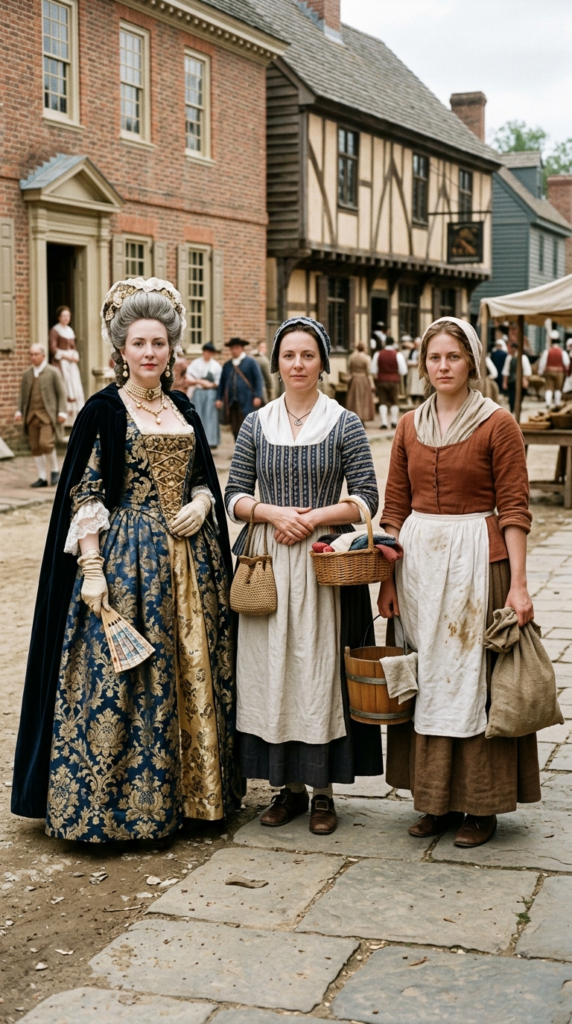
Fashion in 1776 was intricately tied to social class and economic status. The wealthy displayed their position through the quality of fabrics, the intricacy of decoration, the number of servants employed to maintain their appearance, and the sheer expense of keeping current with fashionable trends. A single elaborate gown, complete with all necessary undergarments and accessories, could cost as much as a year’s wages for a working-class laborer.
The emerging middle class used fashion as a means of aspiring to higher social status, adopting fashionable styles as soon as they could afford them. However, careful distinctions were maintained through quality of materials, precision of tailoring, and appropriateness of occasion. A middle-class woman might wear a fashionable gown of printed cotton to a public occasion, while a wealthy woman would wear silk. These distinctions, subtle to the modern eye, were perfectly clear to contemporaries and served important social functions.
The poor and working classes, of course, had no access to fashionable clothing. Their garments were made from inexpensive fabrics, simple in construction, and focused entirely on durability and practicality. However, even among the working classes, women endeavored to maintain respectability through cleanliness and careful mending, understanding that appearance was a form of social currency that could affect their opportunities and standing in their communities.
The Revolutionary Spirit: Fashion as Political Statement
While it may seem that fashion during the revolutionary era was merely a matter of aesthetic preference, the reality was far more nuanced. Clothing choices often carried political significance. Those who sympathized with revolutionary ideals sometimes adopted simpler, more austere clothing styles as a rejection of the excesses of the aristocracy. The embrace of simpler fabrics like cotton and muslin could be read as a statement of democratic values.
Conversely, staunch supporters of the crown maintained the most ornate and expensive fashions, seeing the adoption of excessive decoration as a display of loyalty to established order and hierarchy. In many ways, the fashion choices of 1776 reflected deeper philosophical and political convictions about the nature of society, the role of women, and the future direction of civilization.
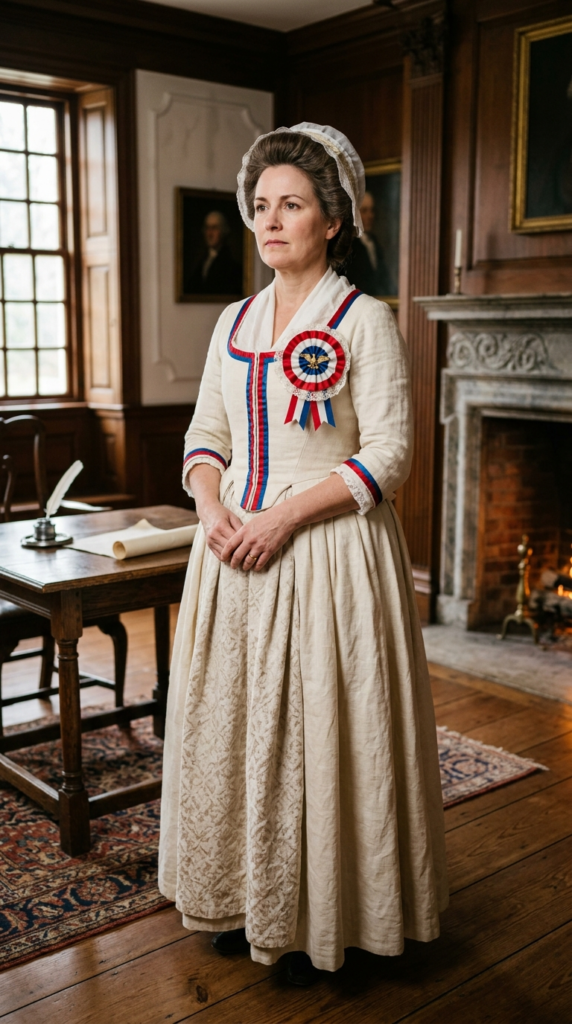
The increasing popularity of patriotic colors—red, white, and blue—in accessories and trim also reflected the political climate of the era. Women who wanted to demonstrate their support for independence could choose these colors for ribbons, bands, and trim on their gowns, making their political leanings evident through their fashion choices.
Conclusion: The Fashion of a Revolutionary Era
The fashion of 1776 represents a fascinating moment in history where aesthetic choices intersected with philosophy, politics, and social change. The high-waisted silhouettes, luxurious fabrics, elaborate accessories, and careful attention to appearance that characterized women’s fashion of this era tell the story of a society in transition. These were women navigating a world of dramatic change, using fashion as a tool to express their identity, their values, and their place in society.
The styles of 1776 would soon give way to the even simpler, more naturalistic fashions of the 1780s and 1790s, but the trends that began during this revolutionary year set the stage for this transformation. The increasing availability and acceptance of simpler materials like muslin, the rising waistline that would eventually reach its highest point just below the bust, and the gradual rejection of excessive ornamentation all had their roots in the fashion of 1776.
For modern fashion enthusiasts, the styles of 1776 offer a rich source of inspiration. The emphasis on quality fabrics, careful tailoring, and the integration of personal accessories in ways that reflected individual taste and circumstances provides lessons for contemporary style. The understanding that fashion is a language through which we communicate our values and identity is as relevant today as it was 250 years ago. By studying the fashion of this revolutionary era, we gain insight not only into the past but also into ourselves and the ways that style continues to shape how we move through the world.