
By Fashion History Editor | Updated: 2024 | Historical Fashion Guide | 8 Mins Read
Introduction: Fashion at the Turn of the Century
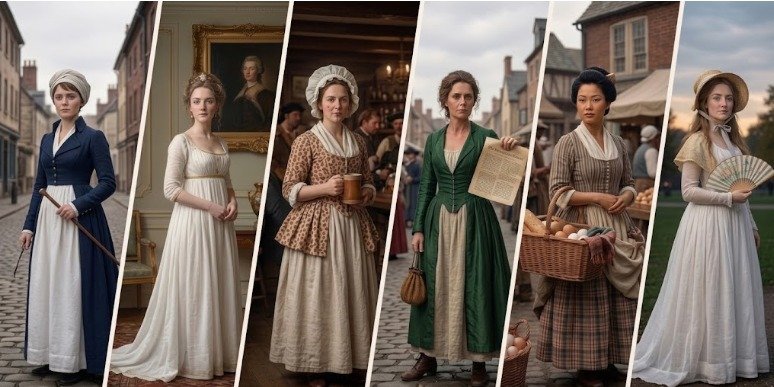
The year 1799 marked a dramatic transformation in women’s fashion that would echo through the centuries to come. As the eighteenth century drew to a close and Europe grappled with the aftereffects of political revolution, women’s fashion underwent a radical metamorphosis. Gone were the heavily structured stays, the towering hairstyles, and the elaborate layers of decoration that had defined the previous decades. In their place emerged a new silhouette—one inspired by classical Greek and Roman aesthetics, reflecting the intellectual currents of Neoclassicism and the democratic ideals that had emerged from the revolutionary period.
The fashion of 1799 was revolutionary in its simplicity, presenting a radical departure from the ornate excess of the mid-eighteenth century. This transformation was not merely aesthetic but represented a fundamental shift in how women understood their bodies, their place in society, and the role that clothing should play in public life. Women’s fashion in 1799 embodied the spirit of the age—a desire for authenticity, a rejection of artifice, and an embrace of natural beauty that would define the early nineteenth century.
The Empire Silhouette: Revolution in Form
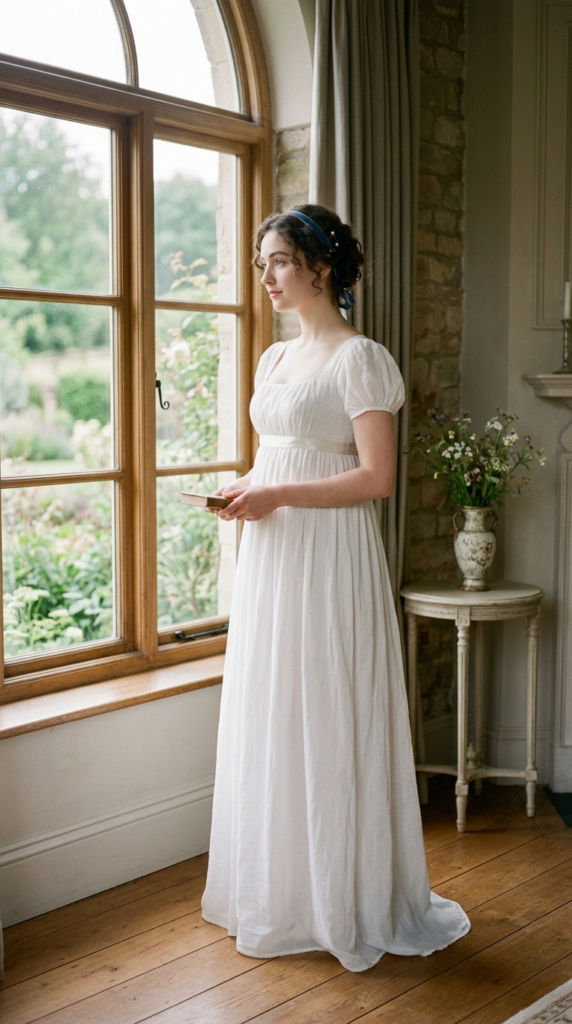
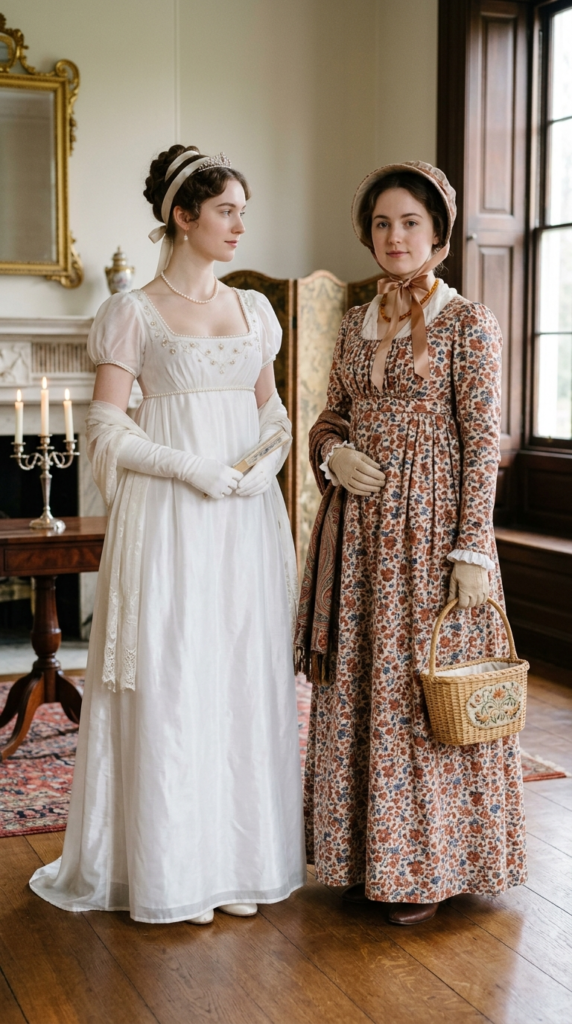
The most defining characteristic of 1799 fashion was the Empire waistline, positioned directly beneath the bust rather than at the natural waist. This revolutionary silhouette was inspired by the classical draperies of ancient Greece and Rome, a direct expression of Neoclassical artistic ideals that permeated European intellectual circles. The high placement of the waistline had several significant effects: it elongated the torso, provided greater comfort by eliminating the need for extensive stays, and created a silhouette that was both sensual and demure.
This new silhouette relied on an entirely different construction method than the structured gowns of previous decades. Rather than heavy boning and multiple petticoats, the Empire gown hung from the high waistline in soft, gathered folds that followed the natural contours of the body. The skirt was typically narrow through the hips, falling straight to the floor in an elegant train. This dramatic shift away from the wide, full skirts of the 1770s and 1780s represented nothing short of a fashion revolution.
The simplicity of the Empire silhouette was deceptive. While the gowns appeared to require no construction or tailoring, they actually demanded exceptional skill to achieve the proper hang and proportions. The placement of the waistline had to be precisely calculated to be flattering, and the gathering of the skirt required careful consideration to create the proper amount of fullness without appearing clumsy or poorly made.

Fabrics: The Reign of Muslin and Simplicity
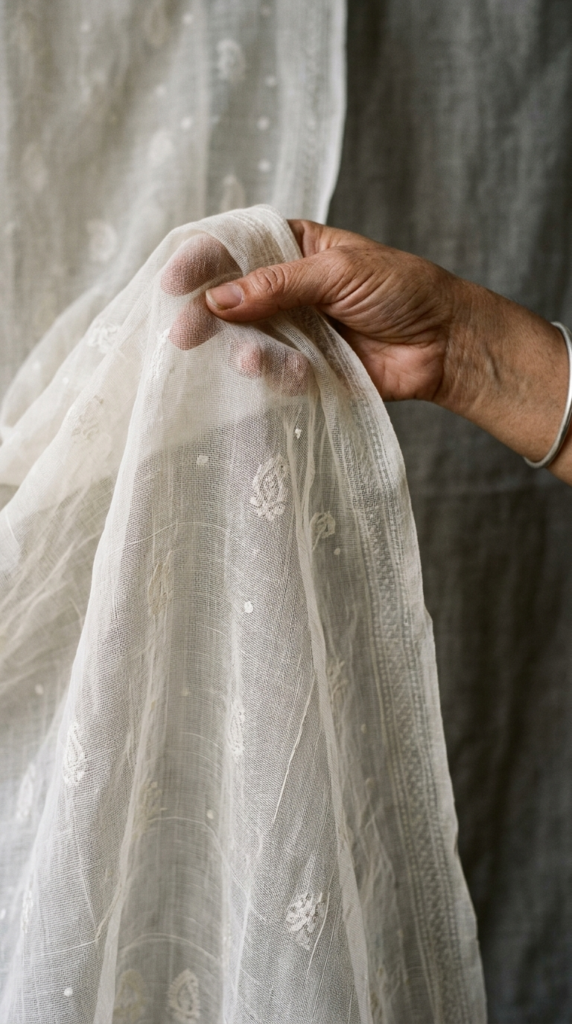
The fabric revolution of 1799 was as significant as the silhouette revolution. While silk remained available and expensive, the fabric of choice for the most fashionable women became fine, lightweight muslin, imported from India. Muslin was revolutionary because it was affordable enough for women of the middle class, yet refined and elegant enough to be worn by the wealthiest women in society. The finest Indian muslins were incredibly thin and delicate, so transparent that they revealed the outline of the body beneath.
This transparency created considerable scandal and concern among more conservative members of society. Clergy and social commentators railed against the impropriety of women wearing garments that so clearly revealed the shape of their bodies. Some suggested that women were abandoning all pretense of modesty and respectability. However, the fashion persisted, becoming even more extreme during the early years of the nineteenth century. The logic of the fashion was grounded in classical aesthetics—the intent was to create a line of beauty that echoed classical sculpture, not to be intentionally provocative.
Beyond muslin, women also wore gowns made from fine linen, cotton lawn, and other lightweight, flowing fabrics. Wool, now being manufactured in finer weights, also appeared in women’s fashion, particularly for traveling gowns or those intended for the cooler seasons. The emphasis on lightweight, flowing fabrics meant that the heavy petticoats of previous eras became entirely unnecessary. A woman could now be comfortable and fashionable simultaneously, a revolutionary development in the history of dress.
Waistline Decoration: Ribbons, Bands, and Embellishment
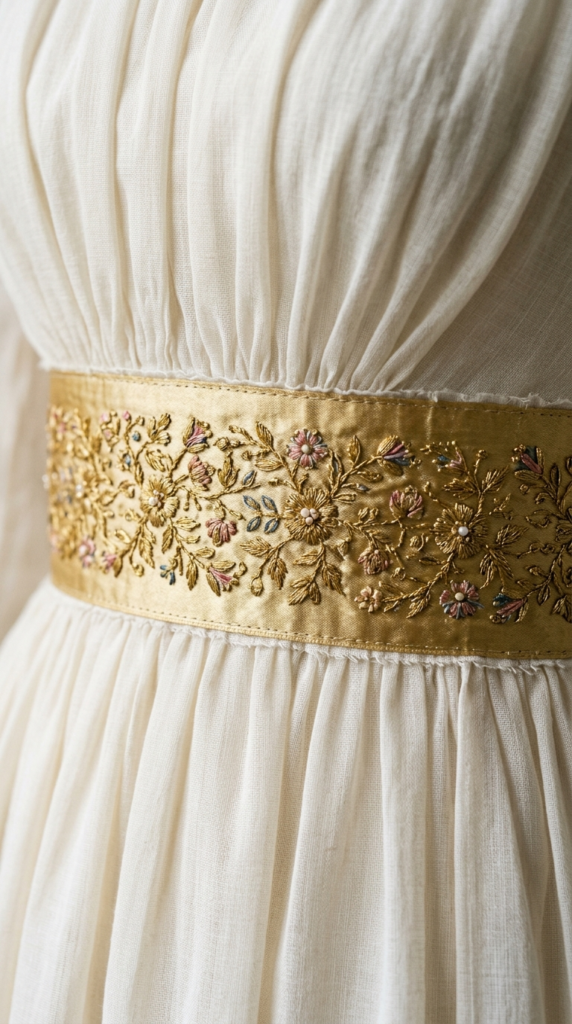
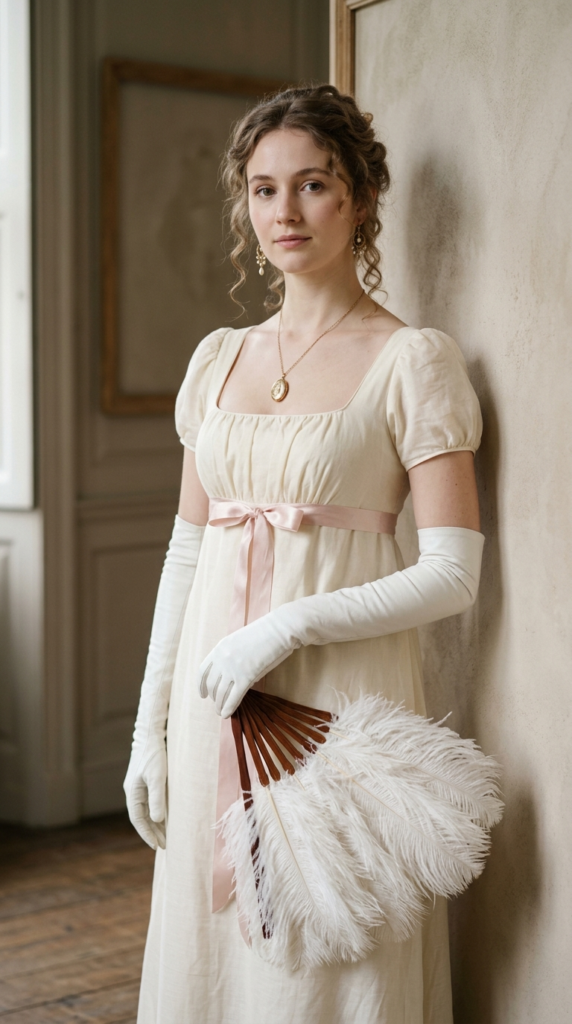
Although the Empire silhouette was characterized by simplicity, women of the era did not abandon decoration entirely. Instead, they concentrated ornamentation at the waistline, where a decorative band or ribbon emphasizing the high waist replaced the elaborate embroidery and decoration that had previously covered entire gowns. These waistbands were often made from satin or silk ribbon, typically in contrasting colors—gold, white, pale pink, or pale blue were popular choices.
Some waistbands were embellished with delicate embroidery, particularly when worn by women of considerable wealth. Beading was less common than embroidery, as it would have disrupted the elegant drape of the fabric. Occasionally, small rosettes or bows were placed at the center front of the waistband, adding a feminine flourish without excessive ornamentation. This restrained approach to decoration reflected the philosophical underpinnings of Neoclassicism—the belief that true beauty lay in proportion and line rather than in elaborate ornamentation.
The simplicity of waistline decoration meant that a woman’s fine taste was demonstrated through the quality of the ribbon or the delicacy of the embroidery rather than through quantity of decoration. This represented a significant cultural shift from the previous era, when more decoration was universally considered more beautiful and more valuable.
Sleeves: From Minimal to Elaborate
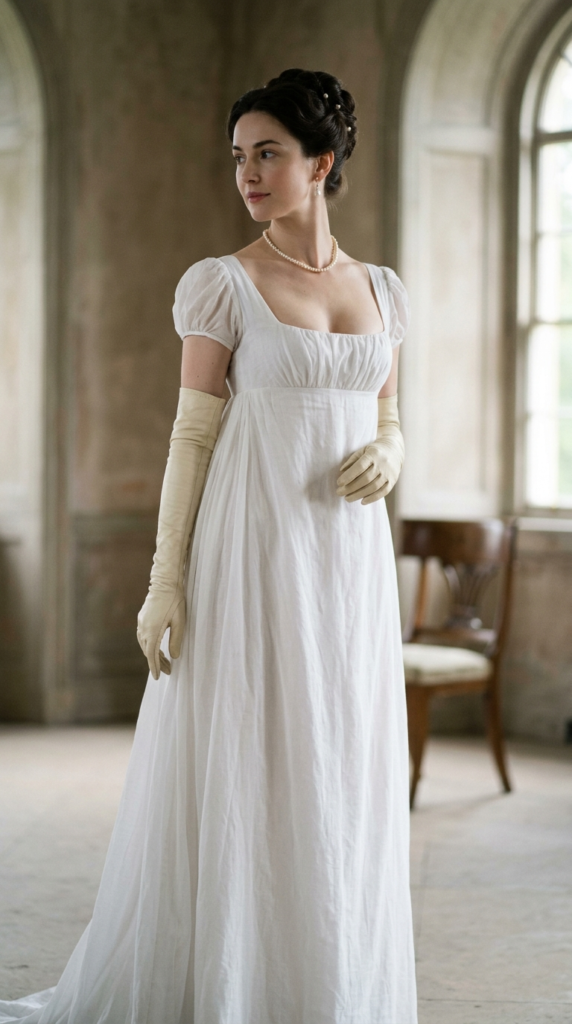
The sleeves of 1799 gowns varied considerably depending on the formality of the occasion and the social position of the wearer. For evening wear and formal occasions, sleeves were often nearly non-existent—the gown might feature only thin straps over the shoulders, leaving the arms completely bare. This radical departure from centuries of long sleeves represented another revolutionary aspect of fashion at this time.
For daytime wear, sleeves were more substantial but still remarkably simple compared to previous eras. The most common sleeve style featured a short puff at the shoulder, gathered into a narrow band just above the elbow. Some gowns featured longer sleeves that extended to the wrist, made from fine muslin and often left relatively unornamented. Long sleeves were increasingly popular as the decade drew to a close, suggesting a slight movement toward modesty and conservatism even within the revolutionary fashion framework.
Short sleeves and bare arms created practical problems in a chilly climate. To solve this difficulty, women wore long gloves, typically made from kid leather or cotton, extending from the wrist to above the elbow. These long gloves served both practical and aesthetic purposes, adding an elegant finishing touch to the ensemble while providing warmth and protection.
The Chemise Gown: Freedom and Sensation
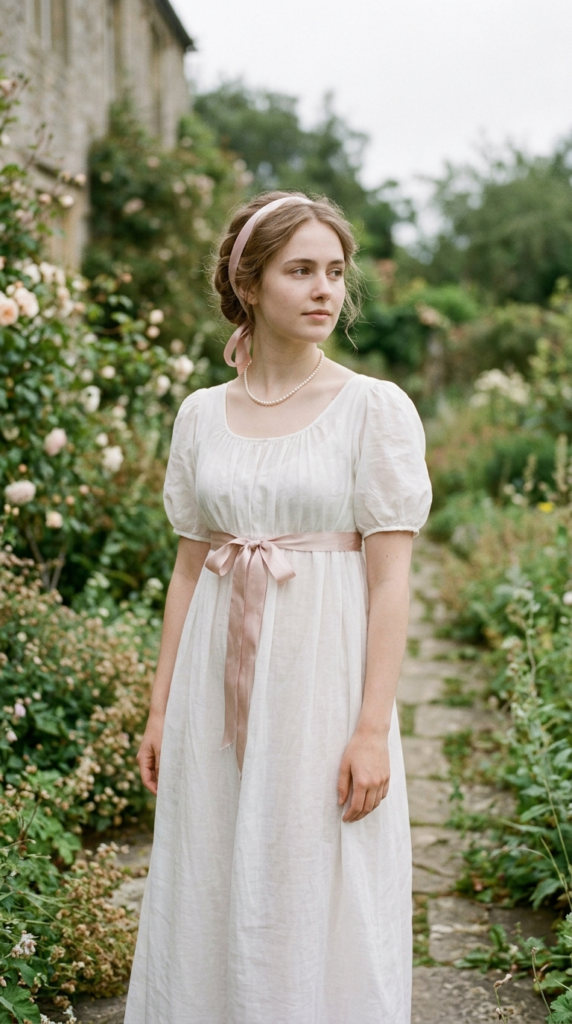
A significant innovation in 1799 fashion was the increasing popularity of the chemise gown, a garment that was essentially an elaborated version of the undergarment that had served as the foundation for fashion throughout the eighteenth century. When worn as an outer garment, the chemise gown was typically made from fine muslin or linen, cut loosely to hang from the shoulders without the restrictive structure that previous generations had considered essential to respectable dress.
The chemise gown represented an almost shocking departure from centuries of fashionable dress. For the first time, it became acceptable for a respectable woman to appear in public wearing what was, in essence, a nightgown. Conservative observers were horrified, seeing this fashion as evidence of moral decline. However, the chemise gown had a powerful appeal, particularly to younger women and those with more progressive political views. The simple, flowing garment suggested innocence, virtue, and a rejection of artificial social conventions.
The chemise gown was often worn with a narrow sash at the waist, frequently made from silk ribbon. Sometimes this sash was tied at the side, creating an asymmetrical drape that added visual interest to the simple silhouette. Occasionally, the sash was tied in a bow at the center front, or even positioned lower on the hips in a fashion that became increasingly popular as the nineteenth century progressed.
Necklines and Décolletage: Radical Changes
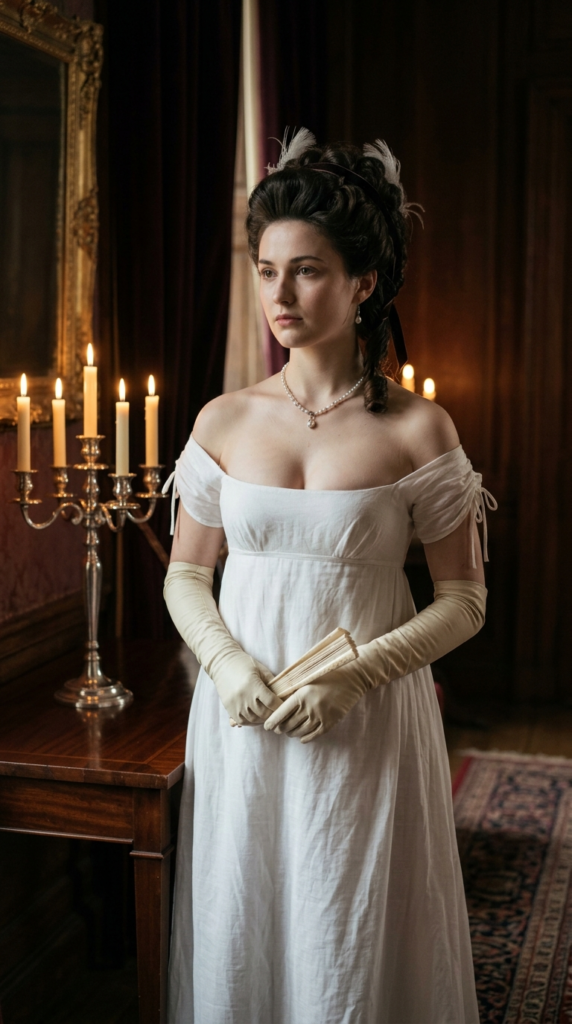
The necklines of 1799 gowns represented another shocking departure from previous fashions. While the modest square neckline had been standard throughout much of the eighteenth century, the fashion of 1799 moved toward much lower necklines. Evening gowns frequently featured deep, off-the-shoulder necklines that exposed the neck, shoulders, and collarbone dramatically. Some gowns featured necklines so low that they barely covered the bust, creating an appearance that would have been considered scandalous in previous decades.
This shift toward more revealing necklines was not universally accepted. Conservative women, older women, and those of modest temperament continued to wear higher necklines with fichus or other modesty pieces. However, among fashionable society, particularly among younger women, lower necklines became increasingly popular and were considered the height of elegance and sophistication.
The square neckline, while lower than previously worn, remained popular for daytime wear, where it could be paired with a delicate fichu or chemisette for modesty. Rounded necklines were also common, creating a soft, feminine appearance that complemented the classical aesthetic of the Empire silhouette. Some gowns featured necklines so low and broad that they essentially consisted of two straps over the shoulders, creating an appearance that was daring to the point of being provocative.
Hair and Headdress: The Return of Natural Beauty
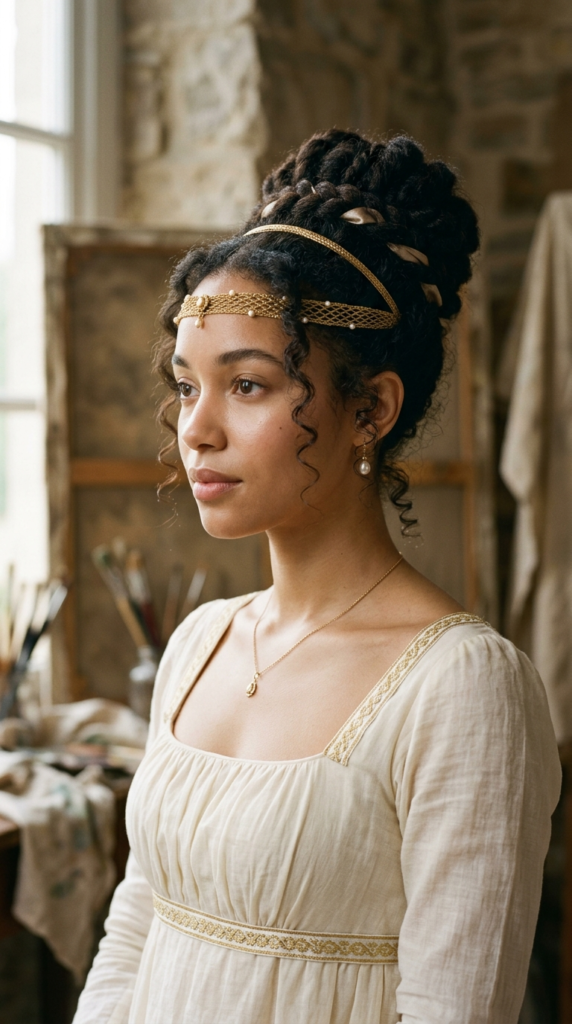
One of the most remarkable changes in 1799 fashion was the treatment of hair. Gone were the towering structures and elaborate curls of the 1770s and 1780s. In their place emerged a much simpler approach that emphasized natural beauty and classical proportion. Hair was typically worn up, gathered in a knot at the back of the head, with soft curls and ringlets arranged around the face to create a romantic, youthful appearance.
The most fashionable hairstyle of 1799 featured hair arranged in Grecian knots, inspired by the simplified, elegant hairstyles seen in classical sculpture. Often adorned with a single ribbon threaded through the curls or a decorative comb, these hairstyles suggested innocence and natural beauty rather than the artificial construction of previous generations. Sometimes a strand or two of hair was allowed to escape from the arrangement, creating a deliberately artful appearance of informality.
Headdresses for day wear included simple bonnets and caps, often made from fine muslin or straw, trimmed with ribbon and sometimes decorated with a single feather or small plume. For evening wear, women often wore no headdress at all, allowing their elaborately arranged hair to serve as the primary adornment for the head.
Footwear: Elegance and Practicality
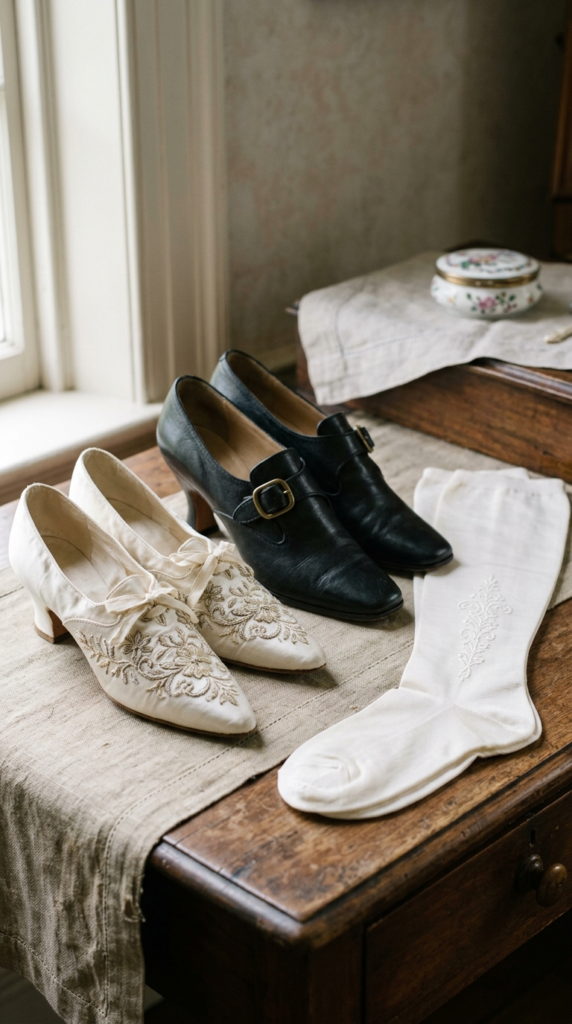
The shoes of 1799 continued the trend toward simplicity and elegance that characterized fashion of this period. Women’s shoes featured thin soles, delicate construction, and minimal ornamentation. The typical shoe had a soft, flexible sole, often made from leather that had been carefully treated to remain supple. The heel, when present, was typically only an inch or so high, much lower than the pronounced French heels of previous eras.
Shoes were often made from silk or fine leather, sometimes in white or pale colors to coordinate with the muslin gowns that were fashionable. Black and other dark colors remained popular for everyday wear and for practical reasons. The toe of the shoe was typically rounded or slightly pointed, and the upper part of the shoe was cut quite low, usually reaching only just above the ankle.
For evening wear, women wore delicate slippers made from silk or satin, often with minimal construction. These slippers sometimes featured decorative embroidery or beading, particularly when worn by wealthy women. The fragility of these evening slippers meant they were not designed for longevity; a woman of means might wear them for a single season and then discard them as they became worn.
Accessories: Restraint and Refinement
The accessories of 1799 fashion reflected the overall aesthetic of simplicity and classical refinement. Long gloves, typically made from kid leather or cotton, were essential to any fashionable woman’s ensemble. These gloves extended from the wrist to above the elbow, often in white or pale colors. The gloves protected the arms and hands while adding a finishing touch of elegance to the ensemble.
Jewelry was minimal compared to previous eras, with most fashionable women wearing only a few delicate pieces. Earrings, typically small gold or pearl drops, were almost universal among respectable women. Necklaces were less common, as the low necklines and minimal decoration of the era left little opportunity for them. However, some women wore delicate chains with small pendants, often containing miniature portraits or locks of hair.
Belts and sashes were important accessories, often made from silk ribbon and sometimes ornamented with small metal decorations or beading. These belts not only served the practical function of emphasizing the high waistline but also added a touch of color to the predominantly white gowns that were fashionable. Fans remained popular accessories, particularly for evening wear, serving both practical and social functions.
The Influence of Political Revolution on Fashion
The fashion of 1799 cannot be understood apart from the political upheaval that had swept Europe during the previous two decades. The French Revolution had fundamentally questioned the legitimacy of aristocratic privilege and had advocated for a new social order based on democratic principles. Fashion, as a visible marker of social position and wealth, became a contested terrain on which these philosophical and political battles were fought.
The simplicity of 1799 fashion was, in many ways, a rejection of the excess of aristocratic dress. By adopting the simple muslin gown, women could present themselves as aligned with the ideals of liberty, equality, and fraternity that the Revolution had championed. The rejection of heavy stays and elaborate ornament could be read as a statement about women’s liberation from artificial social constraints.
At the same time, the remarkable expense of fine Indian muslin meant that only wealthy women could truly be fashionable in 1799. While the gowns appeared simple and affordable, they were in fact extraordinarily expensive, representing a sophisticated form of conspicuous consumption that allowed the wealthy to display their status while appearing to reject artificial show. This contradiction—the appearance of simplicity concealing genuine expense and exclusivity—characterized much of fashionable society during this period.

Outdoor Wear: Spencers and Pelisses
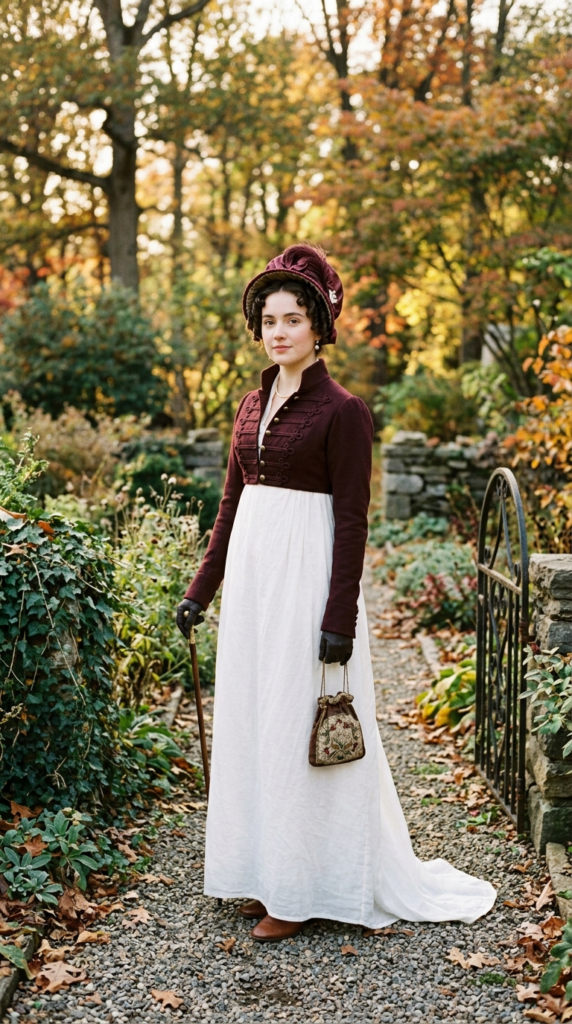
Despite the fashion for thin muslin gowns that provided little warmth, 1799 women still required outerwear for practical purposes. The Spencer jacket emerged during this period as a fashionable solution to the problem of keeping warm without disrupting the elegant silhouette of the high-waisted gown. The Spencer was a short, fitted jacket that ended just below the bust, typically featuring long sleeves and a high collar.
The Pelisse, a more substantial form of outerwear, also remained popular. Like the Spencer, the Pelisse featured a high waistline that aligned with that of the gown beneath, maintaining the elegant proportions of the Empire silhouette. Pelisses were typically made from wool or silk, often lined in contrasting fabric or fur, and might be elaborately decorated with frogging, braid, or buttons.
These outer garments were essential not only for warmth but for propriety as well. Wearing a thin muslin gown alone in public was considered daring and potentially improper. Adding a Spencer or Pelisse provided a layer of modesty and formality that was often necessary in social situations. Cloaks and mantles of various weights and materials were also worn, particularly for traveling or for protection from poor weather.
Undergarments: Simplification and Support
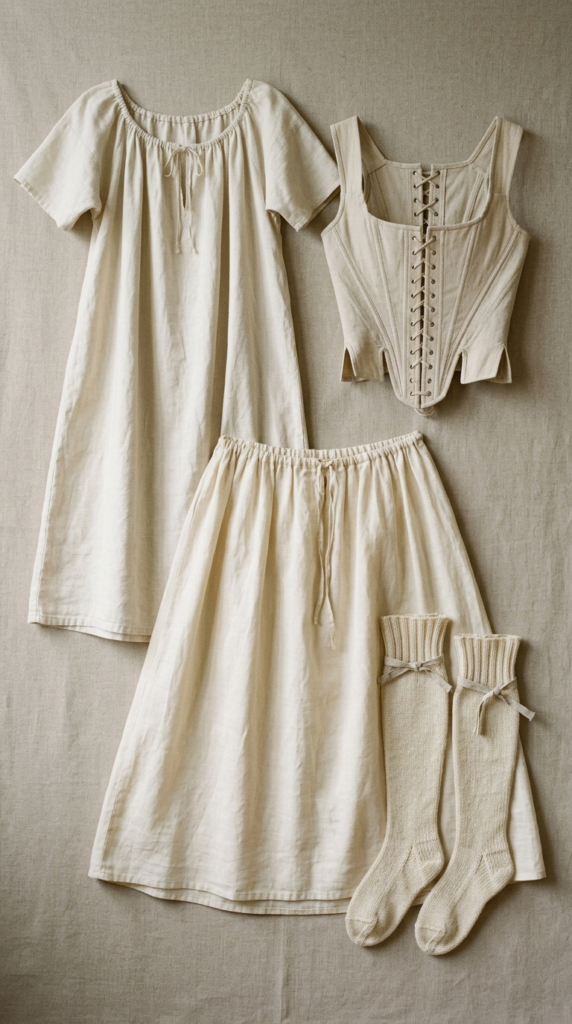
The shift away from heavily boned stays represented a revolution in undergarment construction. While some form of support was still necessary to create the proper silhouette, the elaborate stays of previous eras were gradually abandoned in favor of lighter, less restrictive forms of support. The chemise remained the essential foundation garment, a simple, loose garment made from fine linen that provided both hygiene and modesty.
For additional support, some women began wearing simple corsets with less boning than their predecessors, or even abandoning corsets entirely in favor of high waistbands on their gowns. This represented a fundamental shift in how the fashionable female form was constructed and presented to society. While the Empire silhouette created a new form of aesthetic idealization—emphasizing a small, high waist and a straighter line through the torso—it also allowed women to breathe and move more freely than had been possible in the previous decades.
The removal or significant reduction of multiple petticoats meant that the overall weight of clothing decreased significantly. A woman in 1799 could be warm while still maintaining fashionable appearance, a major practical improvement over the clothing of the 1770s and 1780s.
Evening Wear vs. Day Wear: Degrees of Formality
While the overall aesthetic of 1799 fashion emphasized simplicity, there were still important distinctions between gowns intended for evening wear and those for daytime use. Evening gowns, which would be seen only in controlled interior environments with candlelight, could afford to be more revealing and more delicate than daytime gowns. The thin muslin of the finest evening gowns was sometimes so transparent that it required careful consideration of undergarments.
Daytime gowns, by contrast, were typically made from slightly heavier fabrics that provided more opacity and protection. These gowns often featured longer sleeves and higher necklines than their evening counterparts. They might also feature more substantial decoration, including braid, embroidery, or applied decoration that would have been considered inappropriate for the refined simplicity expected in evening wear.
Promenade gowns, worn when walking in public, were typically made from cotton or linen rather than the finest muslin, and featured more substantial construction and decoration. These gowns served important social functions, demonstrating a woman’s fashion awareness and her place in society. The cost and quality of a woman’s walking ensemble could convey significant information about her family’s wealth and social position.
The Legacy of 1799 Fashion
The fashion of 1799 represented a turning point in the history of women’s dress. The high-waisted Empire silhouette, while not entirely new in 1799, had evolved to its most refined and influential form during this year. The principles that would guide fashion throughout the early nineteenth century—simplicity, emphasis on the bust and high waist, lightweight fabrics, and minimal ornamentation—were clearly established by the end of this pivotal year.
The philosophical ideals that had produced this fashion revolution—the embrace of natural beauty, the rejection of artificial constraint, and the influence of classical aesthetics—would continue to drive fashion evolution for decades to come. While the specific silhouettes would change and evolve, the fundamental principles of simplicity and elegance that characterized 1799 fashion would remain influential throughout the nineteenth century.
For modern fashion enthusiasts, 1799 fashion offers inspiring lessons about the possibility of dramatic change and transformation. The complete revolution in fashionable dress that occurred between 1776 and 1799 demonstrates that fundamental change is possible and that fashion can serve as a vehicle for expressing and promoting new ideas about society, gender, and human possibility.

Conclusion: A New Aesthetic Emerges
As 1799 drew to a close, a new century approached with new fashions, new ideas, and new possibilities for women’s dress. The fashion of this transformative year represented the culmination of intellectual and philosophical movements that had been building throughout the eighteenth century. The high-waisted, simply decorated gown made from lightweight muslin represented both a radical departure from previous fashions and a preview of fashions yet to come.
The women who wore these revolutionary gowns were participants in a profound transformation not only of fashion but of society itself. Their choices about what to wear were choices about how to present themselves to the world, what values they held, and what future they imagined for themselves and their society. In the fashion of 1799, we see the meeting point of art, philosophy, politics, and personal identity—a meeting point that would continue to define fashion throughout the long nineteenth century and beyond.